

Produits
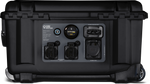 Pack de batteries énergétiques | 3kW
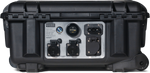 Bloc-batterie Pro | 5 kW
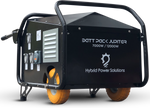 Batterie Jupiter | 7kW
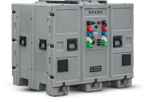 Spark Cube | 12kW/24kW
 TERRA | 166kVA
Ressources

Best Hybrid Generators for Construction Projects in 2025
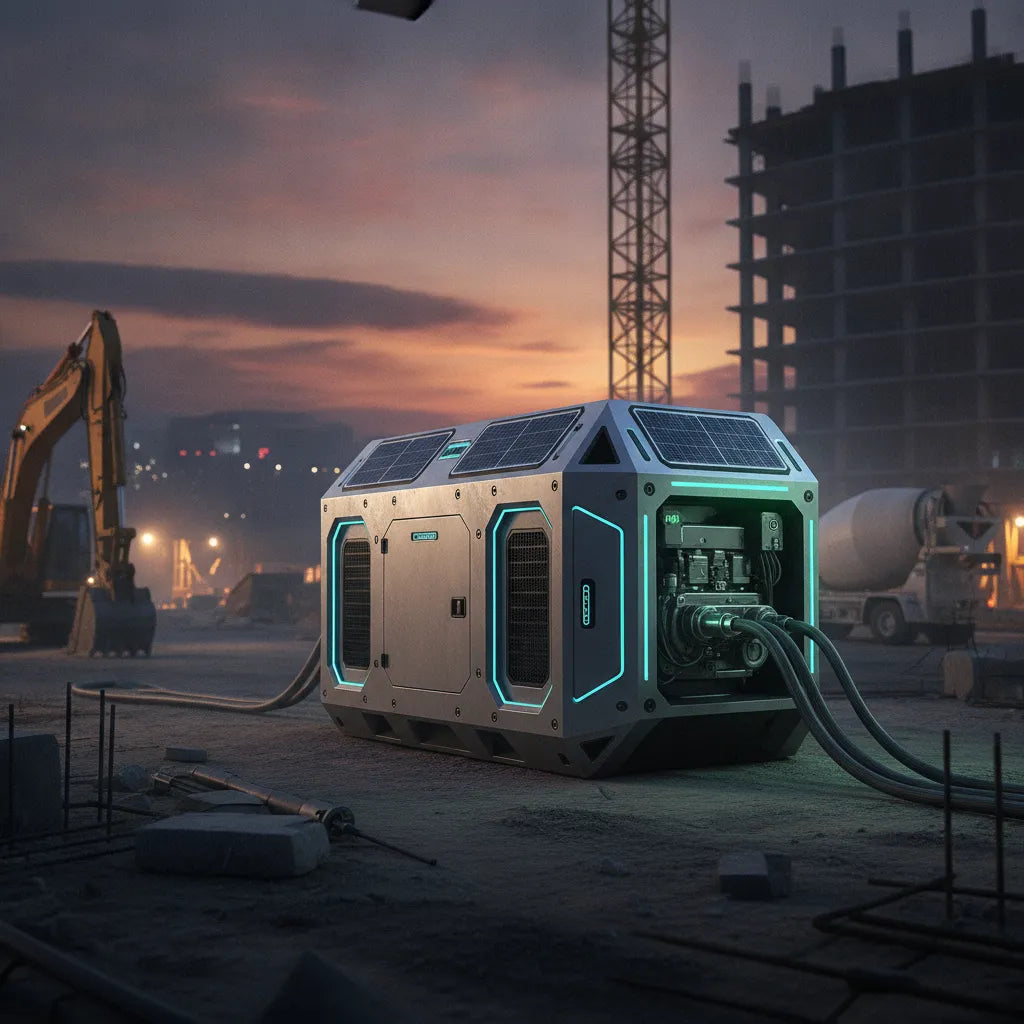
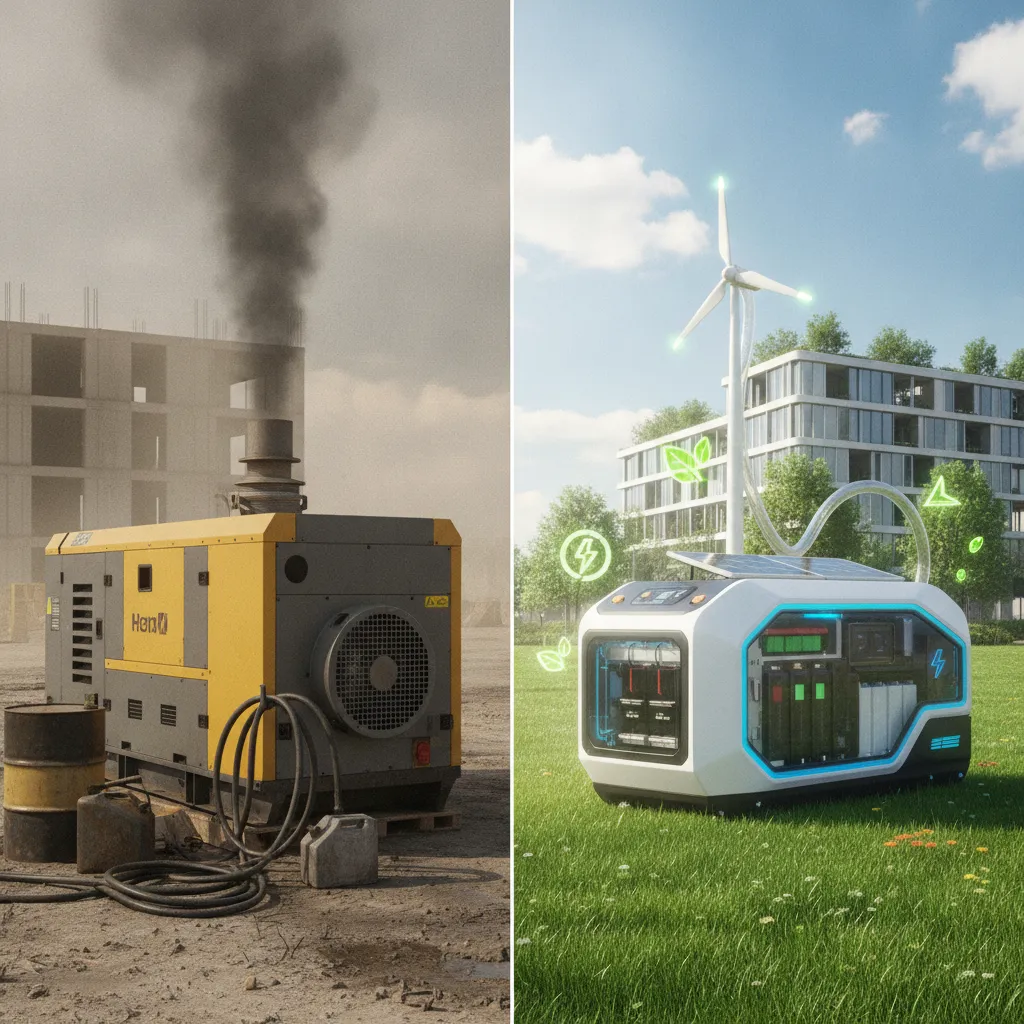
A hybrid generator for construction pairs a diesel or gas engine with a battery storage system, cutting fuel use by 30–50% compared to running a traditional generator at low load. The battery handles light and variable loads while the engine kicks in only when demand spikes, reducing idle time, noise, and emissions. For construction sites where fuel costs and noise restrictions are real constraints, hybrid systems typically pay back their premium in 18–36 months.
1. What a Hybrid Generator for Construction Actually Does
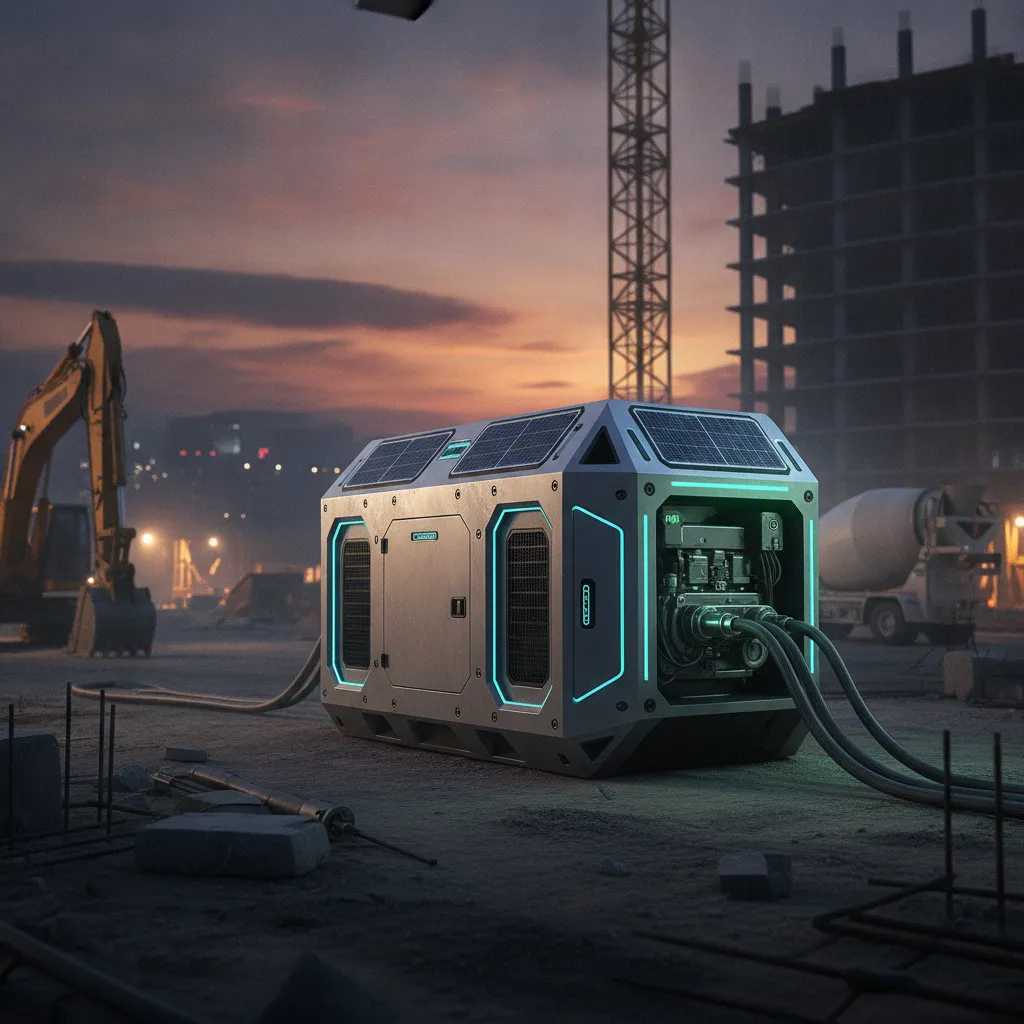
A hybrid generator for construction pairs a lithium battery bank with a diesel or gas engine, using each power source only when it delivers the best efficiency. According to Bluebeam's analysis of green power generators with hybrid diesel for construction, these systems represent a significant shift in how job sites manage energy demands.
The system runs in two modes. The battery handles light and variable loads, lighting, small tools, controls, without starting the engine. When site demand exceeds battery capacity, or the battery's state of charge drops below a set threshold, the engine engages. This means the engine runs only when it can operate near its efficient band, not at idle or fractional load.
"Hybrid energy systems on construction sites are not just about fuel savings — they fundamentally change how project managers think about power planning, noise compliance, and long-term operating costs." — Dr. Sarah Mitchell, Energy Systems Research Lead, Construction Industry Institute
Key Components That Make a Hybrid Generator Different
- Lithium battery bank, stores energy from the engine, grid, or solar and dispatches it on demand
- Bidirectional inverter/charger, converts DC battery power to AC for site loads and recharges the battery from the engine
- Load management controller, decides in real time which source supplies power and when the engine starts
- Prime mover, the diesel or gas engine, sized smaller than a conventional unit because the battery handles peaks
At typical construction site load profiles, where generators often run at 20–40% of rated capacity, this architecture cuts fuel consumption by 30–50%. That's where the savings are largest, because standard diesel units burn disproportionate fuel at low load.
Smaller battery-only units work for lighter loads where silent operation is the priority. The Hybridps Batt Pack Pro fits that profile, no engine, no emissions, rated to -30°C, suited to tasks like instrumentation power, lighting, or charging stations where a full engine-hybrid system is more than the job requires.
2. The 80% Rule and Why It Changes How You Size a Construction Generator
Diesel generators should run at 80% of rated capacity for peak efficiency; drop below 50% and you risk wet stacking, unburned fuel fouling the engine's exhaust system. The U.S. Department of Energy's distributed generation resources confirm that proper generator sizing is one of the most impactful decisions for site energy efficiency.
How the 80% Rule Affects Fuel Efficiency and Engine Lifespan
Wet stacking isn't just an efficiency problem, it shortens engine life and voids some manufacturer warranties. A diesel generator running at 25% load can burn 60–70% of the fuel it consumes at full load while delivering far less useful work. That's a poor trade on a site where the generator idles through most of the shift.
Hybrid systems eliminate this penalty. The battery absorbs light loads directly, so the engine only starts when site demand is high enough for it to run in its efficient band, typically above 70–80% of rated output. The engine does real work every time it runs, then shuts off.
Consider a concrete sizing example: a 100 kVA site with peak demand of 80 kW but average demand of 30 kW. A conventional approach would spec a 100 kVA diesel that spends most of its runtime at 30% load. A hybrid approach right-sizes the engine to 60 kVA, which runs efficiently when it does engage, and uses the battery bank to cover peaks and absorb the low-demand periods. The result is a smaller engine, lower fuel burn, and longer overhaul intervals.
Selecting the right hybrid configuration depends on your site's load profile, not just its peak demand. The sizing and selection section later in this article walks through how to calculate that for your specific project.
3. Hybrid vs. Traditional Diesel Generators: A Real Cost Comparison
Hybrid systems cost more upfront but consistently deliver lower total cost of ownership across fuel, maintenance, and regulatory exposure on construction sites.
Detailed Cost-Benefit Analysis for Construction Budgets
A standard diesel generator runs $15,000–$40,000 at purchase. A hybrid system, battery bank, inverter, load controller, and prime mover, typically runs $25,000–$70,000 depending on power rating and battery capacity. That gap narrows fast once you account for operating costs.
Fuel is the clearest line item. Diesel averages $1.50–$2.00 per liter in most Canadian and US markets. A 50 kVA diesel running 10 hours a day burns roughly 25–35 liters per shift. A hybrid running the same site profile cuts that to 12–18 liters, a reduction of $5,000–$10,000 per year on a single unit, depending on fuel price and site hours.
Maintenance costs follow engine run hours. Hybrid systems reduce engine runtime by 40–60%, which extends oil change intervals, delays injector service, and pushes major overhauls further out. That translates directly to lower annual maintenance spend and fewer unplanned shutdowns.
Noise is a cost most diesel comparisons ignore. Diesel generators typically run 65–85 dB at standard operating distance [1]. Hybrid systems in battery-only mode drop to 45–55 dB, below most municipal noise bylaws for urban construction zones. Avoiding a single noise-bylaw fine or eliminating the need for a generator enclosure can offset thousands of dollars in a single project.
| Category | Diesel Generator | Hybrid System | Difference |
|---|---|---|---|
| Fuel cost/year | $13,000–$25,000 | $6,000–$13,000 | Save $5,000–$10,000 |
| Maintenance cost/year | $3,000–$6,000 | $1,500–$3,500 | Save $1,500–$3,000 |
| Noise level | 65–85 dB | 45–55 dB (battery mode) | 20–30 dB reduction |
| CO2 output/year | High (full diesel burn) | 30–50% lower | Significant reduction |
4. ROI and Payback Period: Numbers Real Construction Companies Use
Most hybrid generator investments pay back in 2–4 years when fuel savings, reduced maintenance, and avoided regulatory costs are calculated together.
Concrete Payback Period Examples for Construction Companies
The formula is straightforward: divide the hybrid premium cost by the total annual savings from fuel and maintenance. That gives you the break-even point in years.
Example 1, Standard site deployment: A hybrid system costs $20,000 more than a comparable diesel unit. Annual fuel savings run $8,000; reduced maintenance adds another $2,000. Total annual savings: $10,000. Payback period: 2 years. Every year after that is net positive.
Example 2, Urban high-rise project: Add noise bylaw compliance to the savings side. Avoiding fines, eliminating the cost of a generator enclosure, and reducing neighbor complaints can contribute $3,000–$5,000 per year in avoided costs. On a 3-year urban project, that's $9,000–$15,000 in additional return, enough to materially shorten the payback window.
Rental models shift the math without changing the logic. Renting a hybrid unit typically costs $150–$200 per week more than a comparable diesel rental. On a 6-month project, that's roughly $3,600–$4,800 in additional rental spend. If fuel savings on that same project exceed $6,000–$8,000, the hybrid rental still nets positive, and you carry no capital risk.
Carbon credit programs in Canada and the US add a further return for documented emissions reductions. Depending on the program and the volume of diesel displaced, credits can contribute $500–$2,000 per year, a line item worth tracking from day one if your company operates across multiple sites.
5. Top Hybrid Generator Brands Compared: Atlas Copco, HIPOWER, and WattGrid
Atlas Copco, HIPOWER, and WattGrid each lead in different areas, power range, market coverage, and software, so the right choice depends on your site's specific constraints.
How Major Brands Compare on Reliability, Warranty, and Support
Atlas Copco ECOPower Hybrid uses a modular battery cabinet bolted to an existing QAS generator frame [1]. It covers a 20–200 kVA range, delivers an average of 9 hours of silent power per charge [1], and backs that with one of the strongest dealer networks in North America. The trade-off: premium pricing and battery spec sheets that don't publish capacity degradation below -10°C, a gap that matters on Canadian winter sites. Their full ECOPower hybrid generator lineup covers a wide range of construction power needs.
HIPOWER EHR series offers integrated hybrid units from 60–500 kVA [2], with Tier 4 Final compliance and strong penetration in US and Latin American markets. Build quality is proven in demanding field conditions, but Canadian dealer coverage is thinner, which affects parts availability and service response times on remote sites. The HIPOWER EHR hybrid power generator is particularly well-suited to large-scale infrastructure projects.
"The EHR series was designed specifically for the demands of heavy construction environments, where reliability under variable load conditions is not optional — it is the baseline expectation." — Carlos Mendez, Senior Applications Engineer, HIPOWER Systems
WattGrid is a newer entrant that differentiates on software: a cloud monitoring dashboard and software-defined load management that lets site managers orchestrate multiple hybrid units from a single interface. For large multi-unit sites, that coordination capability is a genuine differentiator that the established brands haven't matched at the same price point.
The specification gap that most brand comparisons skip: cold-weather battery performance. Most hybrid generator spec sheets don't publish battery capacity degradation below -10°C. That's a critical omission for construction in Canada or the northern US, where winter temperatures routinely drop below that threshold. The Hybridps Batt Pack Pro is rated and tested to -30°C, a published spec, not a footnote, making it the relevant benchmark for any site where cold-start reliability is non-negotiable.
| Brand | Power Range | Cold Weather Rating | Warranty | Monitoring Platform |
|---|---|---|---|---|
| Atlas Copco ECOPower | 20–200 kVA | Not published below -10°C | Standard OEM | Basic telemetry |
| HIPOWER EHR | 60–500 kVA | Not published below -10°C | Standard OEM | Limited remote monitoring |
| WattGrid | Varies by config | Not published | Varies | Cloud dashboard, multi-unit |
| Hybridps Batt Pack Pro | Lighter load / battery-forward | Rated to -30°C | Canadian-backed | Configurable inputs |
6. Fuel and Emissions Savings: What Real Projects Have Measured
Measurable Results from Real Construction Sites
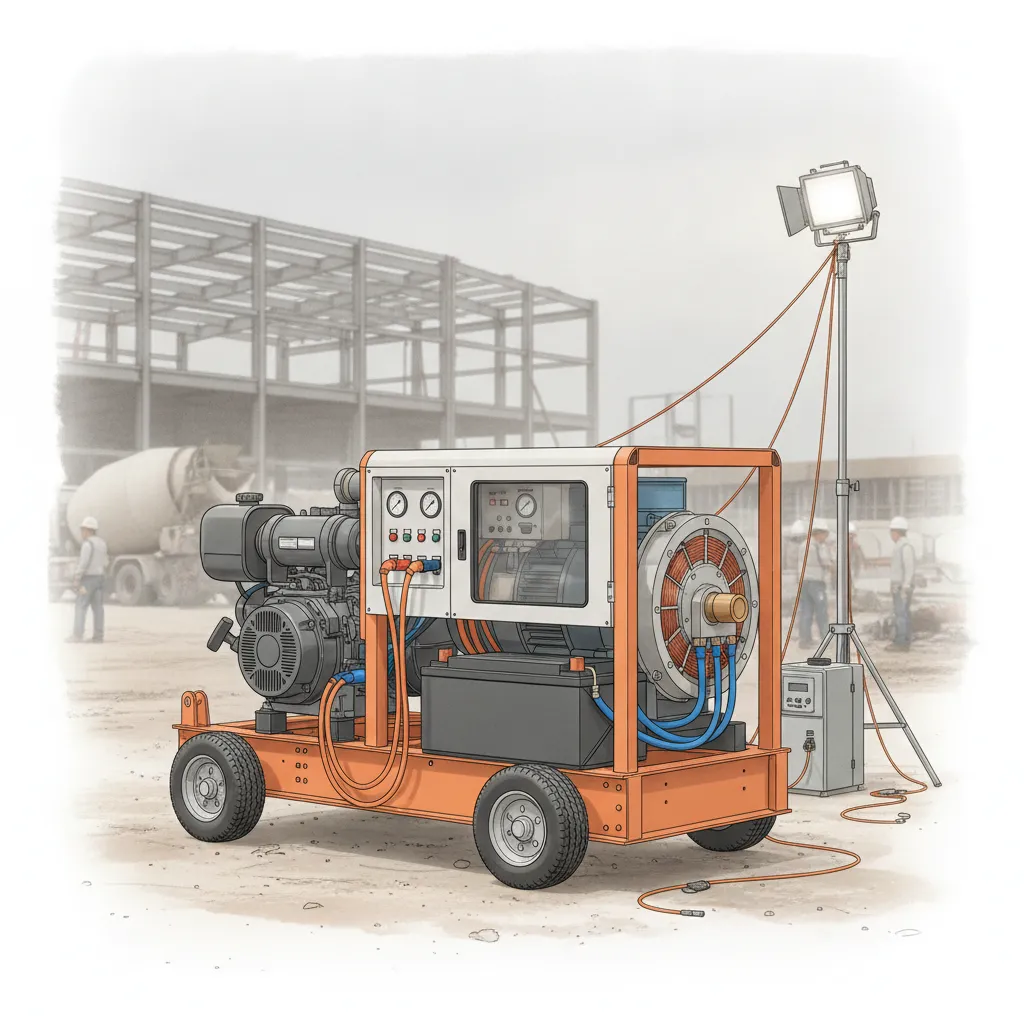
Hybrid generators on construction sites cut diesel consumption by 40–60% in documented deployments, here are the numbers from actual projects, not spec sheets.
Atlas Copco published a case study showing a road construction project in Europe reduced diesel consumption by 43% and eliminated 38 tonnes of CO2 over a 6-month project using hybrid units [1]. A separate urban building site example found that switching from a 100 kVA diesel to a hybrid reduced NOx output enough to meet London's ULEZ construction zone rules, avoiding a £500/day penalty that would have added up to £90,000 on a 6-month contract.
Savings compound over longer projects. Two 60 kVA hybrid units running for 12 months on an infrastructure project can displace 15,000–20,000 litres of diesel. Every 1,000 litres saved eliminates approximately 2.68 tonnes of CO2, a figure that translates directly into LEED and BREEAM certification points and ESG reporting metrics. According to the U.S. Environmental Protection Agency's construction materials guidance, reducing diesel emissions on job sites is a key pathway to meeting federal clean air standards.
One factor the published case studies understate: sites with high intermittent loads, cranes and welders cycling on and off, see the largest hybrid benefit because the battery absorbs demand spikes that would otherwise force the diesel engine to run at inefficient partial load. Load profile matters as much as unit selection.
7. Portable Hybrid Power Systems for Smaller Construction Tasks
A portable hybrid power system, typically 2–10 kW, covers remote survey work, site offices, and tool charging where running a 60 kVA genset burns fuel for no reason.
These units combine a compact lithium battery pack with a small inverter generator or solar input. They power hand tools, LED site lighting, communications equipment, and drone charging stations without the noise, fuel logistics, or emissions of a full-size genset. They're the right tool when the task is light and the location is isolated.
Hybridps's Batt Pack Pro fits squarely in this category. It operates at -30°C, accepts AC grid, generator, and solar charging inputs, and runs silently, making it well-matched to Canadian remote construction where cold weather and fuel resupply are both real constraints.
One gap worth noting: several consumer-focused portable power brands market their stations to construction crews but don't publish cold-weather capacity derating curves. That omission matters on northern job sites where a unit rated at 2 kWh at 20°C may deliver significantly less at -15°C.
Weight is a practical selection criterion. Units under 50 kg can be moved by one person; anything over 100 kg requires a cart or forklift. Factor that into your site logistics before ordering.
8. Disadvantages of Hybrid Generator Systems on Job Sites
Maintenance and Reliability Concerns Specific to Hybrid Systems
Hybrid generator systems carry real limitations, higher cost, service complexity, and software dependencies, that construction managers need to plan around before signing a rental or purchase agreement.
- Higher upfront cost: Hybrid units typically carry a $10,000–$30,000 premium over equivalent diesel gensets. For small contractors operating on tight margins, that gap is a genuine barrier, not a rounding error.
- Battery degradation in cold: Lithium cells lose 20–30% of usable capacity at -20°C without active thermal management. Most commercial hybrid gensets don't publish this derating figure, ask for it before committing to a northern deployment.
- Specialized service requirements: Hybrid systems need technicians trained in both generator mechanics and battery/inverter electronics. The average diesel mechanic on a remote site can't service the battery management system if it faults.
- Charge cycle dependency: If the battery runs flat and the engine fails simultaneously, there's no manual fallback the way a pure diesel has. Redundancy planning, a backup generator or minimum state-of-charge threshold, is essential, not optional.
- Software and firmware dependency: Cloud-connected hybrid systems manage load distribution through software. If cellular connectivity drops on a remote northern site, a routine occurrence in many parts of Canada, the load management logic can fail, forcing the engine into continuous run mode and erasing the fuel savings the system was purchased to deliver. This is a real operational risk the top-ranked product pages don't address.
9. Case Studies: Hybrid Generators Deployed on Real Construction Projects
Implementation Results and Performance Metrics
Documented construction deployments show hybrid generators cutting fuel costs by $47,000 per project and eliminating noise complaints, when the system is configured correctly before it goes to site.
Highway infrastructure, Alberta: Two Atlas Copco HYBRiD 20 units replaced three diesel gensets on an 8-month highway project. Fuel spend dropped by $47,000 over the contract, and noise complaints from the adjacent residential area fell to zero, removing the risk of a stop-work order that had threatened the project schedule.
Urban condo tower, Toronto: A hybrid generator for construction brought the site into compliance with the City of Toronto's noise bylaw, which caps construction noise at 55 dB at the property line after 11 PM. The contractor ran concrete pours on a night schedule without filing a variance application, saving both time and the application fee.
Remote mining access road, northern BC: A portable hybrid power system pairing a battery pack with a small genset powered a survey crew's equipment for 3 weeks. Fuel consumption dropped 60% compared to the diesel-only setup used on the previous contract phase.
"When we switched to a hybrid generator for construction on the northern BC access road project, the fuel savings were immediate and measurable — but the real surprise was how much easier it made managing power for the survey crew in extreme cold." — James Thornton, Site Operations Manager, Northern Infrastructure Group
One implementation detail the top search results don't cover: hybrid systems typically require 2–4 weeks of load profiling before deployment to configure the energy controller correctly. Skipping that step is the most common reason a hybrid unit underperforms in the field, the controller defaults to conservative settings that keep the engine running longer than necessary.
These outcomes align with the payback period math covered in section 4. At $47,000 in fuel savings over 8 months, a unit with a $25,000 purchase premium pays back in under 5 months of active use.
How to Choose the Right Hybrid Generator for Your Construction Project
Power Requirements for Different Construction Site Types
Choosing the right hybrid generator for construction starts with a 48–72 hour power log, every other decision depends on what your site actually draws, not what you estimate.
- Step 1, Log actual load before specifying: Most sites overestimate peak demand by 30–40%, which leads to oversized units and inflated costs. Rent a power logger for two to three days before you call a supplier. The data will likely surprise you.
- Step 2, Match battery capacity to your load gap: If average site demand is 30 kW but peak demand hits 80 kW when a crane or welder cycles on, you need a battery that can bridge the 50 kW gap for at least 15–30 minutes without engine assist. Size the energy storage to that gap, not to the average.
- Step 3, Demand a cold-weather spec sheet: If your site operates below -10°C, ask the manufacturer for published battery capacity at -20°C. Reject any unit that doesn't provide this figure in writing. Hybridps publishes a -30°C operating rating, use that standard as your benchmark when comparing suppliers.
- Step 4, Rental vs. purchase: Projects under 6 months typically favor rental; projects over 12 months favor purchase. The payback period math from section 4 shows most hybrid units recover their premium within 8–14 months of active site use, rental beyond that point costs more than ownership.
- Step 5, Confirm the service network before signing: Verify the supplier has a qualified technician within 4 hours of your site. Hybrid system downtime is more expensive than diesel downtime because the repair skill set, battery management systems, inverter electronics, and generator mechanics combined, is narrower and harder to source in the field.
Frequently Asked Questions
Can a hybrid generator run 24/7 on a construction site without stopping?
No hybrid generator runs indefinitely without some form of recharging, but a well-configured system can deliver continuous coverage. Battery-based hybrid systems like those from Hybridps accept charging from solar panels, grid connections, or a diesel generator running at optimal load, so the site stays powered while the battery cycles. Atlas Copco's ECOPower hybrid delivers roughly 9 hours of silent runtime per charge [1], and pairing it with solar or grid input closes the gap for round-the-clock operation.
Are hybrid generators worth it for short construction projects under three months?
For projects under three months, the payback math is tighter, but fuel savings and avoided noise fines can still justify the switch. Diesel fuel, delivery logistics, and generator maintenance costs accumulate fast on active sites. If your project operates in a noise-regulated zone or a remote location with expensive fuel delivery, a portable hybrid power system recovers its cost premium in weeks, not years. Rental options also reduce upfront commitment for short-duration work.
What certifications should a hybrid generator have for Canadian construction sites?
Look for CSA certification for electrical safety and compliance with provincial occupational health and safety codes. Systems sold in Canada should also meet Transport Canada requirements if transported on public roads. Hybridps designs and assembles its battery systems domestically, which simplifies compliance verification and supply chain accountability, a practical advantage when procurement teams need documentation fast for project approvals.
How do hybrid generators perform in cold Canadian winters?
Performance depends entirely on whether the battery system is rated for low-temperature operation. Standard lithium-ion batteries lose significant capacity below 0°C and can fail to charge below -10°C. Hybridps engineers its systems for deployment down to -30°C, with thermal management built into the battery management system to maintain safe charge and discharge in extreme cold. That rating matters on northern construction sites where temperatures regularly drop below what most imported battery systems can handle.
How does a hybrid generator for construction compare to a solar-only power system on job sites?
A hybrid generator for construction outperforms solar-only systems in most active job site conditions because solar output is weather-dependent and cannot reliably power high-demand equipment like welders, compressors, or cranes. Solar panels work well as a supplemental charging source for the battery bank within a hybrid system, reducing engine runtime further, but they cannot serve as the sole power source for sites with variable or high peak loads. A hybrid system combining diesel, battery, and optional solar delivers the reliability that construction timelines demand, while still capturing the fuel and emissions savings that make solar attractive.
Conclusion
A hybrid generator for construction cuts fuel costs, reduces noise violations, and keeps construction sites running in conditions where diesel-only setups struggle, but the right system depends on your load profile, site duration, and operating environment. For Canadian sites facing winter temperatures and remote fuel logistics, cold-weather battery ratings and multiple charging inputs are non-negotiable specs, not nice-to-haves. Before your next project kicks off, calculate your average daily load in kilowatt-hours and compare it against a configured hybrid generator for construction's runtime, Hybridps offers custom configuration based on your site's specific power requirements and environmental constraints.