

Produits
 Pack de batteries énergétiques | 3kW
 Bloc-batterie Pro | 5 kW
 Batterie Jupiter | 7kW
 Spark Cube | 12kW/24kW
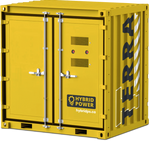 TERRA | 166kVA
Ressources

Remote Site Power Generation: Complete Solution Guide
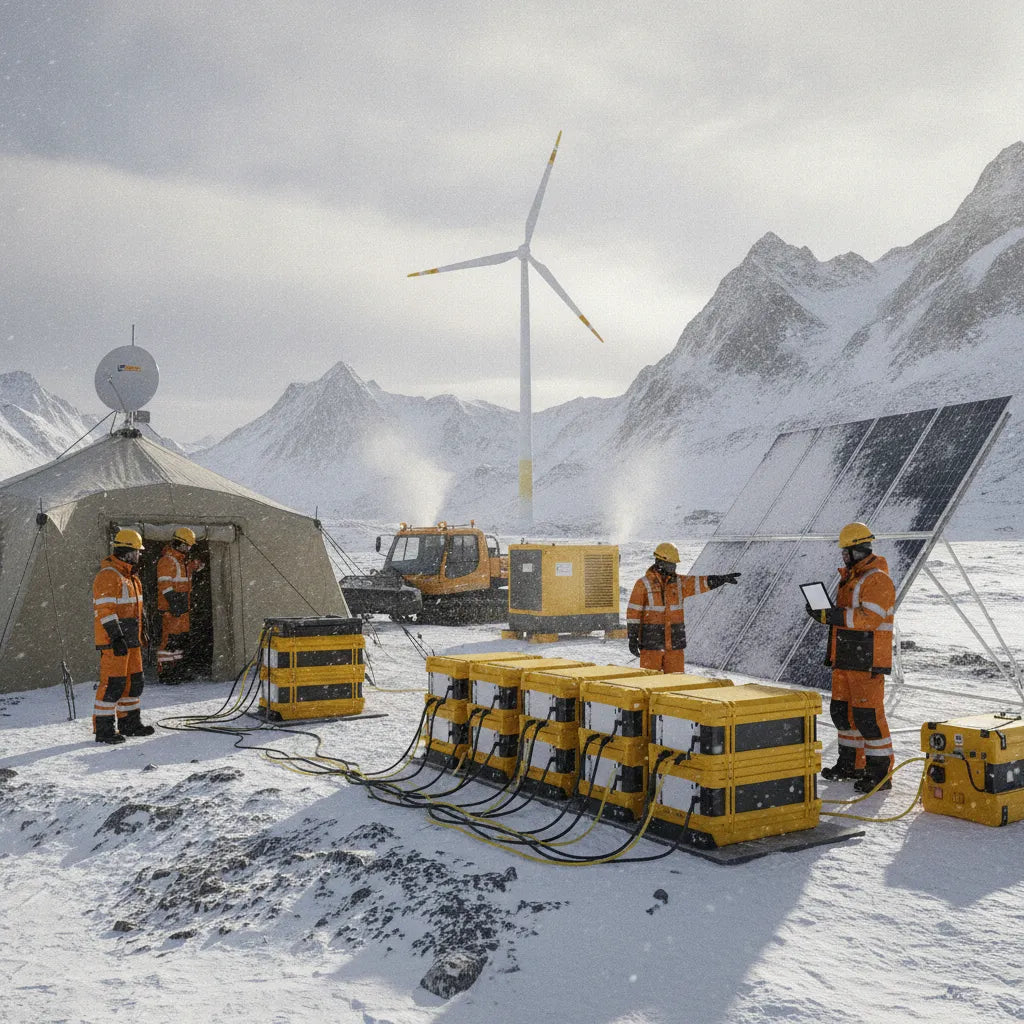
Remote site power generation means producing electricity on-location without a grid connection, using diesel generators, solar arrays, battery storage, or hybrid combinations. Effective remote site power generation depends on load size, fuel logistics, environmental rules, and whether the installation is temporary or permanent. Hybrid solar-battery systems now deliver 90–99% uptime at 30–60% lower fuel cost than diesel-only setups, making them the default choice for most off-grid sites.

Choose the Right Technology for Remote Site Power Generation
Match your technology to your load, fuel access, temperature, and noise constraints, choosing wrong costs more than the generator itself.
How Solar, Diesel, and Hybrid Systems Compare for Remote Sites
Diesel generators remain the default for remote site power generation because upfront costs are low, a 10–30 kW unit typically runs $5,000–$15,000. The real cost hits later: fuel logistics at remote sites add $0.40–$1.20/kWh, and most diesel units require maintenance every 250–500 operating hours, which means scheduled service trips to sites that may be hours from the nearest town.
Solar-battery hybrid systems cut that fuel spend by 30–60% and deliver 90–99% uptime in field deployments. Silent operation matters on sites inside wildlife corridors or subject to municipal noise bylaws, conditions where a running diesel engine is a compliance liability, not just an inconvenience. The Hybridps Batt Pack Pro is rated to -30°C, which rules out the cold-start failures and fuel gelling that ground diesel-only setups in northern Canadian winters.
Grid extension looks attractive on paper until you price the line. Running grid power to a remote site costs $15,000–$100,000+ per kilometre of new line. On-site generation breaks even at distances beyond 1–5 km depending on load size, at that threshold, a hybrid system almost always wins on total cost.
"The economics of remote power have fundamentally shifted. When you factor in fuel transport, maintenance callouts, and downtime costs, diesel-only solutions are rarely the cheapest option beyond a 2-kilometre radius from the grid." — Dr. Aidan Duffy, Professor of Renewable Energy Engineering, Technological University Dublin
| Technology | Upfront Cost | Fuel Cost / kWh | Noise | Cold Weather |
|---|---|---|---|---|
| Diesel only | $5,000–$15,000 | $0.40–$1.20 | High | Cold-start risk below -15°C |
| Solar only | Moderate–High | ~$0 | Silent | Output drops in low-light winters |
| Solar-battery hybrid | Moderate–High | 30–60% less than diesel | Silent | Rated to -30°C (Hybridps) |
| Grid extension | $15,000–$100,000+/km | Grid rate | Silent | Reliable if infrastructure holds |
Temporary vs. Permanent Remote Power: Which Do You Need?
Temporary deployments, construction phases, seasonal camps, emergency response, demand portability and fast setup. Trailer-mounted, plug-and-play battery systems work here because they move with the job and don't require civil works or permitting for permanent infrastructure.
Permanent installations justify a different calculation. A solar array paired with a battery bank and a backup generator carries a 10–15 year ROI horizon, but the per-kWh cost over that period drops well below any diesel-only alternative once fuel and maintenance are factored in.
Before selecting any system, define five criteria: peak load in kW, daily energy demand in kWh, the ambient temperature range your site hits in winter, how often fuel resupply is realistic, and whether noise restrictions apply. Those five numbers narrow the field faster than any spec sheet comparison.
Fuel Cell and Wind Options for Remote Power
Beyond solar and diesel, two additional technologies are gaining traction for specific remote site scenarios. Hydrogen fuel cells offer zero-emission generation with high energy density, making them attractive for sites where solar irradiance is low and diesel logistics are prohibitive. Current costs remain high, typically $8,000–$20,000 per kW of installed capacity, but the technology is maturing rapidly.
Small wind turbines (1–10 kW) can complement solar arrays on sites with consistent wind resources, particularly in open terrain or coastal environments. According to the U.S. Department of Energy's Wind Energy Technologies Office, small wind systems paired with battery storage can achieve capacity factors of 25–40% in suitable locations, meaningfully reducing generator runtime. The key constraint is site assessment: wind resources must be measured over at least 12 months before committing to turbine infrastructure.
Assess Your Site Load and Power Requirements for Remote Site Power Generation
Size your remote site power generation system by listing every load, calculating daily kWh demand, and adding a 20–25% surge margin before specifying any equipment.
Start with a load inventory. Write down every electrical device on site, lighting, HVAC, communications equipment, pumps, tools, alongside its wattage and daily run-hours. Multiply wattage by run-hours to get each load's daily kWh contribution, then sum the column. A construction site monitoring trailer typically draws 2–5 kWh/day; a remote telecom node runs 5–20 kWh/day depending on transmission hardware and climate control.
Apply a 20–25% safety margin on top of your calculated peak load. Motor-driven equipment, compressors, pumps, HVAC fans, pulls 3–6× rated current at startup, and that surge can trip an undersized system before it ever reaches steady-state operation.
Separate critical loads from non-critical ones. Knowing which circuits must stay live overnight determines your minimum battery autonomy requirement. A site with no daytime solar access needs at least 8 hours of battery runtime to bridge the gap without a generator run.
Account for temperature derating before you finalise specs. LiFePO4 battery capacity drops 15–20% at -20°C, so a system rated at 5 kWh at room temperature may deliver only 4 kWh or less in a Canadian winter. Hybridps battery systems, including the Batt Pack Pro 5kW and Jupiter 7kW, are rated and tested to -30°C, which matters when you're sizing for worst-case conditions rather than average ones.
Document your fuel resupply schedule last. Monthly or less frequent resupply means your storage must cover multiple consecutive cloudy days without a generator top-up. Size battery capacity and solar input together to meet that window, not just a single overnight cycle.
"Undersizing battery storage is the single most common and costly mistake we see in remote power deployments. Engineers consistently design for average conditions rather than worst-case scenarios, and that gap is where systems fail." — Dr. Marianne Laverty, Senior Research Engineer, National Renewable Energy Laboratory (NREL)
What Are the Main Challenges in Delivering Power to Remote Sites?
The core challenges are logistics, environment, and load variability, and they compound each other on a remote site.
- Fuel supply chain exposure: Diesel delivery to remote locations can cost 3–5× urban pump prices once transport, handling, and risk are factored in. A monthly resupply window leaves no margin for generator overconsumption or unexpected demand spikes.
- Extreme temperature operation: Cold-start failures, fuel gelling below -15°C, and battery derating all reduce effective capacity precisely when heating loads are highest. Confirm any system's cold-weather rating against your site's recorded low temperatures, not regional averages.
- Load variability and surge events: Remote sites often run intermittent heavy equipment alongside continuous low-draw loads. A single compressor startup can momentarily demand 3–4× its running wattage, an undersized system faults out and disrupts everything downstream.
- Limited maintenance access: A generator failure at a remote site can mean days of downtime waiting for a technician or parts. Systems with fewer moving parts and remote monitoring capability reduce that exposure significantly.
- Regulatory and noise constraints: Noise bylaws and emissions rules increasingly restrict diesel generator use near communities, protected land, or sensitive operations [1]. Battery-based systems with solar charging sidestep both issues entirely.

Install and Commission Your Remote Power System
Follow a structured installation sequence, site prep, wiring order, and commissioning checks, to bring remote site power generation online safely and without rework.
Step 1: Prepare the Site
Work through this checklist before any equipment arrives on site:
- Confirm a level, stable surface, a compacted gravel pad or concrete slab prevents unit tipping and vibration damage over time.
- Orient solar panels within 15° of true south (in Canada) and clear any obstructions that cast shade between 9 a.m. and 3 p.m.
- Plan cable runs under 10 m wherever possible. Longer runs at low DC voltage create measurable voltage drop that reduces charge efficiency and can trigger false low-battery alarms.
Step 2: Wire in the Correct Sequence
Always connect the battery bank first, then the charge controller or inverter, then the solar array last. Reversing this order risks accidental energizing of live conductors before protection circuits are active, a hazard that causes equipment damage and personal injury.
Step 3: Run Commissioning Checks
Before the crew leaves site, verify each of the following:
- State-of-charge display reads a value consistent with the battery's known condition, a blank or erratic reading signals a wiring or BMS fault.
- Generator auto-start triggers correctly at the threshold set for your system, typically 20–30% SOC, so the generator kicks in before loads drop offline.
- Inverter output voltage and frequency match your load requirements, 120V/60Hz for North American equipment.
For Hybridps Batt Pack Pro and Spark Cube units, confirm that all three charging inputs, solar, AC shore power, and vehicle alternator, are recognized by the battery management system before the unit ships to site. A missed input discovered in the field costs a full day of downtime.
Step 4: Record Your Baseline Metrics
Document initial SOC, ambient temperature, and load draw at the moment of commissioning. These three numbers become your reference point if performance degrades weeks later, without them, diagnosing a capacity drop or charge-rate issue is guesswork rather than analysis.
Verify Permits, Regulations, and Environmental Standards
Off-grid remote site power generation is legal across all Canadian provinces and US states, no utility interconnection agreement is required for a fully islanded system.
What Permits and Environmental Standards Govern Remote Power Generation?
The legal complexity comes not from generating electricity itself, but from how you store fuel, where you install equipment, and how much noise the system produces.
- Fuel storage thresholds: Storing diesel above 2,500 L typically triggers provincial environmental reporting requirements and mandatory secondary containment. In Ontario, O. Reg. 217/01 governs spill prevention and containment for fuel stored on-site. Similar rules apply in Alberta and British Columbia. Battery-based systems like the Hybridps TERRA, which uses LiFePO4 chemistry and carries no liquid fuel, sidestep these requirements entirely.
- Noise bylaws: National parks and sites near residential zones commonly cap generator noise at 55–65 dB(A) measured at 7 m. Battery-hybrid systems produce no combustion noise, eliminating this compliance risk without requiring variance applications or acoustic shielding.
- Environmental assessments: Permanent installations on Crown land or within 30 m of a waterbody may require a federal assessment under the Fisheries Act or a provincial equivalent. Temporary deployments on private land generally fall below these thresholds, but confirm with your provincial environmental authority before breaking ground. According to the U.S. Environmental Protection Agency's guidance on distributed generation, off-grid systems must still comply with local air quality and noise standards even when not connected to the utility grid.
- Electrical permits: Even fully off-grid systems require an Electrical Safety Authority (ESA) inspection in Ontario before energizing. Every other province has an equivalent authority, BC Safety Authority, TSASK in Saskatchewan, Technical Standards and Safety Authority in Ontario for fuel-handling systems. Budget 2–4 weeks for permit processing in remote jurisdictions.
Engage a licensed electrical contractor familiar with off-grid installations early. Permit timelines in remote regions routinely extend project start dates by weeks, this is not a step to sequence last.
Troubleshoot Common Remote Site Power Generation Mistakes
Most remote site power generation failures trace back to five fixable specification or setup errors, catch them before commissioning and you avoid costly downtime.
1. Undersizing Battery Storage
Operators routinely size storage for average daily load and forget that two or three consecutive overcast days can drain a solar-charged bank entirely. The field rule of thumb: specify a minimum of 1.5× your daily kWh demand in usable storage capacity. That buffer covers multi-day cloud cover without forcing an emergency generator start.
2. Skipping Cold-Weather Derating
A 100 Ah battery at -20°C delivers roughly 80 Ah of usable capacity, a 20% reduction that causes unexpected shutdowns on winter nights if you haven't accounted for it. Hybridps LiFePO4 systems are rated and tested to -30°C, with thermal management built in, but any battery bank must be derated in the load calculation before deployment.
3. Running Generators at Low Load
Operating a diesel generator below 30% of rated capacity causes wet-stacking, unburned fuel deposits that accelerate engine wear and increase maintenance costs. Set your hybrid controller to run the generator at 70–80% load when it does run, then shut it down once the battery bank is recharged.
4. Undersizing DC Cables
Undersized DC cables introduce voltage drop that triggers low-voltage shutdowns and wastes 5–15% of available energy across the run. Use a voltage drop calculator for every cable run longer than 3 m, and size up one gauge if the calculation puts you near the threshold.
5. Ignoring Total Cost of Ownership
Diesel-only systems appear cheaper at purchase, but fuel, transport to remote sites, and scheduled maintenance push the 5-year TCO to 3–5× the cost of a hybrid alternative. Document your full TCO, including fuel delivery frequency and generator service intervals, before finalising vendor selection. The purchase price is rarely the number that matters.
"Total cost of ownership analysis consistently shows that hybrid battery-solar systems outperform diesel-only alternatives within three to five years on most remote industrial sites, even when capital costs are financed." — James Thurston, Director of Energy Infrastructure, Canadian Electricity Association
Frequently Asked Questions
How do you calculate ROI for a remote power generation system?
ROI is calculated by dividing net savings (fuel, maintenance, and logistics costs avoided) by the total system capital cost, then expressing the result as a percentage over your target payback period. Start with your current annual diesel spend, fuel, transport, and scheduled maintenance. Subtract projected annual costs for the hybrid system, including any financing charges. A Canadian mining or construction operator replacing a diesel-only setup with a solar-battery hybrid typically sees a 40–60% reduction in total operating cost, which translates to a payback period of two to four years depending on site remoteness and fuel delivery frequency.
Can a remote power system be monitored and controlled remotely?
Yes, most industrial-grade remote power systems include cloud-connected battery management and control interfaces that let operators monitor state of charge, load draw, and fault alerts from any internet-connected device. Hybridps systems integrate battery management systems (BMS) that track cell-level performance and flag issues before they cause downtime. For sites without reliable cellular coverage, satellite-linked telemetry is an option worth specifying at the procurement stage.
What is the typical lifespan of a solar-battery hybrid system at a remote site?
A well-maintained LiFePO4 battery system typically delivers 3,000–5,000 charge cycles before capacity drops below 80%, which translates to 10–15 years of service life under normal cycling patterns. Solar panels generally carry 25-year output warranties from reputable manufacturers. The weakest link in most hybrid systems is the inverter and charge controller electronics, which typically require replacement or refurbishment at the 7–10 year mark, factor that into your total cost model.
How do remote power generation costs differ between vendors?
Costs vary based on chemistry, country of manufacture, cold-weather engineering, and post-sale support, not just nameplate capacity. An imported consumer-grade battery unit may carry a lower sticker price but lack the thermal management needed for -30°C operation, carry no local warranty support, and cap out at 3–4 kW, insufficient for multi-load industrial sites. Canadian-engineered systems like those from Hybridps are priced to reflect domestic assembly, extreme-temperature validation, and scalability from 3 kW (Batt Pack Energy) up to 167 kVA (TERRA), costs that reflect mission-critical reliability, not consumer convenience.
What maintenance schedule should I plan for a remote site power generation system?
Maintenance requirements vary significantly by technology. A diesel-only generator requires service every 250–500 operating hours, including oil changes, filter replacements, and coolant checks, which can mean monthly technician visits on high-utilisation sites. A solar-battery hybrid system has far fewer moving parts: battery terminals should be inspected quarterly, inverter firmware updated annually, and solar panel surfaces cleaned every 3–6 months depending on dust and debris accumulation. Scheduling preventive maintenance during planned site visits, rather than reacting to failures, is the most cost-effective approach for remote locations where emergency callouts are expensive.
Conclusion
Getting remote site power generation right comes down to three decisions: accurately sizing your load before you specify equipment, choosing a system rated for your actual operating environment (not just average conditions), and building in redundancy through hybrid multi-input charging so a single source failure doesn't halt the site.
If your site operates in Canada or any cold-climate region, verify that any battery system you evaluate carries a tested rating to -30°C, not a theoretical one. As a concrete next step, document your peak and average daily load in kilowatts, your longest expected grid-off period, and your site's lowest recorded temperature, then contact Hybridps at hybridps.ca with those three numbers to receive a configured system recommendation.
Sources & References
- Remote Power Generation Solutions | Clarke Energy
- Small Wind Turbines | U.S. Department of Energy
- Distributed Generation of Electricity and Its Environmental Impacts | U.S. EPA
- National Renewable Energy Laboratory (NREL)
Recommended Articles
Explore more from our content library: