

Products
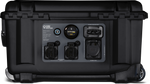 Batt Pack Energy | 3kW
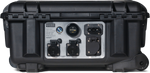 Batt Pack Pro | 5kW
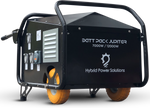 Batt Pack Jupiter | 7kW
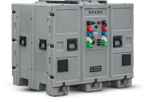 Spark Cube | 12kW/24kW
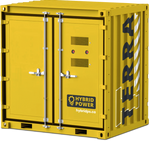 TERRA | 166kVA
Resources

How to Rent Emergency Power Generators Effectively
Understanding emergency power generator rental is essential. A hybrid battery-based system beats a conventional generator rental for emergency and mission-critical deployment when the site needs rapid mobilization, low acoustic and thermal signature, and reduced fuel logistics rather than the lowest daily rental rate. These LiFePO4 systems accept multiple charging inputs, solar, alternator, grid, or a generator, so they run continuously without constant refueling convoys. For defence, rental fleets, and construction sites, the deciding factors are power tier (kW/kWh needed), runtime under load, cold-weather performance to -30°C, and how fast the unit can be on-site and operational.
What You'll Need Before Choosing an Emergency Power Generator Rental Alternative
Four inputs determine whether a hybrid battery system or a diesel rental is the right call: load profile, runtime window, ambient temperature, and noise or emissions limits at the site.
Before comparing an emergency power generator rental against a hybrid battery system, get these numbers down on paper. Skipping this step is why buyers end up over-fueling a site or under-sizing a battery pack mid-deployment.
- Site load profile, total kW draw and which loads run simultaneously (lighting, tools, comms, radar, cold-chain equipment).
- Required runtime window, hours per day and total mission duration, since this determines whether you need a single-charge pack or a system with continuous recharge inputs.
- Ambient temperature range, cold-weather sites need equipment rated for sustained sub-zero operation, not just a cold-start spec.
- Noise and emissions constraints, regulated job sites, urban deployments, and forward operating positions often cap acceptable decibel levels and prohibit visible exhaust or heat signature.
Why LiFePO4 Battery Systems Are Preferred Over Conventional Lithium-Ion
LiFePO4 (lithium iron phosphate) is specified over generic lithium-ion in industrial and defence deployments because it holds up better under continuous duty cycling and carries a lower thermal runaway risk. Generic lithium-ion chemistries, the kind found in consumer power stations, degrade faster under repeated deep discharge and run hotter under sustained load, which matters when a unit is expected to cycle daily for months on a job site or FOB. LiFePO4's longer cycle life and more stable thermal behaviour translate directly into lower replacement frequency and safer operation in enclosed or high-heat environments.
What 'Hybrid' Means and Which Inputs These Systems Accept
"Hybrid" here means the system charges from more than one source, solar, vehicle alternator, grid power, or a generator, instead of depending on a single fuel supply chain. That flexibility is the core difference from a rented diesel unit, which only runs as long as someone keeps the fuel tank filled. A hybrid unit can top up from a solar array during the day, switch to alternator charging during vehicle movement, or accept grid power when it's available, cutting the resupply convoys that diesel-only operations require.
Power tier is the last variable, and it has to be settled before any rental-versus-buy math makes sense. Battery-based systems span a wide range: single-operator packs sized for tools and comms, mid-tier units for a job trailer or command post, and whole-site hybrid microgrids capable of running a forward operating base or a multi-crew construction site. Hybridps configures across that entire range, from the Batt Pack Energy 3kW up through Spark Cube 12/24kW and the TERRA hybrid microgrid, so sizing the load correctly is what determines which tier, and which comparison, actually applies.
Calculate the Power Output and Runtime Your Site Actually Needs
Size the system to your connected load in kW and your required runtime in hours, not to a generic kVA rating pulled from a diesel spec sheet. Most emergency power generator rental decisions go wrong at this first step, because a diesel unit is oversized "for safety" while a battery-hybrid system needs precise load math to run efficiently.
How to Calculate the Right kW and kWh Capacity for Your Application
- List every device or circuit that will draw power simultaneously and add up the continuous connected load in kW, lighting towers, communications gear, tools, pumps, or drone charging stations.
- Separate peak or startup surge from that continuous figure. Motors, compressors, and some pumps draw a short surge well above their running wattage, and undersizing for that spike is the most common field failure mode.
- Match the total to a platform class rather than a single unit rating. Single-tool and small field-team loads fit the Batt Pack Energy 3kW, Pro 5kW, or Jupiter 7kW tier. Multi-circuit job sites, several trades running tools and lighting off one distribution point, fit the Spark Cube 12/24kW class. Whole-site or forward operating base loads, where you're running a command post, refrigeration, communications, and vehicle charging together, call for a microgrid-scale platform like TERRA at 167 kVA continuous and 250 kVA peak.
- Confirm the duration you need power for, in hours or days, before selecting battery capacity.
What Continuous Runtime and Cold-Weather Performance to Expect
Runtime is a function of stored kWh and recharge input, not the kW rating alone, so two systems with identical output can behave very differently over a 72-hour deployment.
A battery-only pack runs until its kWh is depleted and then needs a recharge plan, solar, grid, or a generator brought in to top it up. A hybrid multi-input system, by contrast, accepts solar, alternator, grid, or generator charging concurrently with output, so it doesn't force a shutdown-and-recharge cycle. TERRA's 162 kWh capacity paired with multi-input charging is built for that continuous-duty case, where an emergency power generator rental would otherwise mean rotating fuel deliveries to keep a diesel unit running.
Cold weather changes the calculation further. Hybrid Power Solutions systems are rated to operate down to -30°C, which matters directly for northern, Arctic, and defence deployments where diesel units risk cold-start failure or fuel gelling before a job even begins. Sizing for cold-weather derating, checking that your chosen tier still meets load at the coldest expected temperature, belongs in the same calculation as kW and kWh, not as an afterthought.
Verify Fuel Logistics, Noise, and Emissions Reduction Against a Diesel Alternative
Compare a diesel unit and a hybrid system on four measurable factors, fuel logistics, acoustic/thermal signature, emissions compliance, and total operating cost, before signing any contract.
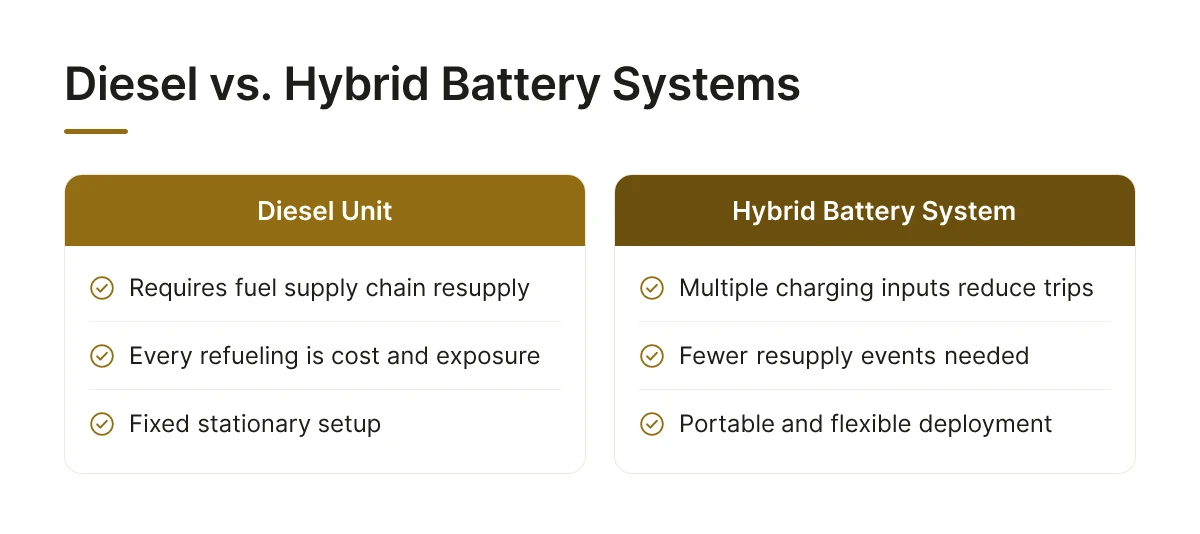
Diesel-based emergency power generator rental depends on a supply chain that has to keep moving: fuel trucks, storage bladders or tanks on site, and a resupply schedule that can't slip. Every refueling convoy is a cost line and, on a forward operating base, an exposure event. A hybrid battery system with multiple charging inputs, solar, alternator, grid, or generator, cuts the number of resupply trips needed to keep a site running, because the battery bank carries load between charge cycles instead of burning fuel continuously.
For defence sites, acoustic and thermal signature matter as much as fuel volume. A running diesel generator emits continuous engine noise and a heat plume detectable by thermal imaging from a distance, a factor separate from operator comfort. Hybrid systems designed for tactical use, including drone recharging at forward positions, draw down silently and shed less heat, which changes what's detectable, not just what's tolerable on site.
What Total Cost of Ownership Looks Like Over a Deployment Cycle
Diesel rental cost doesn't stop at the daily or weekly rate, fuel, delivery, and scheduled engine maintenance recur for as long as the unit runs. A hybrid system shifts spending toward the unit itself, with lower running overhead once deployed. Hybrid Power Solutions' Batt Pack and Spark Cube lines are built around this shift: the cost sits upfront in the hardware, not in a fuel bill that grows every week the deployment extends.
How Much Fuel and Maintenance Cost These Systems Can Eliminate
Every gallon a diesel unit doesn't burn is a gallon that didn't need trucking, storing, or guarding. Maintenance follows the same logic, an engine running continuous hours needs oil changes, filters, and downtime for service; a battery-based system with proper thermal management needs far less scheduled intervention. This is the case whether the site is a construction job running overnight for noise compliance, a rental fleet unit that needs to sit idle for weeks without degrading, or a forward operating base where every maintenance visit is a logistics event.
Environmental compliance adds another filter diesel can't always clear: emissions restrictions on regulated job sites, indoor or enclosed-space work where exhaust isn't an option, and municipal noise ordinances that cap decibel levels a diesel engine exceeds by design.
Compare Deployment Speed and Multi-Input Capability Before You Commit
Mobilization time and charging flexibility separate hybrid battery platforms from stationary diesel setups more than any spec sheet claim about runtime or noise. Before you sign a contract for emergency power generator rental, map both factors against your site conditions.
What Rapid Mobilization Looks Like for Portable Hybrid Units
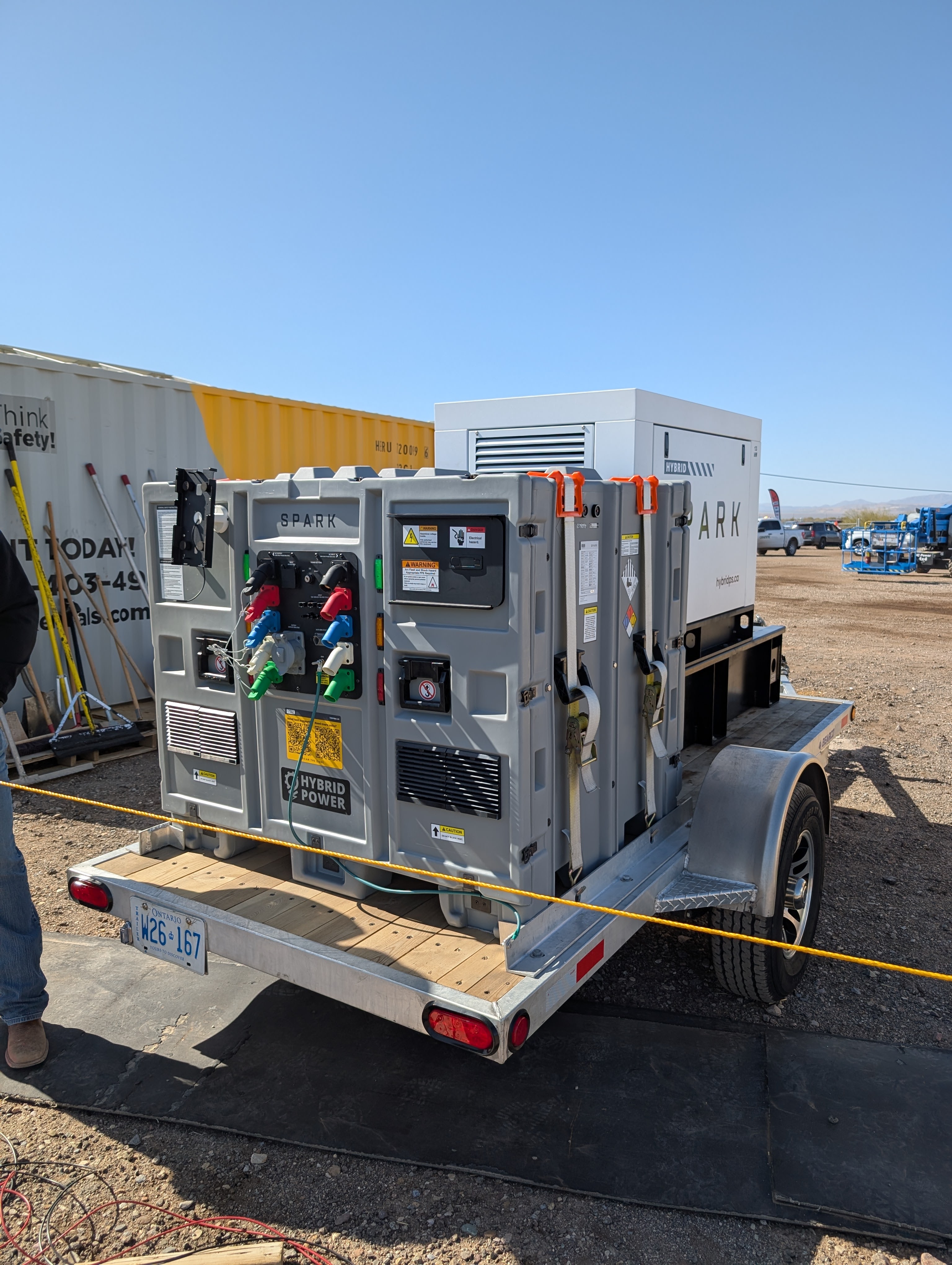
A towable trailer-mounted battery system rolls onto site, connects through a spider box for distributed loads, and starts delivering power in the time it takes to park and cable up. There's no fuel delivery to schedule, no containment berm to inspect, and no combustion permit to file with a local authority.
Stationary diesel generators carry a different overhead. Larger units often require site prep, a level pad, exhaust clearance, fuel storage permitting, and in some jurisdictions, noise variance applications before the unit can legally run overnight. That overhead compounds when a project needs power fast, which is precisely the scenario emergency power generator rental exists to solve.
For rental fleets, this difference shows up directly in fleet utilization: a hybrid unit that mobilizes in hours instead of days turns over more contracts per quarter.
| Factor | Hybrid Multi-Input System | Traditional Diesel Rental |
|---|---|---|
| Mobilization time | Hours, tow, connect, run | Often 1-2 days for permitting and pad prep |
| Refuelling dependency | None required for battery-only runtime; optional generator input for extended jobs | Continuous, fuel trucks on a fixed schedule |
| Noise/signature | Silent battery operation, low thermal signature | Audible combustion noise, exhaust heat signature |
| Cold-weather reliability | Rated to -30°C, no cold-start or fuel gelling risk | Cold-start failures and fuel gelling common below freezing |
| Input flexibility | Solar, alternator, grid, or generator charging | Diesel fuel only |
How Multi-Input Platforms Reduce Downtime on Extended Deployments
Multi-input capability means the same unit recharges from whatever power source happens to be available, cutting the downtime that fuel-dependent generators can't avoid. On a mixed-use site, a Batt Pack Pro or Jupiter unit can top up from a work truck alternator during the day and grid power overnight, without a fuel truck ever showing up.
That flexibility matters most on deployments where resupply is unpredictable, a defence forward operating base with constrained convoy schedules, or a construction site where the fuel contractor misses a delivery window. A hybrid system doesn't stall; it draws from the next available input and keeps running.
Pricing scales with power class, not complexity of use. Portable Batt Pack units sit in a budget-friendly to mid-range tier for single-tool or small-site jobs. Spark Cube systems occupy a mid-range to premium tier for larger job-site loads, and TERRA-class hybrid microgrids sit at the premium/enterprise tier reserved for whole-site or forward-operating-base power. Rental fleets evaluating a buy-or-rent program should size against duty cycle, not just upfront cost. Construction sites typically fit Batt Pack Pro or Jupiter for overnight silent power, while defence sites requiring continuous, high-capacity output should evaluate a TERRA hybrid microgrid or mobile hybrid microgrid configuration built for forward deployment.
Avoid These Common Mistakes When Evaluating Emergency Power Options
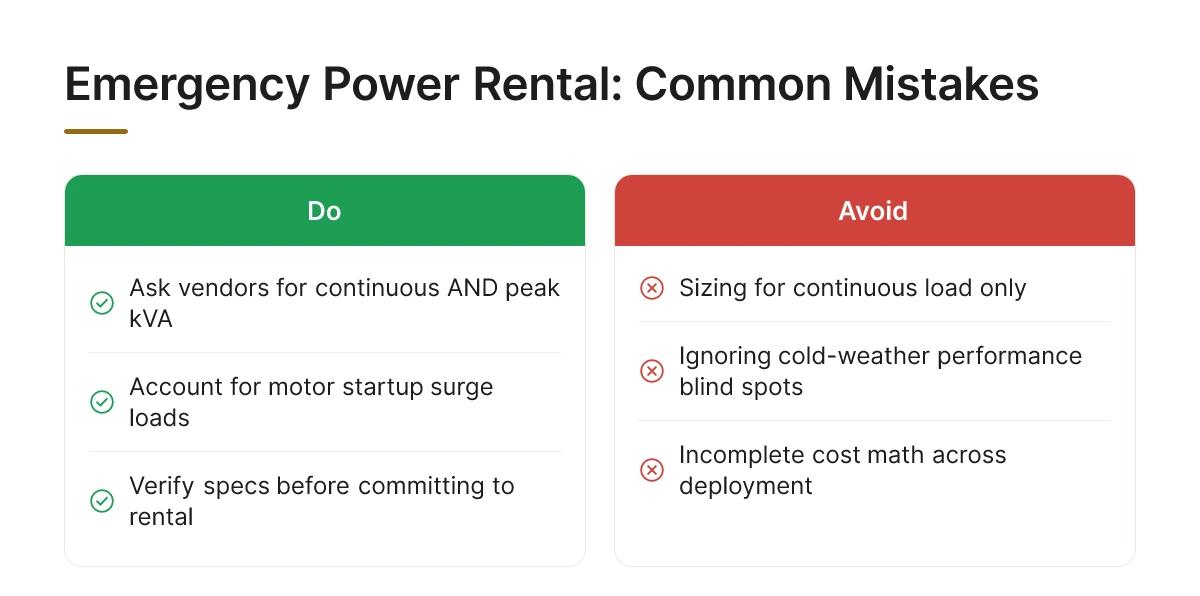
Most procurement errors in emergency power generator rental come down to five recurring gaps: undersized capacity, misjudged runtime, cold-weather blind spots, incomplete cost math, and unverified specs.
- Sizing for continuous load only. Motors, compressors, and drone charging stations pull a surge well above their running wattage at startup. A system sized to the nameplate continuous rating alone will trip or brown out the moment two loads start together. Ask any vendor for both continuous and peak kVA figures before committing, the Batt Pack Jupiter's 7kW rating and Spark Cube's 12/24kW range exist precisely because job sites stack loads unpredictably.
- Assuming a battery-only pack behaves like a hybrid system. A recharge-dependent unit works fine for a few hours of tool power, but on a multi-week deployment it needs a wall outlet or a generator to top up, defeating the point of going off-grid. A true hybrid system accepts solar, alternator, grid, and generator inputs, so it keeps running indefinitely instead of waiting on a charge cycle. Confusing the two is the single most common evaluation error we see from buyers comparing spec sheets side by side.
- Ignoring cold-weather derating. Battery capacity and diesel performance both drop in sub-zero conditions, and generic marketing specs rarely disclose the temperature they were tested at. Northern and winter deployments need a published, verified cold-weather rating, not an assumption. Systems engineered and tested to -30°C, like Hybridps's Batt Pack and TERRA lines, remove this guesswork; systems without a stated rating should be treated as unproven in Arctic conditions.
- Comparing daily rental rates without full-cycle cost. A lower sticker price on a diesel unit ignores fuel delivery logistics, refuelling labour, filter changes, and the downtime when a mechanic has to visit a remote site. Total cost of ownership over the full deployment, not the daily rate, is the number that matters.
- Trusting marketing copy over published specs. Verify kVA, kWh, and temperature ratings directly against the manufacturer's published documentation before signing a contract. For sites with unusual load profiles, request a demo or review buy-or-rent options against your actual power draw rather than a generic brochure figure.
Frequently Asked Questions
Why are LiFePO4 battery systems preferred over conventional lithium-ion for industrial emergency power?
LiFePO4 (lithium iron phosphate) chemistry offers longer cycle life and greater thermal stability than generic lithium-ion, which matters when a unit sits in standby for months and then needs to perform on demand. Hybridps builds its Batt Pack Energy, Pro, and Jupiter lines on LiFePO4 specifically for this reason. For a site running daily charge-discharge cycles across a multi-year deployment, that stability translates directly into fewer replacements and more predictable performance in cold weather.
Which defence, industrial, and emergency response scenarios benefit most from hybrid power deployment?
Forward operating bases, mining sites, construction jobs, and disaster-relief operations gain the most from hybrid deployment because they combine remote location with zero tolerance for power failure. Drone recharging stations at tactical and agricultural sites also benefit, since battery packs deliver stable output without the noise or fuel logistics of a generator running continuously nearby. Equipment rental fleets serving these sectors see similar advantages from lower maintenance overhead.
How do noise and thermal signature drive the choice toward hybrid systems on mission-critical sites?
Low acoustic and thermal signature reduces detectability on tactical sites and eliminates noise violations on regulated civilian job sites. A diesel generator running overnight produces both engine noise and a heat signature that can compromise a forward position. Battery-based systems like Hybridps units operate silently, with no exhaust heat plume, which matters for both military concealment and residential-adjacent construction compliance.
What does rapid mobilization look like for portable hybrid units versus stationary diesel generators?
Rapid mobilization means a single operator can deploy a portable hybrid unit within minutes, without fuel delivery, permitting delays, or heavy lifting equipment. A Batt Pack Jupiter 7kW or a Spark Cube 12/24kW can be trailered or hand-carried to a forward site and connected immediately. Stationary diesel generators typically require fuel trucks, containment planning, and longer setup windows before they produce usable power.
How do multi-input hybrid platforms extend mission capability and reduce downtime?
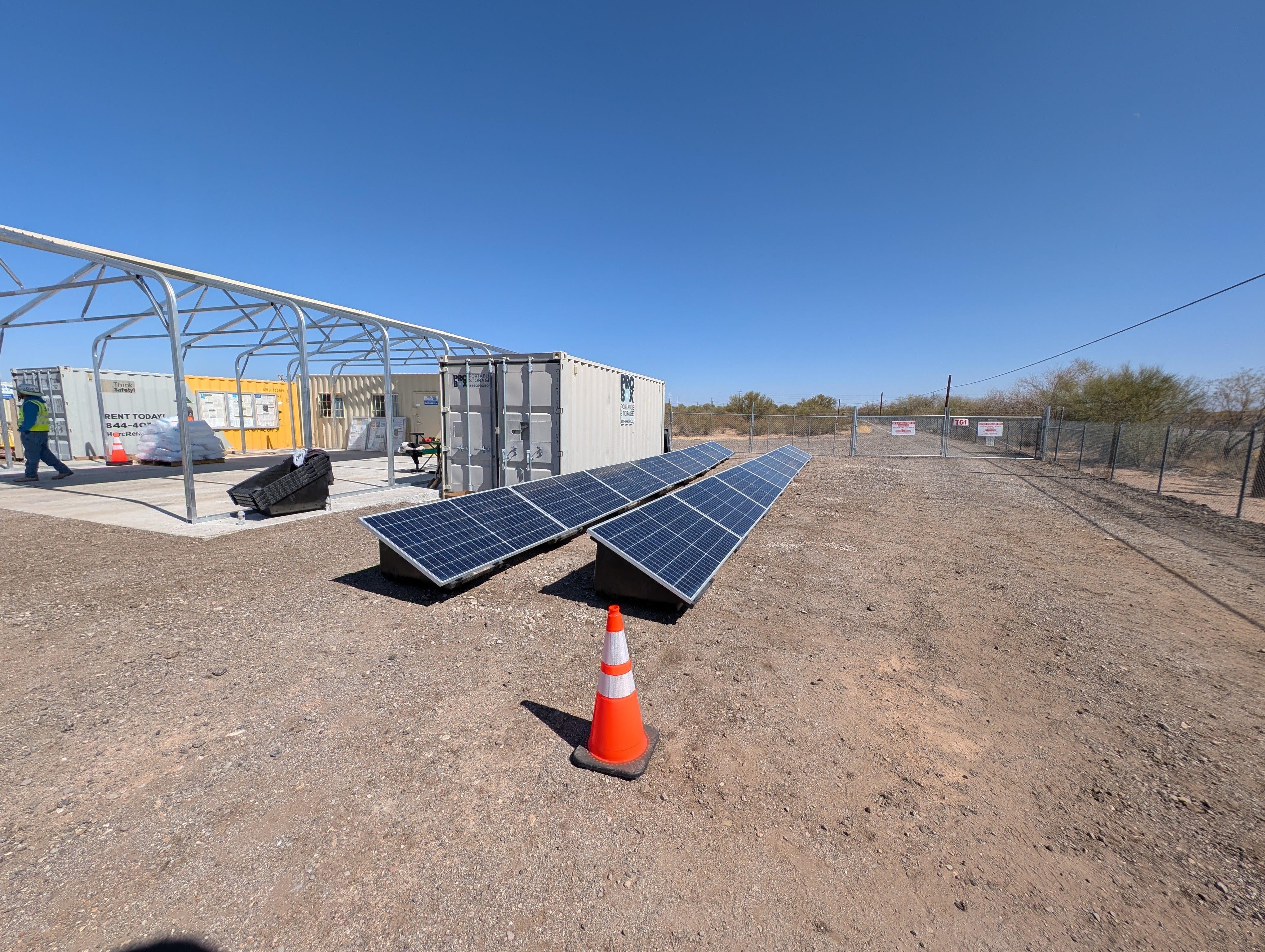
Multi-input platforms accept solar, alternator, grid, or generator charging, so a deployment never depends on a single fuel or power source. If solar output drops on a cloudy day, the system recharges from a vehicle alternator or small generator instead of going dark. Hybridps designs its TERRA and Spark Cube systems around this flexibility, which keeps continuous runtime intact across long, unpredictable deployments.
Conclusion
Renting or deploying emergency power no longer means defaulting to a diesel generator and a fuel truck. The real decision points are runtime continuity, acoustic and thermal signature, and how fast a unit can reach a site without a supply convoy. LiFePO4 hybrid systems with multi-input charging address all three, whether the deployment is a forward operating base, a rental fleet job site, or a disaster-relief zone.
Start by mapping your site's actual load profile and deployment window, then compare that against a Batt Pack, Spark Cube, or TERRA configuration through Hybridps's Request a Demo page.
Recommended Articles
Explore more from our content library: