

Products
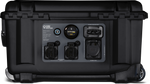 Batt Pack Energy | 3kW
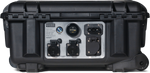 Batt Pack Pro | 5kW
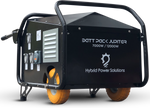 Batt Pack Jupiter | 7kW
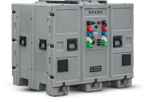 Spark Cube | 12kW/24kW
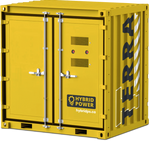 TERRA | 166kVA
Resources

Guide to Portable Hybrid Power Units for Field Operations
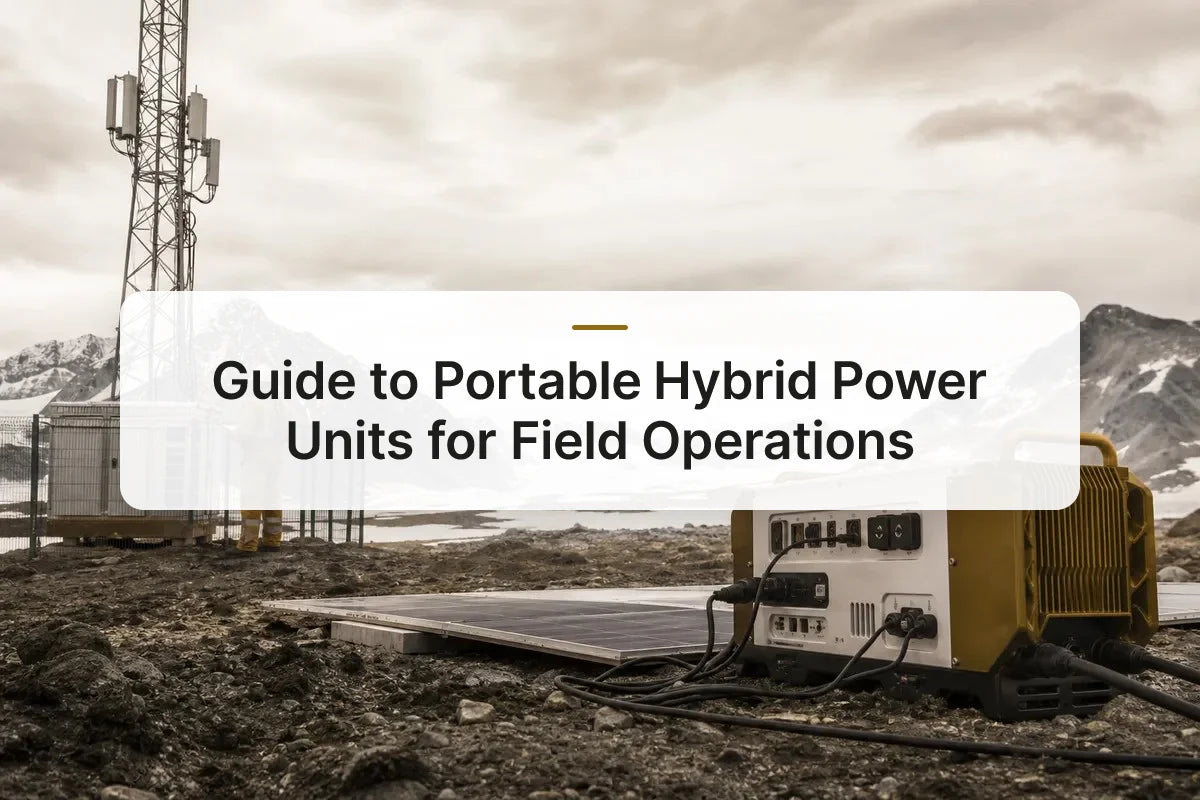
Understanding portable hybrid power units is essential. A portable hybrid power unit differs from a diesel generator or battery-only system by combining LiFePO4 battery storage with multiple charging inputs—solar, alternator, grid, and fuel—so operators get silent runtime plus a fuel-backed reserve for extended missions. This matters most in defence, rental, and construction fields where fuel convoys, acoustic signature, and unplanned downtime carry real operational and safety costs. Units range from 3kW portable packs to 167 kVA continuous hybrid microgrids, letting teams match power tier to mission size rather than overbuilding or running out of charge.
What Makes Portable Hybrid Power Units Different From Diesel Generators or Battery-Only Systems?
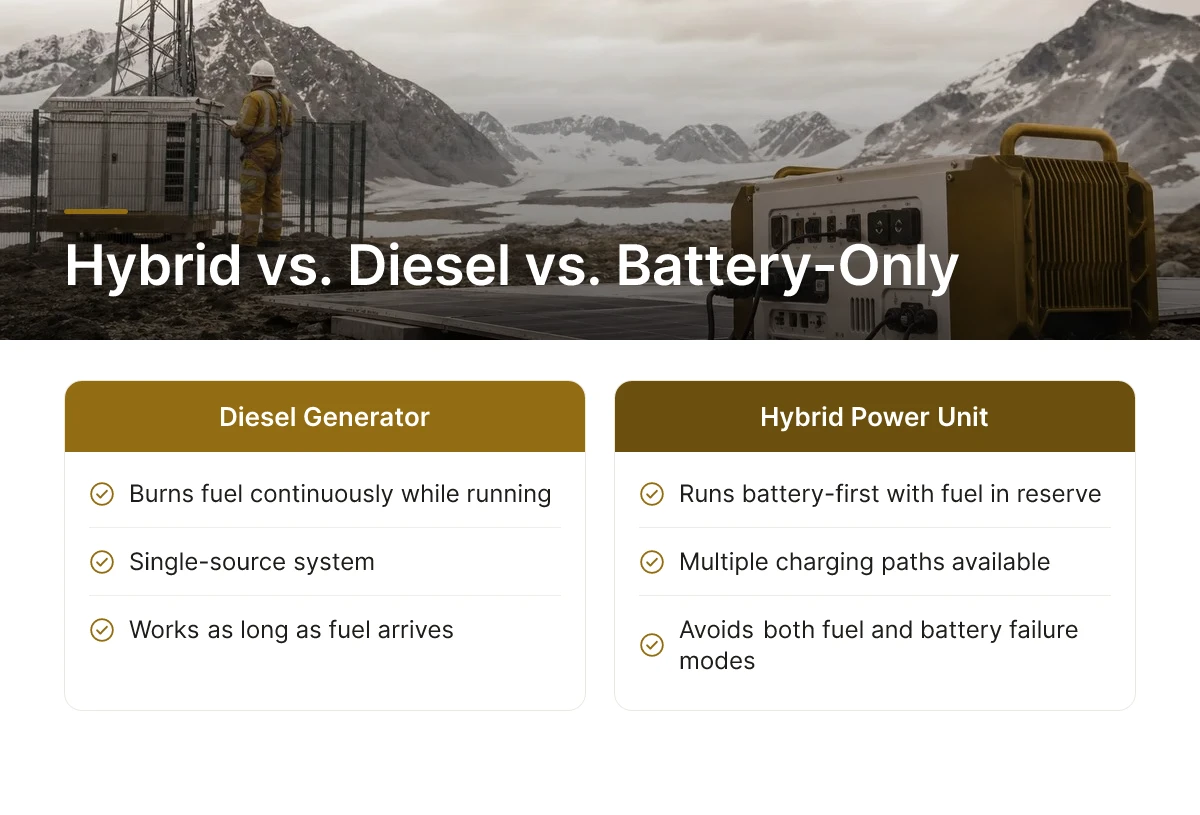
The structural difference is simple: hybrid units run battery-first with fuel or grid power held in reserve, while diesel generators burn fuel continuously and battery-only packs stop when their charge runs out.
A diesel generator is a single-source system, it works as long as fuel keeps arriving, and nothing else. A battery-only pack is also single-source, just inverted: it runs clean and silent until the cells drain, then it's dead weight until someone finds an outlet or a truck. Portable hybrid power units avoid both failure modes by pairing a battery bank with multiple charging paths, solar, vehicle alternator, grid, or a generator, so the unit draws down its stored charge for silent operation, then tops up from whichever input is available on site. Fuel becomes a backup and range-extender, not the primary power source.
Why Do Defense and Industrial Operators Prefer Hybrid Units Over Pure Diesel or Pure Battery Solutions?
Defence and industrial teams favour hybrid systems because they cut resupply trips, lower acoustic and thermal signature, and remove the single point of failure that comes with fuel-only or battery-only designs.
The U.S. Army has started treating battlefield power as its own sustainment domain rather than a footnote inside fuel and generator logistics, a shift driven by the growing electrical demands of drone swarms, sensors, and networked command posts [1]. That reframing matters because every fuel convoy is a target and every generator running at a forward position gives off noise and heat that can be tracked. A battery-first hybrid unit reduces how often a convoy needs to move fuel forward, and it runs silent when the load allows it, no engine noise, no exhaust plume, no thermal signature bleeding through a thermal scope. Industrial site managers care about a quieter version of the same problem: noise ordinances, fuel theft, and generator downtime during a fuel run.
How Do Hybrid Units Reduce Fuel Logistics, Acoustic Signature, and Emissions Compared to Traditional Generators?
Hybrid units pull most of their runtime from stored battery charge and call on fuel or grid power only when the battery needs topping up, not continuously.
That's also where hybrid beats battery-only for anything longer than a short mission. A fixed battery pack has a hard ceiling, once it's empty in the field with no recharge path, the mission stops. A hybrid system with solar, alternator, grid, and generator inputs keeps recharging indefinitely, which is the entire point of a multi-input design over a sealed battery brick. Chemistry matters here too: Hybridps units run LiFePO4 (lithium iron phosphate), not the generic lithium-ion cells found in many consumer packs, LiFePO4 holds up to more charge cycles and carries a lower thermal runaway risk, which matters when a unit sits in a hot vehicle bay or a cold FOB for months. Hybridps's range also scales past briefcase-class packs: Batt Pack Energy, Pro, and Jupiter cover 3kW to 7kW portable tiers, Spark Cube reaches 12/24kW, and TERRA scales to 167 kVA continuous for whole-site or microgrid deployments.
How Do Portable Hybrid Power Units Handle Multiple Inputs in the Field?
Portable hybrid power units draw from the battery bank by default and only call on fuel or grid power when a threshold in demand or state-of-charge is crossed. A battery management system monitors load and charge level continuously, deciding in real time which input, if any, needs to activate.
This automatic source-switching is the core of what separates a hybrid system from a generator with a battery bolted on. The unit doesn't wait for an operator to flip a switch when the battery dips below a set point or a load spike exceeds what the inverter can sustain from storage alone. It pulls from whichever input is connected and appropriate, solar, alternator, grid, or generator, to recharge the bank rather than feed the load directly in most configurations.
What Are the Charging Speeds and Efficiency Trade-Offs Across Solar, AC, Alternator, and Generator Inputs?
Each input type carries a different trade-off between speed, silence, and fuel dependence. Solar charging is the slowest of the four but produces no noise and burns no fuel, making it well suited to static positions like a forward operating base with unobstructed sky access. Alternator charging works opportunistically, it tops up the battery bank while a vehicle is already moving between positions, at no additional fuel cost beyond what the vehicle burns anyway. Grid or shore power, where available, is typically the fastest way to bring a bank back to full charge. Generator input recharges the battery bank rather than powering connected loads directly, which lets the generator run at a steady, efficient load point instead of cycling up and down with demand swings [3].
Can a Hybrid Unit Run Continuously on Battery Alone, and When Does It Switch to Fuel or External Power?
Yes, battery-only operation can sustain a silent window for as long as the state of charge holds, with fuel or external power held in reserve for load spikes or extended runtime beyond the bank's capacity. This is the operating mode that matters most for a low-acoustic and low-thermal signature at a tactical position, where running a generator continuously defeats the purpose of deploying a hybrid system in the first place [5].
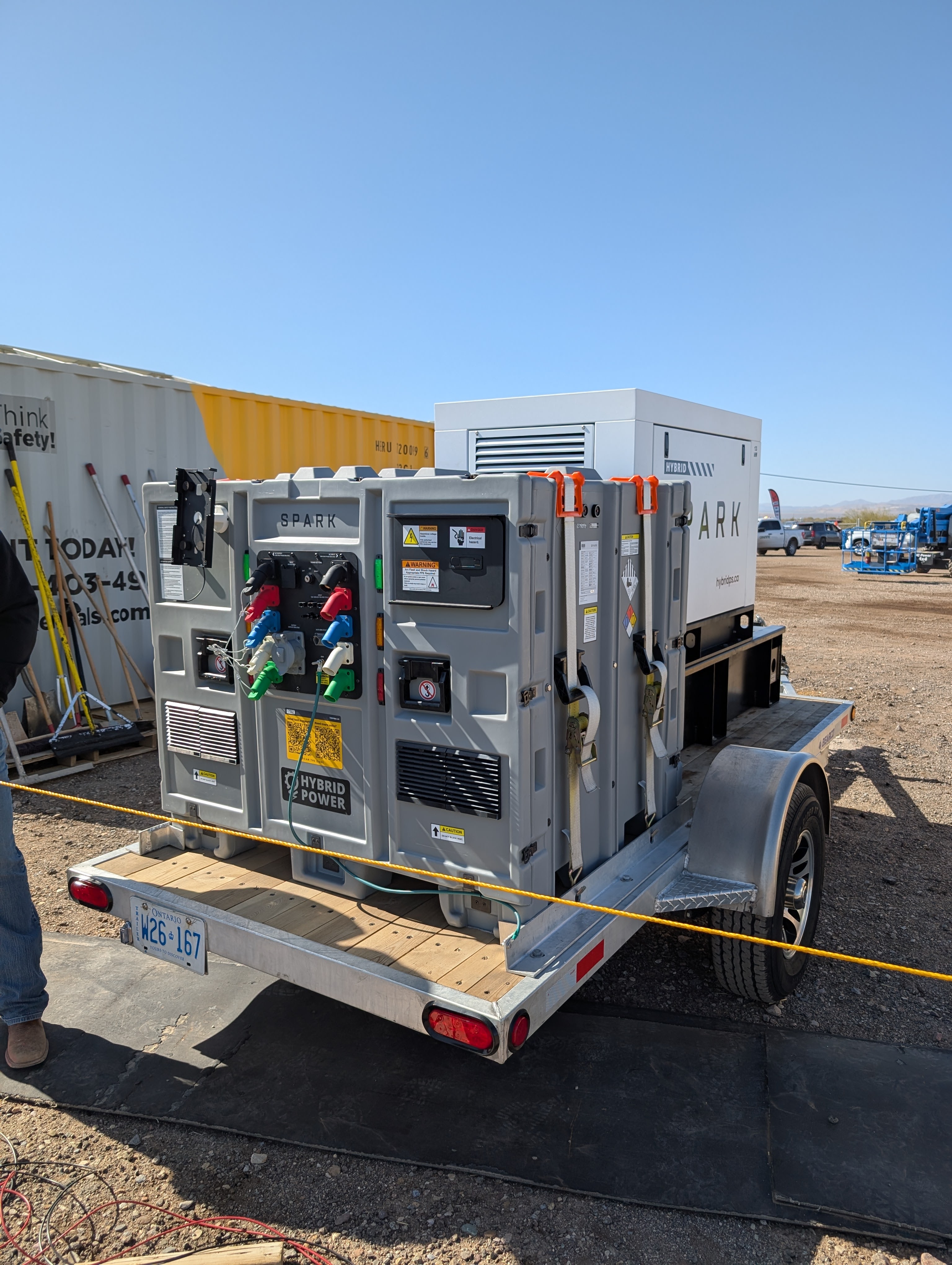
Hybridps builds this multi-input logic into the Spark Cube 12/24kW and the TERRA hybrid microgrid, both engineered to accept solar, alternator, grid, and generator charging on the same unit. That architecture matters directly for drone recharging and FOB setups, where the available input at any given moment may shift, solar during the day, a generator or vehicle alternator after dark, and the system needs to manage the switch without operator intervention.
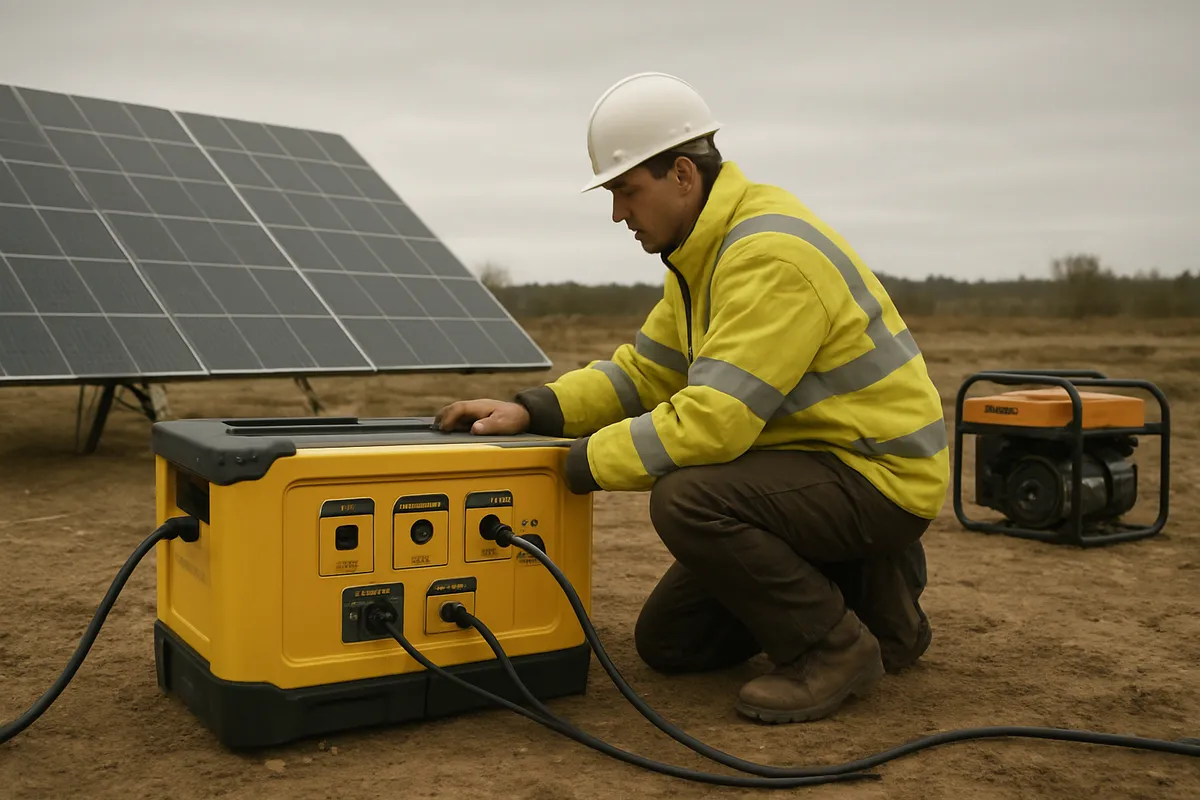
What Runtime and Efficiency Can You Expect Under Real Operational Loads?
Runtime on portable hybrid power units depends far more on load level and ambient temperature than on battery capacity alone, a unit running at half load will outlast the same unit at full load by a wide margin, and cold weather changes the math again.
How Do 50% and 100% Load Conditions Affect Runtime, Fuel Burn, and Battery Cycle Life?
A battery pack running a job site at roughly 50% of its rated capacity draws down its stored energy at a slower rate, which extends the window before a generator or grid input needs to step in. Push the same unit to 100% load and the battery works harder per hour, reserves fall faster, and any hybrid generator input in the system cycles on sooner to support the draw. This is the core trade-off site planners weigh: running equipment closer to rated capacity gets the job done faster, but it shortens the silent, fuel-free window and shifts more of the runtime burden onto fuel support.
Cycle life follows a similar logic. LiFePO4 chemistry, the chemistry behind Hybridps Batt Pack Energy, Pro, and Jupiter units, tolerates repeated partial-discharge cycles without the steep degradation curve seen in generic lithium-ion packs pushed through deep discharges. Field operations rarely draw a battery to empty before recharging; they cycle between partial states of charge throughout a shift. LiFePO4's chemical structure handles that pattern with less capacity loss over time than cheaper lithium chemistries, which is one reason it's become the standard for ruggedized field equipment rather than a marketing footnote.
What Cold-Weather Performance and Thermal Management Should You Expect at -30°C and Below?
Hybridps systems are rated to -30°C, a spec that matters directly to northern job sites, Arctic-adjacent defence deployments, and winter construction where diesel generators face fuel gelling and cold-start failures. Battery chemistry is temperature-sensitive by nature, cold slows the internal chemical reactions that deliver current, and heat stresses components if not managed. Thermal management systems inside the unit exist to keep the battery operating inside its designed range so the pack sustains rated output instead of derating when temperatures swing to either extreme.
That distinction matters operationally. A unit that quietly loses capacity in the cold isn't reliable, even if its spec sheet looks fine at room temperature. Sourcing and understanding a -30°C rating, and confirming it's tested, not assumed, is one of the more overlooked steps in evaluating power for remote or seasonal deployments.
How Do You Choose the Right Hybrid Power Unit for Defence, Construction, or Industrial Deployment?
Match unit capacity to load count and mission duration first, then layer in mobility and deployment speed, that sequence prevents both under-sizing and wasted spend on excess capacity.
What Capacity Range Best Matches Specific Mission Profiles and Site Requirements?
A single operator running one tool or a tactical radio kit needs far less power than a five-person construction crew running saws, compressors, and lighting off one circuit. Sizing portable hybrid power units correctly starts with counting simultaneous loads, not peak wattage on a nameplate.
The Batt Pack Energy 3kW and Batt Pack Pro 5kW fit single-tool or single-operator use: a tactical dismount team recharging radios and optics, a drone operator running a charging station between sorties, or a lone tradesperson powering hand tools on a small job site. These are the entry tier, enough continuous output for one workstream, not a whole crew.
Step up to Batt Pack Jupiter 7kW or Spark Cube 12/24kW when the site supports multiple tools or a full crew running concurrent loads, framing crews, welding stations, or a squad-level forward position charging drones, radios, and sensors at once. This tier is where most rental fleet turnover and mid-size construction jobs sit.
At the top end, TERRA delivers 167 kVA continuous (250 kVA peak) and 162 kWh of storage, sized for forward operating bases, whole remote-site power, or mobile hybrid microgrid deployment where dozens of loads run around the clock. This is the tier the U.S. Army's own guidance points toward when it argues that battlefield power needs to be planned as its own sustainment domain rather than folded into fuel and generator logistics as an afterthought [1].
| Product Tier | Continuous Power | Best-Fit Use Case |
|---|---|---|
| Batt Pack Energy 3kW | 3 kW | Single-tool, single-operator tactical/job-site power |
| Batt Pack Pro 5kW | 5 kW | Small crew or extended single-operator deployment |
| Batt Pack Jupiter 7kW | 7 kW | Construction crew, multi-tool job sites |
| Spark Cube 12/24kW | 12–24 kW | Larger crews, rental fleet mid-tier, multi-load sites |
| TERRA | 167 kVA continuous / 250 kVA peak | FOB, whole remote site, mobile hybrid microgrid |
How Do You Size a Hybrid Unit for Rapid Deployment and Multi-Site Logistics?
Fast redeployment across sites depends on the mounting and handling hardware as much as the battery itself. The Towable Trailer Mount lets a rental fleet or construction operator relocate a unit between jobs without a flatbed, while the Spider Box distributes multiple outputs at the point of use, cutting cable runs across a site.
For rental fleets managing turnover between contracts, this combination shortens the gap between jobs and reduces handling labour. Defence readers planning forward-base or multi-site power should look at TERRA and the Mobile Hybrid Microgrid configuration; rental operators evaluating fleet mix should review the Buy or Rent program and Portable Power Packs; construction teams sizing a crew-level deployment should start with Batt Pack Pro or Jupiter.
What Total Cost of Ownership and Maintenance Advantages Do Hybrid Units Deliver Over 5+ Years?
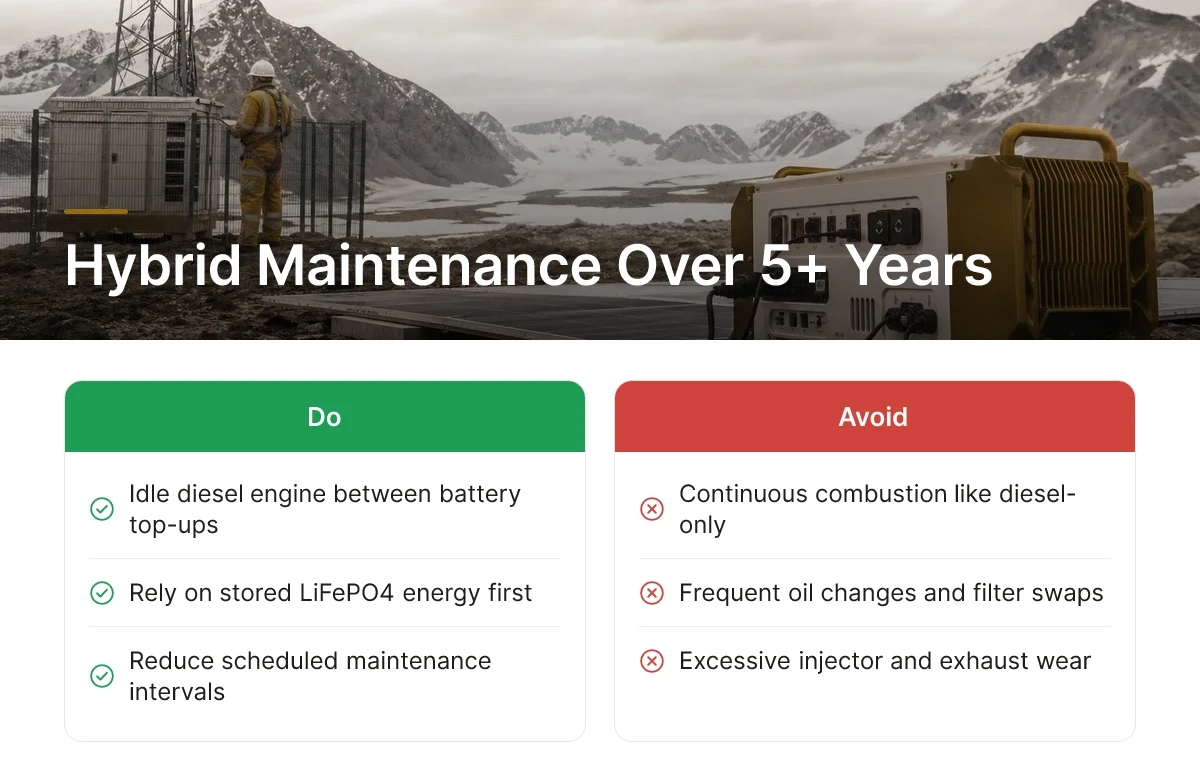
Over a 5+ year deployment, portable hybrid power units cost less to run than diesel-only fleets because fuel purchases and scheduled maintenance both drop sharply.
Diesel generators require continuous combustion whenever they run: fuel injectors, oil circuits, filters, and exhaust components all wear on a fixed schedule regardless of load. A battery-first hybrid system idles the diesel component and draws from stored LiFePO4 energy instead, so the engine only fires when the battery needs a top-up. Fewer running hours means fewer oil changes, filter swaps, and injector inspections, the maintenance clock starts counting down slower.
How Do Fuel Savings, Maintenance Intervals, and Warranty Coverage Compare Across Hybrid, Diesel, and Battery-Only Platforms?
Diesel-only platforms carry the highest ongoing cost because every hour of runtime consumes fuel and advances the maintenance clock at the same rate. Battery-only platforms remove fuel cost entirely but carry a different risk: if a site underestimates load or extends a deployment past the pack's rated cycle life, the operator faces early replacement instead of a top-up. Hybrid systems split the difference. Fuel exists only as a backup extender for the battery, not the primary source, so consumption and resupply frequency both fall well below diesel-only levels.
For defence operators, fewer resupply runs mean fewer convoy movements into contested or remote terrain, a direct reduction in exposure, not just a cost line [1]. For rental and construction fleets, the same mechanic shows up as fewer fuel deliveries and less time coordinating with fuel vendors. Warranty coverage matters here too: ruggedized, field-reliable construction, sealed enclosures, shock-tested housings, cold-rated components, reduces unplanned service calls, which is a durability advantage independent of any specific warranty term.
What Is the Lifecycle Cost Difference When Accounting for Emissions Compliance, Downtime, and Replacement Cycles?
Lifecycle cost favours hybrid platforms once compliance and downtime are counted alongside fuel and parts. Diesel-only units risk noise and emissions penalties on regulated sites, and every unplanned service call is downtime with no power delivered. Battery-only units avoid emissions penalties but concentrate risk into a single event, pack replacement, if cycle life is exceeded.
Pricing across the category spans budget-friendly single-unit packs for a work truck or small crew up to premium, enterprise-tier microgrid deployments supporting a forward operating base or a multi-crew job site, the right tier depends on load and deployment length, not a fixed number. Hybrid Power Solutions builds and assembles its systems in Canada and operates as a publicly traded company across the CSE, OTCQB, and Frankfurt exchanges, which gives procurement teams supply-chain traceability and audit continuity that imported or private competitors can't match over a multi-year contract.
Frequently Asked Questions
Can portable hybrid power units support drone recharging at forward operating bases?
Yes, hybrid battery systems are well suited to drone recharging at FOBs, since they deliver clean, stable DC/AC output without the acoustic or thermal signature of a running generator. This matters for tactical and reconnaissance drone operations where a generator's noise or heat plume can compromise position. Hybridps builds Batt Pack units and larger Spark Cube systems specifically for this kind of multi-load field deployment.
Do hybrid power units require diesel to function, or can they run entirely on battery and solar?
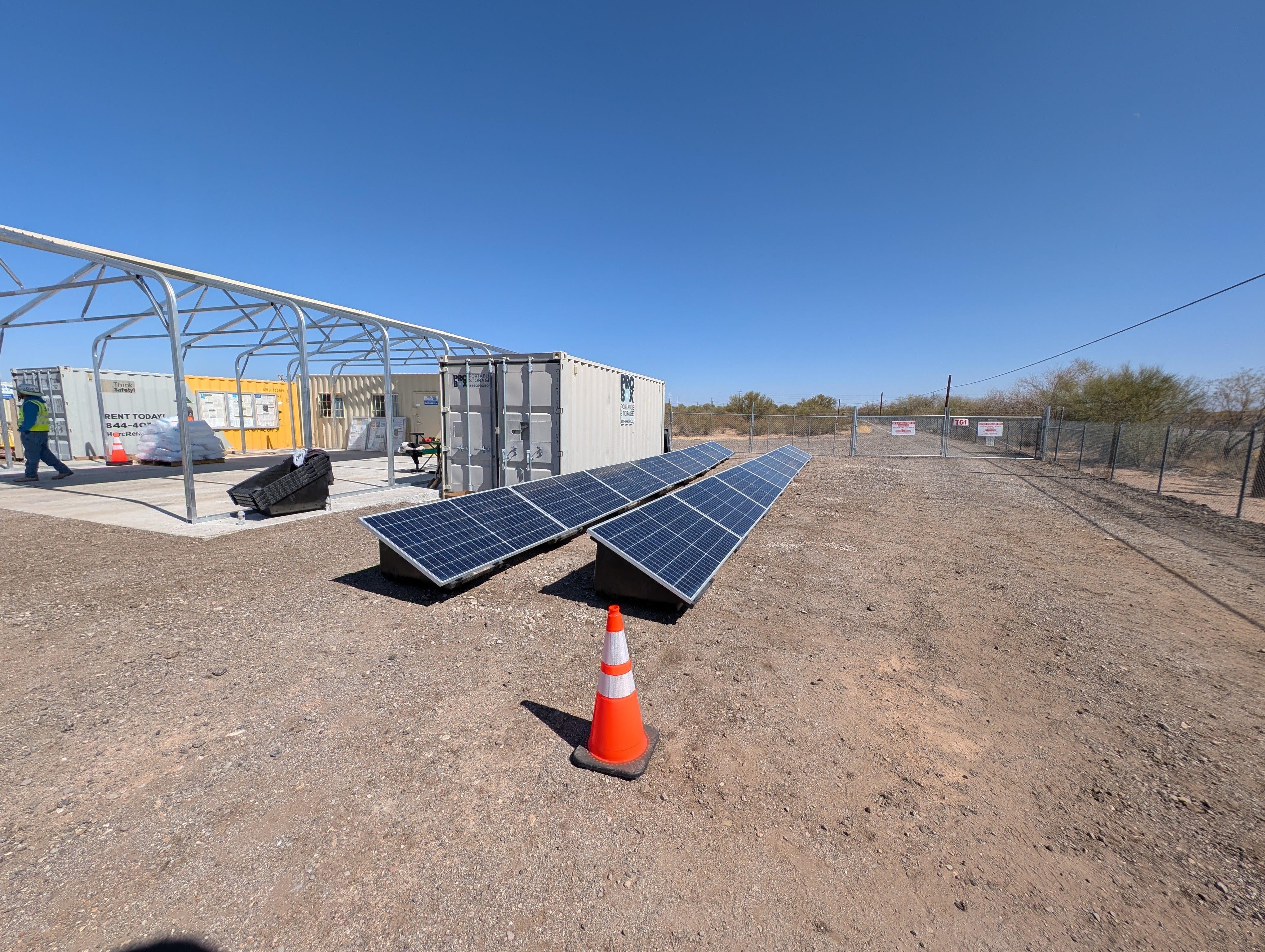
They can run entirely fuel-free on battery and solar, or blend in generator/grid/alternator input when longer runtime is needed. A LiFePO4 pack charged by solar panels alone can power tools, sensors, or drone recharging without any fuel logistics. Larger deployments, like TERRA's hybrid microgrid configuration, add generator input for continuous, extended-duration runtime when solar isn't sufficient.
How does LiFePO4 chemistry differ from standard lithium-ion in field power packs?
LiFePO4 is a lithium-ion subtype with a more stable chemical structure, giving it a longer cycle life and lower thermal runaway risk. That stability matters in field conditions where packs face vibration, heat, and cold cycling over years of use. It's why Hybridps builds its Batt Pack and Spark Cube lines on LiFePO4 rather than generic lithium-ion cells.
Are portable hybrid power units suitable for rental fleets, or are they built for one-time deployment?
They're built for repeat rental deployment, not single-use jobs. Low-maintenance LiFePO4 packs with minimal moving parts hold up across multiple site rotations better than diesel units needing fuel and servicing between rentals. Hybridps offers a buy-or-rent program specifically for fleets that need durable units returning to service quickly.
What makes a hybrid power unit Arctic- or cold-climate-ready?
Cold-climate readiness comes from a battery management system and thermal design rated to operate reliably at extreme low temperatures, not just survive them. Hybridps units are rated to -30°C, avoiding the cold-start failures and fuel gelling that plague diesel generators in northern or winter deployments.
Conclusion
Portable hybrid power units earn their place in defence, rental, and construction operations by solving three problems diesel can't: fuel-logistics burden, acoustic/thermal signature, and cold-weather reliability. The practical takeaway is to match power tier to mission, a Batt Pack for tool-level loads and drone recharging, Spark Cube for multi-load sites, TERRA for whole-site or FOB-scale microgrids. Before your next contract or deployment cycle, audit your current generator fleet's fuel spend and noise/emissions exposure, then request a demo of a Canadian-engineered, -30°C-rated system built for your specific load profile.
Sources & References
- Best Practices on Operationalizing Battlefield Energy | Article | The United States Army
- Military Portable Power Buyer's Guide 2026 | New Use Energy
- Portable Power for Military & Field Teams | Blog, Gletscher Energy
Recommended Articles
Explore more from our content library: