

Produits
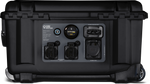 Pack de batteries énergétiques | 3kW
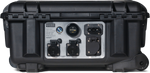 Bloc-batterie Pro | 5 kW
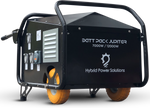 Batterie Jupiter | 7kW
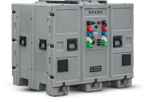 Spark Cube | 12kW/24kW
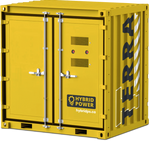 TERRA | 166kVA
Ressources

How an Industrial Hybrid Power Unit Delivers Real Efficiency
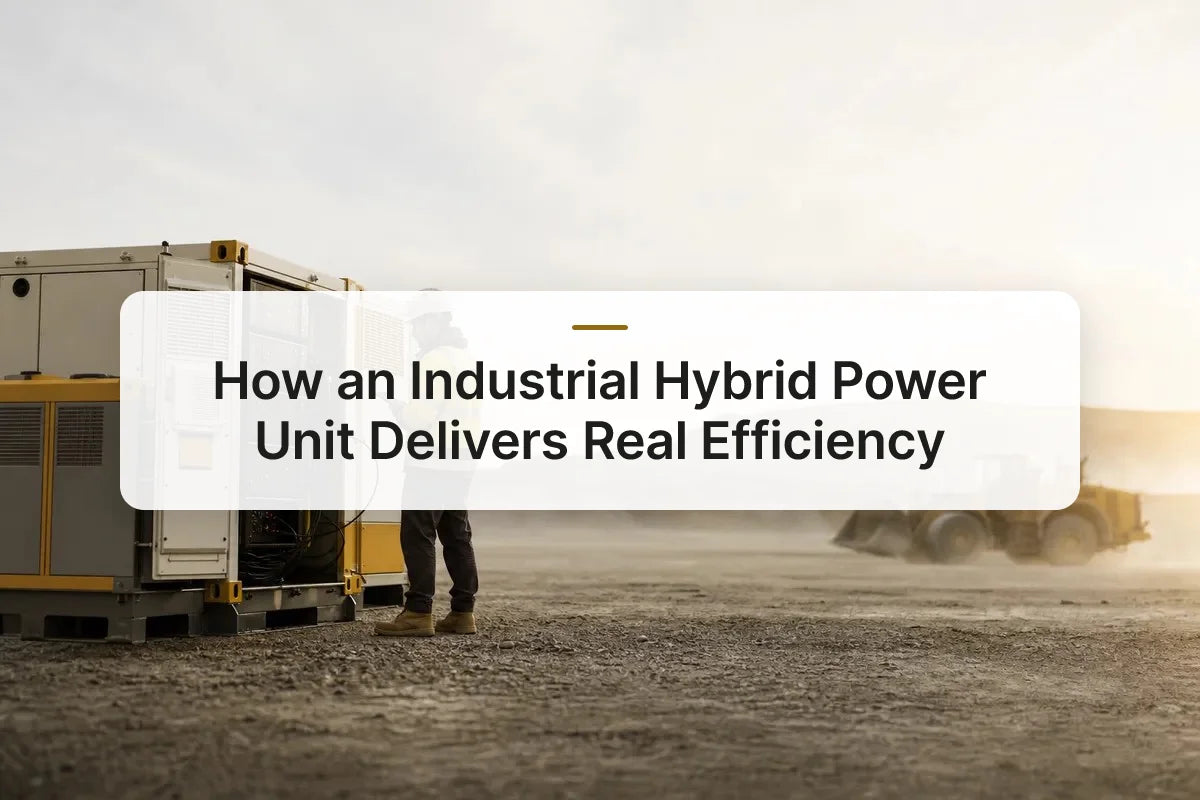
An industrial hybrid power unit combines two or more energy sources, typically a battery storage system, a generator, and renewable inputs such as solar, into a single managed power platform. Unlike a standalone generator, it draws from whichever source is most efficient at any moment, reducing fuel consumption, acoustic signature, and runtime emissions. Purpose-built units like the Hybridps TERRA and Spark Cube are rated for extreme temperatures and continuous industrial loads, making them viable for defence, construction, and remote-site operations where conventional generators fall short.
What Is an Industrial Hybrid Power Unit and How Does It Work?
A hybrid power unit manages multiple energy inputs simultaneously and dispatches power to continuous loads. It is not a consumer UPS or a home battery backup — it is an engineered system designed for sustained, variable industrial demand. This is particularly relevant for industrial hybrid power unit.
What Does Hybrid Power Mean in an Industrial Context?
In an industrial setting, "hybrid" means the system accepts charge from solar panels, a vehicle alternator, grid electricity, or a generator, and routes that energy through a central control layer that decides, in real time, which source powers the load. The dispatch logic prioritises the lowest-cost or most available source, then draws from secondary inputs when the primary source is insufficient.
This is fundamentally different from a consumer power station that simply charges from one source and discharges to another. A hybrid power platform must sustain continuous, variable loads — compressors, lighting arrays, communications equipment, drone charging stations — without interruption when a source drops out.
LiFePO4 (lithium iron phosphate) chemistry is the correct choice for this duty cycle, not generic lithium-ion. LiFePO4 cells maintain stable thermal behaviour down to -30°C, where other lithium chemistries lose capacity sharply or enter thermal runaway risk. Under deep-discharge conditions typical of remote-site operations, LiFePO4 also delivers significantly more usable cycles before capacity degrades — a critical factor when the unit cannot be serviced easily in the field. In enclosed or vehicle-mounted deployments, the chemistry's inherent stability eliminates the fire risk associated with higher-energy-density lithium formulations.
What Smart Technologies Are Integrated into Modern Hybrid Power Solutions?
The battery management system (BMS) is the control mechanism that makes multi-input operation safe and reliable. It balances charge across individual cells, protects against over-voltage and over-discharge, and holds output voltage within the tight tolerances that industrial loads require — even when input power fluctuates between a partially shaded solar array and a generator running under variable RPM.
Thermal management is where engineering discipline separates field-ready units from spec-sheet products. At -30°C, electrochemical reactions inside any battery cell slow dramatically, reducing both charge acceptance and discharge capacity. A properly rated unit actively manages cell temperature through insulation and controlled heating circuits, keeping the BMS within its operating window before the first load draw of the day.
Hybridps builds this architecture across a tiered product range to match application scale. The Batt Pack Energy (3 kW), Pro (5 kW), and Jupiter (7 kW) cover portable and mid-site deployments. The Spark Cube steps up to 12 kW and 24 kW for heavier continuous loads. The TERRA, rated at 167 kVA with 162 kWh of storage, addresses large-scale remote-site and defence applications where a single unit must anchor a microgrid. Each tier shares the same LiFePO4 chemistry, multi-input architecture, and -30°C cold-weather rating.
How Does the Dispatch Logic Manage Multiple Inputs Simultaneously?
The dispatch logic inside a modern hybrid power system operates continuously in the background, evaluating source availability, state of charge, and load demand to determine the optimal draw sequence. When solar irradiance is sufficient, the system routes that input directly to the load and simultaneously tops up the battery bank. When irradiance drops — due to cloud cover or nightfall — the BMS shifts draw to stored battery energy without any interruption to connected equipment.
If the battery reaches a defined depth-of-discharge threshold and no renewable input is available, the generator engages automatically and runs at a load point that maximises its fuel efficiency. Once the battery is sufficiently recharged, the generator steps back down or shuts off entirely. This automated sequencing is what distinguishes a true hybrid architecture from a manually switched backup system, and it is what enables the fuel and maintenance savings that make the technology compelling for multi-year deployments.
How an Industrial Hybrid Power Unit Compares to Traditional Generators and Other Power Solutions
A hybrid power system outperforms diesel generators, grid-tied systems, and single-source battery packs across fuel logistics, acoustic signature, power ceiling, and load stability.
Diesel-only generators in remote or defence deployments carry a logistics burden that goes beyond fuel cost. Each resupply mission to a forward operating base or isolated construction site introduces convoy exposure, scheduling risk, and potential downtime if delivery is delayed. A hybrid unit with LiFePO4 battery storage extends the interval between fuel events by drawing on stored energy first — the generator only engages when the battery reaches a defined threshold, which can cut refuelling frequency significantly depending on load profile. When considering industrial hybrid power unit, this point stands out.
What Efficiency Gains and Grid Stability Benefits Do Hybrid Units Provide Over Conventional Systems?
For defence deployments, acoustic and thermal signature matter as much as fuel savings. A unit running silently on battery, with the generator dormant, produces no combustion noise and minimal heat output. When the generator does engage, it runs at a higher, more efficient load point rather than idling at partial capacity. That selective engagement reduces detection risk in forward operating environments where noise discipline is a tactical requirement.
Single-source battery packs face a ceiling problem. Many cap out at outputs that cannot support industrial HVAC, heavy power tools, or command infrastructure simultaneously. The Spark Cube 12/24 kW and TERRA 167 kVA products from Hybridps address this directly — the power ceiling at those tiers supports the kind of multi-load, continuous-runtime demands that a portable battery pack simply cannot meet.
On load stability, a diesel generator running at partial load operates on an inefficient section of its loading curve, burning more fuel per kilowatt delivered than at full load. A hybrid unit buffers load spikes with battery storage, allowing the generator to run at a higher, steadier load point when it does operate. That mechanism — generator loading efficiency — reduces both fuel consumption and mechanical wear.
| Criteria | Diesel Generator | Single-Source Battery Pack | Hybrid Power Unit |
|---|---|---|---|
| Input sources | Diesel fuel only | Grid or single charger | Solar, alternator, grid, generator |
| Power ceiling | High, but fuel-dependent | Low–mid (typically under 5 kW) | Up to 167 kVA (TERRA) |
| Cold-weather rating | Prone to cold-start failure and fuel gelling | Varies; often unrated for extreme cold | Rated to -30°C |
| Acoustic mode | Continuous combustion noise | Silent | Silent on battery; generator engages at threshold |
| Fuel dependency | High, frequent resupply required | None | Low, extended intervals; multi-input charging |
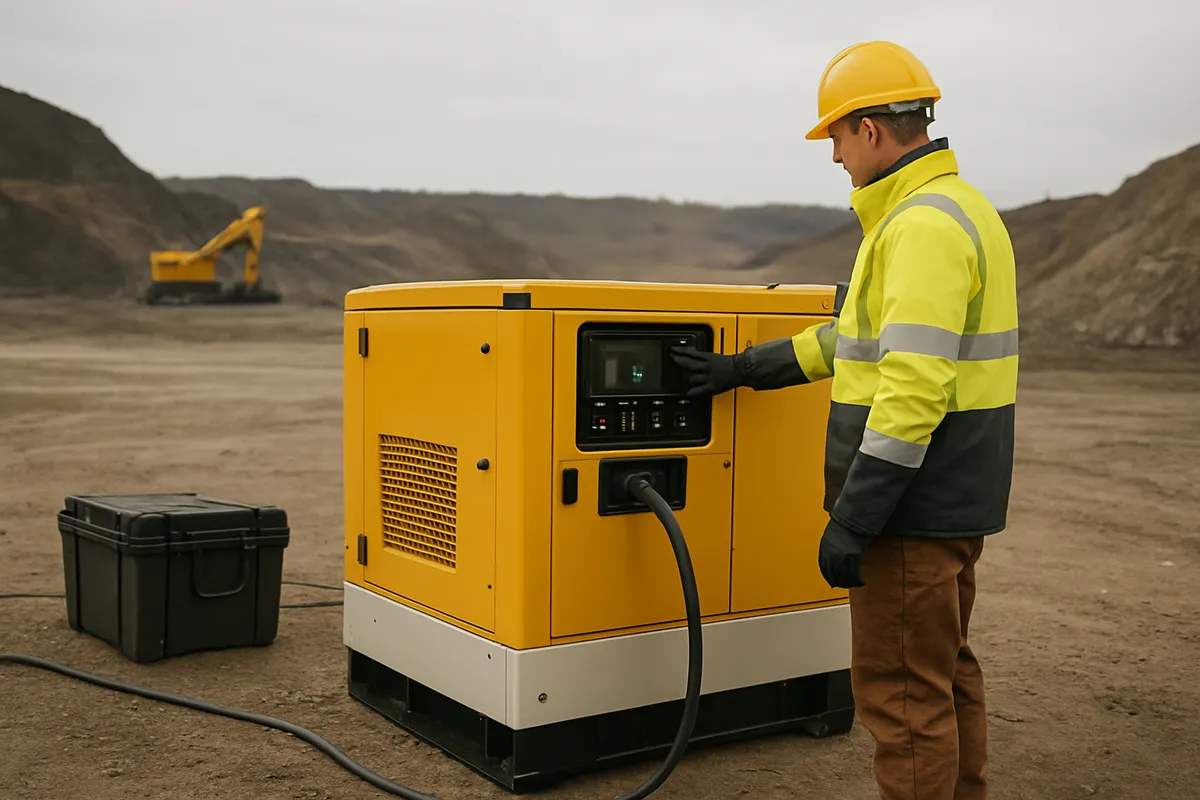
Real-World Applications: Which Industries Use Hybrid Power Units?
Construction, mining, defence, emergency response, and rental operations each rely on hybrid power systems to solve a distinct operational problem that diesel-only systems cannot address.
Defence and Military
Forward operating bases consume large volumes of diesel fuel, much of it burned by generators running continuously at partial load. A hybrid unit cuts resupply frequency by storing energy during off-peak periods and delivering it silently during watch cycles, reducing both acoustic and thermal signatures that adversaries can detect.
Hybridps's TERRA and Mobile Hybrid Microgrid systems are built specifically for this operational profile: LiFePO4 chemistry rated to -30°C, multi-input charging, and a silent-watch power mode that keeps communications and sensor loads running without a running engine.
Construction and Remote Infrastructure
Sites without grid access need continuous power for tools, lighting, and site offices — and in Canadian winters, diesel generators routinely fail to cold-start below -20°C. LiFePO4 battery systems carry no cold-start requirement and deliver consistent output regardless of ambient temperature.
The Batt Pack Pro (5 kW) and Jupiter (7 kW) handle mid-to-heavy site loads and accept solar, alternator, or grid charging, so a crew can top up from a jobsite solar array or a service truck during the day and draw stored power through the night.
Rental Fleets
Rental operators favour hybrid units because fewer moving parts mean fewer maintenance events between client deployments. Multi-input charging flexibility also means the same unit works on a solar-equipped remote site one week and a grid-connected urban project the next.
For operators weighing capital purchase against per-job cost, Hybridps's Buy or Rent and Portable Power Packs pages outline both paths with the configuration options that suit varied client requirements. For those exploring industrial hybrid power unit, this matters.
Mining and Resource Extraction
Mining operations combine three pressures that make hybrid power operationally necessary: continuous high loads running around the clock, remote locations where fuel delivery is expensive and unreliable, and tightening environmental compliance requirements that restrict diesel emissions on site. A hybrid unit addresses all three simultaneously, storing energy from available sources and dispatching it on demand without idling a generator at partial load.
Emergency Response and Disaster Recovery
When a disaster disrupts both the grid and fuel supply chains at once, single-source systems go dark. A hybrid unit with solar and alternator charging inputs can sustain critical loads — communications, medical equipment, lighting — by drawing from whichever source remains available.
This multi-input resilience is the defining operational advantage in disaster scenarios. No single charging path needs to be intact for the system to keep running.
How Do Hybrid Power Units Address Decarbonization and Energy System Challenges in Industry?
Across every sector above, the common pressure is decarbonization: regulators, project owners, and procurement teams are imposing emissions limits that diesel-only generators cannot meet [1]. A hybrid unit reduces or eliminates generator runtime by storing energy from low-emission sources and dispatching it when demand peaks, cutting both fuel burn and the associated carbon output without sacrificing uptime.
The shift is operational as much as environmental. Fewer generator hours means fewer oil changes, fewer injector failures, and fewer unplanned shutdowns — outcomes that matter to a site manager regardless of their position on climate policy.
How to Select and Size the Right Industrial Hybrid Power Unit for Your Operation
Match your unit to three variables: peak simultaneous load in kW, required continuous runtime in hours, and the recharge window available between shifts.
What Capacity Sizing Guidelines Apply to Different Industrial Applications?
Start by logging every load that runs at the same time — tools, lighting, communications, HVAC — and summing their draw to find your peak kW demand. That number sets your floor. Runtime hours then determine the total energy (kWh) the battery must store, and your recharge window tells you how aggressively the system needs to replenish between cycles.
Hybridps publishes four tiers that map directly to this logic: the Batt Pack Energy 3 kW and Pro 5 kW suit single-trade or light monitoring loads; the Jupiter 7 kW handles heavier multi-circuit site demands; the Spark Cube steps up to 12 kW and 24 kW for parallel loads across a work camp; and the TERRA handles 167 kVA / 162 kWh for full remote-site microgrid deployment. Work from your peak-load number outward — never size down to save cost and then run the unit at its ceiling continuously.
Input-source compatibility changes the sizing equation significantly. A site with available solar adds a continuous recharge path, which reduces the raw battery capacity you need to carry through the night. A vehicle-mounted deployment needs alternator input compatibility. Hybridps's multi-input architecture — accepting solar, alternator, grid, and generator simultaneously — means you can size for a smaller stored capacity when a reliable daytime recharge source exists, rather than sizing for the full 24-hour standalone load.
Cold weather introduces a separate sizing adjustment. At -30°C, lithium cells deliver less usable capacity and accept charge more slowly — this is a chemistry-level constraint, not a product flaw. A unit with an active thermal management system pre-conditions the cells before discharge and charge, recovering a meaningful portion of that capacity loss. Without active thermal management, you must oversize the bank to compensate for cold-weather derating. The Hybridps LiFePO4 systems are rated and tested to -30°C with thermal management built in, which keeps the sizing math closer to the rated spec rather than requiring a large cold-weather buffer. This directly impacts industrial hybrid power unit outcomes.
On the buy-versus-rent question: rental suits short-duration projects, proof-of-concept deployments, or contracts where the power requirement ends with the job. Purchase makes financial sense for multi-year continuous operations where fuel and maintenance savings compound over time. Hybridps offers both paths — see the Buy or Rent page for a detailed comparison of total cost across deployment lengths.
What Maintenance Requirements and Warranty Terms Should You Evaluate?
Evaluate four criteria before committing to any hybrid power system: battery cycle-life rating, BMS serviceability, support geography, and warranty scope.
LiFePO4 chemistry — the chemistry in Hybridps systems — carries a materially higher cycle-life rating than other lithium chemistries, which directly affects total cost over a multi-year deployment. Ask the vendor for the rated cycle count at 80% depth of discharge, then divide by your expected daily cycles to project usable lifespan.
BMS serviceability matters in the field. A battery management system that logs fault codes, allows remote diagnostics, and can be serviced without returning the unit to a factory keeps your site running. Pair that with Canadian-based technical support — critical when a remote site cannot wait days for an overseas response.
Warranty terms deserve close scrutiny. Many warranties cover defects under controlled conditions but exclude vibration, temperature extremes, or field handling. For construction, mining, or defence deployments, a warranty that does not explicitly cover those conditions offers limited real protection. Confirm in writing that the coverage applies to the environments where you will actually operate the unit.
Total Cost of Ownership and Long-Term ROI for Hybrid Power Systems
Hybrid power units consistently outperform diesel-only generators in multi-year total cost of ownership by cutting fuel volume, maintenance frequency, and logistics overhead.
How Do Hybrid Units Compare to Traditional Generators in Lifecycle Cost Over Multiple Years?
The TCO gap between a diesel generator and a hybrid power system widens with every year of operation. Four cost mechanisms drive that gap.
Fuel volume and logistics. A hybrid unit draws on stored battery energy or solar input before calling on the generator, so the generator runs fewer hours per day. Fewer runtime hours mean fewer litres purchased, fewer fuel deliveries scheduled, and less logistics overhead — a compounding saving on remote sites where resupply carries a significant cost premium.
Generator loading efficiency. A diesel generator running at 25–40% of rated load burns disproportionate fuel per kWh delivered. A hybrid unit manages load so the generator operates in its efficient band, or bypasses it entirely during low-demand periods, reducing fuel burn without sacrificing site power.
Maintenance event frequency. Generator service intervals are driven by runtime hours. Because the hybrid system absorbs a share of the load, the generator accumulates hours more slowly, pushing oil changes, filter replacements, and scheduled overhauls further apart. This is particularly relevant for industrial hybrid power unit.
Downtime cost. A single-source diesel system fails entirely when fuel runs out, a fuel line freezes, or a mechanical fault occurs. A hybrid unit carries redundant input sources — solar, alternator, grid, or generator — and an integrated battery management system that flags faults before they cascade. No single failure ends all power.
Cost tier matters for procurement decisions. Entry-level portable hybrid units suit light industrial and short-duration deployments. Mid-range systems like the Hybridps Spark Cube target sustained site power where a generator would otherwise run continuously. Enterprise-tier systems like the TERRA, rated at 167 kVA and 162 kWh, serve defence operations and large infrastructure projects where downtime cost per hour is highest.
Canadian engineering and domestic assembly add a TCO advantage that procurement teams often undercount. Replacement parts and technical support ship from within Canada, cutting the lead times that inflate downtime costs when an internationally sourced system waits weeks for a component at a remote site.
Frequently Asked Questions
Can an industrial hybrid power unit operate as the sole power source, or does it always need a generator?
A hybrid power unit can function as the sole power source when paired with adequate solar input or grid charging — no generator required. Systems like the Hybridps TERRA, with 162 kWh of LiFePO4 storage, can sustain continuous site loads independently when charge cycles are planned around operational schedules. Generator backup remains an option for extended overcast periods or high-demand spikes, but it is not a requirement in every deployment.
What is the difference between a hybrid power unit and a standard battery energy storage system (BESS)?
A hybrid power unit combines energy storage with multiple active charging inputs — solar, grid, alternator, or generator — and integrated power conversion in a single deployable package, whereas a standard BESS typically stores energy from one source and requires separate balance-of-system components. The hybrid architecture means the unit manages source switching automatically, which reduces manual intervention on remote sites. A standalone BESS generally requires additional hardware and engineering to achieve the same multi-input flexibility.
How does cold weather affect the performance of an industrial hybrid power unit?
LiFePO4 chemistry loses charge capacity at low temperatures, but units engineered with active thermal management — like Hybridps systems rated to -30°C — maintain reliable output through Canadian winters. Without thermal management, capacity can drop sharply below 0°C, causing unpredictable runtime. Specifying a unit with a verified cold-weather rating and built-in battery heating is the critical factor for any deployment in northern or high-altitude environments.
Are industrial hybrid power units suitable for rental applications, or are they better suited to long-term ownership?
Hybrid power units work well in both rental and ownership models, and the right choice depends on project duration and frequency of remote deployments. Short-term contracts — a single construction phase or a temporary event site — often favour rental because capital cost is avoided. Operations running multiple remote sites year-round typically reach a crossover point where ownership reduces total spend. Hybridps offers both purchase and rental configurations across its portable power pack range.
What certifications or standards should an industrial hybrid power unit meet for defence or mining use?
For defence and mining applications, look for units that meet relevant electrical safety standards for the jurisdiction, carry IP-rated enclosures appropriate to the operating environment, and are tested to the temperature extremes documented in the product specification. Battery systems should comply with applicable transport and handling regulations for lithium-based chemistries. Confirming that a vendor can supply documentation of testing and compliance — not just a marketing claim — is the practical step before committing to a procurement decision.
Conclusion
Choosing the right hybrid power system comes down to three decisions: matching storage capacity to your peak and continuous load, confirming the unit's cold-weather rating against your actual operating environment, and selecting a multi-input charging architecture that fits your site's available sources. A system that handles solar, grid, and generator inputs — like the Hybridps Jupiter or TERRA — gives you the flexibility to adapt as site conditions change without swapping hardware.
As a concrete next step, document your site's peak load in kilowatts and your longest expected off-grid period, then request a configured quote from Hybridps at hybridps.ca with those two numbers in hand.