

Produits
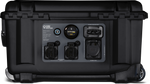 Pack de batteries énergétiques | 3kW
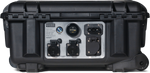 Bloc-batterie Pro | 5 kW
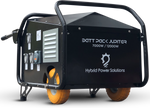 Batterie Jupiter | 7kW
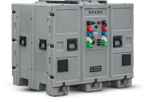 Spark Cube | 12kW/24kW
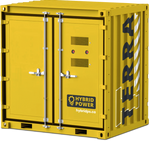 TERRA | 166kVA
Ressources

Comparing Today's Top Industrial Battery Storage Systems
Industrial battery storage systems are LiFePO4-based power platforms built for continuous, high-load operation on construction sites, defence deployments, and remote industrial locations, not scaled-up residential backup units. They differ from home battery backup by offering multi-input charging (solar, alternator, generator, grid), extreme temperature ratings down to -30°C, and power tiers from 3kW portable packs up to 167 kVA containerized systems. Buyers choose them to cut fuel logistics, lower acoustic and thermal signature, and sustain mission-critical loads where generator-only power fails or draws unwanted attention.

1. Portable LiFePO4 Battery Packs for Industrial and Rental Use
Portable 3kW-class packs give job sites entry-level industrial battery storage systems for tool charging, lighting, and small equipment without a fuel line or exhaust plume.
At this tier, expect to run power tools, task lighting, laptops, and remote monitoring gear through a full shift, not welders or large compressors. That load profile is what separates a rental-fleet unit from a whole-site power source.
LiFePO4 is specified over generic lithium-ion because of cycle life and thermal stability. Rental fleets cycle batteries daily across different crews and temperatures, and LiFePO4 chemistry tolerates that abuse with slower capacity fade and a lower thermal runaway risk than cobalt-based lithium-ion cells.
Best fit: rental fleet operators, small trades crews, and remote monitoring stations that need drop-in, swap-out power with no training curve.
Most competitor lists stop at battery capacity and skip two things that matter at this tier: where the pack is built, and how it charges. Hybridps builds its Batt Pack Energy 3kW unit in Canada with multi-input charging, solar, alternator, or grid, so a rental unit can top up from whatever source is on site. For fleet buyers weighing ownership models, see our Buy or Rent guide to Portable Power Packs.
2. Mid-Tier Industrial Battery Storage Systems for Construction Sites
Mid-tier 5-7kW systems carry sustained multi-tool and equipment loads across a full construction shift, not just intermittent backup power.
This is the jump from portable convenience to core site infrastructure. A single mid-tier unit can hold a shift's worth of overlapping loads, saws, compressors, lighting towers, welding prep, where a 3kW pack would trip or drain early.
Cold-climate construction seasons are where this tier earns its keep. A -30°C operating rating means crews in northern builds or winter-extended projects don't lose power to cold-start failure or battery derating, a common failure point for generic lithium-ion systems.
Best fit: general contractors and site managers who need continuous all-day runtime as the primary power source, with backup as a secondary benefit.
The differentiator is hybrid multi-input design: crews recharge from a generator, grid connection, or solar array without swapping hardware or reconfiguring the unit. That flexibility matters most on sites where power source availability changes week to week. See the Batt Pack Pro and Jupiter tiers in our construction site power guide for load-sizing detail.
3. High-Capacity Battery Storage for Heavy Industrial and Multi-Crew Operations
12-24kW systems scale power for sites where simultaneous load count, not just total runtime, outgrows what a single mid-tier unit can carry.
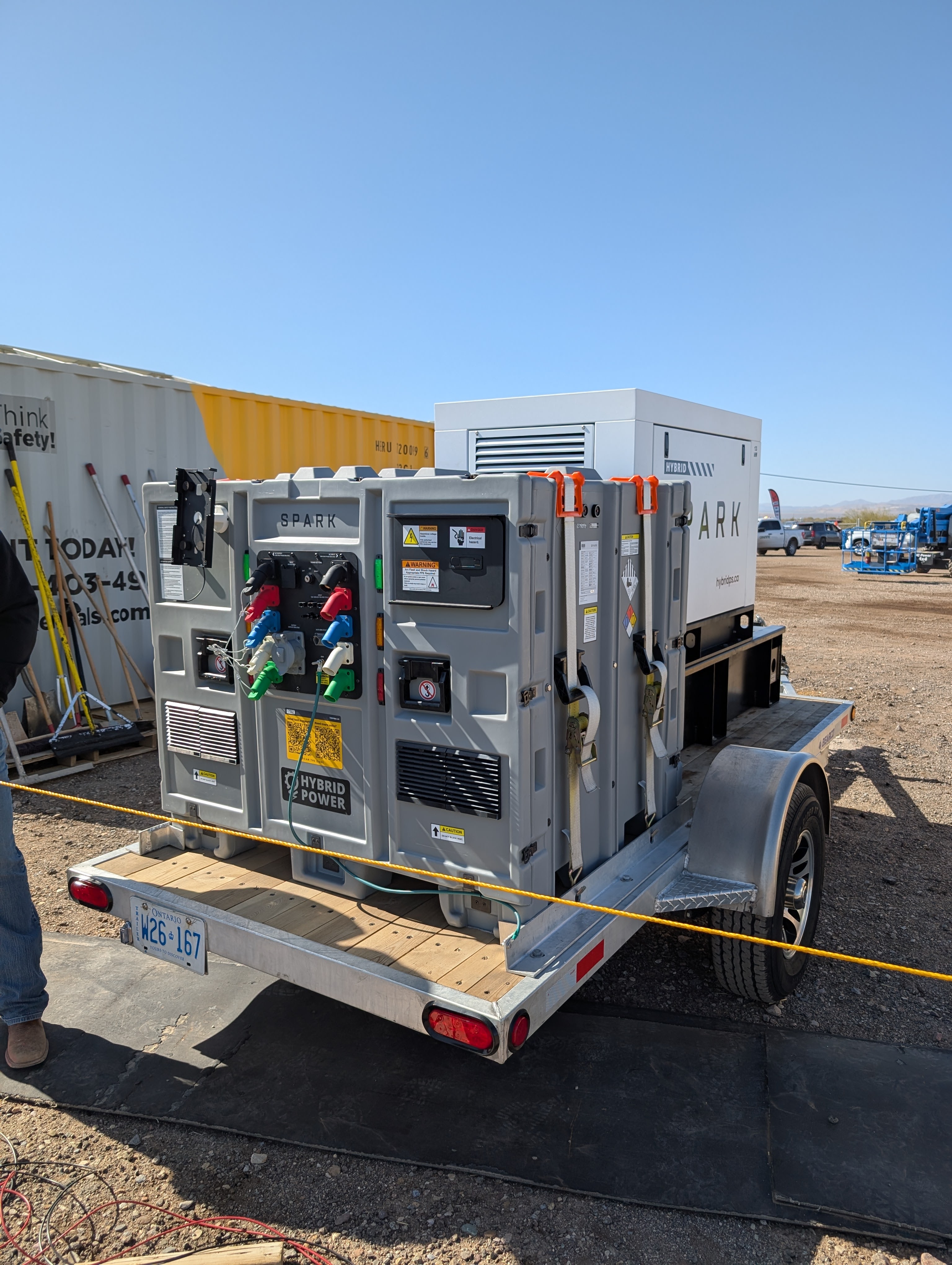
Once a site runs multiple crews pulling power at once, stacking several small units creates its own problem: more cables, more failure points, more units to monitor. A single higher-capacity platform, like the Spark Cube 12/24kW tier, consolidates that load onto one system with continuous runtime instead of chained smaller batteries.
Best fit: multi-crew industrial sites, utility contractors, and temporary facility power where uptime spans days or weeks, not hours.
The procurement differentiator is scalability without fragmentation, one platform tier instead of managing a dozen small battery SKUs across different vendors and specs. That also simplifies spare parts and technician training.
A secondary benefit worth noting: low acoustic signature. For sites bordering occupied buildings, hospitals, or residential zones, a near-silent battery platform avoids the noise complaints and permitting friction that diesel gensets attract.
4. Containerized Battery Storage for Defence and Mission-Critical Deployments
The 167 kVA / 162 kWh containerized TERRA platform buffers or replaces generator runtime at forward bases, cutting the resupply convoys fuel logistics demand. For more information, see Automated Demo Scheduling And Coordination.
Fewer fuel convoys means less exposure, for defence logistics teams, that's a force-protection outcome, not a cost line item. A containerized platform that stores and delivers power on-demand reduces how often diesel needs to reach a forward or remote site at all.
Low acoustic and thermal signature is an operational requirement here, not a comfort feature. Generator noise and heat plumes are detectable; a battery platform running quiet and cool reduces the signature of a forward operating base or sensitive infrastructure site.
Best fit: defence units, remote base camps, and critical infrastructure operators that need mission-ready, continuous power without a visible or audible footprint.
The differentiator is scale combined with hybrid input: a multi-input container accepting solar, alternator, generator, and grid charging, at a power tier competitors capped near single-digit kW simply don't reach. For deployment planning, see our TERRA and Mobile Hybrid Microgrid content, and for a broader look at how containerized platforms fit into utility-scale deployments, see this overview of battery energy storage systems.

5. Hybrid Multi-Input Battery Systems for Remote and Off-Grid Sites
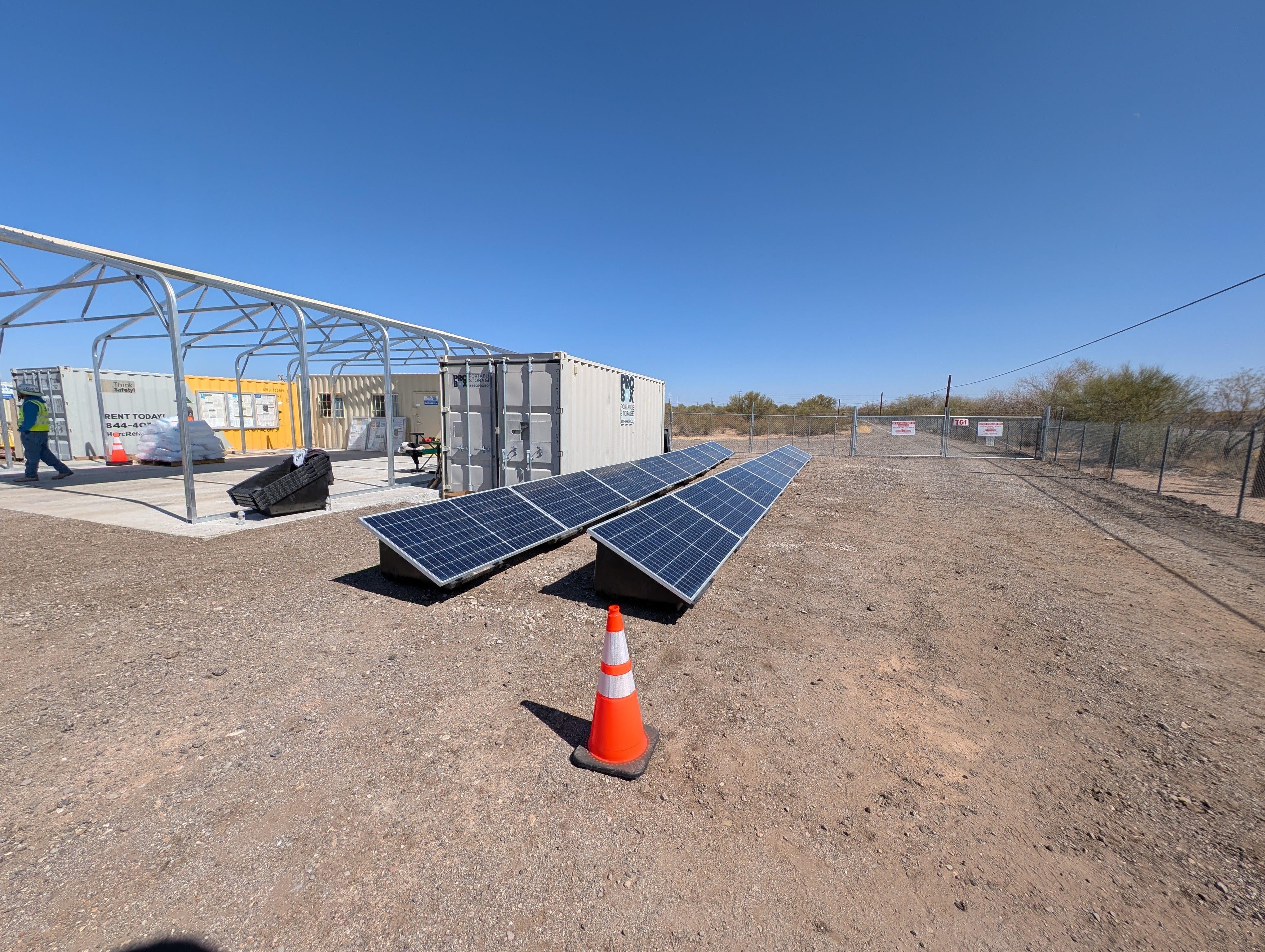
Hybrid multi-input systems combine solar, alternator, generator, and grid charging into one battery platform so remote sites never depend on a single power source.
Power electronics and the battery management system handle the switching. When solar output drops or a generator shuts down for maintenance, the system shifts charging input automatically, no operator standing by to manually reconfigure connections.
How does multi-input charging lower per-cycle operating costs?
The system draws from whichever input is cheapest or most available at that moment, free solar during daylight, alternator charging while a vehicle runs, grid power where it exists. That flexibility cuts the fuel burned per charge cycle compared with a generator-only setup, since diesel becomes a backup input rather than the sole source.
Best fit: remote site operators, drone deployment teams needing field recharge between missions, and off-grid facilities without reliable utility access.
The differentiator is a genuine multi-input hybrid architecture, versus single-source competitors capped at low power ceilings with one charging method. Flexible input mixing also supports more degradation-friendly charging patterns, avoiding repeated deep discharge-recharge cycles from a single stressed source extends usable battery life over the platform's service years.
6. Stationary Battery Storage for Fixed Industrial Facilities
Stationary battery storage systems suit permanent industrial sites with predictable loads, grid access, and no need to relocate power year to year.
A fixed footprint makes sense once a facility has stable interconnection points and a load profile that doesn't change site to site. Peak shaving, backup during grid outages, and load levelling against utility demand charges all favour a system bolted into place rather than one designed for repeated redeployment. Portable and containerized units still win when a project moves, a stationary system trades that mobility for higher sustained capacity and simpler wiring into existing switchgear.
What grid interconnection and utility approval steps apply to stationary systems?
Utility interconnection for stationary industrial battery storage systems typically follows a sequence of steps before energization:
- Submit an application to the local utility outlining system size and interconnection point
- Complete an engineering review of protection settings and system safeguards
- Secure permitting through the municipal authority having jurisdiction
- Assemble compliance documentation, including single-line diagrams, breaker coordination studies, and fire code sign-off
- Schedule final inspection and utility sign-off ahead of energization
Timelines vary by region and utility backlog. Facility managers planning a permanent installation without mobility requirements are the clearest fit for this configuration. Canadian-manufactured systems simplify this process because compliance paperwork and technical support are generated to the same codes local inspectors already work with, rather than translated from an overseas spec sheet. For readers comparing fixed versus mobile configurations more broadly, this guide to commercial and industrial battery storage systems covers the tradeoffs in more depth.
7. Battery Storage Systems Engineered for Extreme Temperature and Harsh Environments
LiFePO4 battery packs paired with active thermal management sustain rated output down to -30°C, where generic lithium-ion packs derate sharply or fail to start.
LiFePO4 chemistry has a more stable electrode structure than other lithium chemistries, and when combined with internal heating elements and insulated enclosures, it holds usable capacity in deep cold instead of shedding it. Generic consumer lithium-ion packs commonly cut output or refuse to charge below freezing, a real problem for a winter camp or a forward site that can't wait for equipment to warm up. Hybridps builds its Batt Pack and Spark Cube lines to an operational rating of -30°C published on the spec sheet, not a rounded-off marketing claim.
Northern construction crews, defence forward-operating sites, and winter remote camps are the clearest fit, anywhere continuous runtime in cold matters more than peak-season convenience. For defence users, the same thermal engineering that keeps cells warm also keeps the unit's thermal signature low, which matters for sites where infrared detection avoidance is part of the operating requirement, a factor a diesel generator's exhaust heat plume can't offer.
8. Low-Maintenance Battery Storage Systems for Long-Term Uptime
LiFePO4-based industrial battery storage systems hold capacity over thousands of cycles with far less maintenance labour than a diesel genset over the same service life.
How does LiFePO4 chemistry affect long-term degradation and lifespan?
LiFePO4 cells degrade more slowly under daily charge-discharge cycling than cobalt-based lithium chemistries, meaning a fleet running one cycle a day retains usable capacity for years longer before replacement. Preventive monitoring, state-of-charge tracking, thermal monitoring, and scheduled inspection intervals, catches drift before it becomes downtime, rather than waiting for a failure in the field.
Total cost of ownership drops over a decade-plus deployment window: no fuel burn, no oil changes, no exhaust system to maintain, and fewer moving parts overall than a generator-only setup. Fleet and facility managers building multi-year budgets are the best-fit buyer here, since the savings compound with every year the system stays in service. The core differentiator is part count, a battery system has fewer serviceable components than an engine-driven genset, which means fewer scheduled field visits and less parts inventory to manage across a site or a fleet.
How to Choose the Right Industrial Battery Storage System
Match your mission profile to a power tier by working through load, runtime, mobility, and environment before comparing specific units.
Work through these questions in order before comparing specific units:
- What is the load profile? List every device or system the unit needs to power and its draw.
- What runtime is required? Hours per day, or continuous operation across a multi-day deployment.
- Does mobility matter? The unit may need to move with the crew, or stay fixed at one site.
- What environmental extremes apply? Cold-weather operation in particular changes which tier fits.
Only after those four answers are set should you match to a power tier.
| Format | Mobility | Power Range | Best-Fit Mission |
|---|---|---|---|
| Portable (Batt Pack Energy/Pro) | High, carried or vehicle-mounted | 3–5 kW | Drone recharging, tool power, small crew sites |
| Mid-tier (Jupiter) | Moderate, trailer or skid | 7 kW | Construction sites, remote job sites |
| High-capacity (Spark Cube) | Low, semi-permanent | 12–24 kW | FOB power, multi-load remote camps |
| Containerized (TERRA) | Fixed or transportable by trailer | 167 kVA / 162 kWh | Defence microgrids, large industrial backup |
Defence buyers should weigh acoustic and thermal signature as a primary requirement, not an afterthought, a low-signature platform matters more than raw cost when detection avoidance is part of the mission. Construction and rental buyers generally weigh cost and simplicity higher, prioritizing a unit that's easy to deploy and easy to bill against a project. Budget-friendly portable units suit short-duration or single-crew needs, while premium containerized platforms suit continuous, high-load industrial or defence sites, treat the decision as qualitative fit, not a numeric price comparison. For deployments where ownership isn't yet decided, review Buy or Rent decision content to weigh short-term rental against long-term ownership before committing capital. Readers looking for a general primer on commercial and industrial battery storage systems can also review this industrial and commercial energy storage overview for additional context.
Frequently Asked Questions
What makes a battery storage system suitable for defence, construction, and utility contractor use cases?
Suitability comes down to three things: extreme-temperature reliability, multi-input charging, and low acoustic signature for field deployment. A system rated to -30°C, capable of accepting solar, alternator, grid, or generator input, and built for repeated transport between sites meets the durability and mobility demands these sectors require. Batt Pack Pro and Jupiter units are built around this exact profile for construction and utility contractors.
Why is LiFePO4 chemistry preferred over generic lithium-ion for mission-critical industrial deployments?
LiFePO4 offers better thermal stability and a lower fire-risk profile than generic lithium-ion cells, which matters when a pack sits inside a vehicle, tent, or forward operating base. It also tolerates more charge cycles before capacity fades, reducing replacement frequency across a multi-year contract. For crews operating in extreme cold or heat with no room for cell failure, that stability outweighs the marginal energy-density advantage some generic lithium-ion cells offer.
What fuel consumption and logistics savings can you expect by replacing or augmenting diesel generators with hybrid power?
Hybrid battery systems cut fuel consumption directly, since every hour running on stored energy is an hour not burning diesel. The exact savings depend on load profile and how much solar or alternator charging supplements the battery bank, but the fuel-logistics burden drops in every configuration, driven by eliminated fuel runs, reduced maintenance intervals, and fewer resupply convoys into remote or contested sites.
When should you choose portable power packs versus stationary or mobile hybrid microgrids for rapid deployment?
Choose portable packs like Batt Pack Energy or Pro for single-load, fast-mobilization jobs, drone recharging, tool power, short-duration site work. Move to a stationary or mobile microgrid, such as Spark Cube or TERRA, when you're powering multiple loads continuously across a construction site, FOB, or utility yard where runtime and scale matter more than footprint.
How do low-noise, low-emission battery systems help meet regulatory compliance in urban and defence operations?
Battery systems run silently and produce zero emissions at the point of use, which directly addresses noise ordinances and air-quality rules diesel gensets often violate. In defence contexts, the same low acoustic and thermal signature reduces detectability near forward positions, a compliance and operational security benefit diesel can't offer.
Conclusion
Industrial battery storage systems succeed or fail on three factors: temperature rating, input flexibility, and chemistry. LiFePO4 packs rated to -30°C with multi-input charging (solar, alternator, grid, generator) solve the fuel-logistics and compliance problems diesel generators create on remote sites, FOBs, and urban job sites alike. Match the tier to the job, portable packs for single loads, TERRA or Spark Cube for multi-load continuous power.
If you're planning a deployment for the next construction season or a forward operating position, start by mapping your site's peak load and charging sources against the Batt Pack, Spark Cube, and TERRA specifications on hybridps.ca before you spec a diesel replacement.
Recommended Articles
Explore more from our content library:
- How an Industrial Hybrid Power Unit Delivers Real Efficiency">How an Industrial Hybrid Power Unit Delivers Real Efficiency
- How to Set Up Off-Grid Power in Simple Steps">How to Set Up Off-Grid Power in Simple Steps
- A Complete How-To Guide on How to Power Construction Sites
- Why Hybrid Generators Are a Better Choice Than Diesel Alone
- How Hybrid Power Systems Work in Industry">How Hybrid Power Systems Work in Industry