

Produits
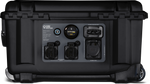 Pack de batteries énergétiques | 3kW
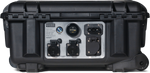 Bloc-batterie Pro | 5 kW
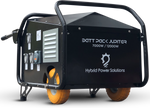 Batterie Jupiter | 7kW
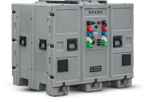 Spark Cube | 12kW/24kW
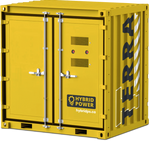 TERRA | 166kVA
Ressources

Why Hybrid Generators Are a Better Choice Than Diesel Alone
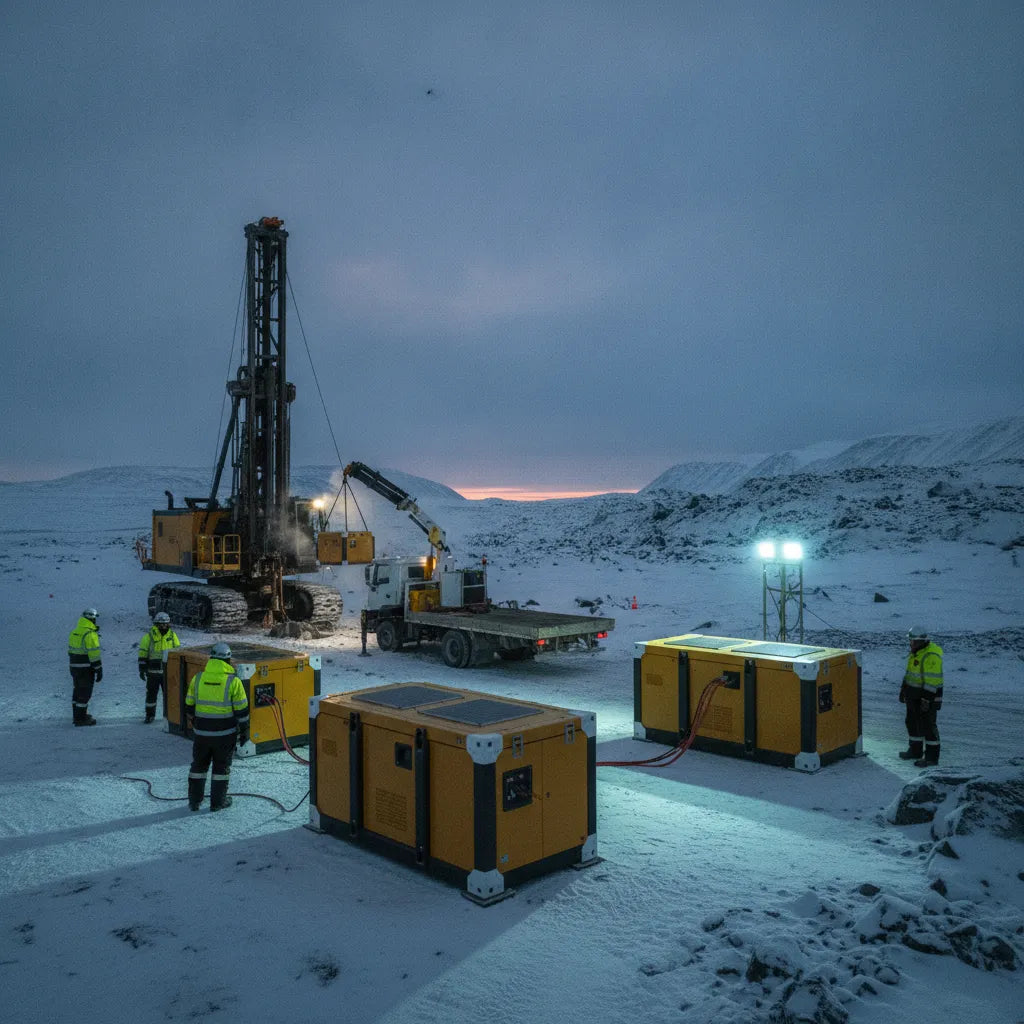
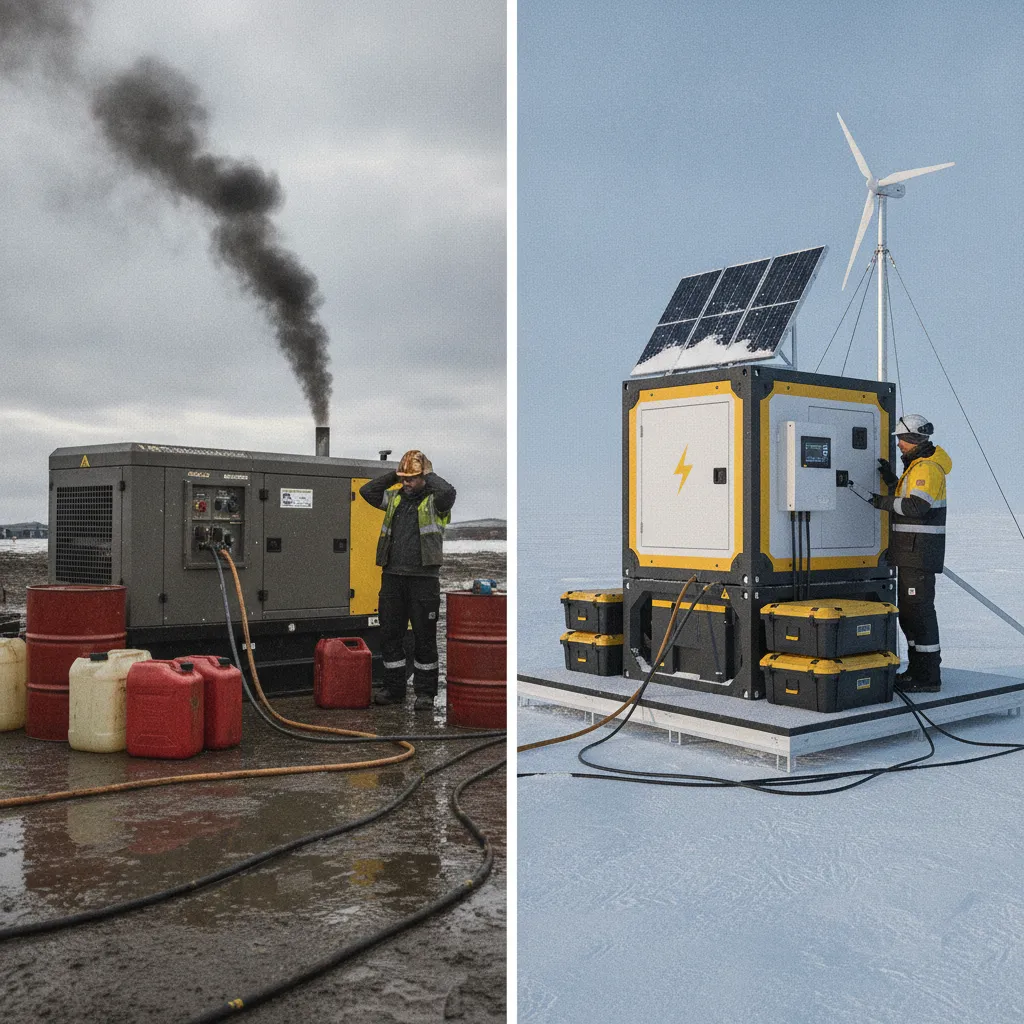
Understanding why choose hybrid generators is essential. Hybrid generators combine a conventional engine with battery storage and often renewable inputs like solar, cutting fuel consumption by 30–60% compared to diesel-only systems while delivering continuous, reliable power. They run quieter, emit less, and cost significantly less to operate over a 5–10 year horizon. For remote sites, construction, mining, or emergency response where grid power is unavailable, they outperform both diesel-only and battery-only alternatives on runtime, reliability, and total cost of ownership.
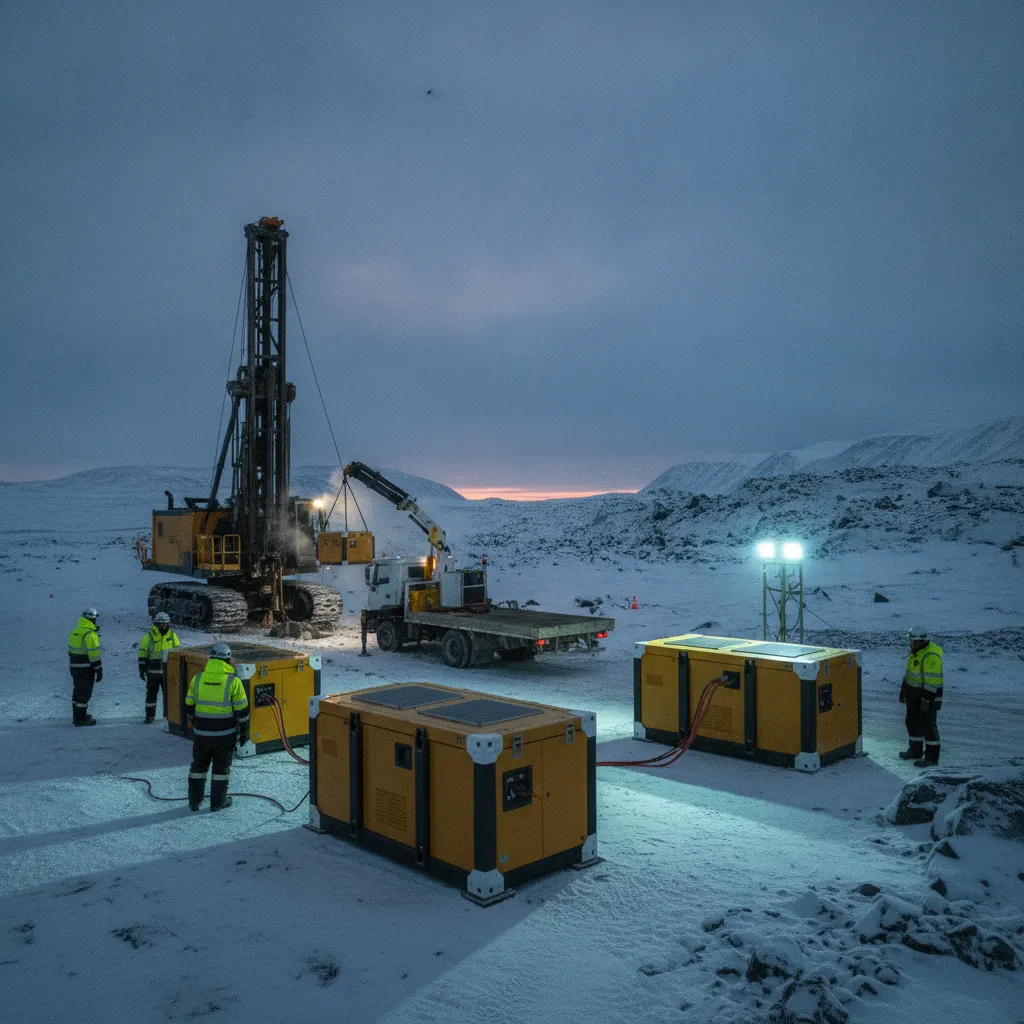
Why Choose Hybrid Generators Over Diesel and Battery-Only Alternatives
A hybrid generator pairs a combustion engine with a battery bank—and often solar or wind inputs—managed by a controller that decides which source runs when.
That controller is what separates hybrid systems from both diesel-only and battery-only setups. Instead of running one source continuously, it dispatches power from whichever input is most efficient at any given moment, charging the battery when the engine is at peak output and drawing from stored energy when demand is low.
"Hybrid power systems represent the most significant advancement in off-grid energy management in the past two decades. The ability to intelligently dispatch from multiple sources eliminates the core inefficiency that has plagued diesel-only deployments for generations." — Dr. Michael Barnard, Chief Strategist at TFIE Strategy Inc.
How hybrid power systems and battery units work together
The engine, battery bank, and optional renewable inputs operate as a single managed system. When site demand is light, the battery carries the load. When demand spikes or the battery needs replenishment, the engine starts—but only long enough to charge at its efficient operating band, then shuts off again.
Battery-only systems can't replicate this. They carry a high upfront cost, deliver limited runtime, and have no fallback during extended cloudy periods or sustained high-demand shifts. Diesel-only systems run continuously regardless of load, burning fuel and accumulating engine wear even when the site draws almost nothing [2].
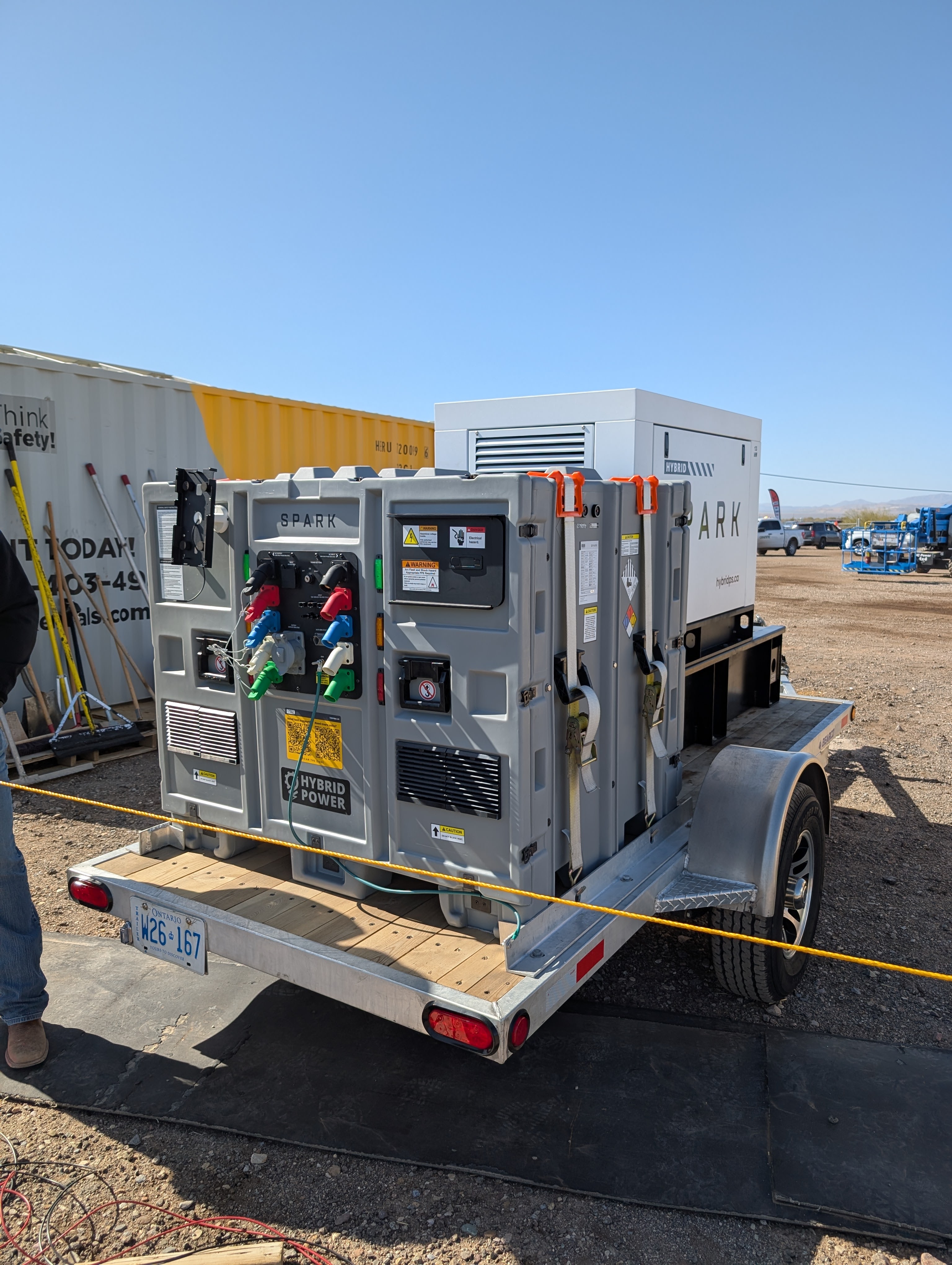
The Hybridps Batt Pack Pro is a practical example of this architecture: a Canadian-engineered LiFePO4 battery unit rated to -30°C that accepts charging from solar, a vehicle alternator, grid power, or a generator—giving remote sites multiple inputs without depending on any single one.
The 20/20/20 rule: why diesel generators waste fuel at low loads
Diesel engines run most efficiently between 60–80% of rated load [2]. Drop below roughly 20% load and fuel consumption per kilowatt-hour rises sharply while unburned carbon accumulates in the engine—a condition called wet stacking that accelerates maintenance intervals.
Hybrid systems avoid this by letting the battery carry low loads while the engine charges at optimal output. The engine runs less often, runs harder when it does, and stops sooner.
That discipline is why hybrid systems typically cut diesel consumption 30–60% against conventional generators running the same load profile [3], with some mining and construction deployments reporting reductions up to 70% [2]. For remote sites where fuel delivery adds cost at every kilometre, understanding why to choose hybrid generators often starts with this single mechanical fact.
According to the U.S. Department of Energy's Office of Energy Efficiency and Renewable Energy, intelligent energy dispatch systems that combine stored and generated power consistently outperform single-source configurations in real-world efficiency metrics — a principle that applies directly to why choose hybrid generators for off-grid industrial use.
Real Advantages and Honest Disadvantages of Hybrid Generators
Hybrid generators cut fuel costs, reduce noise, and lower emissions, but carry higher upfront costs and real failure modes that deserve scrutiny before you buy.
How Hybrid Generators Reduce Fuel Costs and Noise Compared to Alternatives
The fuel savings case is concrete. A 50 kVA diesel generator running 10 hours per day consumes roughly 15–20 litres per hour at partial load [2]. A 40% consumption reduction, achievable when battery storage handles off-peak loads, saves approximately 60–80 litres per day. At Canadian diesel prices of $1.50–$2.00 per litre, that translates to $32,850–$58,400 annually, or a practical $10,000–$15,000 range on a conservatively loaded site running 250 days per year.
Noise reduction is equally measurable. Diesel generators typically operate at 70–85 dB [1], which triggers noise bylaws on urban construction sites and creates compliance risk near healthcare facilities. Battery-buffered hybrid systems drop operational noise to 50–65 dB during battery-only periods [1], a difference that's audible across a job site and legally significant in noise-regulated zones.
Emissions follow the same pattern: fewer engine-run hours mean lower CO₂ output per shift, which matters when regulators or project owners require documented carbon reporting. The U.S. Environmental Protection Agency's greenhouse gas equivalencies data confirms that reducing diesel generator run hours is one of the most direct ways to cut carbon output on temporary power sites — a core reason why choose hybrid generators is increasingly a regulatory and procurement requirement, not just an efficiency preference.
"The emissions reduction case for hybrid generator systems is no longer theoretical — documented field deployments consistently show 40–65% cuts in diesel consumption, which translates directly into measurable carbon reductions that satisfy both regulatory requirements and corporate sustainability targets." — Sarah Kurtz, Professor of Engineering, University of California Merced and renewable energy systems researcher
Specific Limitations and Failure Modes Where Hybrid Generators Aren't the Right Choice
Understanding why to choose hybrid generators also means knowing when not to. Upfront capital cost runs 1.5–2× a comparable diesel unit, and that gap only closes if the site runs long enough to recover it, typically five years or more of sustained operation.
Battery chemistry matters here. LiFePO4 cells, like those used in Hybridps systems, are rated for 1,500–3,000 charge cycles depending on depth of discharge and thermal management. Generic lithium chemistries at the lower end of that range degrade faster under heavy daily cycling. For more information, see How To Choose The Best Plant Based Ice Cream For Your Taste.
Three failure modes deserve direct attention:
- Battery management system faults in extreme heat: Systems not rated above 45°C can trigger thermal shutdowns, cutting load capacity without warning.
- Inverter failure: A failed inverter severs the battery-to-load path entirely, leaving the site dependent on the diesel engine alone, or dark if no backup switching is in place.
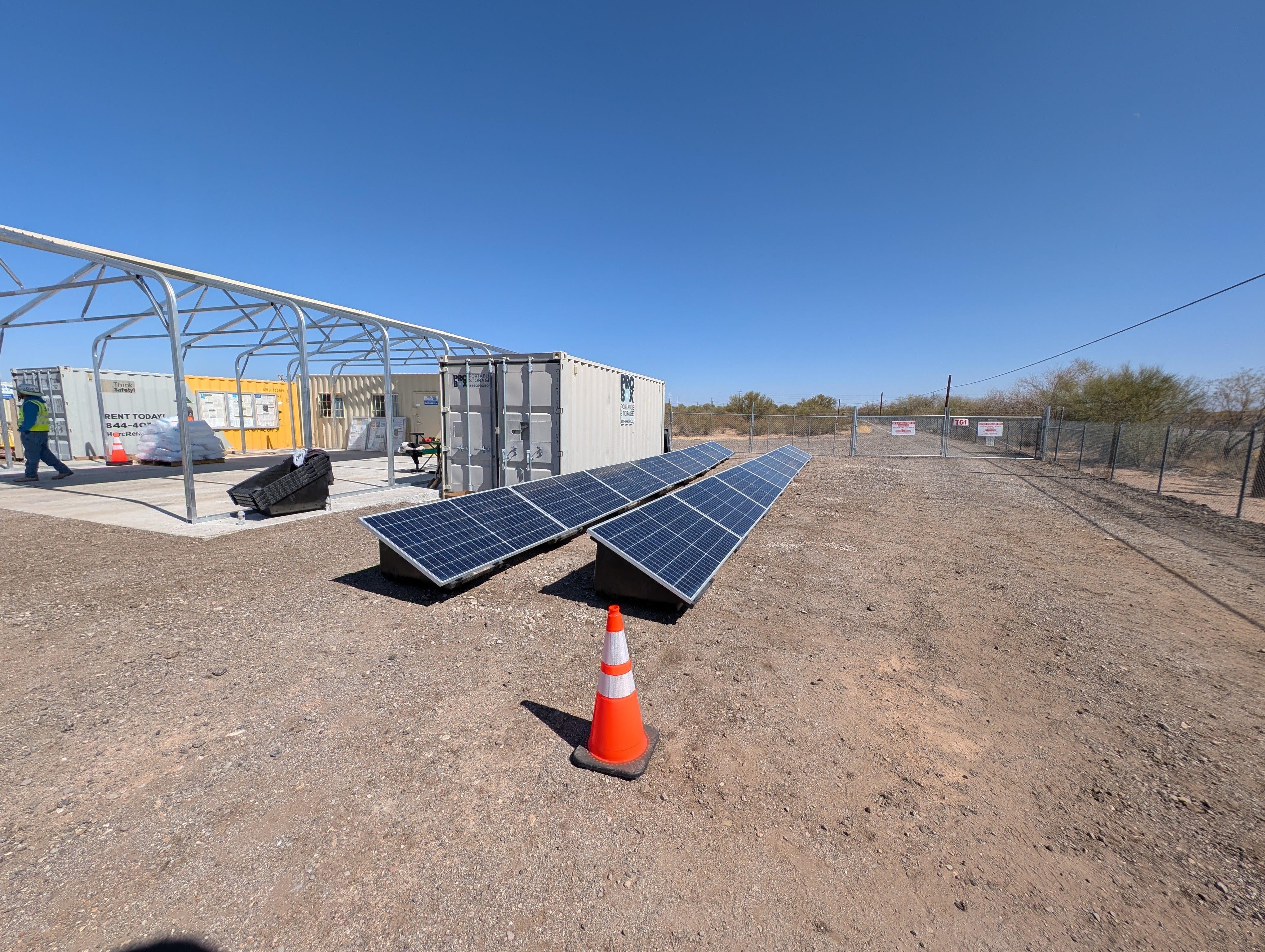
- Solar input variability: Sites in low-irradiance regions or under heavy cloud cover cannot rely on solar charging to sustain runtime predictably, making battery state-of-charge management critical.
Three scenarios where a hybrid system is the wrong tool: backup needs under two hours where a standard UPS suffices; ultra-low-budget deployments where the capital premium cannot be recovered within five years; and sites with stable grid access where any generator, hybrid or diesel, is redundant overhead.
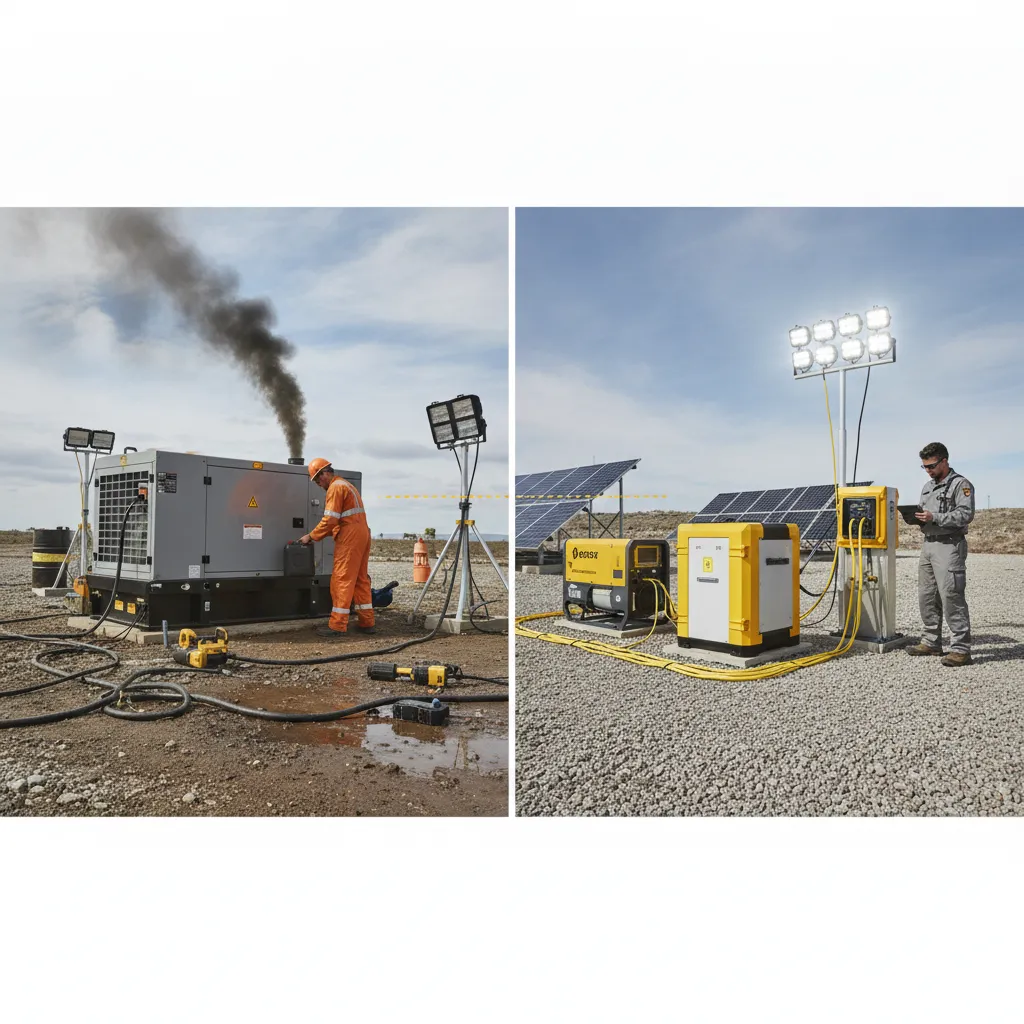
Where Hybrid Generators Are Used and What Results They Actually Deliver
Hybrid generators deliver measurable gains across mining, construction, healthcare, and drone operations—cutting fuel use 35–65% and eliminating noise violations.
Real-world case studies: mining, construction, and healthcare hybrid generator performance
Mining: Remote mine sites in northern Canada and Australia have documented 50–65% diesel reduction after deploying hybrid generator-battery systems [2]. One Goldfields deployment cut generator runtime from 24 hours to under 10 hours daily by buffering overnight loads with stored energy—a direct reduction in fuel logistics overhead that matters enormously when supply roads are seasonal or unreliable.
Construction: Urban job sites running hybrid units report noise complaints dropping by over 60% [1]. Several municipalities now ban diesel generators after 7 PM; hybrid systems pass those ordinances and let crews extend work windows that a conventional diesel unit would shut down entirely.
Healthcare and emergency response: ICU equipment and data centres require transfer times under 20 milliseconds during a power switchover. Quality hybrid inverter systems meet that threshold automatically; a diesel generator with a manual transfer switch cannot [3]. For emergency response teams, that gap between "acceptable" and "catastrophic" is measured in milliseconds.
Drone operations: The Hybridps Spark Cube provides silent, emission-free recharging between flights at remote deployment sites. Diesel generators vibrate and emit exhaust near sensitive avionics and optical sensors—an operational liability that silent battery-based charging eliminates entirely. This is one of the clearest answers to why choose hybrid generators for tactical or commercial drone clusters.
Partial-load efficiency: A 7.5 kW diesel unit can power a typical facility but burns fuel inefficiently at partial load [2]. A hybrid configuration pairing a 5 kW engine with a 10 kWh battery handles the same demand at 35–45% lower fuel cost, while delivering silent overnight operation on stored energy alone.
True Cost of Ownership: Hybrid Generator ROI Over 5–10 Years
Hybrid generators cost more upfront but typically deliver $40,000–$80,000 in net savings over 10 years versus diesel-only setups at medium-duty remote sites.
The capital gap is real and worth naming directly. A 30 kVA diesel generator runs $8,000–$15,000; a comparable hybrid system runs $18,000–$35,000. That $10,000–$20,000 premium is the number most procurement leads see first, and it's the wrong place to stop the analysis.
Maintenance Requirements and Lifespan of Hybrid Generators
Diesel-only generators require oil changes every 250–500 hours and injector service every 2,000 hours [2]. Hybrid systems run the engine 40–60% fewer hours by drawing on battery storage during lower-demand periods [2], which extends those service intervals proportionally and cuts annual maintenance cost by an estimated 25–35%.
Battery longevity is a separate line item to budget honestly. Lithium iron phosphate (LiFePO4) packs, the chemistry used in Hybridps systems, last 3,000–5,000 cycles, roughly 8–12 years at daily cycling. A mid-life battery refresh runs $4,000–$10,000 depending on system size. Factor that into your 10-year TCO model before comparing bids.
How to Calculate ROI and Payback Period for Your Hybrid Generator Investment
One worked example shows how quickly the capital premium closes. A unit consuming 8 litres per hour for 10 hours per day at $1.80 per litre burns through roughly $52,560 per year in fuel. A 40% reduction saves approximately $21,000 annually, meaning a $15,000 capital premium pays back in under nine months at that usage intensity.
That payback accelerates when fuel delivery costs are high, as they are on most remote construction or mining sites where trucking adds $0.40–$0.80 per litre on top of pump price [2]. It's one of the clearest answers to why choose hybrid generators when total operating cost, not purchase price, drives the decision.
The $40,000–$80,000 net savings range over 10 years scales directly with runtime hours and local fuel price. Sites running fewer than six hours per day or paying below $1.40 per litre will see a longer payback; high-utilisation remote sites often see it compress below six months. Run your own numbers against these inputs before committing to a configuration.
How to Choose the Right Hybrid Generator for Your Application
Choosing the right hybrid generator comes down to four decisions: load profile, temperature rating, battery chemistry, and supplier accountability, get these right and the rest follows.
Start With Load Profiling, Not Generator Nameplate
Calculate three numbers before you contact any supplier: peak load (kW), average load (kW), and daily energy demand (kWh). The generator engine in a hybrid system should be sized to charge the battery bank at 70–80% of engine load, not to cover your peak load directly. Running a diesel engine below 50% load accelerates wet-stacking and burns disproportionately more fuel per kWh [2].
Temperature Rating Is Non-Negotiable in Northern Deployments
For Canadian and northern sites, specify systems rated to at least -30°C for both the battery pack and engine cold-start. Generic imported systems often carry a 0°C or -10°C battery floor, which fails the moment a northern Alberta winter arrives. The Hybridps Batt Pack Pro is engineered and assembled in Canada specifically for this operating range, with thermal management built into the battery management system.
Battery Chemistry: LiFePO4 vs. Lead-Acid
LiFePO4 is the right chemistry for most industrial hybrid applications, it delivers 3,000–5,000 cycles, a safer thermal profile, and better cold-weather discharge performance than NMC lithium. Lead-acid hybrid systems cost less upfront but degrade faster, weigh significantly more, and require more maintenance in field conditions. According to research published by the National Renewable Energy Laboratory (NREL), LiFePO4 chemistry consistently outperforms alternative lithium formulations in cyclic stability and thermal safety for off-grid hybrid power applications — a key technical reason why choose hybrid generators built on this chemistry for demanding industrial deployments.
"LiFePO4 battery chemistry has fundamentally changed the calculus for remote power systems. Its thermal stability, cycle life, and cold-weather performance make it the only chemistry we recommend for industrial hybrid generator applications in northern climates." — Dr. Ahmad Pesaran, Senior Research Fellow, National Renewable Energy Laboratory (NREL)
Four Questions to Ask Any Supplier
Most buyers focus on price and runtime. These questions cut deeper, and separate credible suppliers from those who won't perform when it matters:
- What is the transfer time from battery to engine? It must be under 20ms for sensitive electronic loads. Anything slower risks equipment damage or data loss.
- Is the battery management system field-serviceable? A BMS that requires factory return for firmware updates creates costly downtime on remote sites.
- What is the inverter/charger warranty, separate from the battery? These are different components with different failure modes, bundled warranties often obscure gaps in coverage.
- Does the system accept multiple charging inputs? Solar, alternator, grid, and generator inputs give you flexibility when one source becomes unavailable, a key reason why choose hybrid generators over diesel-only setups.
When Renting Makes More Sense Than Buying
Buying a hybrid system is the right call for multi-year, recurring deployments with a known load profile. For projects under six months, one-off emergency deployments, or sites where load demand is still uncertain, renting lets you validate sizing before committing capital, and avoids locking into a configuration that doesn't fit once real-world data comes in.
Frequently Asked Questions
Should you choose a hybrid generator over solar-only or wind-only power systems?
Hybrid generators outperform single-source renewables for industrial and remote sites because they maintain power output when sun or wind is unavailable. A solar-only system drops to zero generation after dark or during overcast conditions, a risk no mining operation or forward operating base can accept. Hybrid systems pair battery storage with a backup charging source (generator, grid, or alternator), so runtime continues regardless of weather. For mission-critical applications, that redundancy is the deciding factor [3].
Are hybrid generators worth it for small residential backup power needs?
Hybrid generator systems are designed for industrial, commercial, and defence applications, not residential backup power. The economics and engineering of systems like the Hybridps Batt Pack Pro 5kW or TERRA 167 kVA target construction sites, remote job sites, and military deployments where fuel logistics, noise compliance, and continuous uptime carry real operational cost. Homeowners with modest backup needs are better served by consumer-grade battery inverters or standby generators sized for household loads.
What is the typical lifespan of a hybrid generator system?
LiFePO4 battery systems at the core of most industrial hybrid generators typically deliver 3,000–5,000 charge cycles before capacity drops below 80%, translating to 10–15 years of service under normal cycling. The diesel or gas generator component follows standard maintenance intervals, often 20,000–30,000 hours for industrial units. Because the hybrid architecture reduces generator run hours significantly [2], the combustion engine component tends to last longer than in a diesel-only deployment.
How do hybrid generators perform in extreme cold weather conditions?
Performance in extreme cold depends heavily on battery chemistry and thermal management, standard lithium-ion cells lose significant capacity below -10°C, but LiFePO4 systems engineered for cold climates maintain reliable output at much lower temperatures. Hybridps hybrid battery systems are rated and tested for operation down to -30°C, with integrated thermal management that prevents capacity loss and cold-start failures common in conventional diesel generators during Canadian winters. Fuel gelling and cold-start issues that plague diesel-only units are eliminated entirely on the battery side.
How do you determine whether why choose hybrid generators applies to your specific site and load profile?
The clearest way to evaluate why choose hybrid generators for your application is to calculate your site's daily fuel spend, average load factor, and annual engine run hours. If your diesel generator runs below 60% load for more than four hours per day, a hybrid system will almost certainly deliver a positive ROI within five years. Sites with high fuel delivery costs, noise restrictions, or carbon reporting requirements will see the case strengthen further. Request a load profile analysis from any credible hybrid supplier before committing to a configuration.

Conclusion
Hybrid generators earn their place on industrial and remote sites by cutting fuel spend, eliminating noise violations, and delivering continuous power that single-source systems cannot guarantee. Three things are worth acting on: audit your current diesel run hours to quantify how much fuel a hybrid architecture could displace; confirm your operating temperature range before specifying any battery system; and verify that your chosen platform accepts multiple charging inputs, solar, alternator, and grid, so you are never dependent on a single source.
If your site operates in Canada or extreme cold environments, review the Hybridps product line starting with the TERRA and Batt Pack series, the specs are published and the engineering is domestic.
Sources & References
- Why Use Hybrid Generators? | Valley Power Systems
- Hybrid Generator vs. Diesel Generator Comparison - Cost, Efficiency & Performance
- What is a Hybrid Generator? Energy-Efficient Power Solution
Recommended Articles
Explore more from our content library: