

Produits
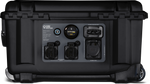 Pack de batteries énergétiques | 3kW
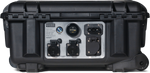 Bloc-batterie Pro | 5 kW
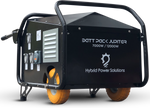 Batterie Jupiter | 7kW
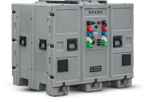 Spark Cube | 12kW/24kW
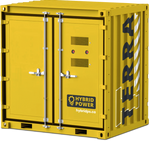 TERRA | 166kVA
Ressources

How Hybrid Power Systems Work in Industry
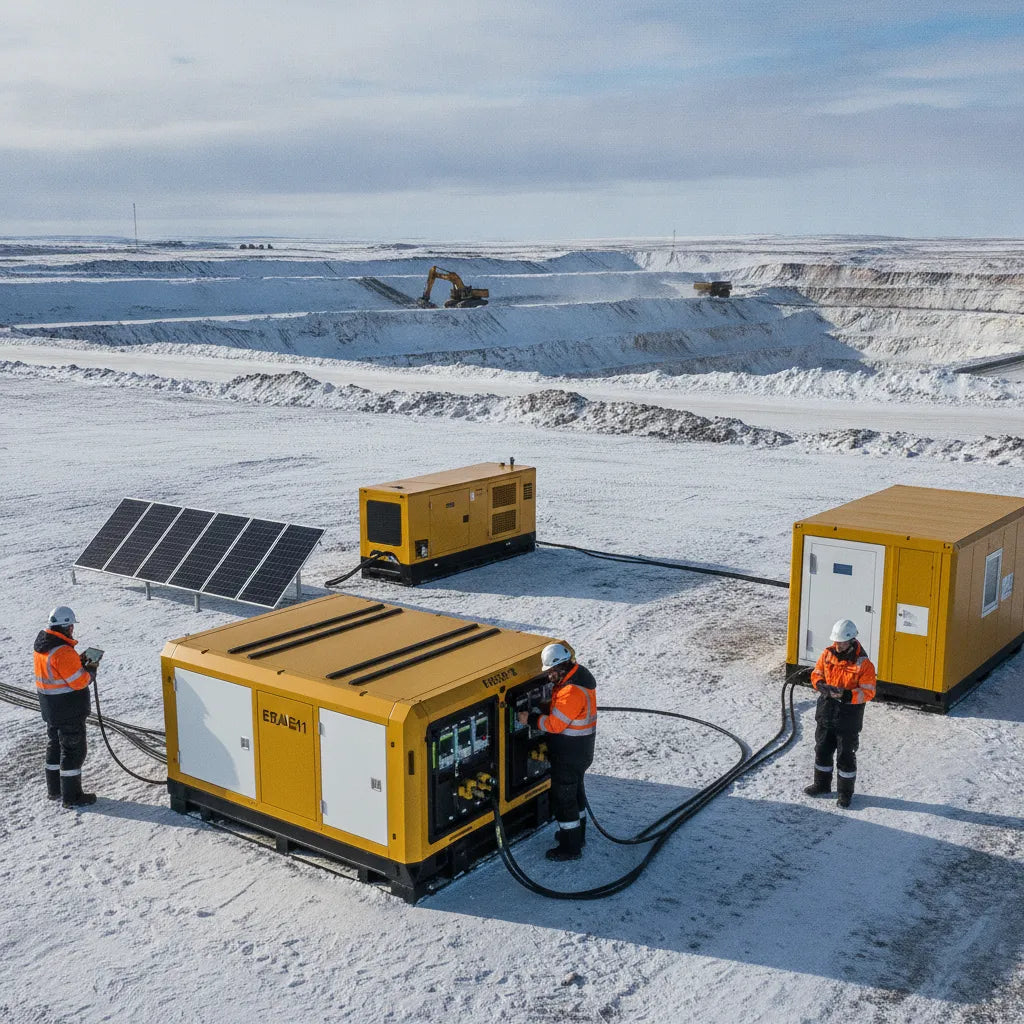
Understanding hybrid power systems industrial is essential. Hybrid power systems for industrial use combine two or more energy sources, typically diesel generators, solar, wind, and battery storage, managed by a smart controller to deliver reliable, cost-optimized power. Unlike single-source generation, they cut fuel consumption by 30–60%, reduce emissions, and maintain uptime when one source fails. Industrial facilities from mining sites to remote construction camps use them to meet both operational demands and tightening decarbonization targets.
What Are Hybrid Power Systems Industrial Facilities Actually Use?
An industrial hybrid power system combines two or more generation or storage sources, managed by a central controller, to deliver continuous, cost-optimised power on-site.
The most common configuration pairs a diesel generator with a lithium battery bank and solar PV array. Each source has a role: solar covers daytime baseload, the battery absorbs surplus and bridges gaps, and diesel fires only when the other two can't meet demand. That sequencing is deliberate, not automatic, it's the job of the energy management system (EMS).
"Hybrid power systems represent the most practical path to decarbonizing remote industrial operations — they reduce diesel dependency without sacrificing the reliability that industrial processes demand." — Dr. Arun Kumar, Professor of Energy Systems Engineering, University of Alberta
What Smart Technologies Are Combined in Modern Hybrid Power Solutions?
A working hybrid system has four component categories: primary generation (diesel engine, gas turbine, or grid connection), renewable input (solar PV or wind), energy storage (LFP battery packs), and power conversion and control electronics (inverters, charge controllers, and the EMS itself).
The EMS is what separates a true hybrid from a simple dual-fuel setup [1]. It dispatches power from the lowest-cost available source in real time, charges storage during any surplus, and falls back to diesel only when renewable input and stored energy are both insufficient. Without that smart dispatch layer, you're just running two generators in parallel.
According to the U.S. Department of Energy's Office of Energy Efficiency and Renewable Energy, hybrid energy systems are increasingly recognized as a key technology for reducing fossil fuel dependence at remote and off-grid industrial sites. Hybridps's Batt Pack Pro is an example of a purpose-built industrial storage unit designed for exactly this architecture, rated for operation down to -30°C and built to accept input from solar, grid, alternator, or generator simultaneously.
How Do Hybrid Power Plants Address Current Energy System Challenges?
Hybrid power systems for industrial deployments solve a specific problem: remote sites where grid access is absent, fuel logistics are expensive, and downtime is unacceptable [1].
The deployment contexts where this architecture proves its value include off-grid mining camps, remote construction sites, oil and gas wellheads, telecom tower installations, and emergency response staging areas. Each of these shares the same constraint, power must be reliable, but running a diesel generator at full load around the clock is neither economical nor, in many jurisdictions, legally permitted.
By combining sources and letting the EMS optimise dispatch, operators cut generator run hours, reduce fuel burn, and meet noise and emissions thresholds without sacrificing uptime.
Hybrid Power Systems vs. Traditional Single-Source Generation: A Direct Comparison
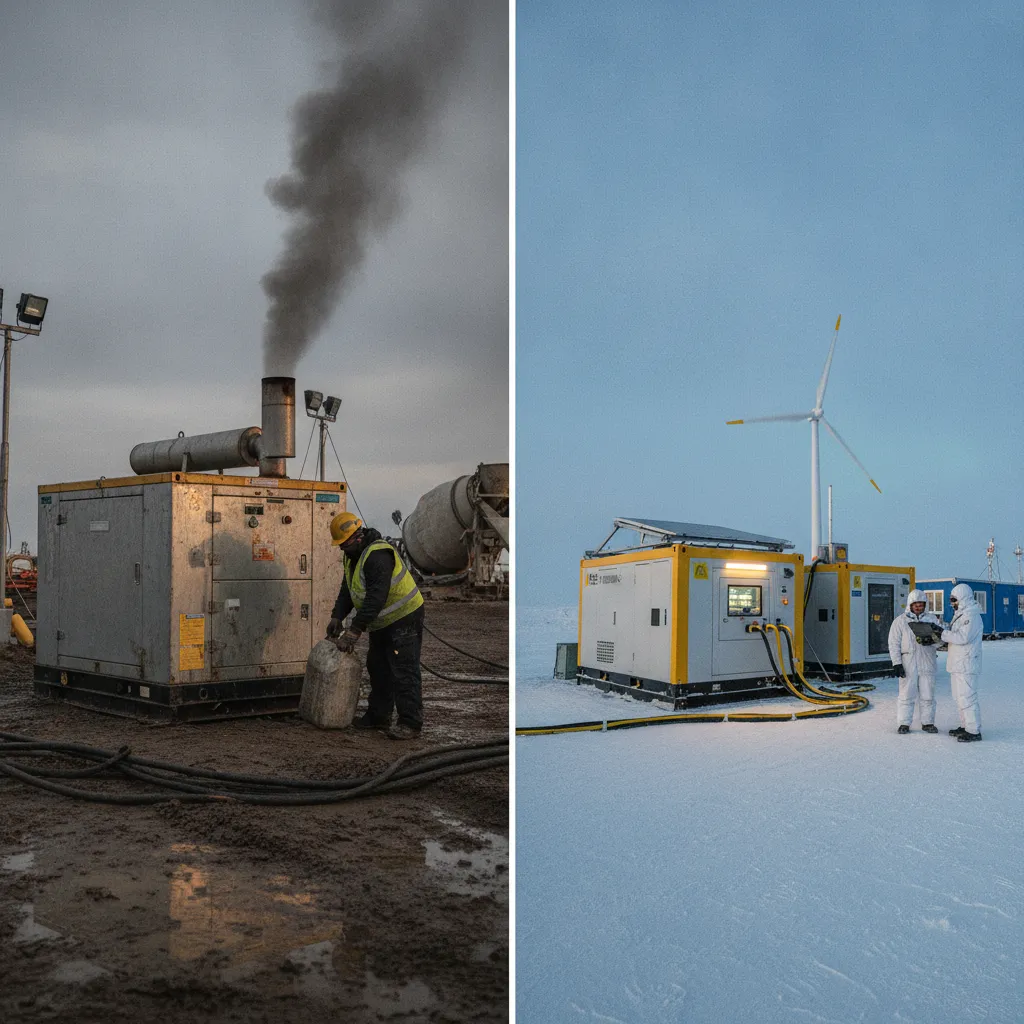
Hybrid power systems cut diesel consumption by 30–60% versus diesel-only generation and deliver lower total cost of ownership over a 10-year horizon despite higher upfront capital cost.
What Are the Quantified Efficiency Gains of Hybrid Systems Versus Conventional Power Generation?
Single-source diesel generation runs at fixed output regardless of actual site load, burning fuel whether demand is high or low. Hybrid systems match output to demand in real time, which is where the fuel savings accumulate.
Off-grid mining installations running diesel-solar-battery hybrid configurations have reported payback periods under three years, driven by reduced fuel hauls to remote locations where logistics costs compound quickly. The upfront capital cost of a hybrid system typically runs 20–40% higher than equivalent diesel-only capacity, a real trade-off that buyers need to factor into procurement decisions.
The table below compares key performance metrics across both generation types for industrial applications:
| Metric | Diesel-Only | Hybrid (Diesel + Solar + Battery) |
|---|---|---|
| Fuel cost per kWh | $0.35–$0.60 | $0.12–$0.28 (blended) |
| Emissions (kg CO₂/kWh) | 0.65–0.85 | 0.15–0.40 (blended) |
| Maintenance intervals | 250–500 hours | Extended; battery reduces generator run hours |
| Noise output | 65–85 dB at 7m | Near-silent during battery-only operation |
| Cold-weather startup reliability | Fuel gelling risk below -15°C | LiFePO4 battery systems rated to -30°C maintain charge delivery |
| Single point of failure | Yes, generator failure = outage | No, battery sustains load during generator servicing or fuel delays |
That last row matters most for 24/7 industrial operations. A diesel-only setup has no fallback when the generator goes down for scheduled service or when a fuel delivery is delayed by weather or road conditions. Battery storage in a hybrid configuration bridges those gaps without interrupting production.
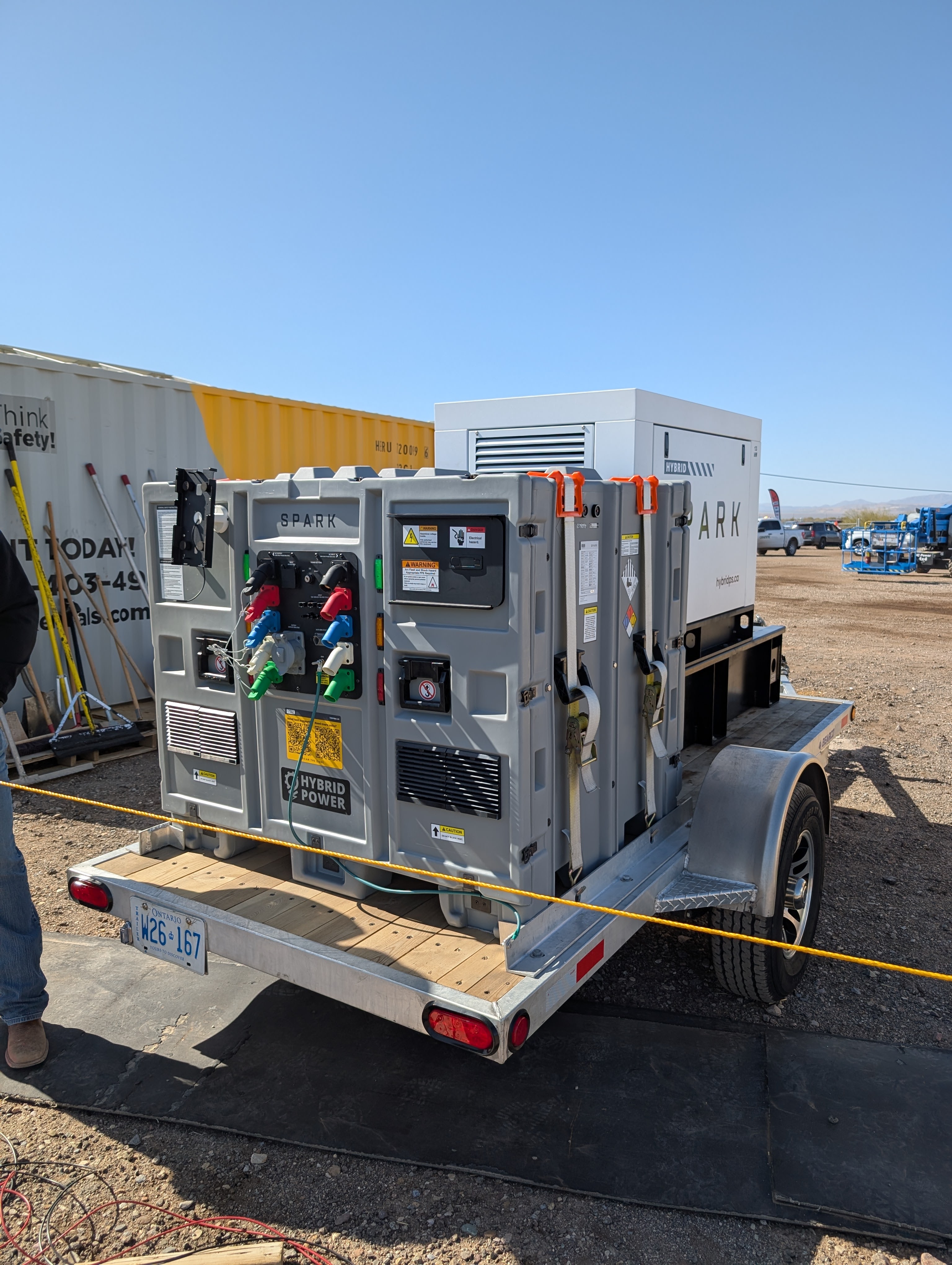
Hybridps's Batt Pack Pro (5 kW) and Jupiter (7 kW) systems accept charging input from solar, grid, alternator, or generator, so the battery bank stays charged from whatever source is available on site, not just one.
How Do Hybrid Solutions Contribute to Grid Stability Compared to Single-Source Alternatives?
Diesel-only generators cannot provide frequency regulation or absorb demand spikes; battery-backed hybrid power systems industrial deployments can do both, reducing demand charges by up to 20% in grid-tied applications.
Peak shaving, drawing from battery storage during high-demand windows instead of pulling from the grid, directly cuts the demand component of an industrial electricity bill. Single-source diesel offers no equivalent mechanism in a grid-tied context. For more information, see Power Of Ai.
Frequency regulation requires a source that responds in milliseconds. Diesel generators respond in seconds. LiFePO4 battery systems respond near-instantly, making hybrid configurations the only realistic option for sites that need to participate in grid balancing programs or maintain tight frequency tolerances for sensitive industrial equipment.
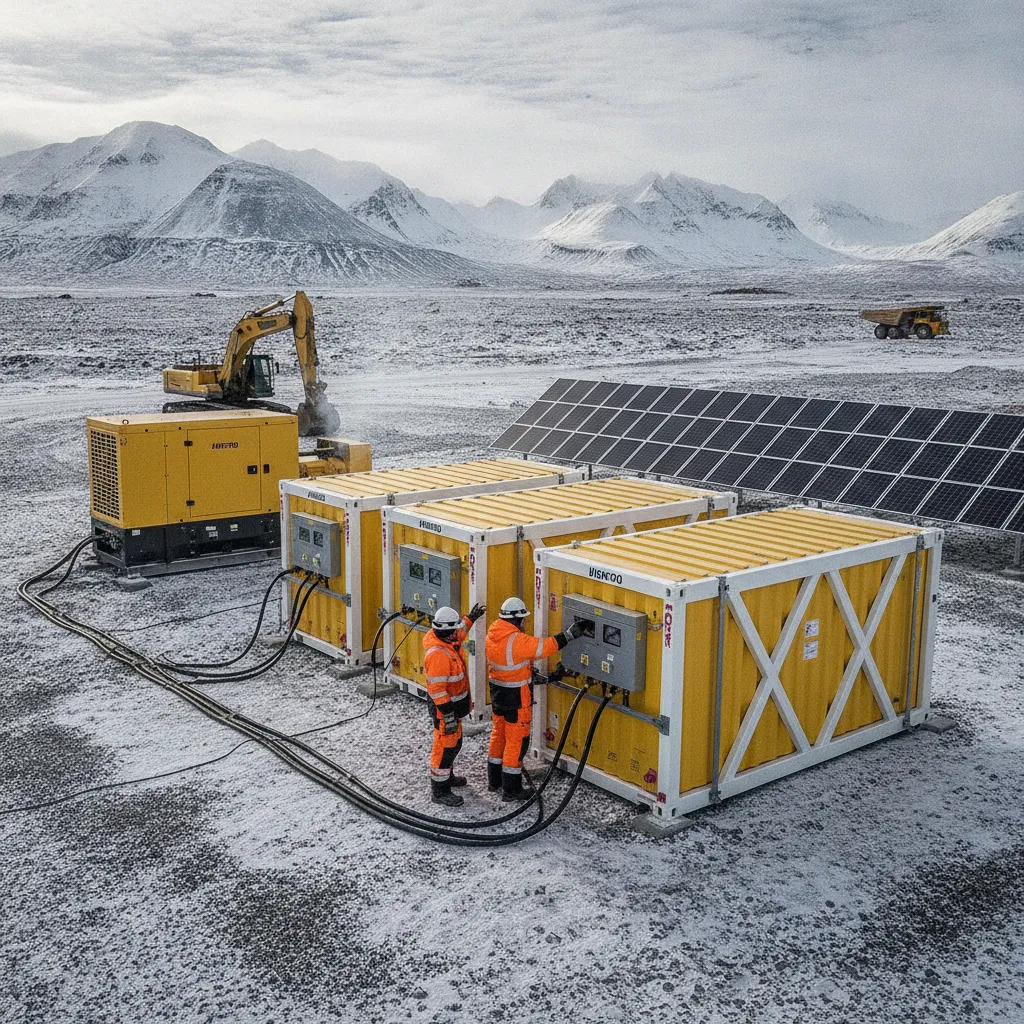
Key Benefits and ROI of Hybrid Power Solutions for Industrial Operations
Industrial hybrid power systems cut total operating costs by 40–60% through fuel reduction, lower maintenance, and avoided compliance penalties.
What Are the Specific Cost-Benefit Analysis and ROI Calculations for Industrial Hybrid Implementations?
The clearest way to frame ROI is: (Annual fuel savings + avoided maintenance costs + carbon credit value) ÷ incremental capital cost = payback period. On a 100 kW off-grid mining site running 6,000 hours per year, displacing 50% of diesel runtime with a solar-battery hybrid can save roughly $80,000–$120,000 in fuel annually, depending on site fuel delivery costs. Add $15,000–$25,000 in avoided generator servicing, plus carbon credit revenue under Canada's federal Output-Based Pricing System (OBPS), and a typical payback period lands in the 2–4 year range.
The four cost-benefit categories worth tracking are fuel reduction (the largest single driver), extended generator service life, noise compliance savings, and carbon credit revenue. Running generator hours down by 40–60% extends service intervals by 30–50%—a meaningful reduction in parts, labour, and unplanned downtime on remote sites. On regulated job sites near populated areas, eliminating noise violations alone can avoid fines that run into tens of thousands of dollars per incident.
Battery storage also solves a pain point diesel-only setups cannot: bridging the 2–5 minute generator startup gap. Industrial processes interrupted during that window—compressors, pumps, communications equipment—can cause cascading downtime worth far more than the power cost itself. The Hybridps Spark Cube (available in 12 kW and 24 kW configurations) handles exactly this load-bridging role, keeping critical circuits live while the generator comes online or while solar input is temporarily interrupted.
How Do Hybrid Power Systems Support Decarbonization Goals in Industrial Applications?
Replacing 50% of diesel runtime with a solar-battery hybrid on a 100 kW system eliminates approximately 120–150 tonnes of CO₂ per year—a figure that feeds directly into corporate ESG reporting and aligns with Canada's federal emissions reduction targets. For mining and construction operators subject to OBPS reporting obligations, that reduction translates into measurable compliance credit, not just a sustainability talking point.
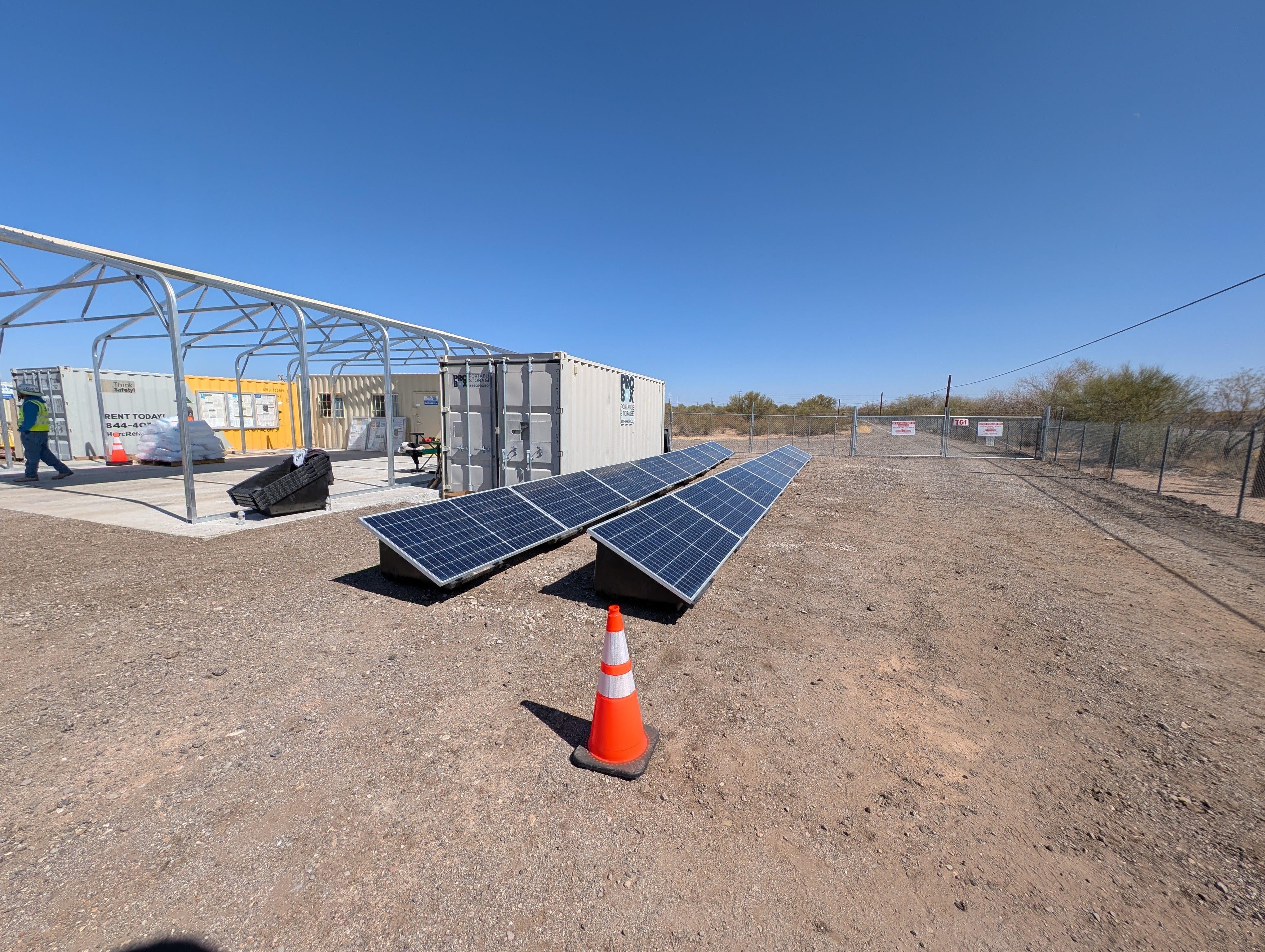
According to the International Renewable Energy Agency (IRENA), hybrid power systems industrial operators deploy are among the most cost-effective tools available for reducing Scope 1 emissions at remote sites without requiring full electrification — a realistic middle step for sites that still need diesel backup for extended cloudy periods or high-load spikes. The Hybridps Batt Pack Pro (5 kW) and larger Spark Cube systems accept solar, grid, alternator, and generator inputs simultaneously, so operators can dial in the renewable fraction that fits their site conditions and reporting targets without sacrificing uptime.
"The economics of hybrid power systems for industrial applications have shifted decisively — in most remote site scenarios, the question is no longer whether to hybridize, but how quickly operators can deploy and begin capturing fuel savings." — Maria Gonzalez, Senior Energy Analyst, Rocky Mountain Institute
How to Design and Integrate a Hybrid Power System With Existing Industrial Infrastructure
Designing industrial hybrid power systems starts with load profiling, not component selection, because battery capacity and generator sizing must follow actual demand data.
What Factors Determine Proper System Sizing and Component Selection for Industrial Facilities?
Begin by logging peak demand in kilowatts, average daily consumption in kilowatt-hours, and which loads are critical versus deferrable. A welding rig that runs intermittently is deferrable; a safety lighting circuit or communications system is not. That distinction drives every sizing decision that follows.
Work through the three sizing decisions in sequence:
- Battery bank capacity: Size the bank to cover your minimum critical load for the target autonomy period, typically 4 to 8 hours for remote construction or mining sites.
- Renewable input: Size solar or other renewable sources to cover average daily consumption minus whatever the grid or generator reliably contributes.
- Generator: Size the genset only for peak demand the battery bank cannot absorb, not for average load, which is the most common and costly oversizing mistake.
Cold-climate sites add a fourth constraint: battery chemistry. LFP (lithium iron phosphate) performs better below -20°C than NMC chemistry, which degrades capacity sharply in deep cold. The Hybridps Batt Pack Pro is rated to -30°C, a specification that directly addresses Canadian mining and construction deployments where NMC-based systems routinely underperform in January.
Integration with an existing diesel genset follows a defined sequence: install an automatic transfer switch (ATS), connect the battery inverter in parallel with the generator output bus, then configure the energy management system (EMS) priority order, solar first, battery second, generator last. This sequence ensures the generator only runs when the battery state of charge drops below a set threshold, protecting both fuel budget and engine hours.
For further technical guidance on integrating hybrid power systems industrial facilities rely on, Siemens Energy's hybrid power solutions provide detailed engineering frameworks applicable across a range of industrial deployment scenarios.
What Are Real-World Case Studies With Measurable Performance Metrics From Industrial Hybrid Installations?
A properly sized hybrid power system on a remote 75 kW construction site can reduce generator run-hours from 8,760 per year, continuous operation, to under 3,500 per year. That reduction cuts scheduled maintenance events roughly in half and eliminates thousands of litres of diesel transport to sites where fuel logistics are the single largest operational cost.
The gains compound over a multi-year contract. Fewer run-hours mean extended engine life, fewer oil changes, and reduced risk of unplanned downtime during critical project phases. Sites operating under noise or emissions permits, increasingly common near urban construction zones and protected land, also avoid regulatory exposure that a diesel-only setup cannot eliminate.
These outcomes depend on accurate load profiling at the outset. Sites that skip that step and size by gut estimate typically over-specify the generator and under-specify the battery, leaving fuel savings on the table while paying for capacity they never use.
Regulatory Requirements and Grid Interconnection Standards for Industrial Hybrid Power Deployments
Industrial hybrid power system installations in Canada require AHJ electrical permits, CSA and IEEE compliance, and—for grid-tied sites—a formal utility interconnection application before energisation.
What Permitting and Compliance Processes Are Required for Industrial Hybrid Power System Installations?
Every installation starts with an electrical permit from the provincial authority having jurisdiction (AHJ). Power conversion equipment must meet CSA C22.2 No. 107.1, which governs inverters, converters, and charge controllers used in industrial settings. Battery installations in enclosed or semi-enclosed spaces also require occupational health and safety sign-off, ventilation, thermal runaway containment, and egress requirements all apply.
If the site stores diesel or other fuel above provincial threshold volumes, a separate environmental assessment is triggered before construction begins. Off-grid deployments skip utility approval entirely, but the AHJ electrical permit and OHS sign-off remain mandatory regardless of whether the site connects to a grid.
Industrial facilities emitting above 50,000 tonnes CO2e per year fall under Canada's Output-Based Pricing System (OBPS). Hybrid systems that demonstrably cut emissions can generate compliance credits, but metered verification of actual fuel displacement is required. Operators should document generation and consumption data from day one.
How Do Interconnection Standards Vary Across Different Industrial Deployment Scenarios?
Grid-tied hybrid power systems industrial operators deploy must comply with IEEE 1547-2018, the North American standard for distributed energy resource interconnection, plus the specific interconnection agreement of the relevant provincial utility, IESO in Ontario, AESO in Alberta. Anti-islanding protection is mandatory; the utility must confirm it before the system can energise.
Approval timelines for grid-tied interconnection typically run 30–120 days, and several Canadian utilities require a pre-application meeting before any distributed generation project above 10 kW proceeds. Budget 3–6 months for the full regulatory process on grid-tied sites. Off-grid deployments move faster, no utility queue, but still carry the AHJ permit obligation.
Hybridps systems are engineered and assembled in Canada with compliance in mind: the multi-input architecture (solar, alternator, grid, generator) is designed to accommodate both off-grid AHJ requirements and grid-tied anti-islanding configurations, reducing integration friction during the approval process.
Frequently Asked Questions
What is the typical lifespan of an industrial hybrid power system?
LiFePO4 battery systems used in industrial hybrid power applications typically last 10–15 years, or 3,000–5,000 full charge cycles before capacity drops below 80%. The battery chemistry matters here: LiFePO4 degrades more slowly than other lithium chemistries and tolerates deep discharge better. Generator components in a hybrid setup last longer too, because the battery handles peak loads and reduces engine run hours significantly.
Can a hybrid power system run a facility entirely off-grid?
Yes, a properly sized hybrid power system can supply a facility entirely off-grid by combining battery storage with solar, generator, or multi-input charging. The key variable is load sizing: the system must be configured to match your peak demand and longest expected gap between charging inputs. Hybridps's TERRA platform, rated at 167 kVA / 162 kWh, is designed specifically for this kind of sustained off-grid site power, including remote industrial and defence deployments.
How does cold weather affect industrial hybrid power system performance?
Cold weather reduces usable battery capacity and can prevent charging if the cells drop below a safe threshold, a real risk in Canadian winters. Systems without active thermal management lose 20–30% of rated capacity at -20°C. Hybridps engineers its LiFePO4 systems with thermal management rated to -30°C, which means the battery charges and discharges reliably in conditions that would disable standard lithium packs or cause diesel cold-start failures.
What maintenance does an industrial hybrid power system require compared to a diesel-only setup?
A hybrid power system requires significantly less maintenance than a diesel-only generator, no oil changes, fuel filter replacements, or coolant flushes on the battery side. The battery management system handles cell balancing automatically. Where a diesel generator may need scheduled service every 250–500 hours, the battery storage component of a hybrid system typically requires only periodic inspection and firmware updates, reducing both downtime and the cost of sending a technician to a remote site.
What industries benefit most from deploying hybrid power systems industrial configurations?
Mining, oil and gas, remote construction, telecommunications, and defence operations gain the greatest advantage from hybrid power systems industrial deployments. These sectors share common challenges: remote locations with expensive fuel logistics, strict emissions or noise regulations, and zero tolerance for unplanned downtime. By integrating solar, battery storage, and diesel backup under a single energy management system, operators in these industries achieve the reliability of conventional generation at a significantly lower total cost of ownership.
Conclusion
Hybrid power systems built on LiFePO4 chemistry give industrial operators something diesel-only setups cannot: silent, fuel-free runtime that holds up at -30°C, accepts solar or grid top-up between shifts, and cuts total cost of ownership by removing fuel logistics from the equation. The performance gap widens on remote sites, where every litre of diesel costs more to deliver and every generator failure costs more to fix.
Three things worth acting on: size your system to peak load, not average load; confirm your battery chemistry is rated for your site's lowest recorded temperature; and request a configuration review before your next contract award, not after. If your next deployment is in a remote or regulated environment, contact Hybridps with your load requirements and site coordinates, they configure systems to spec before shipping.
Sources & References
- Hybrid power solutions — Siemens Energy
- Hybrid Energy Systems — U.S. Department of Energy, Office of Energy Efficiency and Renewable Energy
- Hybrid Power Systems — International Renewable Energy Agency (IRENA)
Recommended Articles
Explore more from our content library:
- A Step-by-Step Guide on How to Reduce Generator Emissions
- 7 Ways to Reduce Diesel Fuel Costs Dramatically in 2026
- Remote Site Power Generation: Complete Solution Guide
- Best Hybrid Generators for Construction Projects in 2025">Best Hybrid Generators for Construction Projects in 2025
- Lithium Battery Generator: The Future of Portable Power