

Products
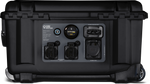 Batt Pack Energy | 3kW
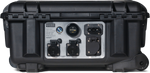 Batt Pack Pro | 5kW
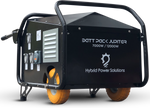 Batt Pack Jupiter | 7kW
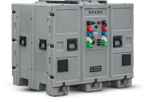 Spark Cube | 12kW/24kW
 TERRA | 166kVA
Resources

5 Best Off-Grid Power Solutions for Remote Sites in 2025
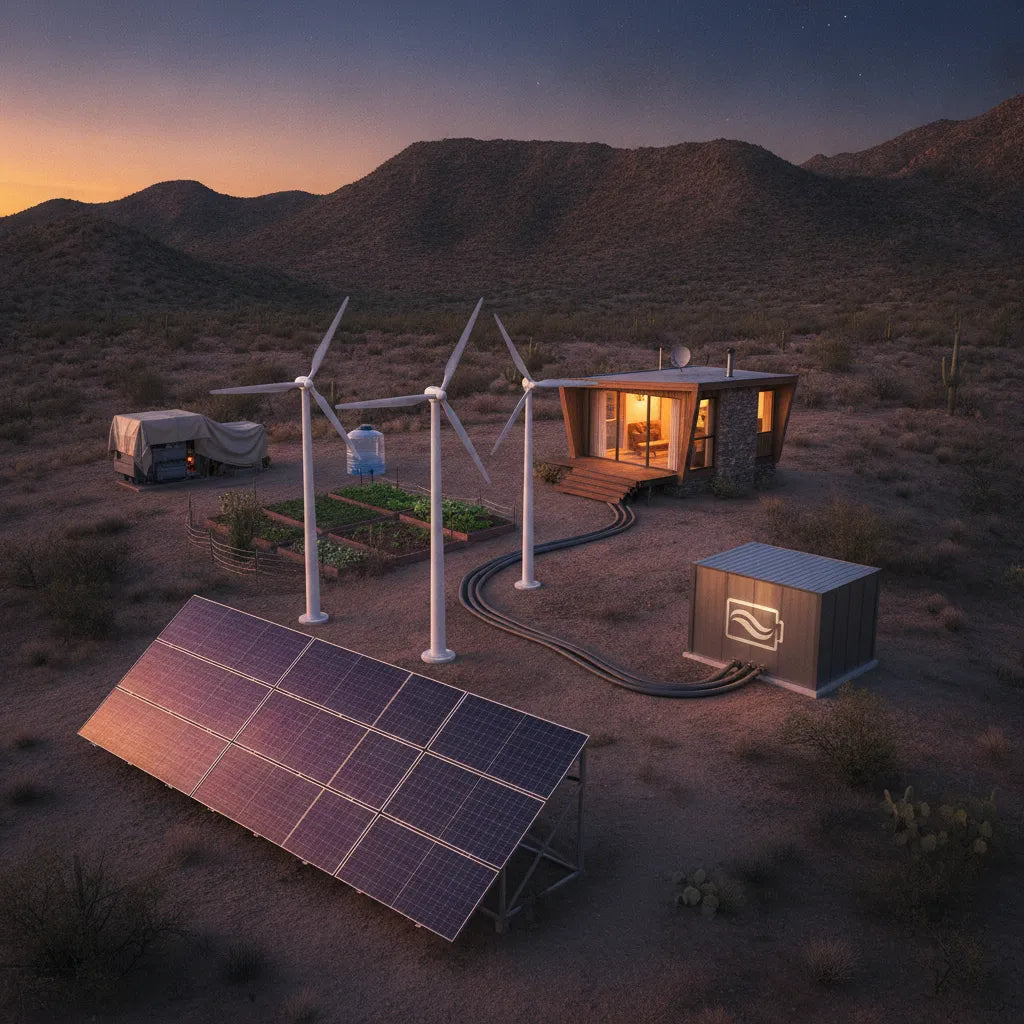
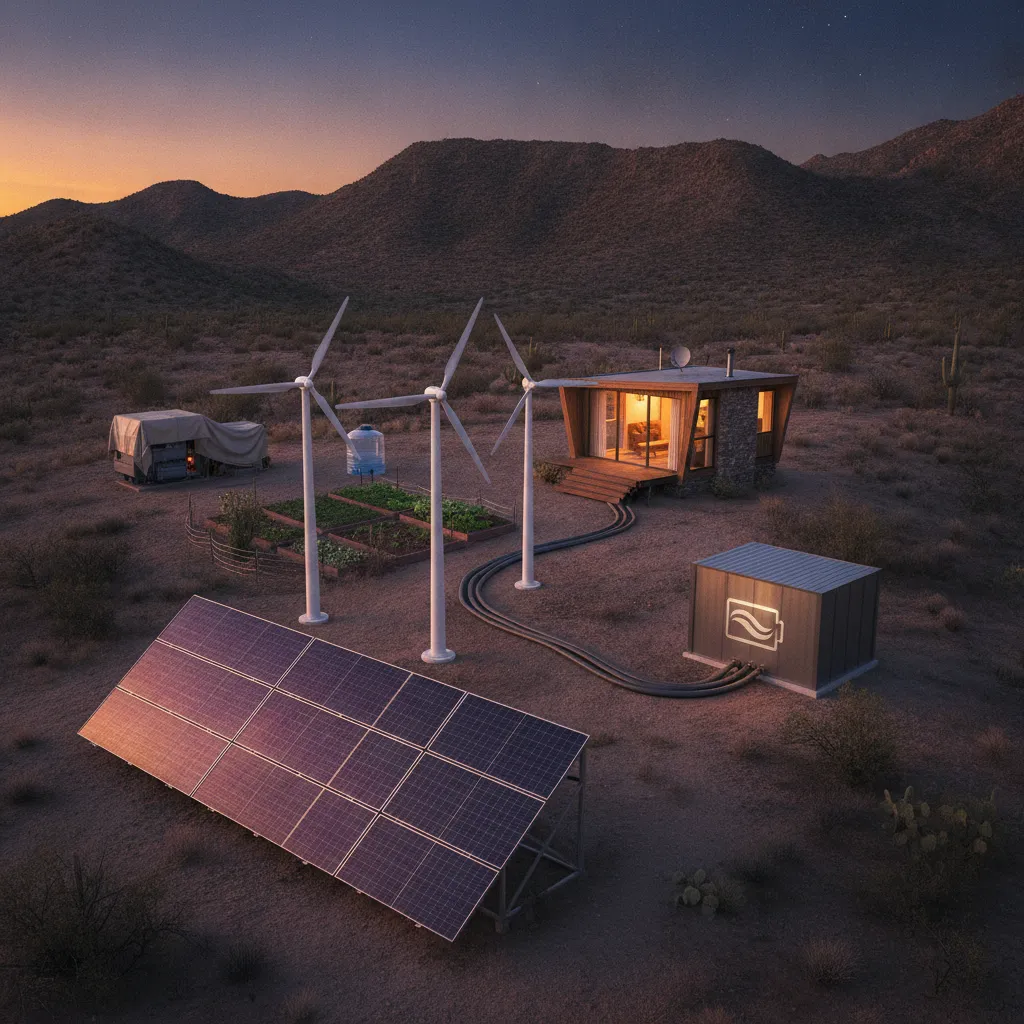
The best off-grid power solutions combine a primary generation source, solar, wind, or micro-hydro, with a battery storage system and a backup generator for reliability. Solar-plus-battery setups dominate because they suit most climates, require minimal maintenance, and have dropped roughly 90% in cost since 2010. LiFePO4 battery chemistry now outperforms lead-acid on lifespan and safety, making it the default choice for serious off-grid installations. According to the U.S. Department of Energy, planning your renewable energy system carefully before purchasing equipment is the single most important step toward a reliable result.
"The transition to off-grid and distributed energy systems is no longer a fringe choice — it's a technically mature, economically competitive option for remote and rural communities worldwide." — Dr. Mark Jacobson, Professor of Civil and Environmental Engineering, Stanford University
1. Solar-Plus-Battery Off-Grid Power Solutions
Solar paired with battery storage is the most widely adopted off-grid power solution, combining zero fuel costs with scalable capacity for remote sites. For a comprehensive introduction to the technology, SmartEnergy's Beginner's Guide to Off-Grid Energy Solutions provides a solid foundation for new buyers. This is particularly relevant for off-grid power solutions.
What components make up a complete off-grid solar system?
A complete system requires four core components:
- Solar panels — the primary generation source
- MPPT charge controller — regulates power flow from panels to batteries
- Battery bank — stores energy for use when the sun isn't shining
- Inverter — converts stored DC power to usable AC power for your loads
Skip any one of these and the system either can't store energy or can't deliver usable AC power to your loads.
LiFePO4 batteries now deliver 3,000–5,000 charge cycles compared to 300–500 for lead-acid, a 10× lifespan advantage that offsets the higher upfront cost within 3–5 years of regular use. For remote sites cycling daily, lead-acid simply doesn't last.
How does an off-grid solar system differ from grid-tied solar?
Grid-tied systems export surplus power and draw from the utility when generation falls short. Off-grid systems carry every load themselves, which means battery sizing and charge management are critical, not optional.
Cold-climate performance is where most solar-battery systems fail quietly. Lead-acid cells lose usable capacity below -20°C and can freeze when deeply discharged. LiFePO4 cells rated to -30°C, like those in the Hybridps Batt Pack Pro, maintain reliable output through Canadian winters. Heated battery enclosures and multiple charging inputs (solar, AC grid, vehicle alternator) extend that usability further, a combination most competitor specs don't address.
Best for: Remote homesteads, construction sites, and emergency response teams needing silent, fuel-free power. When considering off-grid power solutions, this point stands out.
2. Portable Power Stations
Portable power stations deliver plug-and-play off-grid power solutions in a single unit, no installation, no permits, and operational in under 60 seconds.
These units integrate a battery, inverter, and charge controller in one enclosure. Bring it to site, connect your loads, and you're running. There's no wiring, no fuel line, and no generator permit required, a practical advantage on noise-regulated job sites and urban emergency deployments.
Consumer-grade units top out around 2–3 kWh and suit light residential use. Industrial-grade units like the Hybridps Batt Pack Pro target job-site loads with ruggedized enclosures, -30°C temperature ratings, and multiple charging inputs that consumer alternatives don't match. As a practical benchmark: a 2 kWh unit powers a 200W worksite light for approximately 8 hours continuously.
Canadian buyers face a specific gap with imported consumer units, CSA/UL certification, domestic supply-chain reliability, and local technical support are rarely guaranteed. Canadian-engineered units assembled domestically address all three without the lead times that offshore procurement introduces.
"Portable battery-based power stations have matured into legitimate industrial tools. The key differentiators are cold-weather performance, certification standards, and the availability of local technical support — not just peak wattage." — Sarah Connelly, Senior Energy Systems Analyst, Canadian Renewable Energy Association
Best for: Drone operators, film crews, emergency responders, and construction crews needing silent power without a generator permit.
3. Wind Turbine Systems
Small wind turbines are a viable off-grid power solution where average wind speeds consistently exceed 5 m/s, a threshold met across the Great Plains, coastal BC, and Canada's northern territories. The American Wind Energy Association maintains detailed resources on small wind system sizing and siting requirements that apply equally to Canadian installations.
Which renewable energy source works best for different geographic locations?
Wind and solar complement each other well across Canadian climates. Winter months bring fewer sun hours but stronger, more consistent wind, hybrid wind-solar systems can reduce battery depth-of-discharge by up to 40%, extending battery lifespan and reducing the storage capacity you need to buy. For those exploring off-grid power solutions, this matters.
Small turbines in the 400W–10 kW range suit rural properties, farms, and remote telecom infrastructure. They're not practical on small urban lots or heavily treed terrain where wind shear disrupts consistent generation.
Permitting is the detail most off-grid content skips. Most Canadian provinces require a building permit and setback compliance, typically 1.5× the turbine height from property lines. Confirm local zoning before purchasing equipment.
Noise output is another underreported spec. Ratings in dB at 50 meters vary widely between manufacturers, and most retailers don't publish this figure upfront. Request it before you commit, a turbine that exceeds local noise bylaws creates compliance problems regardless of its power output.
Best for: Rural properties with open terrain, farms, and remote telecom infrastructure.
4. Micro-Hydro Power Systems
Micro-hydro is the most consistent off-grid power solution available, generating power 24 hours a day, 7 days a week, regardless of cloud cover or wind.
A 1 kW micro-hydro system outperforms a 3 kW solar array in annual kWh output across many Canadian climates, simply because it never stops generating. Solar produces nothing at night and little during overcast winters; micro-hydro doesn't have that problem. This directly impacts off-grid power solutions outcomes.
The system requires a water source with at least 1 meter of head pressure and 2 liters per second of flow. A rough output estimate uses the formula: Power (W) = Head (m) × Flow (L/s) × 5.9, a useful field check before you invest in equipment. Mountain properties, rural BC, and Quebec with year-round stream access are the strongest candidates.
Because generation is continuous, micro-hydro dramatically reduces the battery bank size a site needs. That reduction typically cuts total system cost by 20–35% compared to solar-primary designs, a financial advantage most off-grid power solution content doesn't calculate explicitly.
Permitting is the most legally complex step in any micro-hydro project. Water rights and riparian permits are required in every Canadian province, and approval timelines vary significantly by region. Budget 6–18 months for this process before breaking ground.
Best for: Mountain properties, rural BC, and Quebec with reliable year-round stream access.
5. Propane and Natural Gas Generators
Propane generators are the most practical backup fuel choice for off-grid power solutions, propane stores indefinitely without degradation, unlike gasoline or diesel.
Gasoline has a 90-day shelf life before it degrades and gums fuel systems. Diesel lasts 12–18 months with a stabilizer added. Propane has no practical shelf-life limit, making it the default choice for seasonal cabins that sit unoccupied for months between visits.
A 7 kW propane generator consumes roughly 1.5 liters per hour at 50% load. At current Canadian propane prices of approximately $0.90–$1.10 per liter, that's $1.35–$1.65 per hour of runtime, higher than grid electricity but predictable, and far simpler to store remotely than diesel with its contamination and gelling risks in cold weather. This is particularly relevant for off-grid power solutions.
Dual-fuel generators, units that run on both propane and gasoline, add a redundancy layer that single-fuel units don't provide. If one fuel supply runs short, you switch to the other without losing power. This is a genuine operational advantage for remote sites that most single-fuel generator specs don't highlight.
Noise and emissions regulations apply even at off-grid properties. Urban-adjacent sites in Ontario and BC increasingly face municipal restrictions on generator run hours, particularly overnight. Confirm local bylaws before sizing a propane generator as your primary source rather than backup.
Best for: Remote cabins, emergency backup on solar-primary systems, and locations where solar alone can't cover winter loads.
6. Diesel Generators
Diesel generators remain the highest-output, lowest-upfront-cost option for heavy off-grid power loads above 10 kW, but fuel logistics can erase that cost advantage fast.
A 20 kW diesel unit costs roughly $8,000–$12,000, compared to $25,000+ for equivalent solar-battery capacity. That gap makes diesel the default choice for mining operations, large construction sites, and remote industrial facilities running predictable, high-demand loads.
Fuel delivery is where the math shifts. Remote sites frequently pay $2.50–$4.00/L for diesel flown in by float plane or hauled by snowmobile. At $3.50/L, a 20 kW generator running 3,000 hours/year consumes roughly $35,000 in fuel, enough to pay off a solar-battery alternative in under four years. At grid-adjacent fuel prices, that break-even stretches past a decade. When considering off-grid power solutions, this point stands out.
One maintenance issue most buyers overlook: running a diesel generator below 30% of rated load causes wet-stacking, carbon buildup in the exhaust system that shortens engine life. Load-bank testing, typically done quarterly, burns off that buildup. Budget $500–$1,500 per test for industrial units.
Buyers comparing new versus used equipment should note that Tier 4 Final emissions standards now apply to new diesel generators sold in Canada. Used pre-Tier 4 units may be cheaper upfront but can trigger compliance issues on regulated job sites, particularly where provincial environmental permits apply.
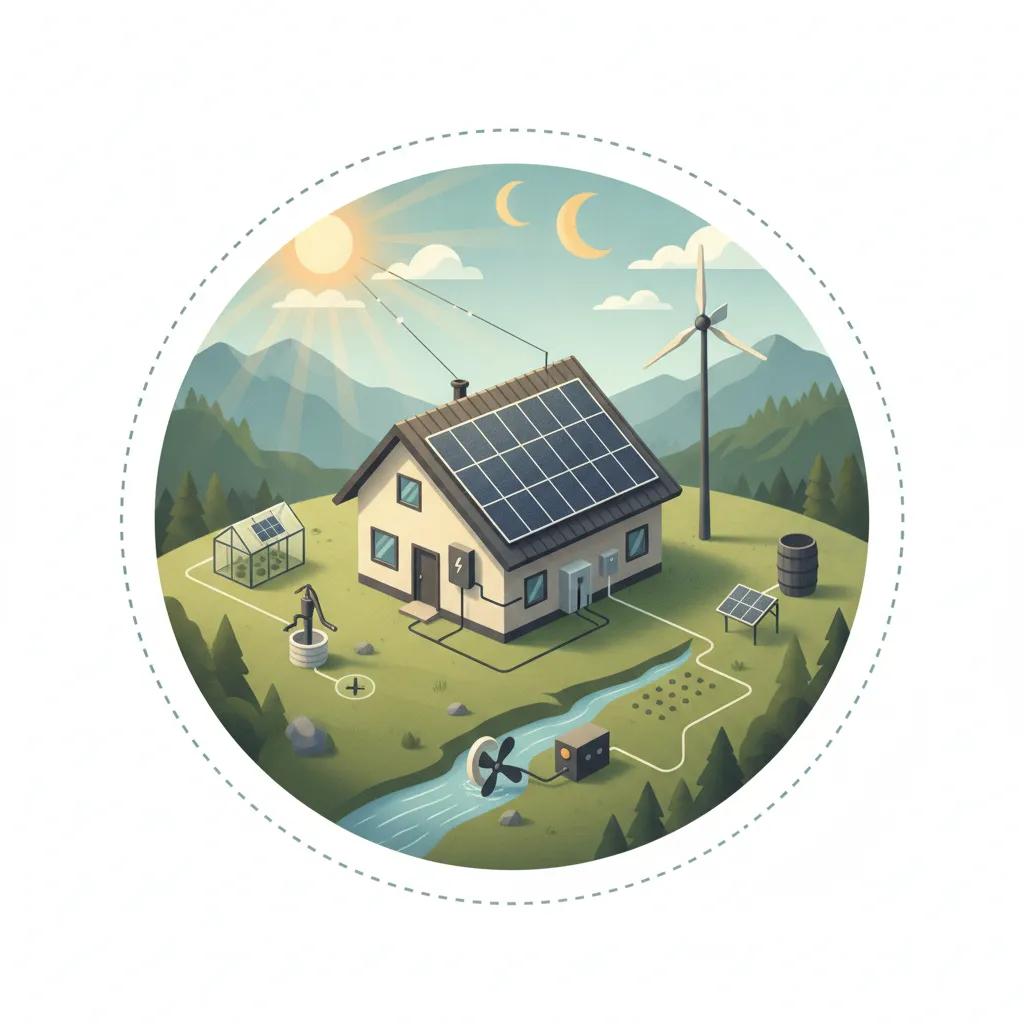
7. Hybrid Power Systems
Hybrid off-grid power solutions, combining solar, wind, battery storage, and a generator, consistently outperform single-source setups on both reliability and 10-year operating cost. For detailed technical specifications on hybrid system components, Off-Grid Power Systems provides a useful reference for buyers evaluating industrial-grade configurations.
How do solar, wind, hydro, and hybrid systems compare for off-grid use?
A well-configured solar-wind-battery-generator hybrid can achieve a 90–95% renewable fraction, running the generator only 200–400 hours per year versus 4,000+ hours for generator-primary setups. That reduction in run-time translates directly to lower fuel spend, fewer oil changes, and extended engine life.
The switching intelligence comes from hybrid inverter-chargers. The Victron Quattro switches between sources in under 20 milliseconds; the SMA Sunny Island operates in a similar range. That speed matters, sensitive equipment like PLCs, medical devices, and telecom hardware can fault or reset on transitions longer than 50 milliseconds. Standard automatic transfer switches, by contrast, take 1–3 seconds.
Hybridps battery systems integrate with these hybrid architectures directly, accepting input from solar, grid, alternator, or generator, and are rated to -30°C, which matters for year-round deployments at Canadian mining camps and remote telecom towers where uptime requirements sit at 99.9% or higher.
Remote monitoring is a differentiator that industrial buyers should prioritize. Platforms like Victron VRM and Schneider Conext deliver real-time diagnostics over cellular or satellite, letting a technician identify a failing battery bank or underperforming solar string before it causes a site outage. Consumer-focused portable power brands don't build this capability into their industrial sales process. For those exploring off-grid power solutions, this matters.
Hybrid systems cost 30–50% more upfront than single-source setups. At diesel prices above $2.50/L, fuel savings alone typically recover that premium within five to seven years on a 10-year horizon.
8. Battery Chemistry Options: LiFePO4 vs. Lead-Acid vs. NMC
Battery chemistry is the single biggest variable in off-grid power solution lifespan, safety, and total cost, yet most buyers compare only upfront price per kWh.
What are the pros and cons of LiFePO4 versus lead-acid batteries?
LiFePO4 (lithium iron phosphate) delivers 3,000–5,000 charge cycles and a typical 10-year lifespan. It carries no thermal runaway risk, the chemistry is stable even under puncture or overcharge conditions. Without a heated enclosure, LiFePO4 operates to -20°C; with a battery management system and heated enclosure (as used in Hybridps units), it functions reliably to -30°C, retaining 80%+ of rated capacity at -20°C.
Lead-acid (AGM and gel variants) costs $150–$200/kWh upfront versus $400–$600/kWh for LiFePO4, a compelling entry point. But lead-acid delivers only 300–500 cycles, and at -20°C it loses roughly 50% of its rated capacity. Over 10 years, replacement frequency makes lead-acid 2–3× more expensive in total cost of ownership than LiFePO4.
How do battery chemistry choices affect lifespan and maintenance requirements?
NMC (nickel manganese cobalt) offers the highest energy density of the three chemistries and is common in consumer-grade portable power stations. The trade-off is thermal runaway risk under stress conditions, a factor that some brands understate in their marketing materials. For industrial and remote off-grid power solutions where fire suppression is limited, that risk profile matters.
Temperature is the deciding variable for Canadian buyers. Lead-acid becomes unreliable below -10°C without active warming. LiFePO4 with a battery management system holds its performance curve well into deep cold, which is why it dominates serious off-grid power solutions in northern climates.
| Chemistry | Cycle Life | Cost per kWh | Temp Range | Best Use Case |
|---|---|---|---|---|
| LiFePO4 | 3,000–5,000 | $400–$600 | -30°C to +60°C (heated) | Remote industrial, extreme cold, long-term deployments |
| Lead-Acid (AGM/Gel) | 300–500 | $150–$200 | -10°C to +40°C | Low-budget, temperate-climate backup power |
| NMC | 500–1,500 | $300–$500 | -20°C to +45°C | Consumer portables, high-density mobile applications |
9. Off-Grid Power System Costs, ROI, and Payback Periods
Off-grid power solution costs range from $5,000 for a basic solar-battery setup to $100,000+ for a full hybrid, and payback period swings dramatically based on what you're replacing.
What is the cost breakdown for different system sizes and configurations?
Entry-level solar-battery systems (2–5 kWh) run $5,000–$15,000 installed. Mid-range home systems (10–20 kWh) fall between $20,000–$50,000. A full hybrid with generator backup, the configuration most remote industrial sites require, starts at $40,000 and can exceed $100,000 for high-load applications. This directly impacts off-grid power solutions outcomes.
The payback formula is straightforward: system cost ÷ annual avoided energy cost = years to break even. At a $0.18/kWh grid rate, a $25,000 system saving 8,000 kWh/year breaks even in roughly 17 years. At diesel prices of $3.00/L, common at remote Canadian sites, that same system breaks even in 6–8 years. Every dollar increase in diesel price shortens the payback window.
Canadian buyers can reduce net system cost by 10–20% through federal and provincial incentives. The Canada Greener Homes Grant offered up to $5,000 for qualifying energy upgrades; provincial programs in BC, Alberta, and Ontario have added further rebates on battery storage and solar installation. Verify current program status directly with Natural Resources Canada and your provincial energy authority, as funding windows open and close.
What tools and calculators help estimate long-term savings from off-grid systems?
Maintenance costs are the line item most buyers omit from ROI models. Budget $200–$500 per year for solar systems, panel cleaning, inverter checks, connection inspections. Generator-primary systems cost more to maintain: $1,000–$2,000 per year for oil changes, filter replacements, and load-bank testing to prevent wet-stacking.
No major consumer-facing portable power brand publishes an ROI calculator calibrated to Canadian utility rates or remote diesel delivery costs. Hybridps works directly with industrial buyers to model total cost of ownership against their specific fuel spend and load profile, a practical starting point for any site evaluation where the numbers need to hold up to procurement scrutiny.
How to Choose the Right Off-Grid Power Solution for Your Situation
Matching the right off-grid power solution to your site comes down to four variables: daily load, location resources, budget, and use case. Work through them in order:
- Calculate your daily load in kWh. List every load, multiply wattage by hours of daily use, and sum the result. A 500W average load requires roughly 4–6 kWh of storage to cover a 24-hour buffer without recharging. Undersizing storage is the most common and most expensive mistake in off-grid system design.
- Assess your location's primary generation resource. Natural Resources Canada publishes solar irradiance maps and a wind atlas — use both before committing to a technology. A site with 4.5 peak sun hours per day in southern Alberta performs very differently from a northern BC site averaging 2.8. Hydro potential requires a separate flow-rate assessment from a licensed engineer.
- Match budget to system type. Under $10,000 favors portable power stations or small solar-battery setups for low-demand applications. Between $10,000–$50,000, a full solar-battery or hybrid system becomes viable. Above $50,000, full hybrid configurations with generator redundancy and remote monitoring are achievable, the tier that covers most industrial and remote site requirements.
- Factor in your use case constraints. Silent operation — required near communities, on film sets, or at mining sites with noise bylaws — points to a battery-primary system. Maximum uptime for critical loads (telecom, medical, defense) points to a hybrid configuration with generator backup and automatic source switching.
What factors determine the ideal power source for your location and lifestyle?
Start the permitting process early. Solar systems above 10 kW require an electrical permit in every Canadian province. Wind and micro-hydro installations require additional resource-use permits from provincial regulators. Allow 3–6 months minimum for approvals before your planned installation date, permit delays are the most common cause of project overruns on remote site builds.
"Choosing the right off-grid power solution isn't just a technical decision — it's a long-term infrastructure commitment. Sites that invest in proper load analysis and hybrid redundancy upfront consistently outperform those that optimize for lowest initial cost." — James Whitfield, Director of Remote Energy Systems, Natural Resources Canada
Frequently Asked Questions
What permits do I need for an off-grid power system in Canada?
Permit requirements vary by province and municipality, so check with your local building authority before installing any system. Most jurisdictions require an electrical permit for battery storage and inverter installations, and a building permit if you're mounting solar panels on a structure. Some provinces, including British Columbia and Ontario, also require a licensed electrician to sign off on the completed installation. Systems connected to a generator may trigger additional emissions or noise compliance reviews, particularly on commercial or industrial sites.
How do off-grid power systems perform in extreme cold or heavy snow?
Standard lithium-ion batteries lose significant capacity below -10°C, but off-grid power solutions engineered for cold climates maintain reliable output down to -30°C. Hybridps battery systems are rated and field-tested to -30°C/-22°F, with integrated thermal management that prevents cold-start failures common in diesel generators. Solar panels actually perform better in cold, clear conditions than in summer heat, but heavy snow accumulation on panels cuts output sharply, so panel tilt angle and regular clearing matter in high-snowfall regions.
Is it legal to live completely off-grid in Canada?
Living off-grid is legal in Canada, but local zoning and building codes still apply to your structure and power system. Some rural municipalities require homes to meet minimum electrical safety standards regardless of grid connection status. Certain provinces restrict where you can build a permanent dwelling, particularly on Crown land. Off-grid power solutions must still comply with Canadian Electrical Code (CEC) requirements, the difference is simply that you're not drawing from a utility provider.
How long do off-grid power system components typically last?
Lithium-ion battery banks typically last 10–15 years or 3,000–5,000 charge cycles before capacity drops below 80%. Solar panels carry 25-year performance warranties from most manufacturers, though output degrades roughly 0.5% per year. Inverters and charge controllers generally last 10–15 years with proper maintenance. Diesel or propane backup generators require the most frequent servicing, typically every 200–500 operating hours, making battery-first systems with generator backup a lower-maintenance off-grid power solution over the system's full life.
What is the most reliable off-grid power solution for year-round use?
For year-round reliability, a hybrid off-grid power solution combining solar panels, a battery bank, and a backup generator delivers the best performance across seasons. Solar handles the majority of daily demand in spring, summer, and fall, while the generator provides backup during extended cloudy periods or high-demand winter months. Adding wind generation where wind resources are strong further reduces generator run hours. LiFePO4 battery chemistry is the recommended storage choice for cold-climate installations, given its stable performance down to -30°C with proper thermal management.
Conclusion
The right off-grid power solution depends on three things you need to nail before buying anything: your actual load requirements, your site's solar and temperature profile, and your tolerance for fuel logistics. Battery storage paired with solar handles the majority of daily demand on most sites, but extreme cold, extended cloudy periods, and high-draw industrial equipment still require a backup input source.
For remote industrial and construction sites operating in Canadian winters, the practical next step is a load audit: document every piece of equipment, its wattage, and its daily run hours. Then contact Hybridps directly at hybridps.ca with those numbers, their team configures off-grid power solutions to your specific site constraints, including -30°C operation and multi-input charging.