

Products
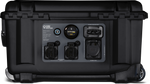 Batt Pack Energy | 3kW
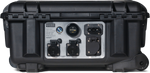 Batt Pack Pro | 5kW
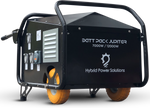 Batt Pack Jupiter | 7kW
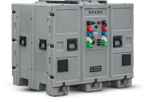 Spark Cube | 12kW/24kW
 TERRA | 166kVA
Resources

Uninterruptible Power Supply Industrial Systems
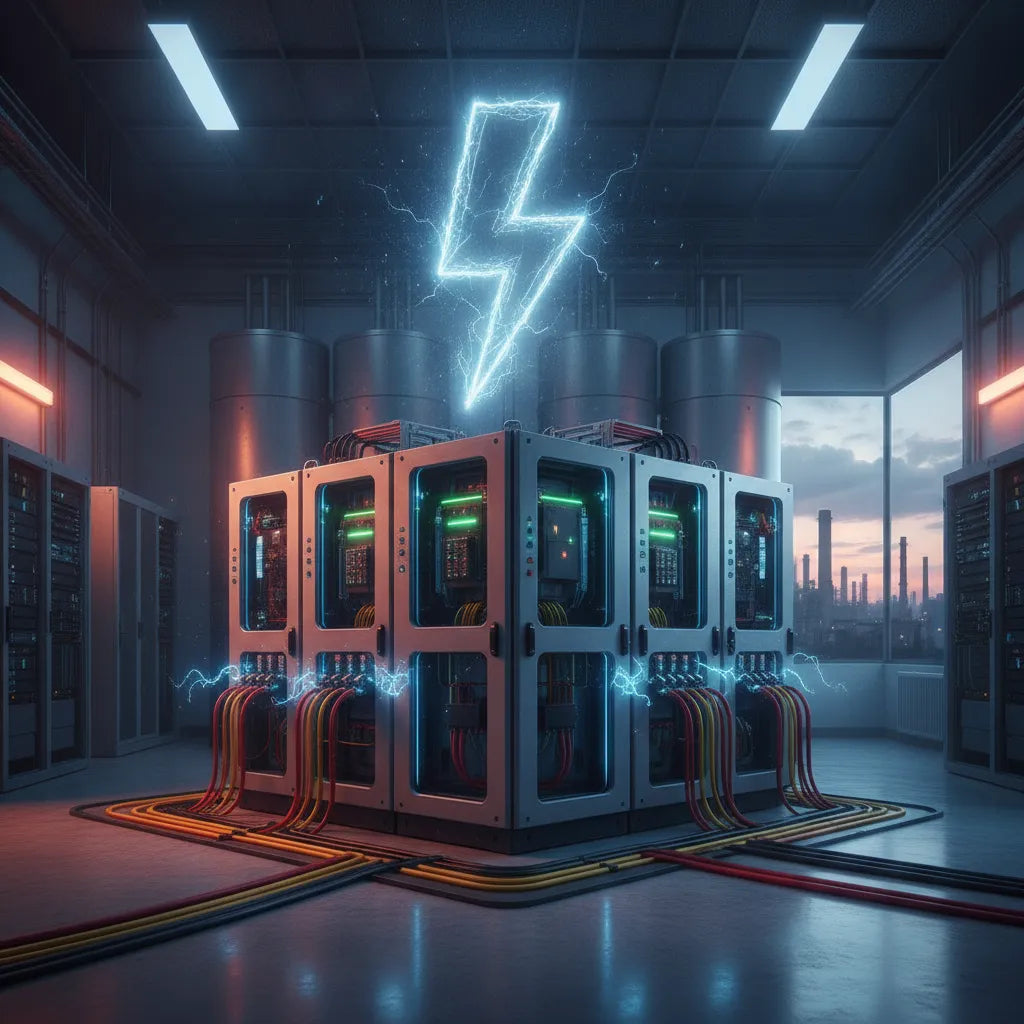
Understanding uninterruptible power supply industrial is essential. An industrial uninterruptible power supply (UPS) is a power protection device that delivers instant, conditioned backup electricity to critical equipment the moment grid power fails or fluctuates. Unlike commercial UPS units, industrial models are built for continuous heavy-load operation in harsh environments, rated for wider temperature ranges, three-phase power, and compliance with IEC 62040 standards. They protect manufacturing lines, data centers, and hospitals from costly downtime that can exceed $100,000 per hour.
"Power quality events — including sags, swells, and outages — cost industrial facilities billions of dollars annually in damaged equipment and lost production. A properly specified uninterruptible power supply industrial system is the single most effective first line of defense." — Dr. Mark McGranaghan, Vice President of Technology at the Electric Power Research Institute (EPRI)
What Is an Uninterruptible Power Supply and How Does It Work in Industrial Settings?
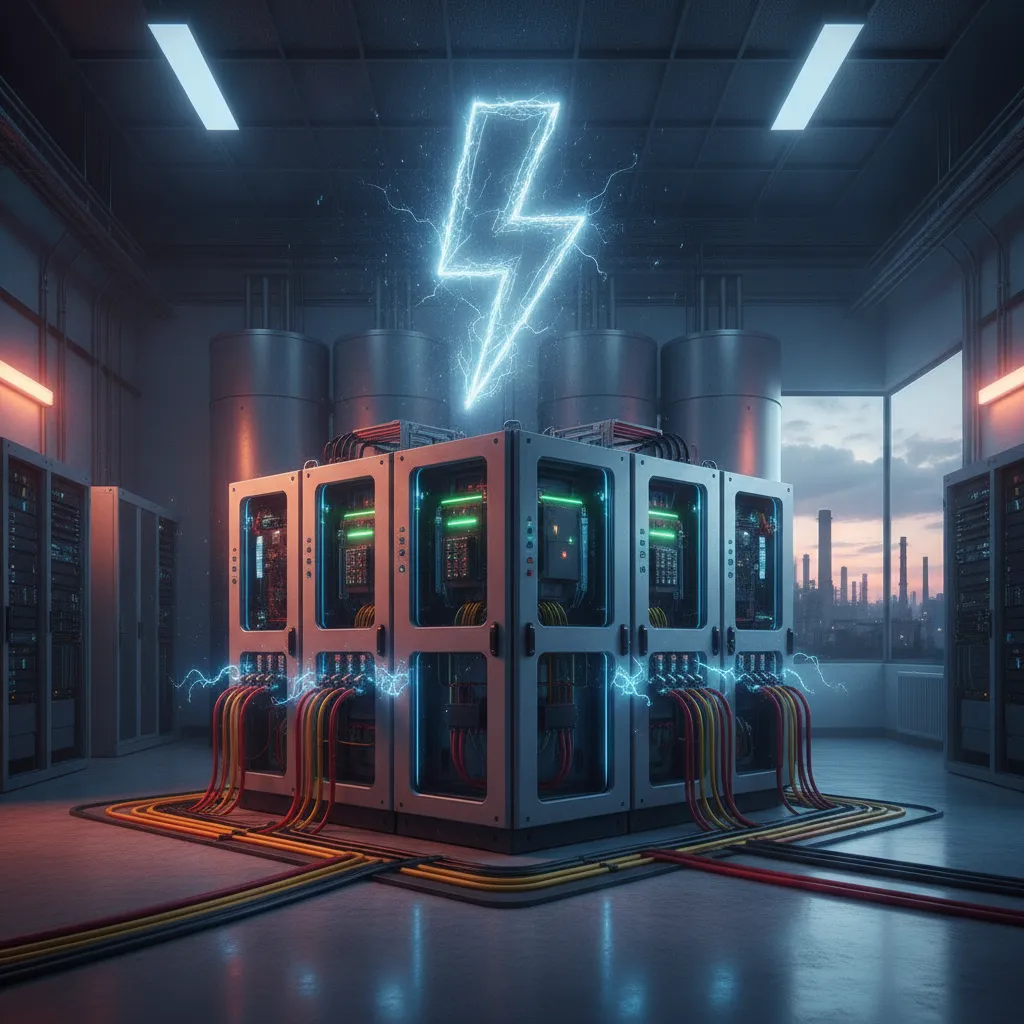
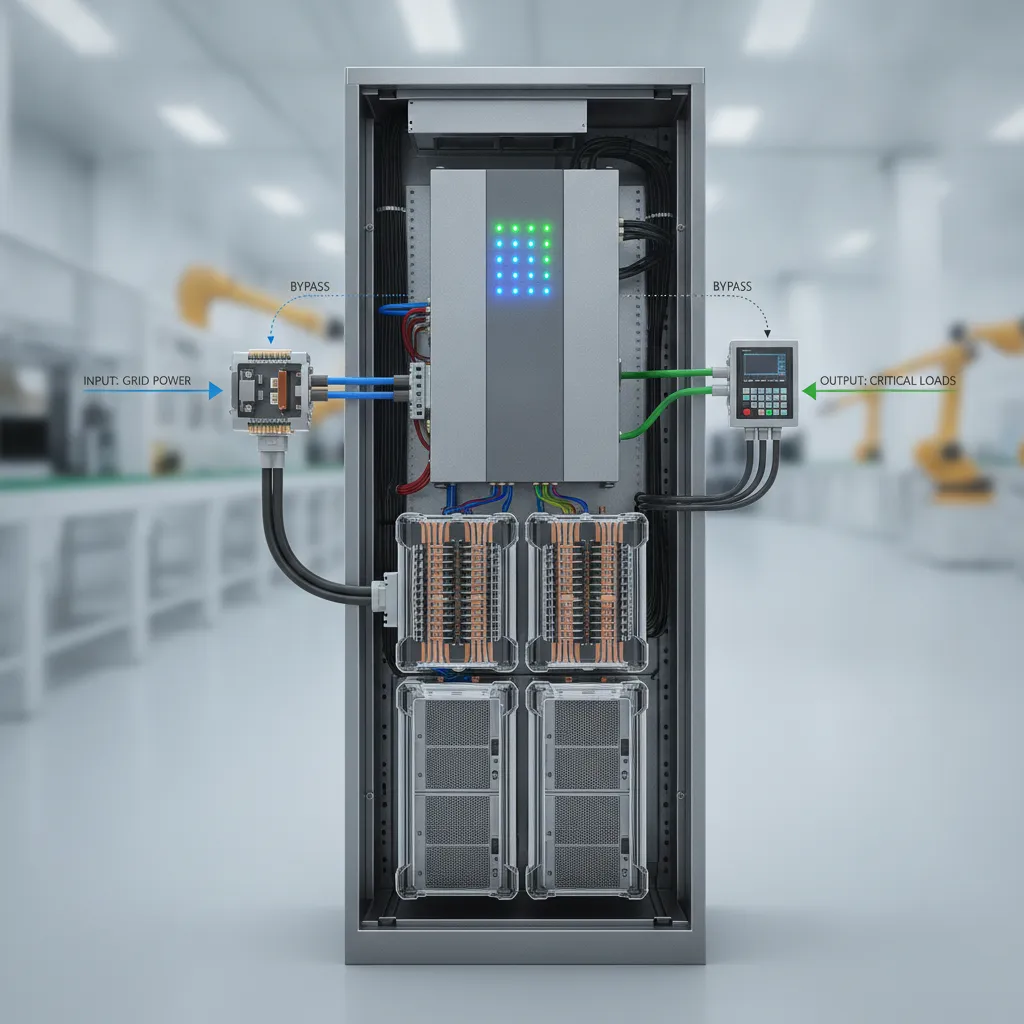
An industrial UPS converts incoming AC power to DC, stores it in a battery bank, then inverts it back to clean AC, all within milliseconds of a grid failure. According to the U.S. Department of Energy, power disturbances cost American businesses over $150 billion per year, making a reliable uninterruptible power supply industrial solution a critical infrastructure investment.
The most reliable topology for heavy industry is online double-conversion. In this design, power flows continuously through the rectifier and inverter, the battery bank is always in the circuit, not waiting on standby. When grid power drops, there is no switchover delay; the inverter simply keeps running. Switchover time in online double-conversion units is under 20 milliseconds, which is fast enough to prevent any interruption to sensitive industrial controls or automation equipment.
Key Components of an Industrial UPS System
Five hardware components define how an uninterruptible power supply industrial system functions under load:
- Rectifier: Converts incoming AC grid power to DC. It also charges the battery bank during normal operation.
- Battery bank: Stores DC energy and delivers it instantly when the rectifier loses its input. Industrial banks use valve-regulated lead-acid (VRLA) or lithium-ion cells rated for deep cycling.
- Inverter: Converts DC from the battery back to stable, conditioned AC power for connected loads. It runs continuously in double-conversion designs.
- Static bypass switch: Routes power directly from the grid to the load, bypassing the inverter, if the UPS itself develops a fault. This keeps the load energized during maintenance or internal failure.
- Isolation transformer: Separates the input and output circuits electrically, blocking transients, ground faults, and common-mode noise from reaching sensitive equipment.
Industrial enclosures also include thermal management systems and hardened bus bars rated for three-phase loads, components absent from standard office-grade units.
Regulatory Compliance Standards: IEC, ISO, and Regional Requirements
Industrial UPS manufacturers must meet two core IEC standards: IEC 62040-1 governs electrical safety, and IEC 62040-3 defines performance classifications. The National Fire Protection Association (NFPA) also sets requirements for UPS installations in healthcare and life-safety applications through NFPA 99 and NFPA 110.
IEC 62040-3 assigns three classifications: VFI (Voltage and Frequency Independent), VI (Voltage Independent), and VFD (Voltage and Frequency Dependent). VFI is the gold standard for industrial use, it means the output voltage and frequency are fully isolated from any variation on the grid input, which is exactly what manufacturing lines and process controls require.
ISO 9001 quality management certification is relevant for manufacturers supplying industrial UPS equipment to regulated industries; it signals consistent production controls and documented testing processes. Regional marking requirements add another layer: CE marking is mandatory for equipment sold in the EU, while UL listing is required for North American deployments.
Operating temperature ratings draw a sharp line between industrial and commercial units. Standard commercial UPS devices are designed for controlled environments, typically 20°C to 25°C. Industrial-grade units are rated for 0°C to 40°C ambient, and outdoor-enclosure models extend that range to -20°C. That gap matters on construction sites, in substations, and in any facility without climate-controlled equipment rooms.
Main Types of Industrial UPS Systems and How They Differ
Industrial UPS systems fall into three core topologies—offline, line-interactive, and online double-conversion—each suited to a different level of load criticality and budget. Selecting the correct uninterruptible power supply industrial topology is one of the most consequential decisions a facility engineer will make.
Three Topologies, Three Levels of Protection
Offline/standby UPS units are the lowest-cost option. They switch to battery only when grid power fails, with a transfer time of 4–8 milliseconds. That gap is acceptable for lighting or basic HVAC, but it can crash a PLC mid-cycle.
Line-interactive UPS adds automatic voltage regulation (AVR), which corrects sags and surges without switching to battery. Transfer time drops to 2–4ms. This topology suits network closets, smaller server racks, and office equipment in facilities with unstable grid voltage.
Online double-conversion UPS runs all load power through an AC-to-DC-to-AC conversion loop continuously. Transfer time is effectively zero because the inverter never disconnects. CNC machines, PLCs, and server rooms require this level of isolation—any voltage transient that reaches the load can corrupt data or damage precision equipment.
"When specifying an uninterruptible power supply for industrial automation environments, online double-conversion is non-negotiable. The cost of a single PLC crash or corrupted batch process far exceeds the price premium of VFI-class equipment." — Jennifer Strohl, Senior Applications Engineer, Industrial Power Systems Division
Single-Phase vs. Three-Phase Industrial UPS: Which Do You Need?
Single-phase industrial UPS units handle loads up to roughly 20 kVA and work well for smaller facilities, remote offices, or individual machine protection. Three-phase configurations start at 10 kVA and scale to 800 kVA or beyond—the right fit for large manufacturing plants, data centers, and utility substations where balanced load distribution across phases matters.
Modular UPS architecture is an increasingly common approach at the three-phase level. Operators add power modules as site load grows, which cuts upfront capital cost and eliminates the single-point-of-failure risk that comes with one large monolithic unit.
Lithium-Ion vs. Lead-Acid Batteries for Industrial Applications
Sealed lead-acid (VRLA) batteries cost 30–50% less upfront but last only 3–5 years and degrade noticeably above 25°C—a real liability in warm equipment rooms or outdoor enclosures. Lithium-ion batteries cost more initially, but they last 8–10 years, weigh 60–70% less, and tolerate wider temperature swings without accelerated capacity loss.
For an uninterruptible power supply industrial buyers can specify today, lithium-ion options from Eaton (9PX Li-Ion), Schneider Electric (Smart-UPS Li-Ion) [1], and Vertiv (Liebert GXT5) offer proven enterprise-grade performance. The weight reduction alone matters on raised floors and mobile deployments where structural load limits are a real constraint.
How to Choose the Right Industrial UPS for Your Facility
Match an industrial UPS to your facility by sizing to actual load, checking three non-negotiable specs, and calculating 10-year TCO—not just sticker price.
UPS Sizing Methodology and Capacity Calculators
Start by adding up the wattage of every connected load. Multiply that total by 1.25 to build in a 25% headroom buffer, then divide by your power factor—typically 0.9 for industrial loads—to get your minimum kVA rating. A 40 kW load works out to: 40 ÷ 0.9 × 1.25 = 55.6 kVA minimum.
Before purchasing any uninterruptible power supply for industrial use, confirm three specs. First, check the input voltage range—wide-input models tolerate 160–280V, which protects equipment against brownouts without draining the battery. Second, verify the operating temperature rating matches your facility's actual conditions; a system rated for a climate-controlled server room will fail in an outdoor switchgear enclosure. Third, look for an MTBF (mean time between failures) of 200,000 hours or more for critical applications.
Free online tools—Eaton's UPS Selector and Schneider Electric's APC UPS Selector [1]—give a useful starting point. For any load above 20 kVA, have a licensed electrician validate the output before you commit to equipment. Industrial distributors such as Grainger's UPS Systems catalog also provide a broad range of industrial-rated units with published specifications for direct comparison.
ROI and Total Cost of Ownership Across Power Ratings and Battery Types
Purchase price covers only 30–40% of 10-year TCO. The rest comes from battery replacement cycles, energy losses, and maintenance contracts. VRLA batteries need replacing roughly every 4 years; lithium-ion batteries typically last 9 years—cutting replacement labor and disposal costs significantly over a decade.
Efficiency losses add up fast. Online double-conversion UPS systems run at 94–96% efficiency under full load; ECO mode pushes that to around 99%, reducing heat and electricity costs at scale.
Facilities that experience more than two unplanned outages per year typically recover their industrial UPS investment within 18–24 months, once avoided downtime costs, scrap reduction, and equipment protection are factored in. That payback window shortens further when battery storage—like the lithium-ion systems Hybridps engineers for extreme-temperature field conditions—replaces or augments a diesel backup that carries its own fuel and maintenance overhead.
Industrial UPS vs. Commercial UPS: Key Differences That Matter
An industrial uninterruptible power supply is built to a different specification than a commercial unit—different enclosure ratings, load ranges, isolation standards, and serviceability requirements.
Performance and Durability Differences Between Industrial-Grade and Commercial UPS Units
Enclosure rating. Industrial UPS units carry IP54 or higher ratings, meaning they resist dust ingress and water splash—a baseline requirement for factory floors, outdoor substations, and mining operations. Commercial units carry no IP rating and are designed for climate-controlled server rooms and offices.
Load capacity. Commercial UPS systems top out at roughly 3–10 kVA, enough for server racks and office equipment. Industrial units start at 10 kVA and scale to 800 kVA or more for plant-wide load protection across multiple circuits and machines.
Galvanic isolation. Many industrial models include isolation transformers as standard. These eliminate common-mode noise and ground loops that damage PLCs and CNC controllers—a failure mode commercial units don't address because their loads don't require it.
Serviceability. Industrial UPS designs use hot-swappable modules and front-access panels so technicians replace batteries or power modules without shutting down protected loads. Commercial units typically require a full shutdown for battery replacement—unacceptable in continuous-process environments.
Certification gap. Some portable battery stations are marketed as industrial alternatives, but they lack sustained kVA output, static bypass switching, and IEC 62040-3 VFI certification. VFI (Voltage and Frequency Independent) classification confirms the output is fully conditioned regardless of input quality—a requirement for sensitive industrial controls that portable stations cannot meet.
For sites where grid power is absent or intermittent, a lithium-ion hybrid system like those built by Hybridps—rated to -30°C and accepting solar, generator, or grid charging inputs—can complement a certified industrial UPS by extending runtime and reducing diesel dependency, without replacing the protection-class hardware the load actually requires.
How Long Will an Industrial UPS Keep Your Equipment Running?
Runtime depends on battery capacity, system efficiency, and actual load draw, and the relationship between load and runtime is not linear.
How to Calculate Runtime for Different Loads and Battery Capacities
The core formula is straightforward: Runtime (minutes) = (Battery Capacity in Wh × Efficiency) ÷ Load in Watts. A 10 kWh battery bank operating at 95% efficiency and powering a 5 kW load delivers roughly 114 minutes of runtime, enough to bridge most grid disturbances and allow for an orderly shutdown.
The critical trap is assuming runtime scales proportionally with load. A uninterruptible power supply industrial buyers often spec for nameplate kVA rather than actual peak draw, and that mismatch is expensive. A UPS rated for 60 minutes at 50% load may only deliver 20–25 minutes at 100% load because battery internal resistance increases and efficiency drops sharply under heavy discharge.
Always size your battery bank to your actual peak load, not the kVA rating on the equipment label. Pull a power meter reading during your busiest production window and use that number in the formula above.
Real-World Industrial Case Studies: Manufacturing, Data Centers, and Hospitals
A Canadian automotive parts plant running three-phase CNC equipment installed a 120 kVA online double-conversion UPS with extended battery modules. When a 47-minute grid outage hit, the system held without interruption, avoiding an estimated $85,000 in scrap and machine restart costs. No production loss was recorded.
A 500 kW colocation facility switched to a modular lithium-ion UPS architecture and cut its battery footprint by 60% while extending runtime to 15 minutes at full load. That window comfortably bridges to generator start, a typical diesel generator reaches full load in 10–15 seconds, so 15 minutes provides substantial margin for transfer switching and load verification.
In healthcare, the stakes are higher still. A 200-bed hospital UPS installation was designed to IEC 62040-1 compliance standards, delivering 20 minutes of runtime for ICU equipment and meeting NFPA 99 healthcare facility requirements in North America. Life-safety systems cannot tolerate even a momentary gap, the 20-minute window covers generator startup, transfer, and any transfer switch delay under worst-case conditions.
"In critical healthcare environments, the uninterruptible power supply industrial standard is not just a best practice — it is a patient safety requirement. Every millisecond of power continuity is a clinical imperative." — Robert Arno, Principal Engineer, Healthcare Facilities Engineering, American Society for Healthcare Engineering (ASHE)
Frequently Asked Questions
What is the difference between a UPS and a generator for industrial use?
A UPS delivers power instantly during an outage, within milliseconds, while a generator takes 10–30 seconds to start and stabilize. That gap matters enormously for CNC machines, PLCs, and data systems that crash or corrupt data if power drops even briefly. Generators are better suited for extended outages lasting hours or days. Many industrial sites run both: a UPS bridges the gap while the generator spins up, or a lithium battery system like those from Hybridps handles shorter outages entirely without fuel.
How often do industrial UPS batteries need to be replaced?
Most valve-regulated lead-acid (VRLA) batteries in industrial UPS systems need replacement every 3–5 years, depending on temperature, discharge cycles, and load. High ambient heat accelerates degradation significantly, every 10°C above 25°C roughly halves battery service life. Lithium-ion alternatives last 8–10 years under similar conditions, reducing replacement frequency and total maintenance cost over the system's lifetime.
Can an industrial UPS protect against power surges and voltage spikes, not just outages?
Yes, a double-conversion online UPS protects against surges, sags, spikes, and frequency variations, not just full outages. Because incoming AC power is continuously converted to DC and back to AC, the output is fully isolated from the raw utility feed. This makes double-conversion UPS the right choice for sensitive industrial equipment where voltage irregularities, not just blackouts, cause damage or process errors.
What kVA rating do I need for a small manufacturing facility?
Add up the wattage of every load you need to protect, then divide by 0.8 to account for the standard 0.8 power factor, and add a 20–25% headroom buffer for startup surges and future expansion. A small facility running 40 kW of critical load, for example, needs a UPS rated at roughly 62–65 kVA. Always confirm motor and compressor startup draw with your equipment specs, inductive loads can pull 3–6 times their running current at startup.
What industries benefit most from an uninterruptible power supply industrial solution?
Manufacturing, healthcare, data centers, oil and gas, water treatment, and telecommunications are among the industries that benefit most from industrial-grade UPS systems. Any operation where even a brief power interruption causes equipment damage, production loss, safety hazards, or data corruption requires a dedicated uninterruptible power supply industrial system. According to the U.S. Department of Energy, process industries and continuous-operation facilities face the highest financial exposure from unplanned outages, making industrial UPS a core infrastructure investment rather than an optional add-on.
Conclusion
Choosing the right industrial UPS comes down to three decisions: topology (double-conversion for sensitive loads, line-interactive for moderate protection), battery chemistry (lithium-ion if you need longevity and temperature resilience), and runtime strategy (UPS alone for short bridging, or UPS paired with a generator or battery system for extended outages). Don't size to current load, size to where your facility will be in three years.
If your site operates in extreme cold or off-grid conditions, review whether a lithium battery system from Hybridps can replace or supplement a traditional UPS entirely, their systems operate to -30°C and accept solar, grid, and generator charging inputs. Start by calculating your critical load in kW, then request a configuration quote based on your runtime requirement.