

Products
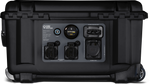 Batt Pack Energy | 3kW
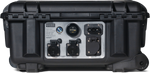 Batt Pack Pro | 5kW
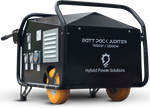 Batt Pack Jupiter | 7kW
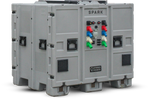 Spark Cube | 12kW/24kW
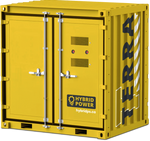 TERRA | 166kVA
Resources

Anacorp Compared to Hybrid Generator and Microgrid Systems
Anacorp is a brand that surfaces in searches for hybrid and portable generator suppliers, typically associated with AIRMAN-line diesel and hybrid generator distribution for industrial markets. For defence, rental, and construction buyers evaluating power options, the real comparison point is power class and deployment model: briefcase-style and mid-size diesel-hybrid units versus purpose-built LiFePO4 hybrid microgrids with multi-input charging, continuous runtime, and -30°C field reliability. The right choice depends on mission duration, acoustic/thermal signature requirements, and whether fuel logistics reduction matters.
Where Anacorp Fits in the Hybrid Generator Market
Anacorp represents the distribution-led model of hybrid power: diesel generator lines retrofitted with add-on battery modules, rather than a battery-first system built from the ground up. That distinction matters more than brand name when you're comparing power options for a job site or a forward operating base.
Distribution-led suppliers like anacorp typically source diesel generator platforms, often tied to established engine and genset manufacturers, and layer hybrid or battery-assist modules on top to reduce runtime and fuel burn. The generator remains the core system; the battery component is supplementary. This is a fundamentally different design philosophy than engineering a battery system around LiFePO4 chemistry first and treating the generator as one of several charging inputs.
What Product Lines Does This Model Typically Offer?
Anacorp's product lines typically centre on diesel generator units paired with hybrid add-on kits rather than standalone, purpose-built battery systems.
This usually means a catalogue organized around engine displacement and generator output, with battery modules offered as an upgrade path for customers already running diesel fleets. The hybrid component extends runtime between refuelling or reduces idle-time fuel consumption, but the diesel engine still does the heavy lifting. Compare that to a Batt Pack Pro 5kW or Batt Pack Jupiter 7kW unit, which is LiFePO4 from the chassis up and accepts solar, alternator, grid, or generator charging without a diesel engine as the default power source.
Who Are the Primary Customers in Construction and Industrial Sectors?
Anacorp's buyers are typically industrial and construction operators looking for incremental fuel savings on diesel fleets they already own and operate.
These are customers with sunk capital in diesel infrastructure, construction contractors, industrial sites, utility crews, who want to trim fuel cost and emissions without replacing existing generator assets. That's a reasonable goal for incremental efficiency gains. It's a different buyer than a defence procurement team evaluating fuel-logistics reduction and low acoustic/thermal signature for a forward operating base, or a rental fleet manager who needs durable, low-maintenance units that don't depend on a diesel engine to function at all.
The deeper difference between anacorp's model and a vertically integrated manufacturer is structural, not cosmetic. Distribution and licensing arrangements mean support, customization, and parts supply chains run through multiple intermediaries. A company engineering and assembling its own LiFePO4 systems domestically controls that chain directly, which shapes everything from lead times to field service response when a unit is deployed at -30°C in a remote location [1].
Technical Differences: Diesel-Hybrid Add-Ons vs. LiFePO4 Hybrid Systems
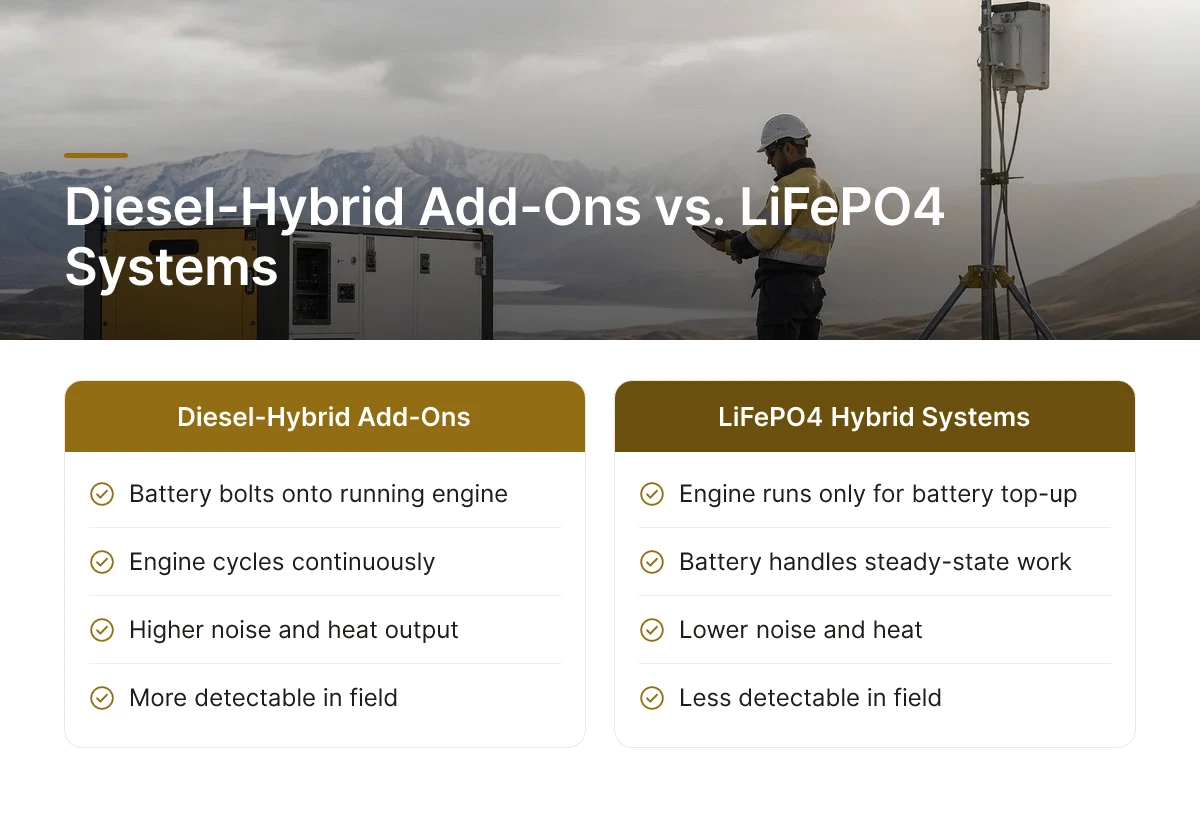
The core difference comes down to architecture: diesel-hybrid add-ons bolt a battery buffer onto an engine that still runs on a cycle, while LiFePO4 hybrid systems run the engine only when the battery needs a top-up. That distinction changes everything downstream, noise, heat, fuel burn, and how detectable a unit is in the field. When evaluating anacorp or any other hybrid generator pairing against a purpose-built battery-first platform, the question isn't which has a bigger battery, it's which component does the actual work during steady-state operation.
How Do Emission and Noise Profiles Compare to Conventional Generators?
A diesel-hybrid add-on like those sold under the anacorp name reduces fuel burn incrementally, because the engine still fires on a schedule to recharge the buffer battery.
A battery-first system eliminates runtime emissions entirely during battery-only operation, there's no partial combustion cycle hiding in the background. The same logic applies to noise. Diesel-hybrid pairings still cycle the engine periodically, which means the acoustic signature spikes every time that engine kicks on, even if the average noise level looks lower on a spec sheet. A system built around a LiFePO4 pack, like the Batt Pack Pro 5kW or Batt Pack Jupiter 7kW, can run fully silent on stored energy for extended stretches, with no engine noise at all until a recharge cycle is actually needed. For a construction crew running overnight pours or a rental fleet managing noise ordinances, that difference between incremental and full acoustic suppression is the entire value proposition. Hybrid Power Solutions frames this same shift toward fuel-free operation in its own launch of the Batt Pack Spark as a fuel-free alternative to a 25kW diesel generator, positioning battery-first design against the diesel-hybrid add-on approach directly.
What Battery Chemistry and Storage Capacity Matter Most?
Chemistry determines how a hybrid pairing ages and how safely it handles heat. LiFePO4 cells offer longer cycle life and better thermal stability than the generic lithium-ion or lead-acid packs found in some bolt-on hybrid add-ons, which matters when a unit sits in direct sun on a mine site or runs through a prairie winter. Thermal stability isn't a marketing line, it's what keeps a pack from degrading fast under repeated deep discharge cycles, which is exactly what remote job sites and rental fleets put packs through.
Thermal signature has a second, less obvious consequence for defence buyers: an engine that cycles continuously keeps radiating heat, which changes a unit's detectability compared to a battery pack drawing down silently. That's a meaningful operational factor at a forward operating base, where the goal is often to be powered and unseen, not just powered. Hybrid Power Solutions designs its systems, including the TERRA hybrid microgrid at 167 kVA continuous and 162 kWh of storage, around that battery-first principle, pairing LiFePO4 storage with solar, alternator, grid, or generator inputs so the diesel component becomes a backup, not the default. Compared against an anacorp-style retrofit, the gap isn't incremental, it's a different design philosophy entirely.
Comparing Power Output, Runtime, and Deployment Against Hybridps Systems
Buyers evaluating anacorp against other hybrid and portable power providers need a consistent framework: rated power output, usable energy storage, charging inputs, and cold-weather deployment data. Without that framework, comparisons reduce to marketing claims rather than field-usable specifications.
What Power Tiers and Runtime Specifications Should Buyers Compare?
Match the power tier to the load first, then check whether the vendor publishes continuous and peak ratings separately, many anacorp-style comparisons blur the two. Hybridps structures its lineup across three tiers, which gives a reference point even when a competing brand's documentation is incomplete.
| Tier | Model | Power Output | Energy Storage | Typical Deployment |
|---|---|---|---|---|
| Portable | Batt Pack Energy | 3kW | Not independently stated | Tools, small job-site loads |
| Portable | Batt Pack Pro | 5kW | Not independently stated | Construction crews, drone ground support |
| Portable | Batt Pack Jupiter | 7kW | Not independently stated | Larger job-site loads, forward sites |
| Mid-tier | Spark Cube | 12kW / 24kW | Not independently stated | Multi-trailer sites, rental fleets |
| Large-scale | TERRA | 167 kVA continuous / 250 kVA peak | 162 kWh | Forward operating bases, mining camps, microgrids |
When a vendor in the anacorp comparison set lists only peak output, ask for the continuous figure, that's the number that determines whether a crane, pump, or compressor actually runs without tripping the system.
Does the System Support Solar, Alternator, and Grid Charging in Cold Weather?
Hybridps systems accept solar, alternator, grid, and generator inputs, which keeps a site running without waiting on a single charging method to catch up. This multi-input design matters more than battery capacity alone, a unit that only recharges from one source becomes a liability the moment that source is unavailable, whether that's a cloudy week or a generator down for maintenance.
Hybridps also rates its systems to -30°C, a figure most generator-centric hybrid offerings, including several positioned against anacorp in procurement searches, don't publish at all. For Arctic resupply routes or northern construction seasons, an unstated cold-weather rating is effectively a disqualifier, not a neutral gap.
No independently verified kVA, kWh, or runtime figures exist for anacorp or similar providers outside their own marketing material. Before comparing head-to-head, request documented specifications directly from the vendor, continuous output, usable capacity, input compatibility, and a stated temperature range, the same categories Hybridps publishes for Batt Pack, Spark Cube, and TERRA.
Hybrid Power's Role in Industrial and Defence Deployments
Distribution-model hybrid generators, the kind a reseller like Anacorp supplies with a diesel engine paired to a small battery buffer, cut fuel use incrementally; purpose-built hybrid microgrids cut fuel logistics structurally. The difference matters most at a forward operating base or remote mine site, where every resupply run carries risk and cost.
How Does Fuel Logistics Reduction Work in Practice?
Fuel-logistics reduction works by letting battery runtime absorb load swings so the generator cycles less often and at a steadier, more efficient output band.
In a typical diesel-only setup, the generator runs continuously to cover peak loads that only appear intermittently, lighting at night, a compressor cycling on, radio and sensor loads spiking during an operation. A hybrid system like Hybrid Power Solutions' Batt Pack Jupiter 7kW or the TERRA microgrid (167 kVA continuous, 162 kWh) absorbs those peaks from the battery bank and lets the generator run only to recharge, or not at all for stretches of the day. Fewer running hours means fewer fuel deliveries, which on a forward operating base translates directly into fewer resupply convoys, convoys that are often the single riskiest activity in a deployment. Anacorp's distribution-model generators can reduce fuel burn somewhat through engine efficiency gains, but they don't eliminate the cycling pattern that drives convoy frequency the way a battery-first architecture does.
Acoustic and thermal signature is a defence-specific requirement that most generator-hybrid pairings address only partially, because the diesel engine still runs and still radiates heat and noise whenever it's on. A battery-first system like Batt Pack Energy or Spark Cube 12/24kW can run silent and cold for extended stretches, dropping both signatures to near zero during battery-only operation, a meaningful difference for forward positions, drone recharging stations, or any site where detection matters as much as uptime. Anacorp-style hybrid gensets reduce average noise and heat output compared to diesel-only units, but signature spikes return the moment the engine kicks in to recharge.
Why Do Supply Chain and Manufacturing Location Matter for Procurement?
Supply chain and manufacturing location matter because parts availability and support speed depend on how far the product travels from factory to field.
Anacorp distributes AIRMAN generators and EBOSS power modules built overseas, serving primarily African and international markets, a model that works well in those regions but introduces longer lead times and import dependencies for North American defence and government buyers. Hybrid Power Solutions engineers and assembles its systems domestically in Canada, giving procurement teams direct supply-chain control and a documented domestic sourcing trail, a real advantage when contracts require verified country-of-origin components [1]. For defence and government buyers, that distinction often outweighs small differences in unit price.
Choosing Between an Anacorp-Style System and an Integrated Hybrid Microgrid
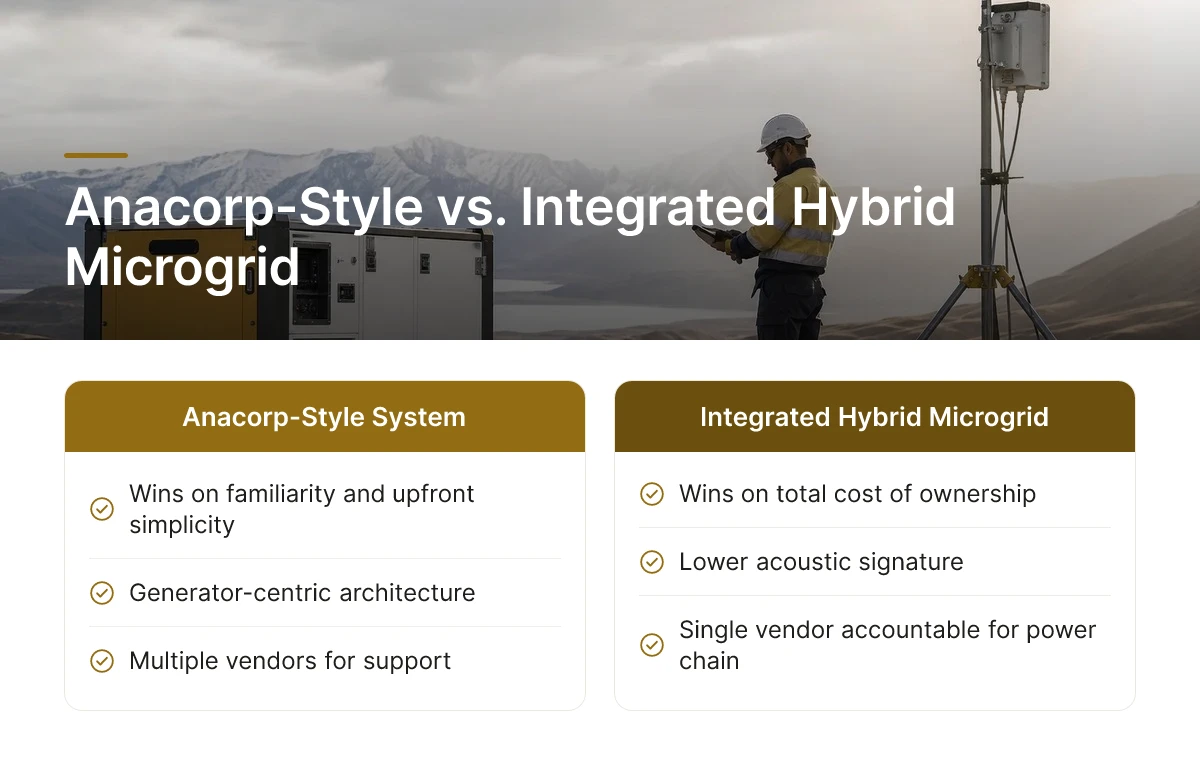
The right choice depends on mission duration, climate exposure, and whether you need one vendor accountable for the whole power chain rather than several.
Buyers comparing an anacorp-style generator-centric setup against a vertically integrated hybrid system are choosing between two different cost and support structures, not just two boxes with different output ratings. An anacorp-style diesel or hybrid add-on unit often wins on familiarity and upfront simplicity. A fully integrated hybrid microgrid wins on total cost of ownership, acoustic signature, and field support once you factor in multi-year deployment.
What Drives Total Cost of Ownership Over Time?
Maintenance frequency, moving parts, and fuel consumption, not sticker price, determine what a power system actually costs over a multi-year deployment.
A diesel generator or anacorp-style hybrid add-on has an engine, filters, fuel lines, and combustion components that need scheduled service regardless of how lightly the unit runs. Every fuel delivery to a remote job site or forward operating base adds convoy risk, lead time, and logistics cost on top of the fuel itself. A battery-based system like Hybrid Power Solutions' Batt Pack Pro 5kW or Batt Pack Jupiter 7kW has no engine to service and no fuel to truck in, so the long-run cost curve is flatter, the dominant expense shifts from recurring fuel and parts to a one-time hardware decision. For continuous site power, the TERRA hybrid microgrid (167 kVA continuous, 162 kWh) extends that same logic to whole-site scale instead of single-tool scale.
How Do Warranty and Field Support Models Compare?
A single-vendor system centralizes warranty claims and field service, while a generator-plus-hybrid-add-on setup like an anacorp-style configuration often splits support across separate manufacturers.
When a battery module, inverter, and charge controller come from three different suppliers, a failure triggers three different support calls and three different shipping timelines. A vertically integrated platform, engineered, assembled, and supported by one company, means one warranty, one technical contact, and one service record. For defence and rental buyers running equipment in Arctic or remote conditions, that difference shows up directly in mean time to repair.
Decision Criteria Checklist
- Mission duration: short deployments tolerate recharge cycles; extended or indefinite missions favour multi-input hybrid charging.
- Acoustic and thermal signature: forward operating bases and drone recharging sites need low-noise, low-heat units an anacorp-style diesel setup can't match.
- Climate rating: confirm cold-weather performance down to -30°C before committing, not after a winter failure.
- Multi-input charging: solar, alternator, grid, and generator inputs matter for continuous off-grid runtime.
Request a demo or a documented quote and compare specs side by side rather than relying on marketing claims alone, that's the only reliable way to evaluate an anacorp-style system against an alternative. Rental and construction buyers should start with Buy or Rent or review the Portable Power Packs lineup. Defence buyers evaluating fuel-logistics reduction at scale should look at TERRA and the Mobile Hybrid Microgrid configuration directly [1].
Frequently Asked Questions
Is Anacorp the same as a hybrid microgrid manufacturer?
No, Anacorp and similar distributors typically supply diesel generator sets and genset-based power modules, not battery-based hybrid microgrids. A hybrid microgrid combines LiFePO4 battery storage with solar, alternator, grid, or generator charging inputs to run loads with far less fuel burn. Buyers comparing the two are often comparing different categories of equipment, not competing versions of the same product.
What should buyers ask for when comparing hybrid generator specifications?
Ask for continuous versus peak power rating, battery chemistry, cold-weather certification, and charging input flexibility. A unit's 25kW-equivalent output on paper means little without knowing runtime, recharge sources, and operating temperature range [1]. Procurement teams should also request documented acoustic and thermal signature data, especially for defence or regulated job sites.
Can hybrid generator add-ons achieve silent operation?
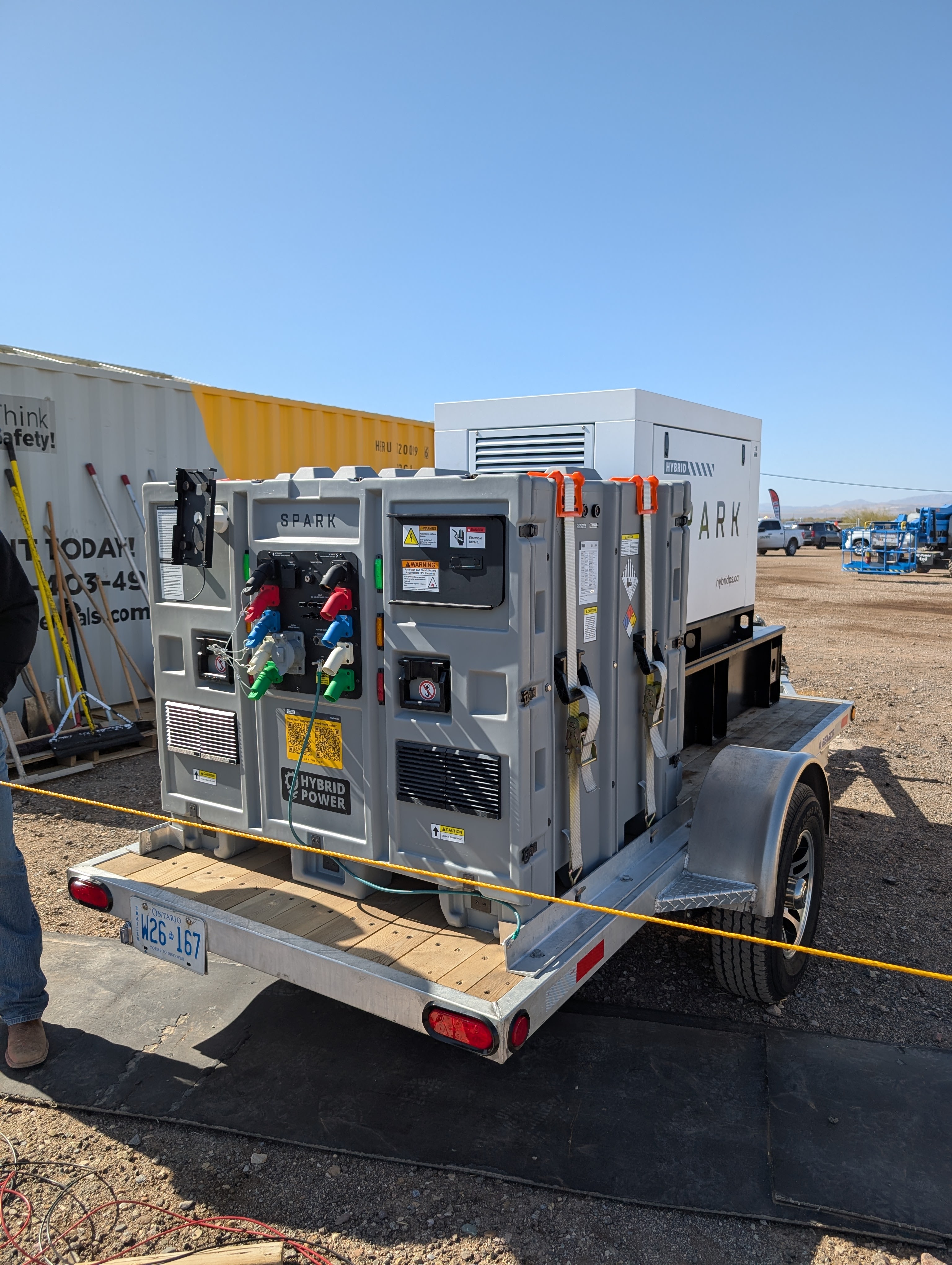
Yes, pairing a battery energy storage system with an existing generator lets the generator shut off during low-load periods, cutting both noise and fuel consumption. The battery supplies continuous power while the generator only runs to recharge, reducing run hours substantially. This hybrid approach is why fuel-free alternatives like the Batt Pack Spark target the same performance class as a 25kW towable diesel unit [1] without constant engine noise.
Why does cold-weather rating matter for defence and remote-site power?
Cold-weather rating determines whether a power system starts reliably and holds capacity at sub-zero temperatures without fuel gelling or battery degradation. Forward operating bases and northern job sites can't afford cold-start failures. Systems rated to -30°C remove that risk entirely, which matters more for mission continuity than headline power figures.
How should a buyer evaluate an anacorp-style quote against a hybrid microgrid proposal?
Line up both quotes against the same categories: continuous power rating, usable energy storage, charging input types, cold-weather certification, and warranty structure. Ask whether support runs through a single vendor or multiple intermediaries, since that affects repair turnaround. A quote that omits continuous output or temperature rating usually signals a gap worth questioning before signing.
Conclusion
Comparing hybrid power providers means separating diesel-generator distributors from true battery-hybrid manufacturers, they solve different problems. Buyers should weigh continuous power rating, charging flexibility, and cold-weather certification before fuel-logistics costs, not after. For defence and remote-site teams, the real decision point is whether a system still performs at -30°C after the sales brochure closes.
If you're replacing a 25kW diesel genset, request a side-by-side runtime and acoustic comparison against the Batt Pack Spark [1] before your next procurement cycle.
Sources & References
Recommended Articles
Explore more from our content library: