

Products
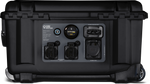 Batt Pack Energy | 3kW
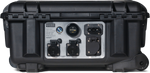 Batt Pack Pro | 5kW
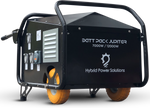 Batt Pack Jupiter | 7kW
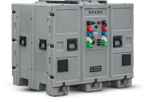 Spark Cube | 12kW/24kW
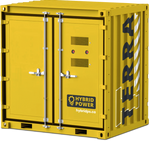 TERRA | 166kVA
Resources

Generator Rental for Construction: The Fuel-Free Guide
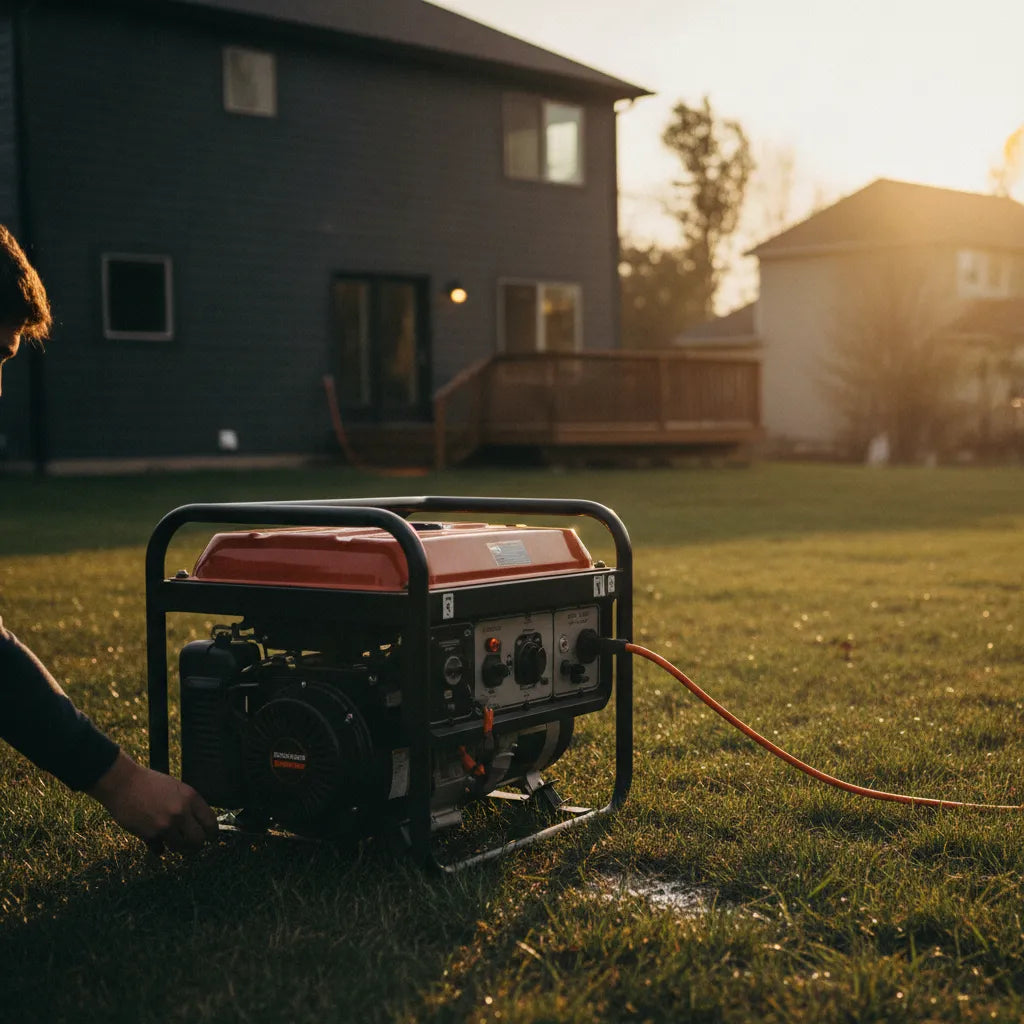
Generator rental for construction is changing fast. For decades the default was a diesel genset dropped on site, refuelled daily, and run loud from first light. But the jobs themselves have changed — noise bylaws, indoor and confined-space work, emissions targets written into bids, and fuel logistics that eat into margin. That's why a growing share of generator rental for construction demand is shifting toward silent, fuel-free battery power. This guide is written for the two people who feel that shift most: equipment rental fleet owners deciding what to stock, and construction site managers deciding what to rent. It covers when battery units beat diesel, how to size them, what they cost over a project, and how to specify them correctly.
We are seeing an industry wide transition like never before fueled by a need for lower cost and better performance - Francois Byrne
Why Generator Rental for Construction Is Moving to Battery Power
The pressure isn't coming from regulators alone — it's coming from the customers renting the equipment. Four forces are reshaping what a modern construction site will accept.
Noise Bylaws Are Squeezing Diesel Off Urban Sites
Urban infill, hospital and school grounds, film production, and residential renovation increasingly cap equipment noise. Many Canadian municipalities limit construction equipment to roughly 85 dB(A) at 7 metres, with tighter limits overnight and on weekends. A running diesel genset can breach that on its own. A battery unit runs silently, so it keeps a site legal — and keeps a crew working past the hours a diesel unit would force a shutdown. For a rental branch, a silent unit is a "yes" to jobs a diesel unit forces you to decline.
Indoor and Confined-Space Work Rules Out Combustion
Interior fit-outs, basement and foundation work, tunnels, and any enclosed space simply cannot run a combustion engine — carbon monoxide makes it unsafe and illegal. Battery power is the only compliant option for that work, so those renters actively seek it out. There is no diesel workaround; the fleet that stocks battery units captures that demand outright.
Emissions Targets Now Flow Down Through Bids
General contractors bidding public, institutional, and increasingly private work now carry emissions and ESG commitments that flow down to every subcontractor and every piece of rented equipment. A rental fleet that can offer a documented zero-emission power line helps its customers win bids — and wins the rental in the process. Generator rental for construction is becoming a line item that procurement scrutinizes, not just a logistics afterthought.
Fuel Logistics Are a Cost and a Liability
On remote or access-controlled sites, diesel delivery, storage, spill containment, and theft are real costs and real liabilities. A unit that recharges from grid, solar, an alternator, or an existing generator removes all of it. Renters increasingly prefer that flexibility, and rental fleets increasingly prefer assets they don't have to fuel.
The Rental Fleet Economics of Generator Rental for Construction
A diesel generator is cheap to acquire and expensive to own. A battery unit inverts that equation — and for a rental fleet running an asset across many deployments over years, the total-cost picture is what determines return.
Where Diesel Bleeds Margin
· Fuel — billed to the fleet or the customer, at Canadian diesel prices that have run well above historical norms.
· Maintenance — oil, filters, and coolant every few hundred operating hours, plus the labour and downtime around each service.
· Refuelling logistics — the trips, the storage, and the staff time to manage them.
· Liability — fuel theft and spill exposure on unattended overnight sites.
Where Battery Units Return the Investment
· Zero fuel cost across the entire rental life of the asset.
· Minimal maintenance — no engine, no oil changes, no exhaust system to service.
· High cycle life — HPS Batt Pack units are rated for 6,000+ charge cycles (Hybrid Power Solutions). For a rental asset amortized over many jobs, cycle life is the number that decides payback.
· Higher utilization — a silent, emission-free unit rents into jobs a diesel unit is barred from, so it earns instead of sitting idle.
Hybrid solutions rent for more than a standard diesel generator but are far cheaper when taking into account fuel, maintenance and lost productivity savings.
For the fleet buyer, the logic is simple: battery units carry a higher acquisition cost, but eliminated fuel and maintenance plus higher utilization is where a multi-year return comes from. For the site manager, the logic is the total cost of a project — and on any job longer than a few weeks, or any job with noise or emissions constraints, generator rental for construction with a battery unit often wins on total cost, not just on compliance.
Matching HPS Units to Construction Rental Demand
Construction customers don't rent watts; they rent a solution to a job. Here's how the HPS lineup maps to the work your customers bring in. Every unit is engineered and assembled in Canada and rated down to −30°C (Hybrid Power Solutions) — a genuine advantage for Canadian fleets whose diesel units struggle to cold-start on a winter morning.
The HPS Lineup at a Glance
HPS unit |
Continuous power |
Energy capacity |
Best construction rental fit |
Batt Pack Energy | 3kW |
3,000 W |
2.5 kWh |
Small tools, task lighting, electronics, short-duration jobs |
Batt Pack Pro | 5kW |
5,000 W |
5.1 kWh |
General jobsite power, hand tools — the workhorse rental unit |
Batt Pack Jupiter | 7kW |
7,000 W |
7.2 kWh |
Higher-draw tool combinations and longer runtime needs |
Spark Cube | 12/24kW |
12–24 kW |
20 / 30 / 60 kWh models |
Site trailers & washrooms, welding, lighting, water pumps, backup |
TERRA | 166kVA |
166 kVA |
180 kWh |
Whole-site hybrid microgrid, large builds, mining/utility deployments |
.
The Feature Renters Care About Most
Every HPS unit charges from solar, alternator, grid, or generator (Hybrid Power Solutions). That single feature is what makes battery power practical on a construction site: the unit fits the site's existing setup rather than forcing a new one. A crew can top up overnight from grid power, run off it silently through the day, and never schedule a fuel run.
It also enables a genuinely hybrid model that a diesel-only fleet cannot offer. On a longer build with intermittent high loads, a customer can pair a smaller diesel genset or the site's grid connection with a battery unit: the battery carries the base load silently and absorbs surges, while the generator runs only in short, efficient bursts to recharge rather than idling all day at low load. That cuts fuel burn, cuts runtime hours on the genset, and keeps the site quiet for most of the working day. For a rental branch, being able to propose that pairing — rather than just handing over a bigger diesel unit — is a consultative sell that wins repeat business.
Where Each Unit Earns Its Keep on Site
The Batt Pack Pro is the unit most construction rentals start with: enough continuous power for a crew's hand tools and lighting, light enough to move between floors, and simple enough that any operator can run it. The Jupiter steps in when a customer runs heavier combinations — a compressor alongside tools and lighting. The Spark Cube is where rental economics get interesting for larger sites: a single unit can carry a site trailer, washrooms, welding equipment, water pumps, and lighting, replacing a mid-size diesel genset outright while staying silent. The TERRA sits at the top of the range for whole-site power, large builds, and remote deployments where it functions as a hybrid microgrid rather than a portable unit.
How to Size a Battery Unit for a Construction Site
The most common mistake in generator rental for construction is sizing on running watts and ignoring startup surge. Coach counter staff — and site managers — to size battery units the same way they'd size a genset, with one added step for runtime.
Step 1: List Every Simultaneous Load
Write down everything that runs at once: power tools, task and area lighting, water pumps, the site trailer, and any welding or compressor equipment.
Step 2: Use Starting Watts, Not Running Watts
Motor-driven equipment — pumps, compressors, saws — can draw two to three times its running figure at startup. If only running watts are known, multiply by roughly 2.5 as a conservative surge estimate.
Step 3: Match Continuous Power to the Surge Total
The unit's continuous-power rating must cover the peak surge, not just the average running load. If the combined surge exceeds a Batt Pack Pro's 5,000 W, step up to the Jupiter (7 kW) or a Spark Cube (12–24 kW).
Step 4: Size Runtime, Not Just Power
For battery units, divide energy capacity (kWh) by the expected continuous load (kW) to get hours before recharge. A Batt Pack Pro at 5.1 kWh running a 1 kW load gives roughly 5 hours before it needs a charge window.
Step 5: Plan the Recharge Window
This is the habit that separates a smooth rental from a callback. Because HPS units recharge from grid, solar, alternator, or generator, the customer schedules a charge window (typically overnight) rather than a fuel run. Set that expectation at the counter, in writing, before the unit leaves the yard.
A Worked Example
Consider a two-storey interior renovation with a noise-restricted overnight window. The crew runs a mix of hand tools and LED task lighting during the day, drawing perhaps 1.5 kW on average with brief surges when a saw or a small compressor kicks in. A Batt Pack Pro's 5,000 W continuous rating comfortably covers those surges, and its 5.1 kWh carries roughly three hours of that average load before a top-up. Because the site has grid power available overnight but a noise curfew during the day, the crew charges the unit overnight and runs silently through the day — exactly the scenario diesel cannot serve. If the same crew adds a larger compressor or extends hours, the branch steps them up to a Jupiter or pairs two units. Walking a customer through this math at the counter is what turns a one-off rental into a standing account.
Don't Undersize to Win the Quote
A common temptation in competitive rental markets is to quote the smallest, cheapest unit that might work. With battery power that backfires: an undersized unit hits its runtime limit mid-shift, the customer calls in frustrated, and the branch eats a swap. Size honestly to the surge and the shift length, explain the recharge window up front, and the rental runs itself.
Certification and Safety in Generator Rental for Construction
For a rental fleet, certification is liability protection and a procurement checkbox for institutional customers. For a site manager, it's what keeps an inspector satisfied.
What Fleet Buyers Should Confirm
· Look for CSA or UL marks on any powered equipment added to the fleet; the mark confirms independent safety testing.
· Backfeeding is illegal in both Canada and the U.S. Any unit connected to building or site wiring needs a proper transfer switch installed by a licensed electrician — include this in your rental terms.
· Document transport certification (UN38.3) for battery units that ship as dangerous goods.
The Safety Advantage Battery Power Gives Your Customers
The single largest safety hazard with rental generators — carbon monoxide from combustion units run in enclosed spaces — does not exist with battery power. That's not just a spec; it's a genuine talking point that helps a rental branch place units on indoor and confined-space jobs where diesel is simply prohibited.
Frequently Asked Questions
Is battery-based generator rental for construction worth it versus diesel?
For sites with noise limits, indoor or confined-space work, or emissions requirements, yes. Battery units rent into jobs diesel units are barred from, carry no fuel or engine-maintenance cost, and are rated for thousands of charge cycles, so the acquisition premium amortizes over the asset's rental life. The more the unit is utilized, the stronger the case.
How long does a battery unit run on a construction site before recharging?
Runtime equals energy capacity divided by load. A Batt Pack Pro (5.1 kWh) running a 1 kW load lasts roughly 5 hours; a lighter load runs proportionally longer. Because HPS units recharge from grid, solar, alternator, or generator, the practical model is scheduled recharge windows — usually overnight — rather than continuous fuelling. [VERIFY: derating]
Can a battery unit handle high-surge equipment like pumps and compressors?
Size to the startup surge, not the running load — motor-driven gear can draw two to three times its running watts at startup. Match that peak to the unit's continuous-power rating, and step up to the Jupiter or Spark Cube for heavier combined loads.
Do battery units work through a Canadian construction winter?
HPS units are rated down to −30°C (Hybrid Power Solutions), a real advantage over diesel gensets that struggle to cold-start. HPS technology limits the loss of efficiency in cold weather to maximize performance.
What certifications should a fleet require before adding a battery unit?
Require CSA or UL marks at minimum, and UN38.3 transport certification for units shipped as dangerous goods.
The Bottom Line for Construction Power
Diesel generators are cheap to acquire and costly to own; battery units flip that equation in a rental fleet's favour and on a construction project's total cost — no fuel, minimal maintenance, thousands of charge cycles, and access to jobs diesel can't legally touch. For Canadian operations specifically, the −30°C rating and multi-source charging mean a battery line fits the sites and seasons you already work.
Your next step: identify the two or three jobs each month you currently turn away or lose because a diesel genset is too loud, too dirty, or can't run indoors — that lost revenue is the clearest case for battery-based generator rental for construction. Then request a fleet quote and spec sheet from Hybrid Power Solutions at hybridps.ca to size the units against that demand.
About the Author
Written by the team at Hybrid Power Solutions, a Canadian manufacturer of portable LiFePO4 battery and hybrid microgrid systems engineered and assembled in Canada for construction, rental, industrial, and defence operations. [VERIFY: swap to CEO/founder byline if you want the article authored by Francois Byrne per your Moonrank author bio.]