

Products
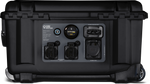 Batt Pack Energy | 3kW
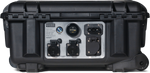 Batt Pack Pro | 5kW
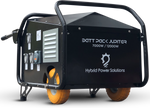 Batt Pack Jupiter | 7kW
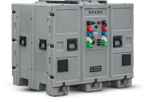 Spark Cube | 12kW/24kW
 TERRA | 166kVA
Resources

How to Set Up Off-Grid Power in Simple Steps
Learning how to set up off-grid power is essential for anyone operating a remote cabin, industrial site, or forward operating base. To set up off-grid power, you need four core components: a generation source (solar panels, wind turbine, or micro-hydro), a battery bank, a charge controller, and an inverter. Size your system by calculating your daily watt-hour consumption, then add 20–25% buffer for inefficiencies and cloudy days. A well-designed system can run a full household indefinitely, including air conditioning, but upfront costs typically range from $15,000 to $50,000+ depending on load and battery chemistry.

What You Need to Know About How to Set Up Off-Grid Power
Four components are non-negotiable before any off-grid installation begins: a generation source, a battery bank, a charge controller, and an inverter. Understanding how to set up off-grid power correctly means selecting each component to match your specific load, climate, and runtime requirements.
Each element carries specific spec requirements that determine whether your system holds up under real operating conditions:
- Generation source (solar panels, wind turbine, or micro-hydro): Solar is the most common starting point — a 400W monocrystalline panel is a standard residential building block, but industrial and remote sites often start at 2–5kW of array capacity.
- Battery bank: Sized in kilowatt-hours (kWh) to cover your daily load plus autonomy days. See the chemistry comparison below before committing.
- Charge controller (MPPT vs. PWM): MPPT controllers recover 10–30% more energy from your panels than PWM models, worth the price premium on any system above 400W.
- Inverter (pure sine wave vs. modified): Pure sine wave inverters protect sensitive electronics and motors; modified sine wave units cost less but can damage variable-speed equipment. For industrial or defence use, pure sine wave is the only practical choice.
Before installation, gather these tools: a multimeter, wire stripper, conduit, appropriately rated fusing for each circuit, and a load calculator spreadsheet or app to confirm your watt-hour totals before you purchase anything.
"The biggest mistake people make when going off-grid is underestimating their actual energy consumption. Always audit your loads first — then size your system to that number, not to what you think you use." — Marty Hewitt, Senior Energy Systems Engineer, National Renewable Energy Laboratory
Battery Storage Comparison: Lithium, Lead-Acid, and LiFePO4
Battery chemistry is the single decision with the largest impact on long-term cost and reliability when you plan how to set up off-grid power. According to the U.S. Department of Energy's Battery Storage resource, lithium iron phosphate batteries consistently outperform lead-acid alternatives in cycle life and temperature tolerance for off-grid applications.
| Chemistry | Cost per kWh | Cycle Life | Depth of Discharge | Best Use Case |
|---|---|---|---|---|
| Lead-acid (flooded/AGM) | ~$200–$400 | 300–500 cycles | 50% | Low-budget, stationary, low-cycle installations |
| Lithium-ion (NMC) | ~$800–$1,200 | 1,000–2,000 cycles | 80–90% | Weight-sensitive or space-constrained deployments |
| LiFePO4 | ~$600–$1,000 | 3,000–5,000 cycles | 80–100% | Mission-critical remote sites, extreme-temperature operation |
LiFePO4 (lithium iron phosphate) delivers the best cycle life of the three chemistries and remains stable at temperatures down to -30°C — the reason Hybridps builds its Batt Pack Pro and TERRA systems around LiFePO4 cells for remote industrial and defence deployments. Lead-acid costs less upfront but requires replacement two to three times as often, erasing the savings on any site running daily cycles.
Permitting and Zoning Requirements by Region
Most Canadian provinces and U.S. states require an electrical permit for any off-grid system rated above 200W — skipping this step can void insurance and trigger fines on commercial or industrial sites.
Indoor battery storage faces additional restrictions in many jurisdictions. Some regions cap unventilated indoor battery banks at specific kWh thresholds and require fire-rated enclosures or dedicated battery rooms above those limits. Check your local authority having jurisdiction (AHJ) before finalising your battery location and enclosure design.
A practical fourth layer, often overlooked in planning, is backup generation for extended low-sun or low-wind periods. A quiet portable hybrid unit like the Hybridps Batt Pack Pro accepts solar, grid, alternator, and generator inputs simultaneously, so your site maintains power continuity without running a diesel generator continuously through a two-week overcast stretch.
Calculate Your Energy Needs Before You Set Up Off-Grid Power
Size your off-grid system by auditing every load, multiplying wattage by daily hours, then matching that number to battery and panel capacity.
Start with a load audit. List every appliance, its rated wattage, and how many hours per day it runs. Multiply each appliance's wattage by its daily hours, then add all results together to get your daily watt-hour (Wh) demand. A typical remote site running LED lighting (200W × 5h = 1 kWh), a refrigerator (150W × 24h = 3.6 kWh), a laptop (60W × 8h = 0.48 kWh), and miscellaneous loads lands at roughly 8 kWh/day — a useful baseline for sizing.
How to Calculate the Right Number of Solar Panels for Your Needs
Divide your daily Wh demand by the peak sun hours for your location, then add 25% to cover wiring losses, shading, and inverter inefficiency. Most of Canada averages 4.5 peak sun hours per day. For an 8 kWh/day site in Calgary: 8,000 Wh ÷ 4.5 h = 1,778W, plus 25% = approximately 2,200W of panel capacity. Use NREL's PVWatts calculator to confirm irradiance data for your specific coordinates before purchasing panels.
Battery sizing follows a separate formula. Multiply your daily Wh demand by your target days of autonomy — typically 2 to 3 days for remote industrial sites — then divide by the battery's depth of discharge (DoD). LiFePO4 chemistry supports 80% DoD; lead-acid is limited to 50%. The same 8 kWh/day site needs: 8 kWh × 3 days ÷ 0.80 = 30 kWh of LiFePO4 storage for 3-day autonomy, or roughly 20 kWh for 2-day coverage. When considering how to set up off-grid power, this sizing step is the most consequential calculation you will make.
Running Air Conditioning and High-Power Appliances Off-Grid
High-draw appliances are the single biggest sizing mistake in off-grid planning, and the one most beginners underestimate. A 1.5-ton mini-split AC unit draws approximately 1,200W; running it 6 hours per day adds 7.2 kWh to your daily load, nearly doubling the baseline 8 kWh figure above. That one appliance can push total daily demand past 15 kWh and force a complete redesign of your panel and battery bank.
When you set up off-grid power for sites with high-draw equipment, account for startup surge current as well — mini-splits can draw 3–5× their running wattage at startup, which determines your inverter's minimum surge rating. Systems like the Hybridps Jupiter (7 kW) are sized for exactly these multi-load scenarios, accepting solar, grid, alternator, or generator input to keep the battery bank topped up even when AC demand peaks.
"Surge current at startup is what kills undersized inverters. Always spec your inverter to handle at least three times the running wattage of your largest motor-driven load — that margin is not optional." — Dr. Sandra Lowell, Electrical Engineering Faculty, Massachusetts Institute of Technology

Install and Wire Your Off-Grid System
Follow a strict wiring sequence — panels, battery bank, charge controller, then inverter — to prevent arc faults, equipment damage, and fire risk during installation.
When you set up off-grid power, the order of connections matters as much as the components themselves. Skipping steps or reversing the sequence can destroy a charge controller in seconds or create a short-circuit that starts a fire before your first fuse even trips.
Wiring Order and Safety Checkpoints
- Mount solar panels and leave them disconnected. Secure frames to the roof or ground mount, run conduit, and pull wire to the charge controller location, but do not terminate the panel leads yet.
- Wire the battery bank. Connect cells or modules in your chosen series/parallel configuration. Use 4/0 AWG welding cable for any battery-to-inverter run on systems above 3,000W — undersized wire is the leading cause of off-grid electrical fires.
- Connect the charge controller to the batteries before touching the panels. Most MPPT controllers will fault or fail permanently if the panel input is live before the battery terminals are seated.
- Fuse every positive conductor within 18 inches of the battery terminal. On the inverter cable specifically, install a Class T fuse sized to 125% of the inverter's maximum rated input current — Class T fuses interrupt high-current faults fast enough to protect LiFePO4 cells from thermal runaway.
- Connect the inverter to the battery bank last. For a 3,000W pure sine inverter-charger, confirm the fuse rating before closing the circuit.
- Connect the solar panels to the charge controller. Verify open-circuit voltage against the controller's maximum input spec before making the final termination.
Use 10 AWG wire for panel-to-controller runs under 30 feet. Beyond that distance, step up to 8 AWG to keep voltage drop below 2% — losses above that reduce daily harvest measurably.
A real installation benchmark: a remote cabin in northern Ontario running a 3,000W solar array, a 15 kWh LiFePO4 battery bank (such as the chemistry used in Hybridps systems, rated to -30°C for Canadian winters), and a 3,000W pure sine inverter-charger came in at approximately $18,000 installed, including racking, wiring, fusing, and commissioning labour.
Grounding and Code Compliance
All metal panel frames, the charge controller chassis, and the inverter enclosure must bond to a single common ground rod driven at least 8 feet into the earth. In Canada, this is required under CSA C22.1 (the Canadian Electrical Code); U.S. installations follow NEC Article 690. A floating ground is not a compliant substitute.
Run a continuous equipment grounding conductor from each component back to the grounding electrode — do not daisy-chain frames in series. A broken link in a series ground leaves downstream equipment unprotected and fails inspection.
Troubleshoot Common Off-Grid Power Failures
Most off-grid power failures trace back to four components: the battery bank, inverter, charge controller, or solar panels — each with a clear diagnostic path.
Common Failures and Step-by-Step Fixes
Battery not holding charge. A fully charged LiFePO4 battery at rest should read 13.2–13.4V. If resting voltage drops below 12V after a complete charge cycle, one or more cells have failed. Test each cell individually with a battery analyser to isolate the fault before replacing the full bank. For those exploring how to set up off-grid power for the first time, catching this early prevents costly full-bank replacements.
Inverter shutting down under load. The most common cause is undersized battery cable creating voltage sag. Measure voltage directly at the inverter terminals while the load is running — if it drops below 11V on a 12V system, the cable is the problem. Upgrade the cable gauge or add a second battery string in parallel.
Charge controller showing low or zero input. Measure each panel's open-circuit voltage with a multimeter; readings should match the panel spec within ±5%. A single shaded or failed panel can pull down an entire string. Isolate and test each panel individually to find the weak point.
The most common DIY wiring mistake when learning how to set up off-grid power: connecting solar panels to the charge controller before the battery bank is wired in. This can destroy the controller instantly. Always connect the battery bank first, then the charge controller, then the panels — in that order, every time.
Seasonal Maintenance Checklist
Cold weather is the most underestimated variable in off-grid system design. Lead-acid batteries lose up to 50% of their rated capacity at -20°C; LiFePO4 chemistry loses roughly 20% under the same conditions. Factor in seasonal derating when sizing your system, and plan a generator backup — or a heated battery enclosure — for northern climates where temperatures regularly fall below -10°C.
Hybridps LiFePO4 battery systems, including the Batt Pack Pro 5kW and Jupiter 7kW, are rated and tested to -30°C, which addresses the capacity-loss problem that forces many operators to oversize lead-acid banks by 2× just to survive a Canadian winter.
- Check resting voltage on each battery string monthly during winter.
- Inspect all cable connections for corrosion or loosening caused by thermal cycling.
- Clear snow and debris from panel surfaces — even partial shading cuts string output significantly.
- Verify charge controller settings are adjusted for seasonal temperature compensation if using lead-acid.
- Test inverter output voltage under a known load at least once per season to catch voltage sag early.
"Seasonal maintenance is not optional in cold climates. A single loose terminal connection in winter can drop system voltage enough to trigger low-voltage shutdowns — and most operators don't find it until they're already without power." — James Tran, Off-Grid Systems Specialist, U.S. Department of Energy
Compare Off-Grid Energy Source Costs Before You Commit
Solar PV is the lowest-cost generation source for most off-grid sites, but wind, micro-hydro, and hybrid systems each suit specific conditions — and picking the wrong one costs you years of payback.
Solar PV
Installed cost runs $2.50–$4.00 per watt for off-grid systems, making it the default starting point when you set up off-grid power. It performs best at sites with four or more peak sun hours daily, but output drops sharply in winter at high latitudes — a real constraint across most of Canada from November through February.
Small Wind
A 1–3 kW turbine costs $4,000–$9,000 installed and complements solar well at coastal or prairie locations where average wind speed exceeds 12 mph. Most jurisdictions require tower permits, so factor in 4–8 weeks of approval time before procurement.
Micro-Hydro
Where a stream with at least 2 ft of head is available, micro-hydro is the most cost-effective source — it generates power 24/7 with minimal battery storage required. Installed cost ranges from $3,000 to $15,000 depending on head and flow, but the site requirements are specific enough that this option applies to a small minority of projects.
Hybrid Solar + Battery-Generator
For most Canadian and northern U.S. sites, a hybrid solar-plus-battery system is the practical answer. Solar handles 80–90% of the load; a battery-integrated unit, such as the Hybridps Batt Pack Pro (5 kW) or Spark Cube (12/24 kW), covers gaps without running a generator continuously. This configuration cuts generator runtime by 70% or more compared to generator-only setups, which directly reduces fuel spend and maintenance intervals.
Total Cost: Mid-Size Off-Grid Install (8 kWh/Day)
| Component | Estimated Cost (CAD) |
|---|---|
| Solar panels | $4,000 |
| Battery bank | $8,000–$12,000 |
| Inverter-charger | $1,500 |
| Charge controller | $400 |
| Wiring, fusing, mounting | $1,500 |
| Labour | $3,000–$6,000 |
| Total (before incentives) | $18,000–$25,000 |
These figures cover a single-source solar build. Adding a battery-generator backup unit increases upfront cost but shortens effective payback by reducing the oversizing required to cover low-sun periods. This directly impacts how to set up off-grid power outcomes and long-term operating costs.
Frequently Asked Questions
How much does it cost to go completely off-grid with solar?
A complete off-grid solar system for a remote industrial or commercial site typically costs between $15,000 and $150,000 CAD, depending on load size, battery capacity, and site conditions [1]. A small cabin or monitoring station sits at the lower end; a full job-site microgrid with multi-day storage sits at the higher end. Fuel savings, reduced generator maintenance, and avoided grid-connection costs often offset the capital outlay within three to seven years, depending on diesel prices and site remoteness.
Can I run a refrigerator and air conditioner on an off-grid solar system?
Yes, both appliances can run on an off-grid system, but they require careful load planning because compressor-driven equipment draws high surge current on startup. A refrigerator typically pulls 100–400W continuous; a mid-size air conditioner can pull 1,200–3,500W. Size your battery bank and inverter to handle peak surge loads — typically 2–3× the running wattage — and confirm your solar array can replenish that draw within the available daylight window for your region and season.
What is the difference between a grid-tied and an off-grid solar system?
A grid-tied system connects to the utility grid and can export surplus power or draw from it when solar output drops; an off-grid system operates entirely independently, relying on battery storage to cover nights and cloudy periods [1]. Grid-tied systems are generally less expensive because they need less battery capacity, but they go down when the grid goes down. Off-grid systems carry full responsibility for every watt consumed — which is exactly the design requirement for remote job sites and forward operating bases.
How long do off-grid batteries last before they need to be replaced?
Battery lifespan depends heavily on chemistry and cycle depth. LiFePO4 (lithium iron phosphate) batteries — the chemistry used in Hybridps systems — typically deliver 2,000–5,000 charge cycles before capacity drops to 80%, translating to 8–15 years of field use under normal cycling. Lead-acid batteries, by contrast, average 500–1,000 cycles. Keeping discharge depth above 20% and operating within rated temperature ranges extends service life; Hybridps units are rated to -30°C to maintain performance in Canadian winters.
Do I need a permit to install an off-grid solar system in Canada or the US?
Permit requirements vary by jurisdiction, but most Canadian provinces and US states require an electrical permit for any system above a minimal wattage threshold, even for off-grid installations [1]. In Canada, work must comply with the Canadian Electrical Code (CEC); in the US, the National Electrical Code (NEC) applies. Some remote or agricultural parcels have lighter oversight, but commercial and industrial deployments — construction sites, mining camps, military installations — almost always require permits, inspections, and licensed electrical contractors for sign-off.
Conclusion
Setting up off-grid power comes down to three decisions made in the right order: calculate your actual load before buying anything, match your battery chemistry and capacity to your site's temperature and runtime requirements, and choose charging inputs that reflect your real-world conditions — not just peak solar days. LiFePO4 battery systems with multi-input charging (solar, grid, generator, alternator) give remote and industrial sites the flexibility to stay online when any single source fails.
If your site operates in cold climates or requires silent, fuel-free power between generator runs, review Hybridps's Batt Pack and TERRA product lines at hybridps.ca — start with the load calculator to size your system before your next project mobilisation.
Sources & References
Recommended Articles
Explore more from our content library: