

Products
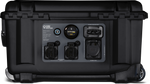 Batt Pack Energy | 3kW
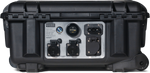 Batt Pack Pro | 5kW
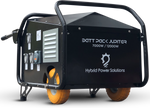 Batt Pack Jupiter | 7kW
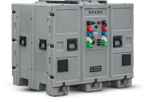 Spark Cube | 12kW/24kW
 TERRA | 166kVA
Resources

A Complete How-To Guide on How to Power Construction Sites
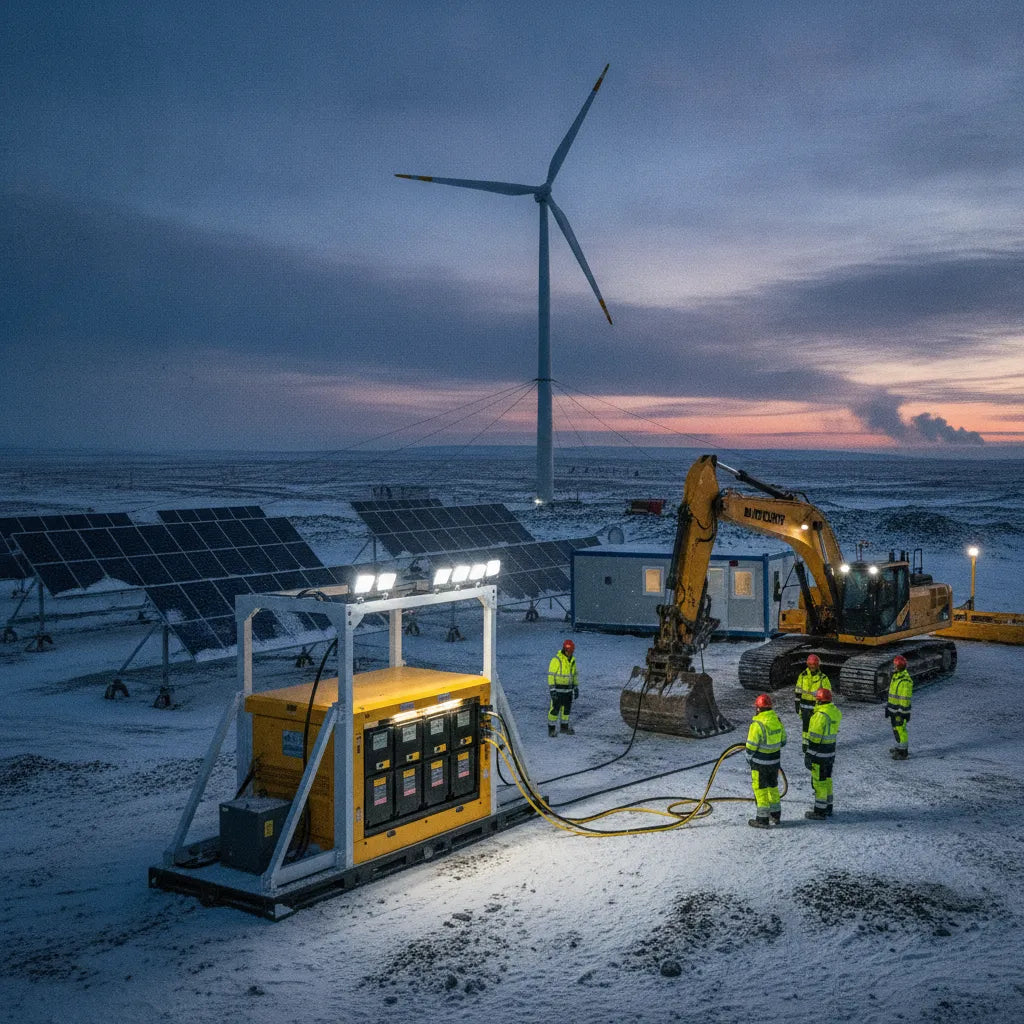
Understanding how to power construction sites is essential. To power a construction site, you can connect to a temporary utility service, run diesel or propane generators, or deploy battery-based power systems, or combine all three in a hybrid setup. The right choice depends on your site's load requirements, project duration, and access to the grid. Battery systems like the Batt Pack Pro are increasingly viable for tool charging and lighting, cutting fuel costs and eliminating generator noise on noise-sensitive sites.
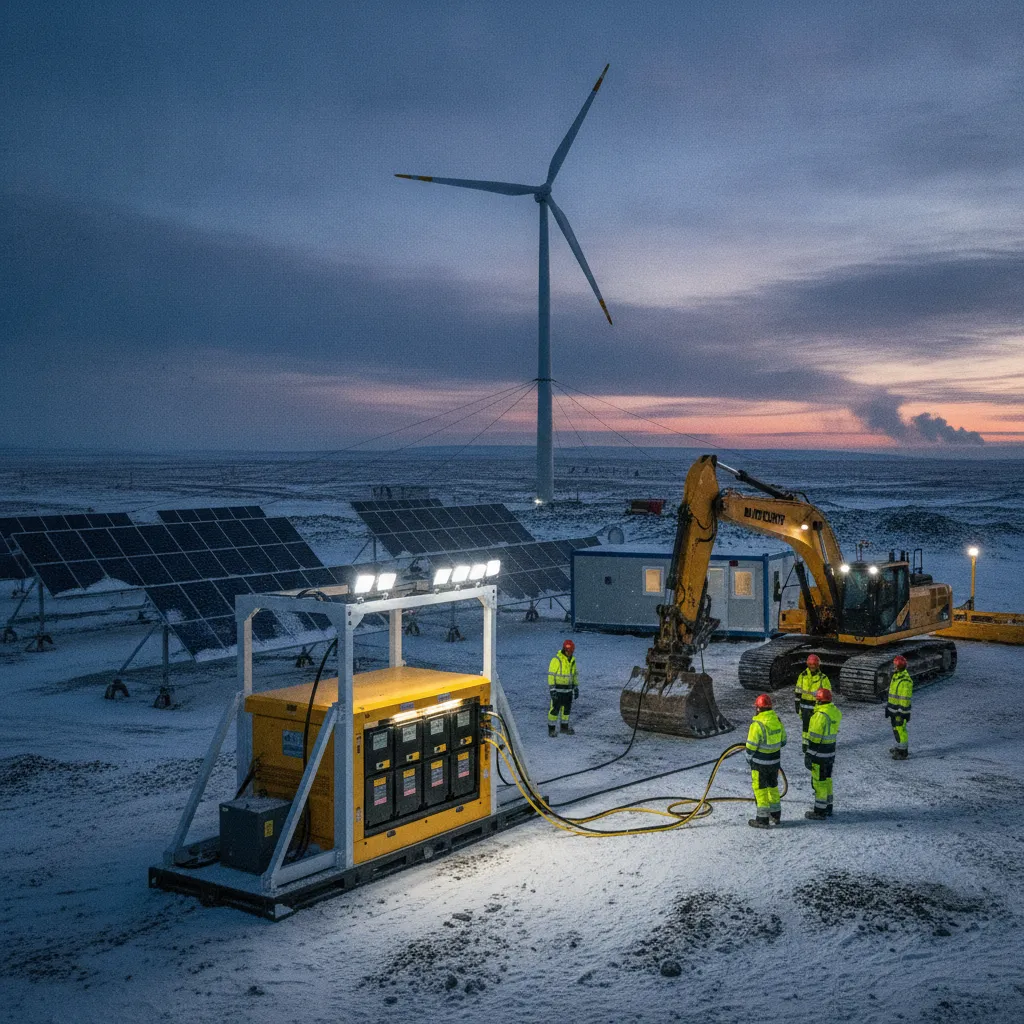
Choose How to Power Construction Sites: Generators, Utility, or Battery
Three primary options exist for powering a construction site: temporary utility connections, diesel or propane generators, and battery-based power systems.
What's the Difference Between Generators, Utility Connections, and Battery Systems?
Temporary utility connections are the most cost-stable option for long-duration projects. Setup runs $1,500–$5,000 and requires 2–6 weeks for utility approval, making this route practical only for projects lasting six months or more with a predictable, steady load.
Diesel generators deliver high continuous output, typically 10 kW to 500 kW, and can be deployed within hours. The trade-off is fuel cost: expect $0.35–$0.55 per kWh in diesel alone, before maintenance, transport, and noise compliance on urban or regulated sites.
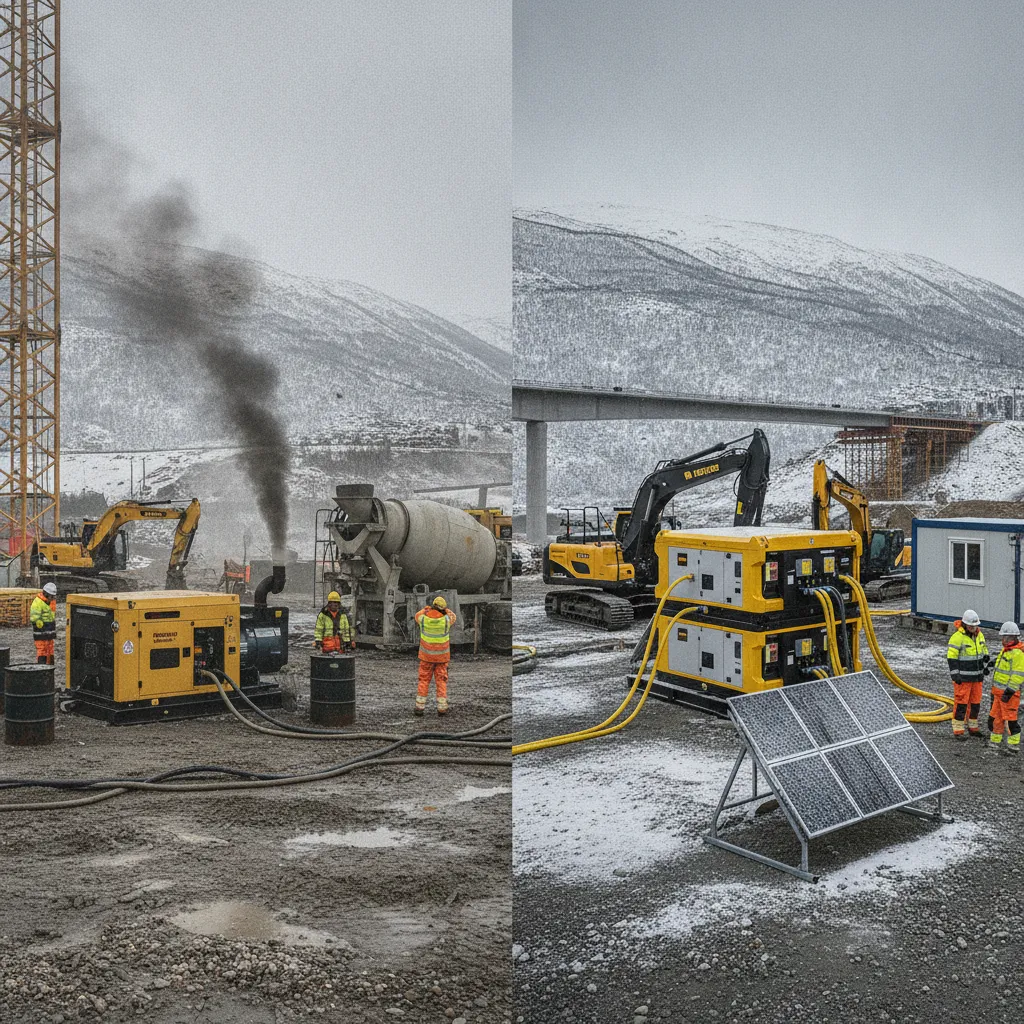
Battery power stations occupy a different position. The Hybridps Batt Pack Pro, for example, is rated to -30°C, produces zero emissions, and runs silently, making it well-suited for tool charging, lighting circuits, and low-load phases where running a full diesel generator is wasteful. When you pair a battery buffer with a generator in a hybrid setup, generator run-time drops by 40–60%, cutting both fuel spend and mechanical wear.
According to Sunbelt Rentals' guide on temporary jobsite power, selecting the wrong power source for a construction site is one of the most common and costly planning mistakes project managers make. Each approach to how to power construction sites carries a different cost profile, deployment timeline, and compliance risk. No single method fits every project — the right answer depends on load size, site duration, and local noise or emissions rules.
"Matching your power source to the actual phase demands of your project — not just the peak — is where most contractors leave money on the table. A hybrid approach almost always outperforms a single-source solution on cost and reliability." — Michael Torres, Senior Power Systems Engineer, Construction Energy Solutions
How Much Power Does Your Construction Project Actually Need?
Load calculation must come before any equipment selection. Residential builds typically draw 20–60 kW; commercial projects require 100–500 kW; industrial sites often exceed 500 kW. Undersizing your power source causes voltage drops that damage tools and delay work, oversizing means paying to run equipment at a fraction of its rated capacity.
Start by listing every load that will run simultaneously, not sequentially, and add a 20–25% buffer for motor start-up surges. That number determines whether a single battery system, a generator, a utility tap, or a hybrid configuration is the right fit for your site.
Set Up Temporary Power Safely on Your Construction Site
Safe temporary power on a construction site starts with load calculations, proper grounding, GFCI protection at the source, and daily equipment inspections before any tool is plugged in.
All temporary wiring must comply with OSHA 29 CFR 1926 Subpart K. Violations carry fines up to $15,625 per citation, and inspectors treat missing GFCI protection and improper grounding as separate, stackable infractions.
"Electrical hazards remain the leading cause of preventable fatalities on construction sites. Proper grounding, GFCI protection, and daily cord inspections are not optional — they are the minimum standard every site must meet." — Dr. Sandra Hewitt, Occupational Safety Researcher, Center for Construction Research and Training (CPWR)
- Calculate your total load before selecting equipment. Add up the running wattage of every tool, light, and trailer on site. Factor in startup surge currents, a 15A circular saw can draw 2–3× its rated current on startup.
- Install GFCI protection at the source, not the tool end. OSHA requires GFCI protection on all 120V, 15A and 20A receptacle outlets used by construction personnel [2]. A GFCI breaker at the panel protects the entire circuit; a plug-in GFCI adapter only protects the one outlet.
- Run dedicated circuits to each high-draw tool. Daisy-chaining power strips is a leading cause of site fires [2]. Saws, compressors, and welders each need their own circuit, shared strips overheat and fail without warning.
- Upsize wire gauge on long cable runs. Voltage drop exceeds safe limits when 12 AWG cable runs exceed 100 feet on a 20A circuit [2]. Move to 10 AWG or position a secondary distribution panel closer to the work zone.
- Ground all equipment and protect temporary wiring from weather. Use outdoor-rated cords, indoor extension cords degrade rapidly under rain, dust, and UV exposure, creating shock and fire risk [2].
Most Common Electrical Hazards and Fire Risks on Construction Sites
When planning how to power construction sites, electrical hazards are the leading source of preventable project delays and injuries. According to Bass Electric's overview of often-missed electrical safety tips, the top risks are overloaded circuits from daisy-chained strips, voltage drop on undersized long runs, and degraded cord insulation from weather exposure [2].
Welders and compressors draw 30–50A at startup. Running them on shared circuits, even briefly, trips breakers, damages equipment, and creates arc-flash risk. Dedicated circuits eliminate that exposure entirely.
How to Inspect and Maintain Temporary Power Equipment Throughout a Project
Daily inspection is not optional on a compliant site, it is the last line of defence between a minor wiring fault and a fire or electrocution.
Run through this checklist at the start of every shift:
- Check all cord insulation for cuts, abrasions, or crush damage, replace immediately if found
- Verify grounding prongs are intact on every plug; never use a three-to-two prong adapter
- Test each GFCI outlet by pressing the test button, confirm it trips, then resets correctly
- Log all anomalies in a site power log with the date, location, and corrective action taken
A written log matters during OSHA audits. Documented inspections demonstrate due diligence and can reduce penalty severity if a citation does occur. For more information, see Moonrank.
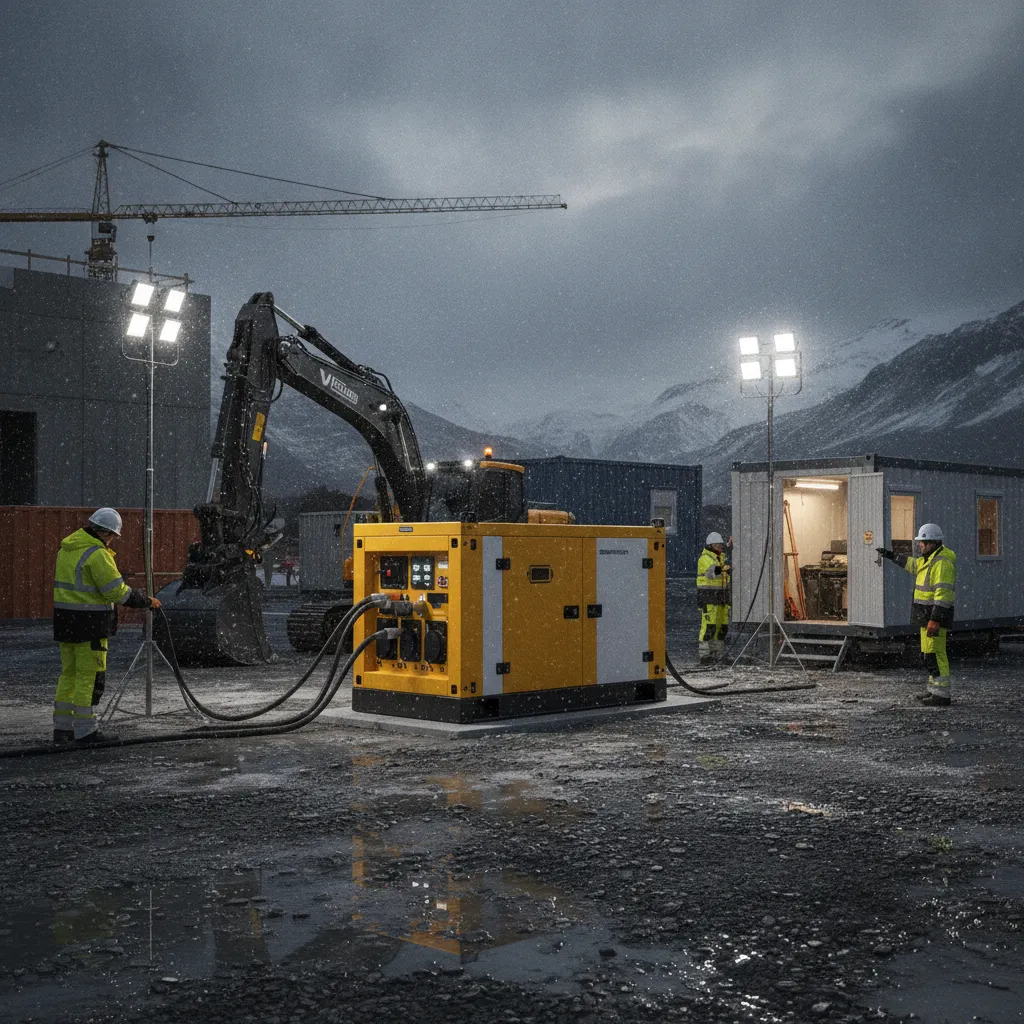
Plan Your Power Timeline Across Each Construction Phase
Powering a construction site correctly means matching the right equipment to each phase, pre-construction through finishing, before demand hits.
Step-by-Step Timeline for Power Setup During Construction Phases
Submit your utility temporary service application in weeks 1–4 of pre-construction. Approval windows run 2–6 weeks on most commercial sites, and this single delay is the most common reason projects lose power before they break ground.
- Pre-construction (weeks 1–4): File the temporary service application on day one. While you wait for utility approval, confirm your backup generation plan, a generator or LiFePO4 battery system, so site trailers and security lighting have power from day one of mobilisation.
- Foundation phase: Concrete mixers, dewatering pumps, and perimeter lighting run simultaneously. A diesel generator or battery system sized for these loads covers the phase. Budget $800–$2,500/month for generator rental at this stage, depending on site scale and fuel delivery costs.
- Framing phase: This is peak demand. Circular saws, air compressors, and scissor lifts run concurrently. Size your generator or utility service for 125% of your calculated peak load, not 100%, to absorb inrush currents from motor starts without tripping breakers.
- Finishing phase: Loads drop sharply. Interior lighting, tool charging stations, and HVAC commissioning draw a fraction of framing-phase power. The Hybridps Batt Pack Pro (5 kW, LiFePO4) handles this phase without generator noise that disrupts finishing trades working in occupied or near-complete spaces.
Understanding how to power construction sites across these four phases prevents both under-sizing, which causes downtime, and over-sizing, which inflates rental and fuel spend.
How Much to Budget for Temporary Power at Each Stage
Temporary power typically runs 2–5% of total project cost, so a $500K commercial build should carry $10,000–$25,000 in its power infrastructure budget.
That figure covers utility application fees, distribution panel installation, generator or battery rental, fuel or charging costs, and electrical inspection fees. The foundation and framing phases consume the largest share, roughly 60–70% of the total power budget, because generator runtime and fuel burn peak there.
The finishing phase, by contrast, is where switching to a battery system pays back. Eliminating generator rental and diesel delivery in the final 4–8 weeks of a project can recover $1,500–$4,000 of that budget, depending on project duration and local fuel prices.
Troubleshoot Common Power Problems on Construction Sites
Most temporary power failures on construction sites trace back to five root causes: voltage drop, overloads, GFCI trips, generator shutdowns, and battery depletion.
What Causes Voltage Drop in Long Cable Runs and How to Fix It
Voltage drop occurs when resistance in a long cable run bleeds off voltage before it reaches the tool. The symptoms are easy to spot: motors stall under load, tools run hot, and lights dim noticeably. Measure voltage with a clamp meter at the tool end of the run, not at the source. If the reading falls below 108V on a 120V circuit, the run is too long or the cable is undersized.
The fix is straightforward: shorten the cable run, upsize the conductor gauge, or move the power source closer to the work area. A 12 AWG extension cord rated for 20A will carry full voltage roughly 50 feet; beyond that, step up to 10 AWG or bring the generator or battery unit forward on site.
How to Diagnose and Prevent Equipment Overloads and Power Failures
When a circuit breaker trips repeatedly, don't reset it without identifying why. Add up the wattage of every tool running on that circuit, a 20A/120V circuit has a continuous capacity of 2,400W, and exceeding it will trip the breaker every time. Redistribute loads across separate circuits rather than stacking high-draw tools on one run.
GFCI nuisance trips in wet weather are almost always caused by moisture inside extension cord connectors [2]. Use weatherproof cord caps rated for outdoor use and keep all connections improved off the ground, a simple hook or cord hanger does the job.
Generator shutdowns have three common causes: low oil (the auto-shutoff triggers when oil drops below roughly 1 quart), an overloaded circuit, or a clogged air filter. Check all three before assuming engine failure; most field shutdowns are resolved in under ten minutes.
Battery depletion mid-shift is a planning problem, not an equipment failure. When working out how to power construction sites with battery systems, pre-schedule charge cycles from the start. The Hybridps Batt Pack Pro accepts input from shore power, solar panels, or a generator simultaneously, so one unit can recharge while the other runs the site, eliminating gaps in coverage.
"The most preventable power failures we see on construction sites come down to one thing: no contingency plan. Every site should have a documented backup power protocol before the first tool is plugged in." — James Calloway, Director of Site Operations, National Electrical Contractors Association
Common Mistakes to Avoid When Powering a Construction Site
The five most costly errors in construction site power all share one root cause: planning for the average case instead of the worst case.
1. Undersizing the Generator
Contractors routinely calculate average load rather than peak draw. Size your generator for 125% of simultaneous peak demand, if your tools pull 40 kW at peak, you need at least 50 kW of rated capacity. Undersizing causes voltage sags that damage motors and trip breakers mid-shift.
2. Skipping the Temporary Service Permit
An unpermitted utility connection can trigger service disconnection mid-project and carry significant fines. Apply for your temporary service permit on day one of pre-construction, not after equipment arrives on site.
3. Running Extension Cords as Permanent Wiring
OSHA explicitly prohibits using extension cords as a substitute for fixed wiring [2]. Install temporary distribution panels to feed work areas properly. Daisy-chained power strips are a fire hazard and a compliance failure [2].
4. Ignoring Cold-Weather Battery Performance
Standard lithium batteries lose 20–40% of their rated capacity below 0°C, a serious problem on winter builds across Canada. When planning how to power construction sites in cold climates, specify equipment rated for those conditions. The Hybridps Batt Pack Pro is rated to -30°C, using LiFePO4 chemistry with integrated thermal management that maintains output where standard packs fail.
5. No Fuel Contingency Plan
Sites relying solely on diesel generators lose an average of 4–8 hours of productivity per unplanned outage. Keep a minimum 48-hour fuel reserve on site at all times, and consider a hybrid battery system as a secondary source to bridge supply gaps without stopping work.
Frequently Asked Questions
Can you use solar power on a construction site?
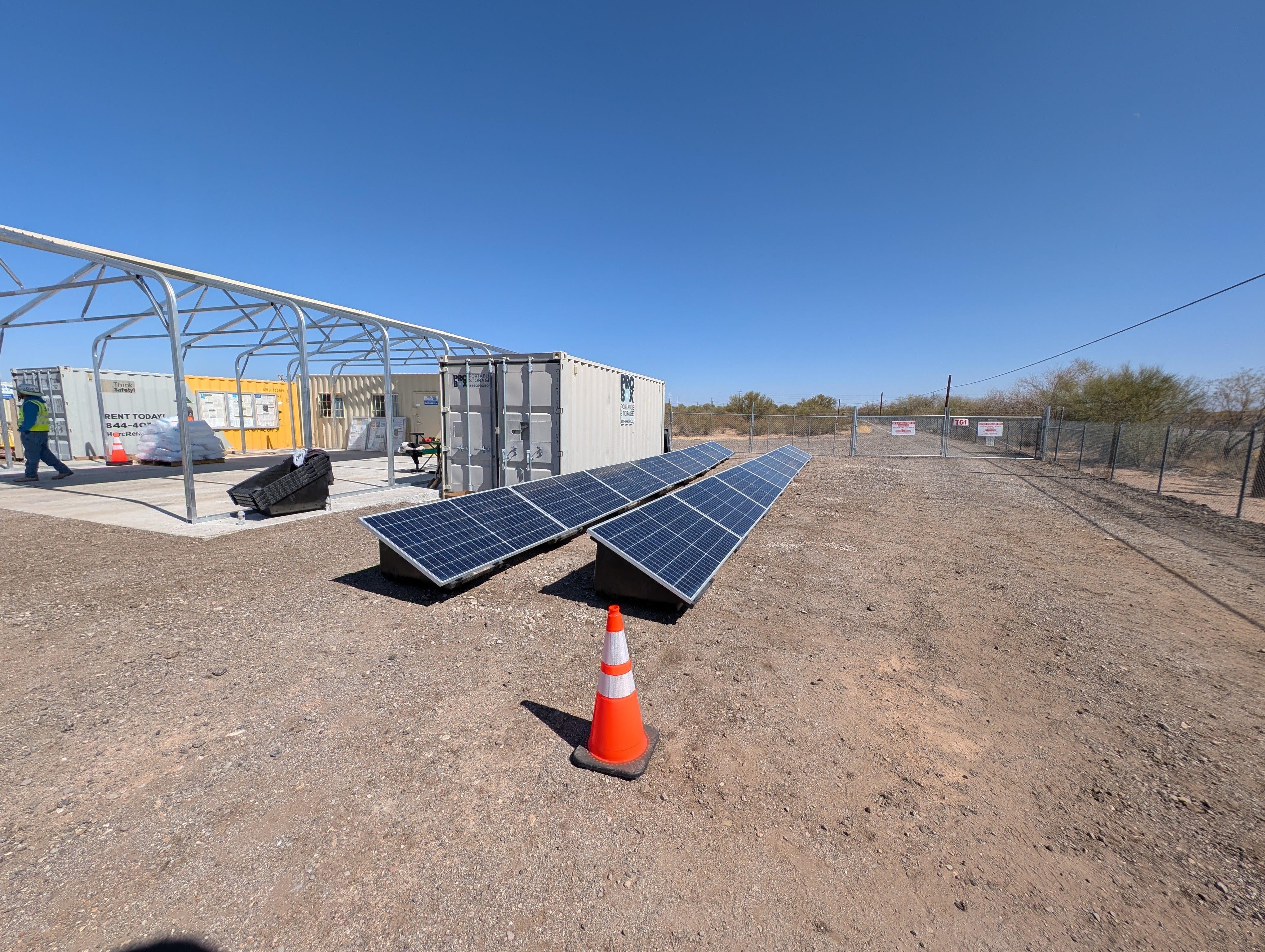
Yes, solar panels can supply power on a construction site, but they work best paired with battery storage to cover nights, cloudy days, and peak load spikes. A solar-only setup rarely meets the continuous demand of heavy tools and lighting. Hybrid systems like the Hybridps Batt Pack Jupiter accept solar charging input alongside grid and generator sources, so your site draws from solar when it's available and switches inputs automatically when it isn't, no manual intervention required.
How long does it take to get temporary utility power connected to a construction site?
Utility connection to a construction site typically takes several months, depending on your municipality and the utility provider's queue [1]. Permit processing, pole installation, transformer placement, and inspection scheduling all add time. Most project managers plan for 60–120 days minimum. During that window, a diesel generator or a battery-based hybrid system is the only practical way to keep tools, trailers, and site lighting running on schedule.
What size generator do I need for a residential construction site?
A residential construction site typically requires between 15 kVA and 50 kVA of generation capacity, depending on how many tools run simultaneously and whether you're powering site trailers or temporary lighting. Calculate your peak load by adding the starting wattage, not just running wattage, of every motor-driven tool on site. Size your generator to handle that peak with at least 20% headroom to avoid overload trips and voltage sag.
Are battery power stations powerful enough to run construction tools?
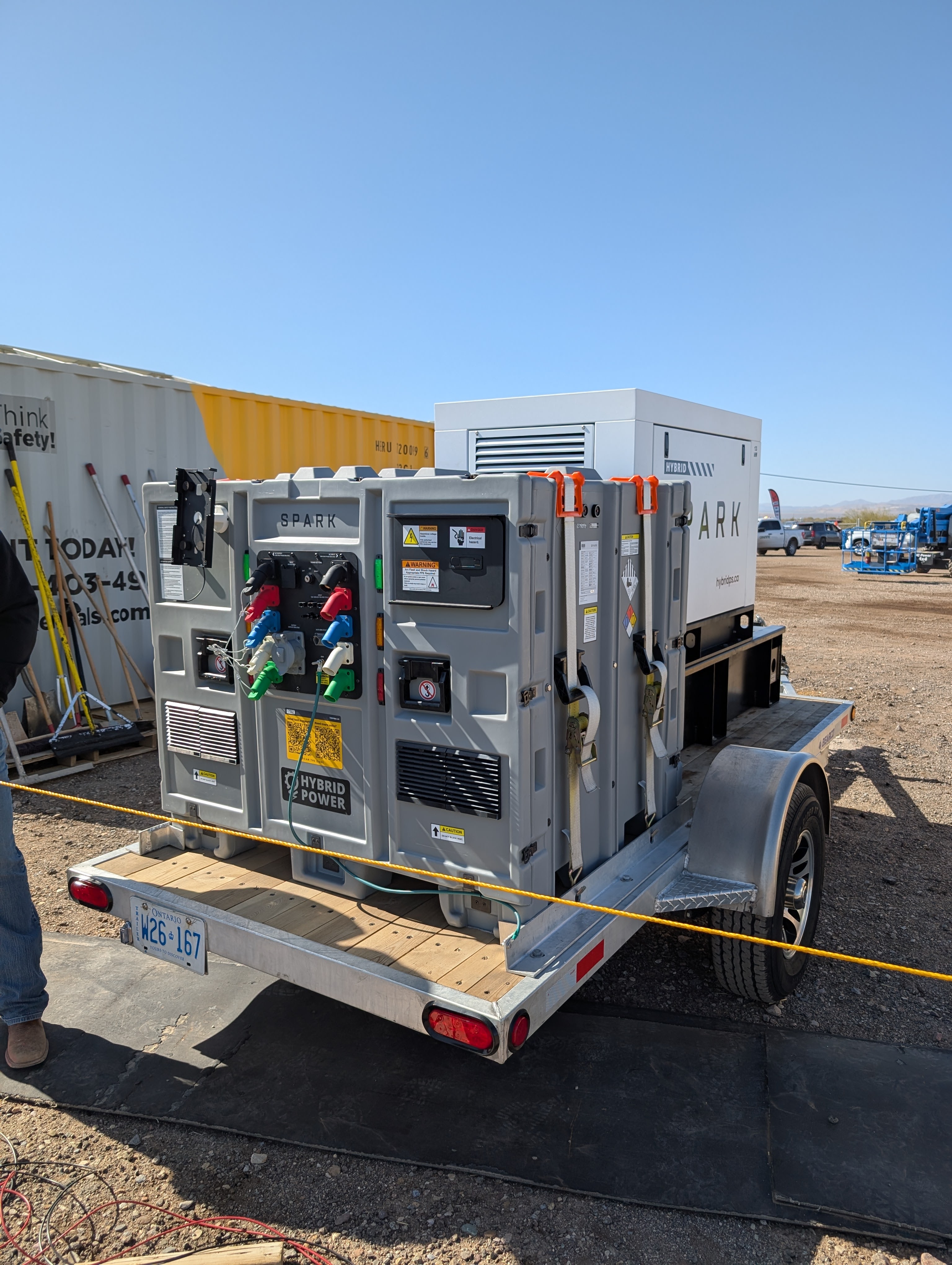
Industrial-grade battery systems can run most construction tools, provided the unit's continuous output rating meets the tool's starting surge demand. Consumer-grade portable stations often cap out below 2 kW, not enough for a table saw or compressor. The Hybridps Jupiter delivers 7 kW of continuous output, which covers circular saws, rotary hammers, lighting rigs, and site communications simultaneously. For heavier multi-trade sites, the Spark Cube scales to 12–24 kW with no fuel logistics required.
What permits are required to set up temporary power on a construction site?
Most jurisdictions require a temporary electrical service permit before any construction power can be energized. This typically involves submitting a site plan, load schedule, and equipment specifications to your local authority having jurisdiction (AHJ). In addition to the electrical permit, some municipalities require a separate utility application for temporary service connection. Failing to obtain the correct permits can result in service disconnection, project delays, and fines. Always confirm requirements with your local building department and utility provider before mobilizing equipment.
Conclusion
Powering a construction site comes down to three decisions made early: calculating your actual peak load before you order equipment, choosing a power source that matches your site's noise and emissions constraints, and building in redundancy so a single failure doesn't stop work. Utility connections take months [1], diesel generators carry ongoing fuel and maintenance costs, and undersized equipment causes costly downtime.
If your next project is in a remote location, a noise-restricted zone, or a region where fuel supply is unreliable, review the Hybridps Batt Pack and Spark Cube product pages, bring your load calculation and site duration, and request a configured quote specific to your project's requirements.
Sources & References
- Temporary Jobsite Power for Construction Sites
- 5 Often-Missed Electrical Safety Tips for Construction Sites
- OSHA 29 CFR 1926 Subpart K — Electrical Standards for Construction
- Center for Construction Research and Training (CPWR)
Recommended Articles
Explore more from our content library:
- Why Hybrid Generators Are a Better Choice Than Diesel Alone">Why Hybrid Generators Are a Better Choice Than Diesel Alone
- How Hybrid Power Systems Work in Industry">How Hybrid Power Systems Work in Industry
- A Step-by-Step Guide on How to Reduce Generator Emissions">A Step-by-Step Guide on How to Reduce Generator Emissions
- 7 Ways to Reduce Diesel Fuel Costs Dramatically in 2026">7 Ways to Reduce Diesel Fuel Costs Dramatically in 2026
- Remote Site Power Generation: Complete Solution Guide">Remote Site Power Generation: Complete Solution Guide