

Products
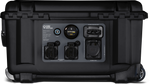 Batt Pack Energy | 3kW
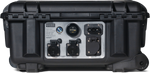 Batt Pack Pro | 5kW
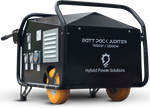 Batt Pack Jupiter | 7kW
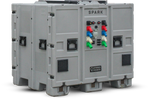 Spark Cube | 12kW/24kW
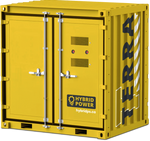 TERRA | 166kVA
Resources

What Hybrid Power Efficiency Means for Your Operations
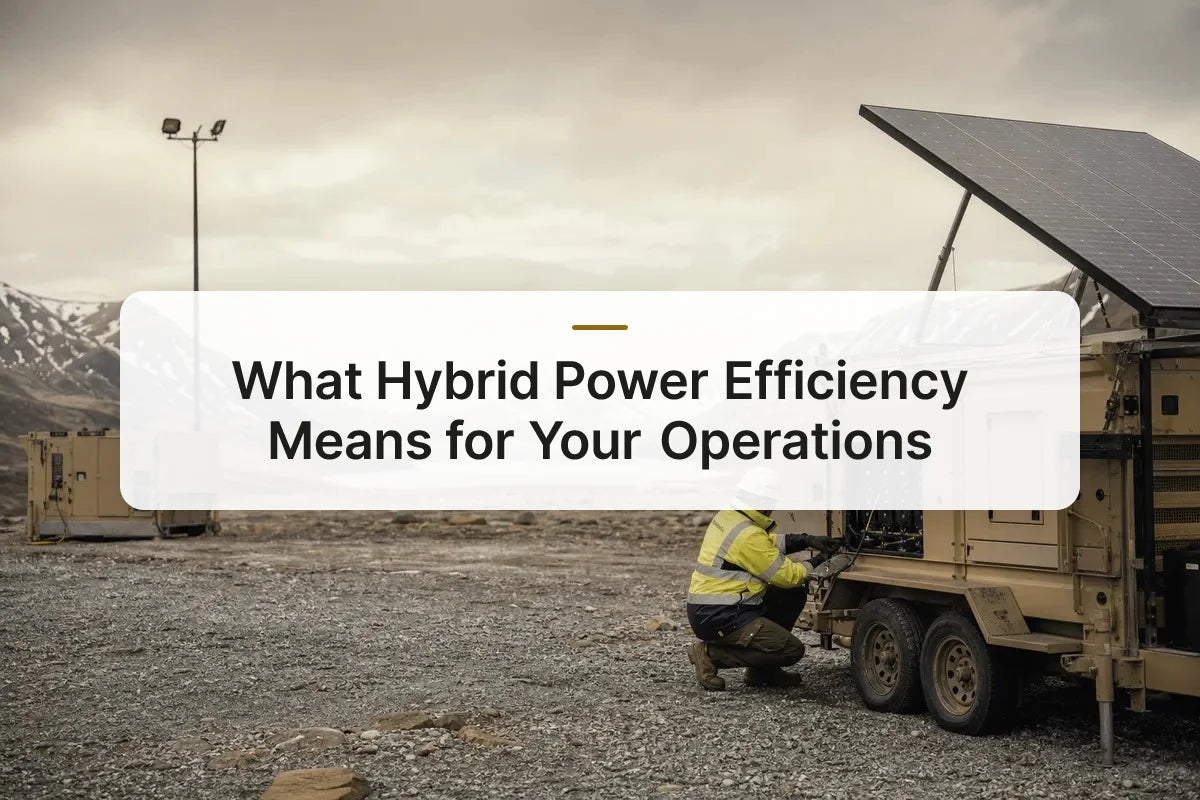
Understanding hybrid power efficiency operations is essential. Hybrid power systems cut fuel consumption and downtime by combining a LiFePO4 battery bank with generator, solar, alternator, or grid input so the generator runs only when the battery needs a top-up, instead of continuously. This load-levelling approach reduces generator runtime hours, fuel-logistics burden, and maintenance intervals, while delivering silent, low-thermal-signature power for mission-critical defence, construction, rental, and remote-site operations. The efficiency gain comes from smarter source management, not a single component, which is why control strategy and battery chemistry matter as much as generator size.
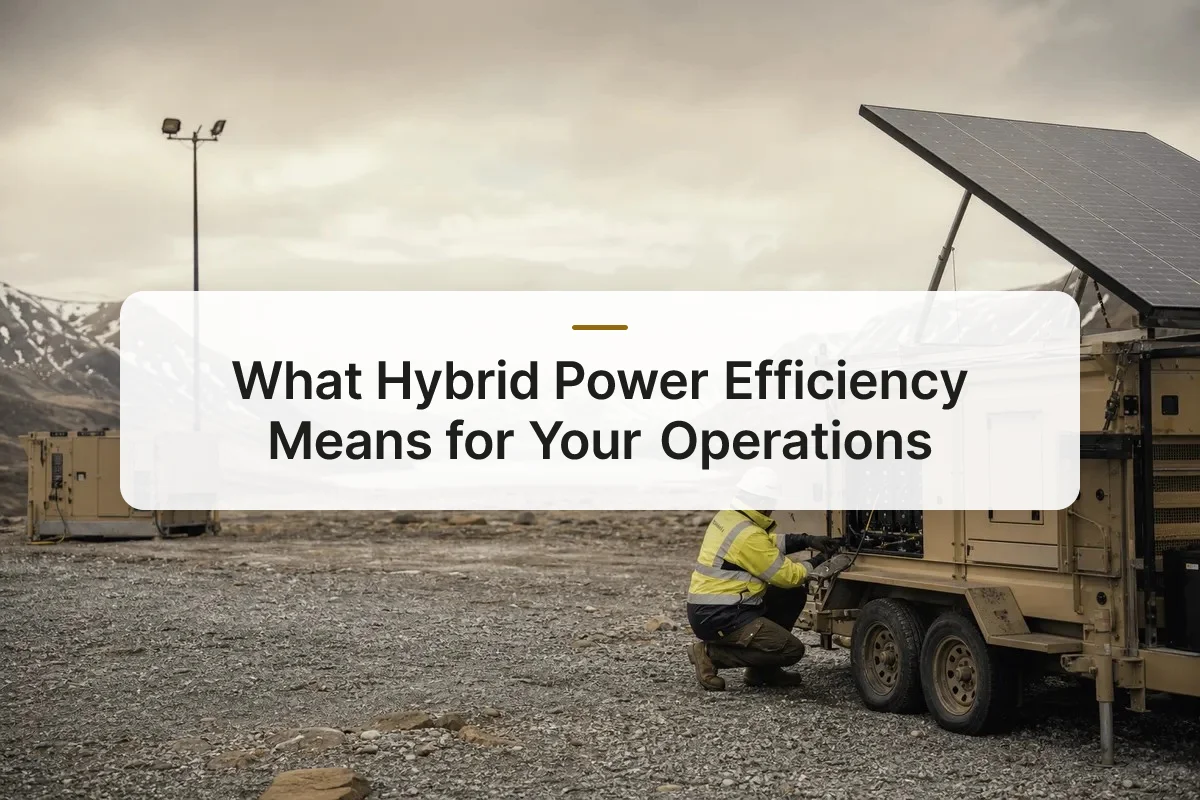
How Do Hybrid Power Systems Improve Efficiency in Operations Compared to Diesel-Only Generators?
A battery bank absorbs the site's peak demand swings while the generator only cycles on to recharge the bank, instead of running non-stop at partial load. This is particularly relevant for hybrid power efficiency operations.
Diesel-only sites size the generator for peak demand, then run it continuously even though actual load rarely sits near that peak. A crane lift, a welding spike, or a drone recharge pulls hard for a few minutes; the rest of the time the site draws a fraction of rated capacity. That mismatch is where hybrid power efficiency operations gain ground: a LiFePO4 battery bank supplies the baseline load and smooths the spikes, so the generator can shut down between charge cycles rather than idle through them.
What Fuel-Burn Reductions Can Defence and Industrial Operators Expect From Hybrid Configurations?
Generators burn fuel inefficiently when forced to run at low or variable load, because partial-load combustion is incomplete and unburned fuel accumulates in the exhaust system, a condition known as wet-stacking that fouls injectors and raises maintenance costs. Hybrid energy storage keeps the generator in its efficient operating band by running it at a steady, higher load only when recharging the battery, then letting it shut off [5]. Commercial and industrial hybrid storage deployments combining batteries with diesel generators have been reported to cut operational costs by as much as 40% [5], and mission-critical hybrid power supply studies using liquid propane as the primary fuel source have evaluated similar fuel-efficiency and cost gains for continuously-powered remote installations such as telecom towers [1].
For forward operating bases and remote industrial sites, fewer generator-running hours translates directly into fewer fuel resupply convoys, less on-site fuel storage, and reduced handling risk, the headline benefit for defence logistics planners who measure cost in convoy trips as much as litres burned. A diesel-only deployment demands continuous fuel delivery for the full duration of the mission; a hybrid configuration needs enough fuel to cover the generator's reduced duty cycle, not the whole deployment window.
How Does Battery-Assisted Load Levelling Extend Generator Lifespan?
Running fewer hours means fewer wear cycles on pistons, injectors, and bearings, which stretches the interval between overhauls and reduces unscheduled downtime. A continuous-duty diesel generator accumulates engine hours around the clock, whether the load justifies it or not. Under hybrid operation, the generator's total running hours over a deployment can be a small fraction of the diesel-only equivalent, since the battery bank, in platforms like Hybridps's Batt Pack and Spark Cube systems, carries the baseline load and the generator only engages to recharge. Less running time at the right load band means less mechanical stress, which is as much a maintenance-cost story as a fuel-cost one.
What Components and Control Strategies Let Hybrid Systems Balance Battery, Solar, Alternator, and Generator Inputs?
A hybrid system pairs a battery bank with a charge controller, inverter, and control logic that routes power from whichever input is cheapest and quietest at that moment. Getting that routing right is the core of hybrid power efficiency operations on any remote site.
The architecture starts with four possible inputs feeding one battery bank: solar panels, a vehicle alternator, grid power when available, and a generator as backup. This differs fundamentally from battery-only portable packs, which run until depleted and then require a full recharge or a swap before they can deliver power again. A multi-input system never fully depends on one charging path, if solar is weak on a cloudy day, the alternator or generator can top up the same bank without interrupting the load [3].
How Do Power Management Algorithms Prioritize Battery, Solar, Alternator, Grid, and Generator Inputs?
Control logic defaults to the lowest-cost, lowest-noise source first, and calls in the generator only when the battery state of charge drops below a set threshold. In practice, that means solar and stored battery power carry the load during the day, grid power is used when a site has it, and the generator, the loudest, most fuel-intensive option, starts only as a last resort [3]. POWR2 describes this same logic in BESS-plus-diesel configurations, where the generator's job shifts from running the load directly to charging the battery bank efficiently, then shutting off [3]. That shift cuts generator runtime hours and the associated fuel burn, maintenance intervals, and noise exposure on a job site.
Why Does LiFePO4 Battery Chemistry Matter for Charge Cycling and Field Durability?
LiFePO4 (lithium iron phosphate) tolerates frequent partial charge and discharge cycles without the degradation or thermal risk seen in other lithium chemistries, which matters because hybrid control logic is constantly topping batteries up in small increments rather than running full charge cycles. That tolerance for shallow, repeated cycling, rather than a single deep discharge followed by a full recharge, is what makes real-time source-switching viable over months of field deployment rather than a handful of cycles. When considering hybrid power efficiency operations, this point stands out.
This control principle doesn't change with scale. The same prioritization logic that governs a small battery pack on a construction site governs a microgrid-class system coordinating multiple generators and solar arrays across a larger installation [2]. What changes is capacity and the number of loads managed, not the underlying decision process, a point worth remembering before comparing systems purely on power rating.
How Do Hybrid Power Systems Lower Maintenance Burden and Total Cost of Ownership for Mission-Critical Deployments?
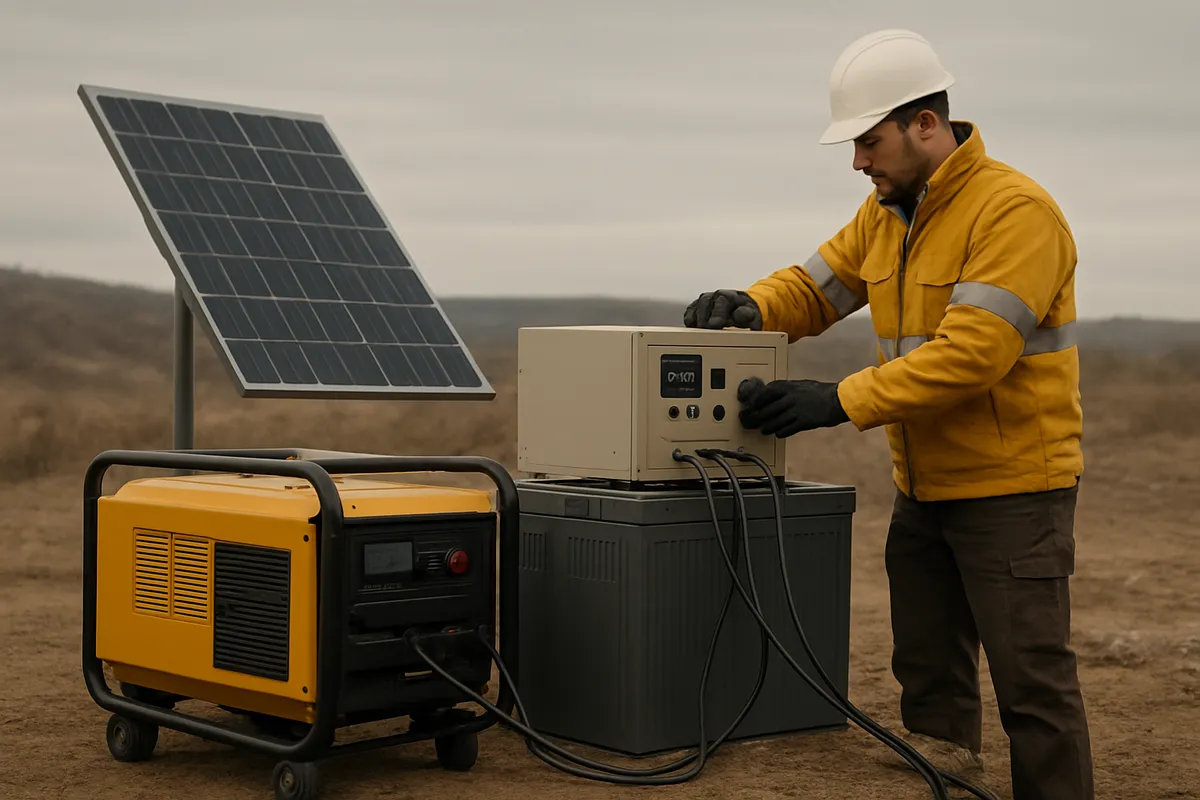
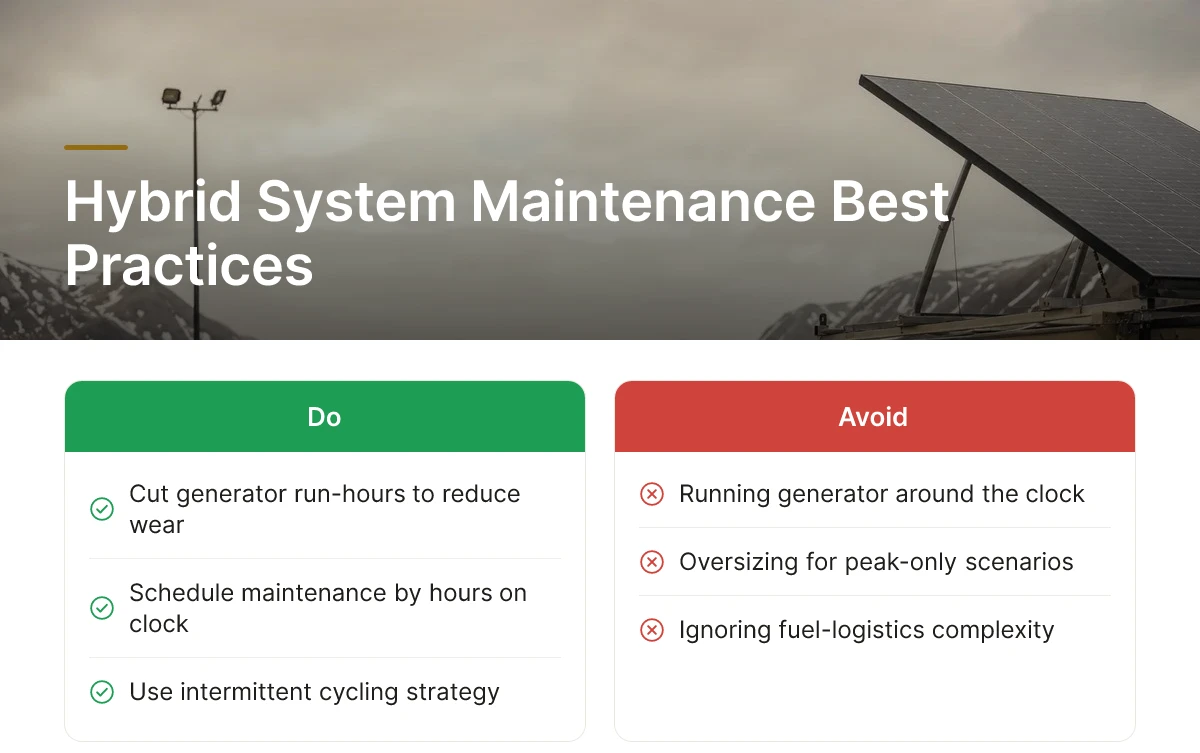
Cutting generator run-hours is the single biggest lever in hybrid power efficiency operations, because almost every maintenance cost on a diesel fleet scales directly with hours run, not calendar time.
Why Do Hybrid Systems Reduce Generator Wear and Fuel-Logistics Complexity?
A diesel generator that only starts when the battery pack needs topping up accumulates far fewer run-hours than one carrying the full load around the clock. Oil changes, fuel filter swaps, and wear-part service intervals are all scheduled against hours on the clock, so a genset cycling intermittently behind a LiFePO4 battery bank burns through those intervals much more slowly than a generator running continuously [3]. POWR2's framing of a BESS as a dynamic energy reservoir makes the mechanism explicit: the generator's job narrows to charging the battery during surplus periods, rather than carrying site load directly [3].
Fewer run-hours also means fewer refuelling trips, a logistics cost that compounds at remote or forward sites where every fuel delivery requires convoy planning, transport labour, and exposure time. For a forward operating base or a mine site three hours from the nearest depot, each avoided refuelling run removes a line item from the logistics schedule, not just a fuel cost.
What Does the Total Cost of Ownership Advantage Look Like Over a 5-10 Year Lifespan?
A hybrid battery system sits at a higher upfront cost tier than a diesel-only genset of comparable output. Over a 5 to 10 year deployment horizon, that upfront gap is typically offset by lower fuel spend, fewer scheduled services, and less downtime from field failures, industrial deployments combining a BESS with generators have reported operational cost reductions as high as 40% [5]. The arithmetic favours the hybrid system more as deployment length and site remoteness increase, since fuel and labour logistics are where diesel-only operations bleed cost over time.
Ruggedization matters here too. Hybrid Power Solutions builds its Batt Pack and Spark Cube lines rated to -30°C, which reduces field-failure risk in Arctic and northern operations where cold-starting a diesel unit or dealing with fuel gelling is a recurring maintenance event rather than an edge case. Fewer field failures mean fewer emergency repair callouts, a cost category that's hard to budget for and expensive when it happens.
For defence users, silent, low-thermal-signature operation carries a maintenance-adjacent benefit beyond cost: fewer resupply convoys moving fuel to a forward position means fewer logistics touchpoints and lower detection risk, alongside the direct savings on oil, filters, and transport labour. For those exploring hybrid power efficiency operations, this matters.
What Efficiency and Runtime Gains Do Construction, Mining, and Remote-Site Operations See From Hybrid Power?
Hybrid power efficiency operations translate into fewer fuel deliveries, quieter job sites overnight, and power that keeps running when diesel-only equipment would stall in the cold.
What Efficiency and Uptime Improvements Have Construction, Mining, and Utility Contractors Achieved On-Site?
A diesel generator sized for peak daytime load is badly oversized for overnight security lighting, heat trace, or standby loads, it burns fuel at low efficiency while running far below its rated capacity. Hybrid systems solve this by switching to stored battery power overnight and shutting the generator down entirely, which removes the noise complaint that follows construction sites running gensets near residential areas after hours. Hybridps Batt Pack units (Energy 3kW, Pro 5kW, Jupiter 7kW) are built for exactly this overnight-carry role on construction sites, recharging during the day when the site genset or grid connection is already running.
In mining and utility contexts, the runtime math changes further. Rather than sizing a generator for continuous full-load operation, the generator only needs to recharge the battery bank as it depletes, a hybrid energy storage system can smooth out variable loads and cut the generator's duty cycle substantially compared to running it as the sole source [5]. That shift from "always-on genset" to "battery carries load, generator tops up" is the core mechanism behind lower fuel burn and reduced maintenance intervals on remote sites.
How Do Hybrid Systems Maintain Power Delivery in Extreme Cold and Remote Locations?
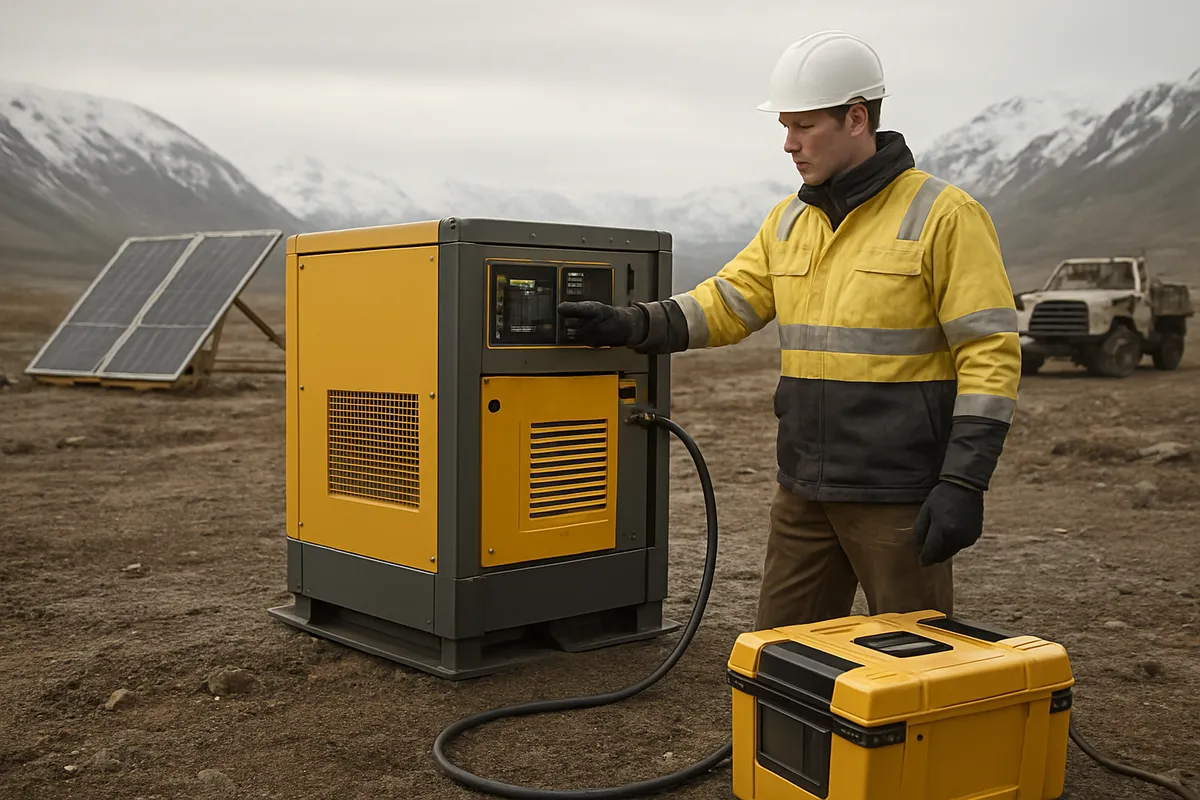
Cold is where diesel-only setups fail first, fuel gelling, hard starts, and batteries that won't hold charge below freezing. Hybridps systems are rated to -30°C, engineered and assembled in Canada specifically for northern and Arctic deployments where a failed cold start can mean waiting days for a service truck. That reliability matters most where fuel resupply is expensive, weather-dependent, or simply unavailable on short notice.
Portability compounds the advantage. A battery unit that rolls or lifts into place beats hauling, positioning, and fuelling a standalone diesel generator, cutting site setup time on short-duration deployments. For rental fleets, that same durability and lower duty cycle reduce the servicing burden between rentals, fewer oil changes, fewer filter swaps, less downtime between jobs, which keeps units turning over faster across a fleet.
How Do You Select and Configure a Hybrid Power System for Your Operational Requirements?
Match the product class to three variables first: peak load, duty cycle, and deployment environment, then layer in portability and maintenance constraints. Getting this sequence right is the difference between a system that quietly supports hybrid power efficiency operations and one that gets abandoned in a yard after the first failed deployment.
What Power Tier and Multi-Input Configuration Best Matches Your Mission Profile and Duty Cycle?
Start with the load you're actually running, not the load you might someday run. A crew charging tools, running lights, or topping up a drone fleet at a single checkpoint fits the Batt Pack class, Energy 3kW, Pro 5kW, or Jupiter 7kW, where the job is task-level power, not site-wide draw.
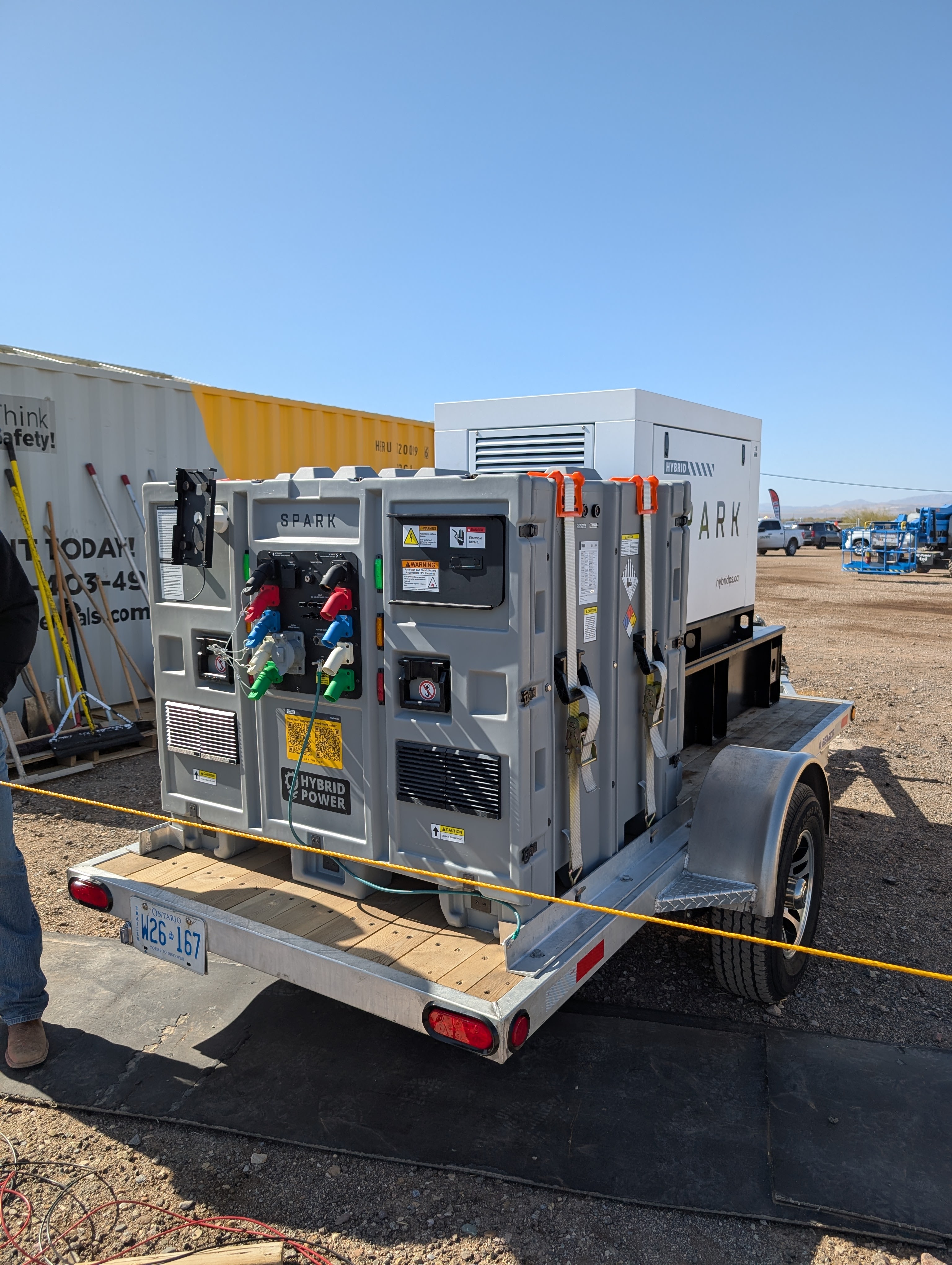
Step up to Spark Cube 12/24kW when you're feeding a mid-size site: a construction trailer compound, a multi-bay workshop, or a cluster of equipment that draws steadily rather than in short bursts. For a forward operating base or a whole remote site running multiple structures, climate control, and communications gear around the clock, TERRA's 167 kVA continuous and 250 kVA peak rating, backed by 162 kWh of storage, is built for that scale, it's a hybrid microgrid, not a single-load battery pack. This directly impacts hybrid power efficiency operations outcomes.
Multi-input flexibility matters as much as capacity. A system that accepts solar, alternator, grid, and generator charging lets a site manager keep running when one input drops out, which research on mission-critical hybrid power supplies identifies as central to maintaining fuel efficiency and uptime in remote deployments [1].
How Do Noise, Thermal Signature, and Portability Requirements Influence System Selection?
Low acoustic and thermal signature push defence and emergency-response buyers toward hybrid microgrids over standalone diesel units, because a generator's heat and noise profile can compromise a position in ways that matter more than fuel cost alone. Hybrid systems that use batteries as the primary reservoir and run the generator only to recharge, rather than to carry load directly, cut both running time and the signature that comes with it [3].
Portability drives the rest of the configuration. A towable trailer mount suits a unit relocating between job sites every few weeks, while a spider box lets one power source distribute across multiple points on a scattered site without rerunning cable for every load. Rental fleets should weight unit durability and low-maintenance design heavily, equipment rotating across sites every few weeks takes more handling stress than a stationary install, so match product toughness to rotation frequency before committing to a buy-or-rent path.
Extreme cold narrows the decision further. A -30°C rating matters wherever resupply is slow and failure isn't an option, and it's often the deciding factor between a portable pack for short stays and a full microgrid for sites with no easy fuel or parts delivery.
Frequently Asked Questions
Can a hybrid power system fully replace a diesel generator on a remote site?
In many deployments, yes, a battery-generator hybrid can handle baseload and peak demand while the generator runs only to recharge, cutting runtime sharply. Full diesel elimination depends on load size and duration: a Batt Pack Jupiter 7kW suits tool and equipment loads, while a TERRA 167 kVA microgrid can carry an entire site with the generator as backup rather than primary power.
Does adding battery storage to a generator increase upfront equipment cost?
Yes, upfront hardware cost is typically higher than a generator alone, but fuel, maintenance, and logistics savings offset it over the deployment lifecycle. Sites with high fuel-delivery costs or strict maintenance intervals tend to recover that difference fastest through reduced engine hours and fewer service callouts. This is particularly relevant for hybrid power efficiency operations.
How does solar input affect hybrid system efficiency in low-sunlight or Arctic conditions?
Solar input drops in low-sunlight or Arctic winter conditions, but a properly designed hybrid system shifts load to battery and generator inputs without losing uptime. This is why multi-input charging, solar, alternator, grid, and generator, matters more in northern operations than solar capacity alone; Hybridps systems are rated to -30°C specifically for this scenario.
What is the difference between a battery-only portable power pack and a hybrid microgrid?
A battery-only pack stores and discharges energy until depleted, then needs recharging before it can deliver more power. A hybrid microgrid combines battery storage with one or more charging inputs, solar, generator, grid, or alternator, so it can sustain continuous output indefinitely. Portable packs like the Batt Pack Energy 3kW suit single-tool or short-duration jobs; a microgrid like TERRA is built for whole-site, multi-day power.
How long does a hybrid battery-generator system take to deploy on a new site?
Portable units such as the Batt Pack line can be operational within hours of arrival, since they ship pre-configured and need no site construction. Larger systems like Spark Cube or TERRA take longer to commission depending on site prep, but still deploy faster than building out fixed diesel infrastructure.
Conclusion
Fuel-logistics reduction, not emissions alone, is the strongest efficiency argument for hybrid power on remote and mission-critical sites [1]. The gains come from matching system class to load, a portable pack for tool-scale work, a microgrid for whole-site or forward-operating-base power, and from multi-input charging that keeps batteries topped up regardless of sunlight or grid access. Efficiency also depends on cold-weather reliability, since a system that fails at -30°C delivers no savings at all. Start by auditing your current generator's fuel burn and maintenance log against your actual load profile, then size a hybrid configuration, portable pack, Spark Cube, or TERRA, against that real demand rather than the generator's rated capacity.
Sources & References
- Frontiers | Fuel efficiency and economic assessment of a hybrid power supply system for mission critical applications
- Hybrid power system, Reliable multi-source energy solutions - Vikinor
- Hybrid Power Systems 101 | BESS | POWR2
- Hybrid Energy Storage: Features, Applications, And Benefits
Recommended Articles
Explore more from our content library: