

Products
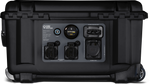 Batt Pack Energy | 3kW
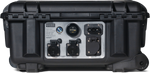 Batt Pack Pro | 5kW
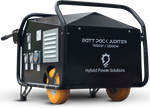 Batt Pack Jupiter | 7kW
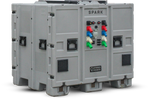 Spark Cube | 12kW/24kW
 TERRA | 166kVA
Resources

Best Quiet Hybrid Generators for Noise-Regulated Job Sites
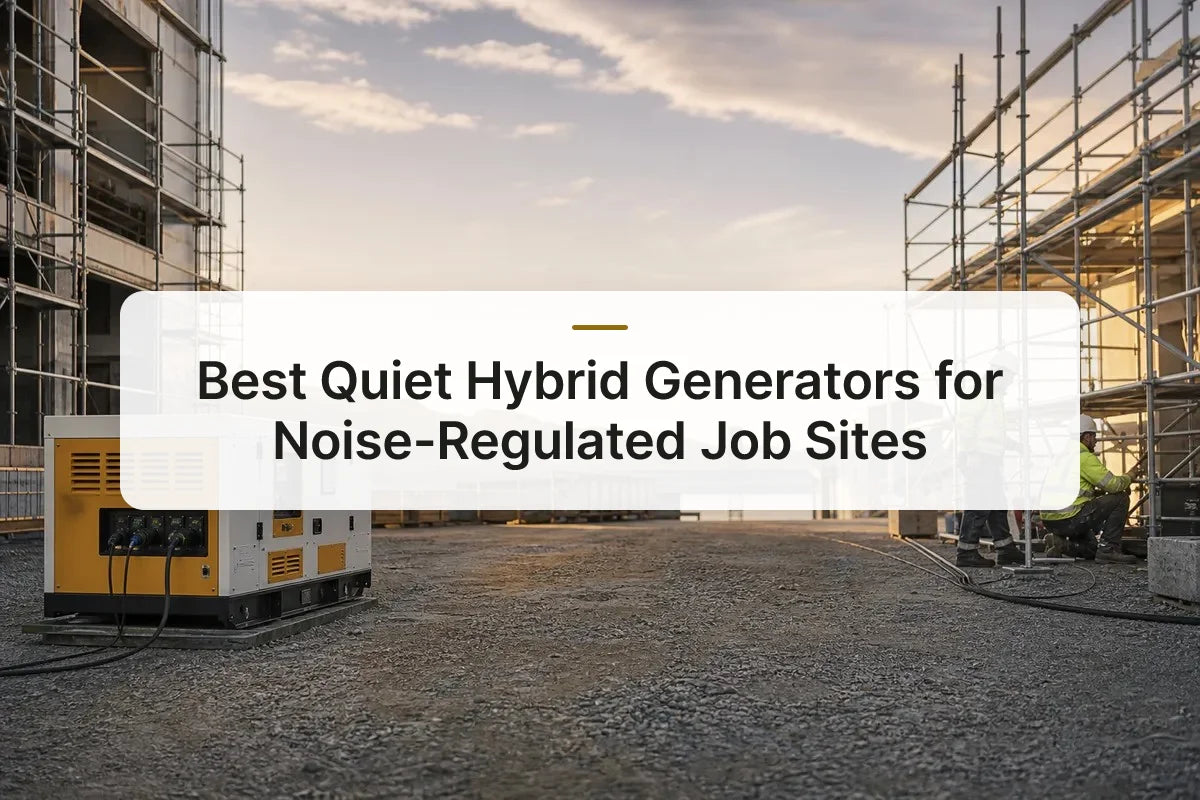
Understanding best quiet hybrid generator systems for construction sites with strict noise regulations is essential. Understanding best quiet hybrid generator systems for construction sites with strict noise regulations is essential. Hybrid battery-diesel systems cut construction site noise by running on LiFePO4 battery power for most of the duty cycle, starting the diesel engine only to recharge at a steady, efficient load rather than idling continuously. This lowers the acoustic signature well below typical open-site diesel generator output, reduces fuel burn, and makes it far easier to stay inside municipal or OSHA construction noise limits. Compared with generator-only setups, hybrid systems also cut runtime gaps, maintenance intervals, and total fuel logistics over the life of a project.
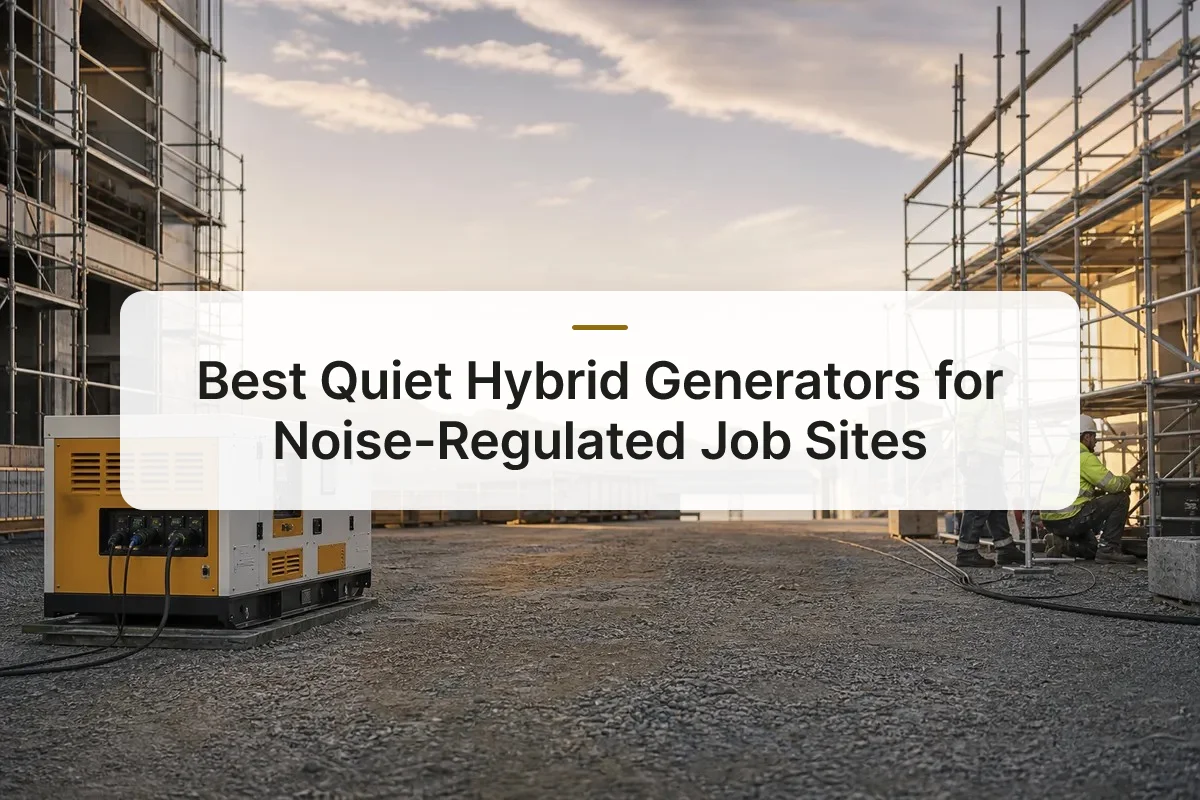
How Do Hybrid Battery-Diesel Systems Achieve the Best Quiet Hybrid Generator Systems for Construction Sites with Strict Noise Regulations?
The acoustic advantage comes from engine runtime reduction, not just better mufflers, the diesel engine simply runs less often and at a steadier, more efficient load point.
A traditional genset must track whatever the site demands in real time. When a crane motor starts or a welder draws a surge, the engine throttles up immediately, and the noise spikes with it. A hybrid system handles that differently: the battery supplies power for most of the duty cycle, and the diesel engine only switches on to recharge the pack at a fixed, efficient operating point. That distinction, continuous load-tracking versus intermittent recharge cycling, is the core mechanical reason hybrid systems qualify among the best quiet hybrid generator systems for construction sites with strict noise regulations.
Why Does Battery-Primary Operation with Diesel Backup Reduce Acoustic Signature Compared to Continuous Diesel Running?
A genset-only setup has to idle or cycle constantly to stay ready for the next load spike, which means the engine is making noise even when the site barely needs power [3]. Hybrid systems flip that logic: the LiFePO4 battery bank, like the configurations in Hybridps's Batt Pack Energy, Pro, and Jupiter lines, carries the baseline and peak loads, while the diesel only starts when the state of charge drops to a set threshold. Running at a single efficient load point rather than constantly adjusting also improves fuel efficiency, since diesel engines burn disproportionately more fuel per kilowatt-hour at partial load than at a steady, well-matched output [3]. Less engine runtime translates directly to fewer hours of acoustic exposure for crews and neighbouring properties.
How Do Power Electronics and Control Systems Minimize Noise During Load Transitions and Peak Demand?
Inverter-based power electronics manage load transitions electronically instead of mechanically, so the engine doesn't need to surge when demand jumps. In a genset-only system, a sudden load, a compressor kicking in, a hoist starting under tension, forces the engine's governor to react in real time, and that throttle response is audible as a pitch and volume change. In a hybrid design, the battery buffers that spike instantly while the control system manages the transition in milliseconds, leaving the diesel engine, when it's running at all, undisturbed at its fixed point [1]. This is also where a multi-input hybrid architecture matters: a system that accepts solar, alternator, grid, and generator charging gives the control electronics more flexibility to keep the engine off longer, rather than forcing a recharge cycle purely on a timer.
Enclosure design and thermal insulation still contribute to the overall acoustic profile, and a well-sealed cabinet with proper ventilation shaves further decibels off a running engine [5]. But insulation is a secondary layer. The primary mechanism driving down noise on a hybrid job site is less engine runtime in the first place, not a quieter box around the same engine running the same number of hours.
What Acoustic and Fuel-Efficiency Specifications Matter Most Under OSHA and Municipal Noise Limits?
Buyers evaluating the best quiet hybrid generator systems for construction sites with strict noise regulations need two separate specs: a sound-output rating at a defined distance, and a worker exposure estimate over the shift length. These are not the same measurement, and conflating them leads to compliance gaps even when equipment "sounds fine" on paper.
What dB Thresholds and Measurement Standards Apply to Construction Site Noise Regulations, and How Do Hybrid Systems Meet Them?
Municipal noise bylaws generally set a maximum decibel level measured at the property line or a fixed distance from the site boundary, while OSHA guidance addresses how much noise a worker can be exposed to across an eight-hour shift. A generator can satisfy a city's property-line limit and still contribute to a worker exposure problem if it sits close to the crew all day.
Decibel ratings only mean something when the measurement distance and load condition match. A spec sheet listing 60 dBA at 23 feet under half load is not comparable to a competitor's 65 dBA at 7 metres under full load, the numbers describe different test conditions entirely. Anything under roughly 60 dBA is generally treated as quiet, while readings above 80 dBA move into the range that draws fines in regulated zones, particularly for extended runtime [5]. Buyers should request the test distance and load point behind any published rating, not just the headline figure, before comparing units head-to-head.
How Do Fuel Consumption Rates and Runtime Specifications Compare Across Power Tiers and Duty Cycles?
Fuel consumption at partial load is where most diesel-only setups lose efficiency and gain noise-hours, a unit running at 25% load burns disproportionately more fuel per kilowatt-hour than the same unit near 75% load, and it keeps running loud the whole time [3]. Oversizing a generator for a job that only needs a fraction of its rated output means more refuel cycles, more maintenance exposure, and more hours of unnecessary noise on site.
Duty cycle, whether the load is continuous or intermittent, determines which power tier and battery capacity actually fits the job. A crew running lighting, tools, and welfare units intermittently through a shift has different capacity needs than one running a continuous crane or hoist load. Hybridps publishes specs across this range: the Batt Pack Energy 3kW and Batt Pack Pro 5kW cover smaller intermittent loads typical of a job trailer or tool circuit, the Batt Pack Jupiter 7kW steps up for heavier intermittent draw, and the Spark Cube 12/24kW addresses sites with sustained, higher-continuous demand. Matching the tier to the actual duty cycle, not the worst-case peak, keeps both fuel-hours and noise-hours down, which is the practical core of sizing any hybrid system correctly for a noise-regulated site.
How Do Hybrid Power Systems Compare to Generator-Only Solutions in Total Cost of Ownership and Runtime?
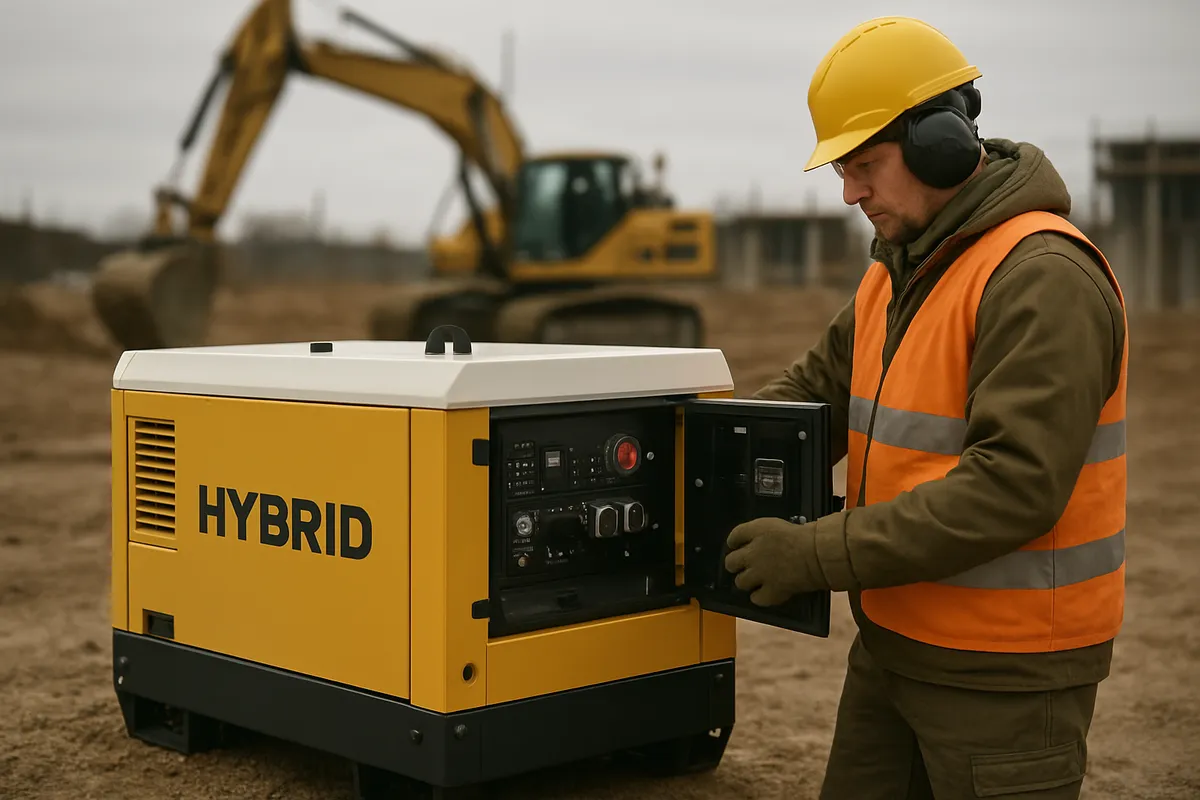
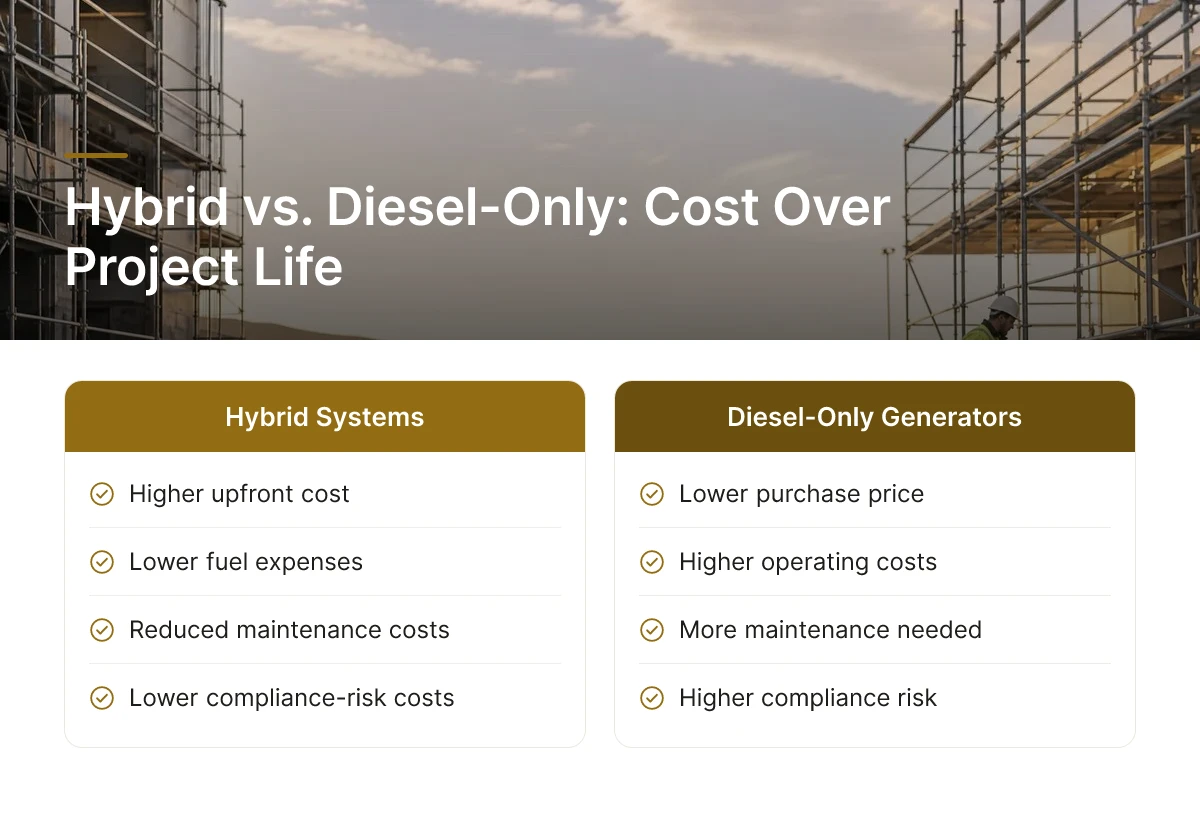
Hybrid systems carry a higher upfront cost than a basic diesel generator but typically cost less over a project's life because fuel, maintenance, and compliance-risk expenses drop sharply once engine run hours fall.
Diesel generators win on purchase price alone, a bare generator rental or buy is almost always the budget-friendly option on day one. But that comparison ignores how the unit actually performs across a multi-month job. Over a full project lifecycle, generator-only setups accumulate operating costs that hybrid-diesel or hybrid-battery configurations avoid by design. The right question isn't which system costs less to acquire, it's which system costs less to run, maintain, and defend against a noise complaint.
What Are the Capital, Fuel, Maintenance, and Compliance Cost Differences Between Hybrid and Traditional Generator Deployments?
Four cost categories separate the two approaches, and each has a distinct mechanism behind it.
- Capital cost: Generator-only units sit in the budget-friendly tier; hybrid battery-generator systems sit mid-range to premium depending on power class and runtime requirements.
- Fuel cost: Running a generator at low or variable load burns fuel inefficiently, diesel engines consume disproportionately more fuel per kilowatt-hour at partial load than at higher load [3]. A hybrid system lets the battery absorb variable demand and the generator run only near its efficient load point, cutting fuel consumption and delivery frequency. Site data across construction deployments shows hybrid configurations reducing fuel burn by roughly 50-70% compared to generator-only setups [2].
- Maintenance cost: Fewer engine hours means fewer oil changes, filter swaps, and wear-related failures. A generator that only runs to recharge batteries or cover peak loads logs a fraction of the hours a generator running continuously would accumulate.
- Compliance-risk cost: Quieter operation reduces exposure to noise-complaint fines, stop-work orders, and restricted work-hour windows, costs that rarely show up in a procurement spreadsheet but can halt a schedule outright.
Independent cost modelling on battery energy storage integration points to operating expense reductions as high as 85% versus diesel-only setups, with payback periods as short as one to two and a half years on the capital difference [1]. That framing matters for procurement teams weighing the best quiet hybrid generator systems for construction sites with strict noise regulations against a straightforward generator purchase.
How Do Continuous Runtime and Multi-Input Charging Extend Operational Flexibility and Reduce Downtime?
Multi-input charging lets a system top up from whatever power source is already on-site, solar, a vehicle alternator, grid connection, or a generator, instead of depending solely on diesel delivery schedules. HybridPS's Batt Pack Pro 5kW and Jupiter 7kW units accept all four inputs, which matters when a fuel truck is delayed or a site has partial grid access.
Continuous runtime design also closes the downtime gap that generator-only units create. A generator-only setup goes dark mid-shift when it needs refuelling or hits a maintenance interval. A battery-plus-generator-assist configuration keeps power flowing from storage while the generator cycles on only when needed, avoiding the stop-start pattern that costs schedule time on every refuel.
Which Hybrid System Configurations Best Serve High-Power Construction and Industrial Sites?
The this strategy are not one product, they're a tier ladder matched to load, site size, and remote-site constraints. A single job trailer needs a different battery footprint than a multi-zone earthworks site running cranes, dewatering pumps, and lighting towers around the clock.
What Power Tiers and Battery Capacities Are Required for Mission-Critical Construction Applications, and How Do They Scale?
Tier selection follows load, not site size alone, a small urban lot with tight noise bylaws can draw as much power as a rural pad with none.
Small portable packs cover hand tools, task lighting, and site office circuits where loads cycle on and off through the shift. Mid-tier units step up to trailer power, welding, and small equipment loads that run longer and pull harder. Large or remote builds, pipeline right-of-ways, multi-building commercial pads, resource-sector sites, need stationary hybrid microgrid systems that power the whole site, not just one zone, and that accept multiple charging inputs so the site isn't dependent on a single fuel delivery schedule.
This mirrors the broader shift in construction power sizing: sites with grid access increasingly default to battery energy storage for continuous loads, while remote or off-grid sites pair batteries with a smaller generator to stretch fuel and cut runtime hours [2]. Matching tier to load, rather than over-sizing a single unit for the whole job, is what keeps both noise output and total cost of ownership in check.
How Do LiFePO4 Systems with -30°C Ratings and Canadian Manufacturing Support Year-Round Construction Operations?
Chemistry matters as much as capacity. LiFePO4 (lithium iron phosphate) holds up to the daily charge-discharge cycling a job site demands far better than generic lithium-ion, with a wider safety margin under the heat and vibration generators and battery packs take on a working site, fewer thermal events, longer service life before capacity fades below useful thresholds.
Cold climate is the second filter. A -30°C operating rating means a pack doesn't lose usable capacity on a January pour in northern Alberta or a winter build in the territories, where temperature swings degrade less-rugged chemistries and force crews back toward diesel. Canadian engineering and assembly also means parts, support, and replacement units aren't stuck behind a cross-border supply chain when a site needs a unit fast.
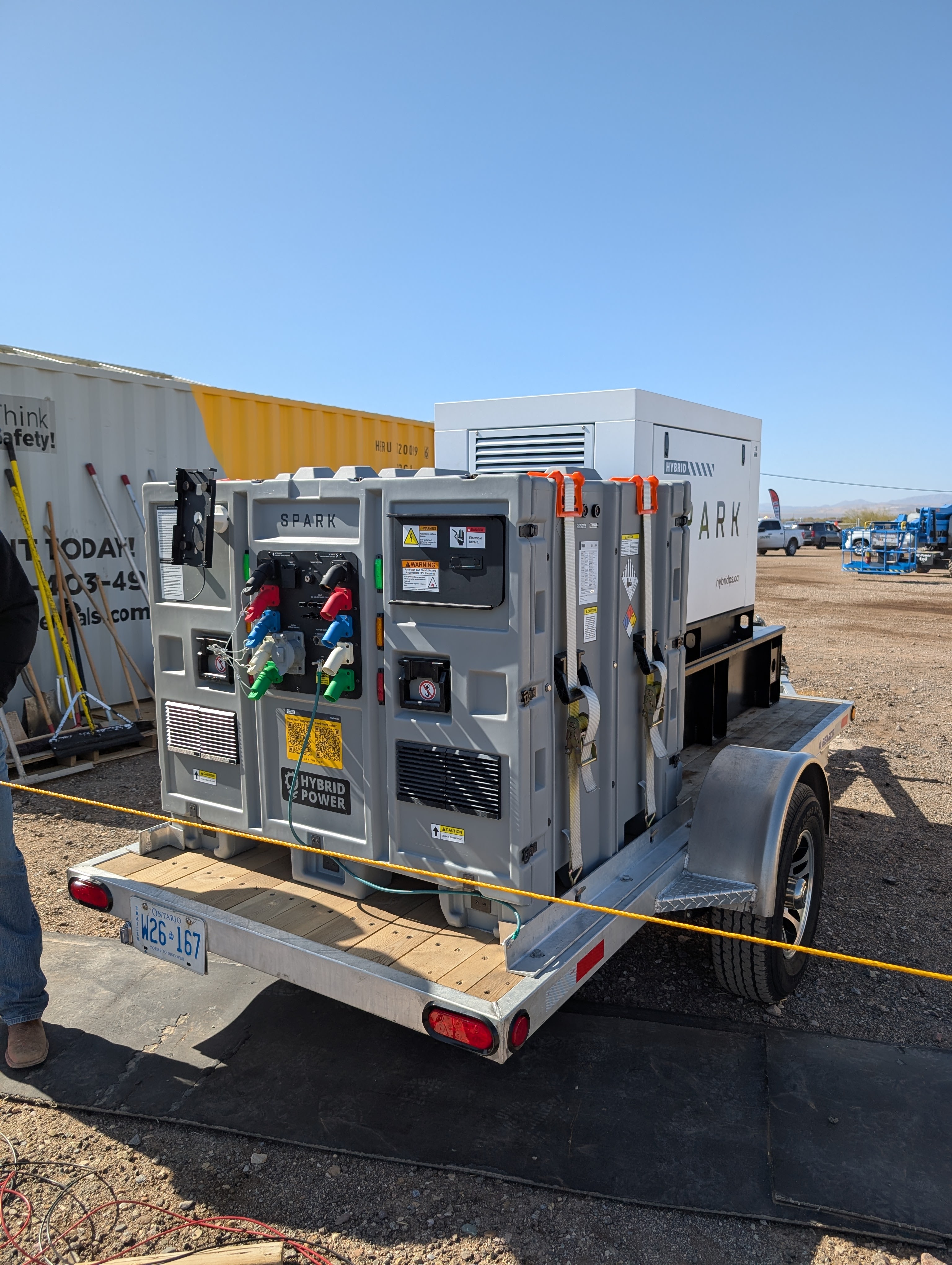
Hybridps builds to this tier structure directly: the Batt Pack Pro and Batt Pack Jupiter sit at the portable, job-site scale, tool power, trailers, lighting circuits, while Spark Cube and the TERRA hybrid microgrid step up to larger or multi-zone site power. For sizing guidance against your actual load schedule, the Batt Pack Pro and Jupiter product pages are the starting point before scaling up to Spark Cube or TERRA.
What Operational and Compliance Results Have Hybrid Systems Delivered on Noise-Restricted Construction Sites?
Operators switching from diesel-only setups report three consistent outcomes: longer permitted work windows, lower fuel-logistics overhead, and faster contract approval on noise-sensitive jobs. These patterns show up across construction, rental, and utility deployments rather than in any single flagship project.
What Documented Deployments Show Hybrid Systems Meeting Noise Ordinances and OSHA Compliance on Active Sites?
Lower acoustic output doesn't just avoid fines, it changes when crews can legally run equipment. Municipal noise ordinances typically cap decibel levels at construction boundaries during restricted hours, often early morning, evening, and overnight [5]. A generator running near or above threshold forces work into a narrow daytime window. A system that stays well under the limit lets site managers schedule concrete pours, utility tie-ins, or crane operations outside peak traffic hours without triggering a violation.
This is the practical mechanism behind "quiet" power on a regulated site: it's not a comfort feature, it's a scheduling enable. Among the this approach, the ones that deliver real schedule flexibility are those rated for sustained near-silent operation, not just a lower idle noise spec. Hybridps's Batt Pack Pro 5kW and Jupiter 7kW units are built for this role on active construction sites, running tools and lighting overnight without the acoustic signature that draws neighbour complaints or inspector attention.
How Have Contractors and Operators Reduced Fuel Logistics and Emissions Reporting by Switching to Hybrid Power?
Hybrid systems cut the number of fuel deliveries a site needs, which shrinks both cost and paperwork. Diesel-only operations require recurring tanker visits and on-site storage that triggers spill-prevention and emissions documentation requirements [2]. A hybrid setup that draws from grid, solar, or a smaller generator only to recharge batteries reduces that storage footprint and the associated reporting burden, since there's simply less fuel on site to track.
Rental fleets have adapted their offerings around this shift. Buy-or-rent hybrid programs let contractors deploy compliance-ready power without committing capital to a full fleet upgrade, which shortens the sales cycle on noise-sensitive bids where the power plan has to be finalized before the contract closes. Readers evaluating that path should review the Buy or Rent and Portable Power Packs options before scoping a noise-restricted job.
Frequently Asked Questions
Can a hybrid generator system fully replace a diesel generator on a construction site?
In many applications, yes, but it depends on continuous load and runtime needs. A battery-only setup suits intermittent loads like lighting, tools, and welfare units, while heavier continuous draws often still pair a smaller diesel or generator input with battery storage [2]. Hybrid systems with multiple charging inputs, like Batt Pack Pro or Spark Cube, let you scale from battery-only to hybrid-assisted power as site demand changes.
Do hybrid power systems need to be recharged by the grid, or can they run entirely off-grid?
They can run entirely off-grid if configured with solar, alternator, or generator charging inputs. Grid access with a BESS can deliver fuel savings up to 90% where available [2], but sites without grid access rely on hybrid charging combinations instead. Hybridps systems accept solar, alternator, grid, or generator input, so the charging method depends on what's accessible at the site, not the battery itself.
How does cold weather affect battery performance on winter construction sites?
Standard lithium batteries lose capacity and can fail to start in sub-zero conditions, similar to diesel fuel gelling issues in extreme cold. Systems not rated for low temperatures need heated enclosures or indoor storage overnight. Hybridps LiFePO4 systems are rated to -30°C, engineered and tested in Canada specifically for northern and winter job sites without separate thermal management add-ons.
What size hybrid system does a typical construction trailer or job-site setup need?
Sizing depends on your largest simultaneous load, not just total equipment count, lighting, tools, and welfare trailers typically fall in the 3-7kW range. A single Batt Pack Energy (3kW) may cover a small trailer, while Batt Pack Pro (5kW) or Jupiter (7kW) suit active job sites running power tools alongside lighting and charging. Larger multi-trailer sites may need a Spark Cube 12/24kW.
Are hybrid generator systems harder to maintain than standard diesel generators?
No, hybrid battery systems generally require less maintenance than diesel units. Diesel generators need regular oil changes, filter replacement, and wet-stacking prevention from running under light loads [2]. Battery systems with extended service intervals and no fuel system to maintain reduce the mechanical upkeep burden significantly over a multi-year deployment.
Conclusion
Meeting strict noise limits on a construction site isn't just about swapping one generator for a quieter model, it's about rethinking how power gets delivered. Battery-based systems with multiple charging inputs cut fuel costs by up to 85% compared to diesel-only setups [1], eliminate wet-stacking and idle-noise violations, and hold up in winter conditions down to -30°C when properly rated. Before your next bid on a noise-restricted site, size your actual load profile against options like Batt Pack Pro or Spark Cube rather than defaulting to a diesel unit one size up. Start by requesting a demo to match your site's load and runtime needs to the right configuration.
Sources & References
- Battery vs Diesel vs Hybrid: A Construction Cost Comparison
- Construction Site Power Solutions: Complete Guide to Generators, Hybrid & Battery Systems - WOLFF Onsite
- Hybrid Generator vs. Diesel Generator Comparison - Cost, Efficiency & Performance
- The 6 Quietest Generators For Home, Recreation & Business - Blue Diamond
Recommended Articles
Explore more from our content library: