

Produits
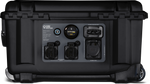 Pack de batteries énergétiques | 3kW
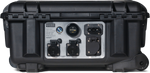 Bloc-batterie Pro | 5 kW
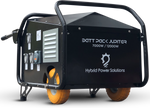 Batterie Jupiter | 7kW
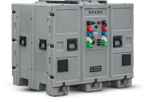 Spark Cube | 12kW/24kW
 TERRA | 166kVA
Ressources

Battery-Based Power Solutions vs Traditional Generators
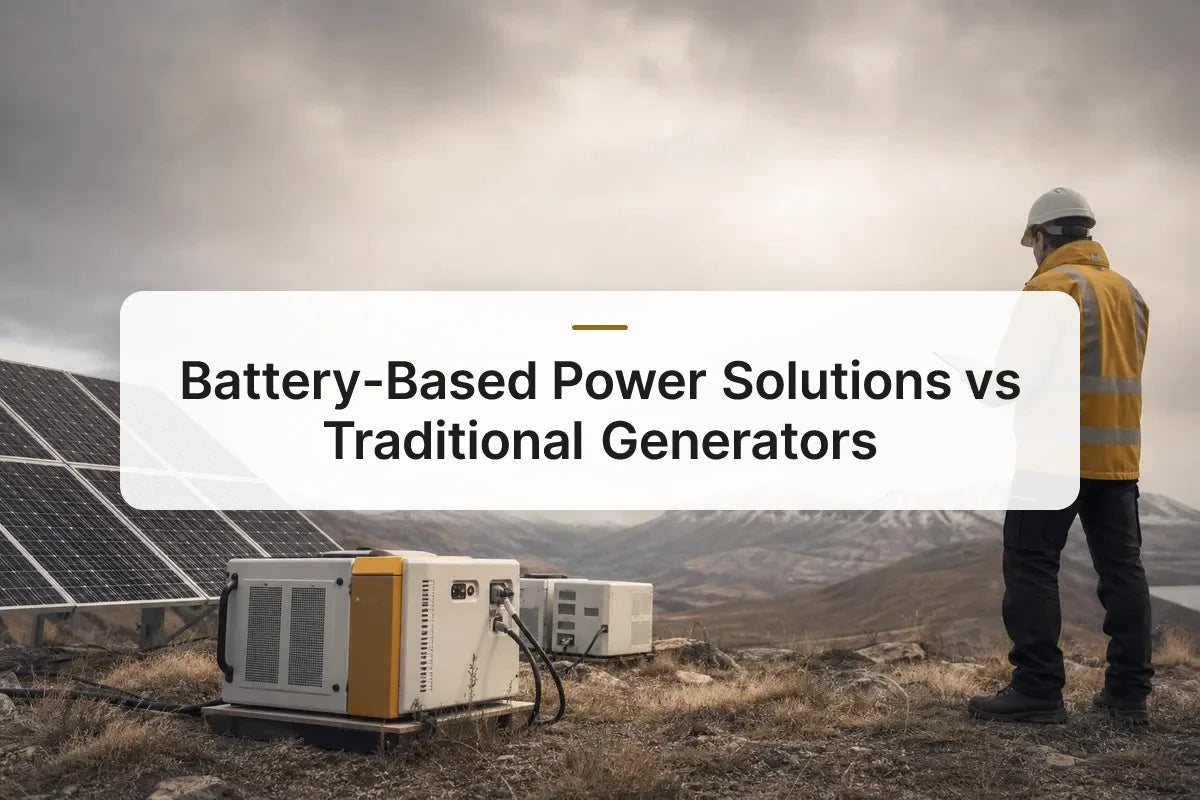
Understanding battery based power solutions is essential. Battery-based hybrid power solutions outperform traditional diesel generators by pairing LiFePO4 battery capacity with multi-input charging (solar, alternator, grid, or generator) to cut fuel resupply frequency, run near-silent, and hold output in extreme cold. For defence, rental, and construction operators, this means fewer convoy trips, a low acoustic and thermal signature for forward positions, and continuous runtime that scales from a single Batt Pack to a 167 kVA TERRA microgrid, without diesel-only downtime or cold-start failure below -20°C.
How Do Battery-Based Power Solutions Outperform Diesel Generators for Industrial and Defence Use?
A diesel generator sized for peak load spends most of its life running well below that peak, burning fuel inefficiently while a battery buffer lets the engine work only at its efficient point or shut off entirely. That mismatch between fixed generator output and variable site demand is the core inefficiency battery based power solutions are built to close.
A diesel-only genset can't scale down gracefully. It either idles at partial load, where fuel-to-output ratios degrade sharply, or cycles on and off to chase demand, which accelerates wear on pistons, injectors, and bearings [2]. A hybrid architecture solves this differently: the battery absorbs and delivers the swings, while any generator present runs in short bursts at its rated efficiency band, or not at all if solar and grid inputs cover the load. This is particularly relevant for battery based power solutions.
What advantages do hybrid systems deliver in fuel efficiency, emissions, and maintenance cost?
Hybrid systems cut fuel burn and maintenance hours by letting the battery carry the load curve while the generator, when needed, runs at a fixed efficient setpoint instead of constant partial-load cycling.
Mission-critical hybrid deployments, including remote telecom and off-grid sites, show measurable fuel efficiency and cost gains when a battery buffer is added to reduce generator runtime [1]. Diesel generators run at 25% load can burn substantially more fuel per kilowatt-hour than the same unit at 75% load, and that inefficiency compounds directly into fuel spend at sites where resupply is expensive or logistically constrained [2].
Maintenance follows the same pattern. Diesel gensets need oil changes, filter replacements, and running-hour tracking to catch wear before failure, work that scales with engine hours, not with energy delivered. A LiFePO4 hybrid shifts most of that burden onto a battery pack with far fewer moving parts, reducing the mechanical wear surface a maintenance crew has to manage.
How do hybrid systems handle rapid load changes and peak demand?
The battery acts as an instant buffer for load spikes, while a diesel engine's mechanical ramp-up lags behind sudden demand by design.
When a compressor kicks on or a drone charging station pulls a peak draw, a battery responds in milliseconds. A diesel generator has to spin up, which means either oversizing the unit to absorb inrush current or accepting a lag that risks brownout. Hybrid battery energy storage systems are built specifically to smooth this kind of variability while cutting fuel consumption and emissions compared to running a generator alone [3].
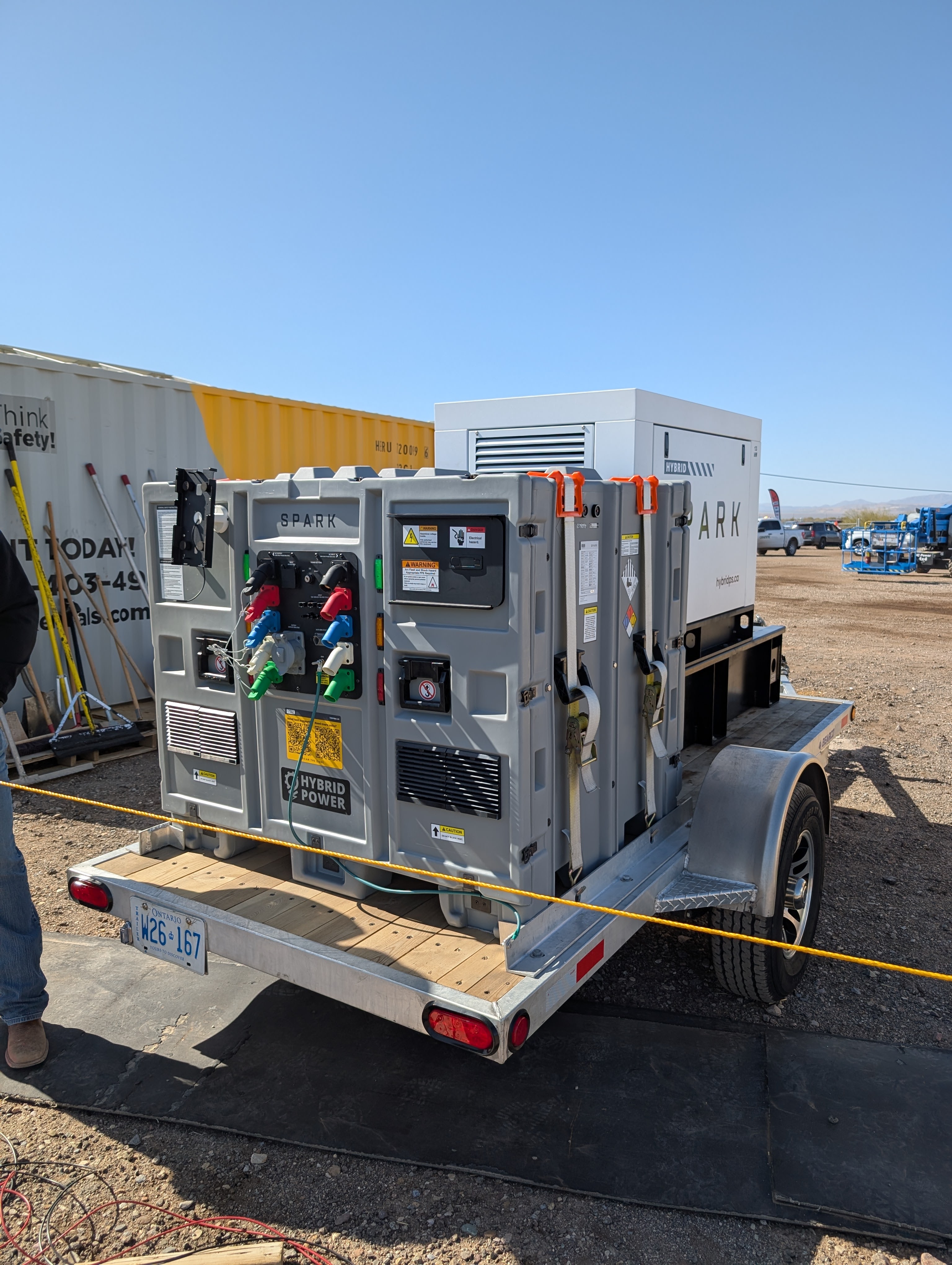
This is a hybrid architecture, not a battery-only replacement, the battery works alongside solar, alternator, grid, or generator input, with the generator sized for average load rather than peak. For construction-scale examples of this efficiency gain, the Batt Pack Pro and Batt Pack Jupiter platforms show how this buffering plays out on active job sites.
What Makes LiFePO4 Chemistry the Right Fit for Mission-Critical Hybrid Power Systems?
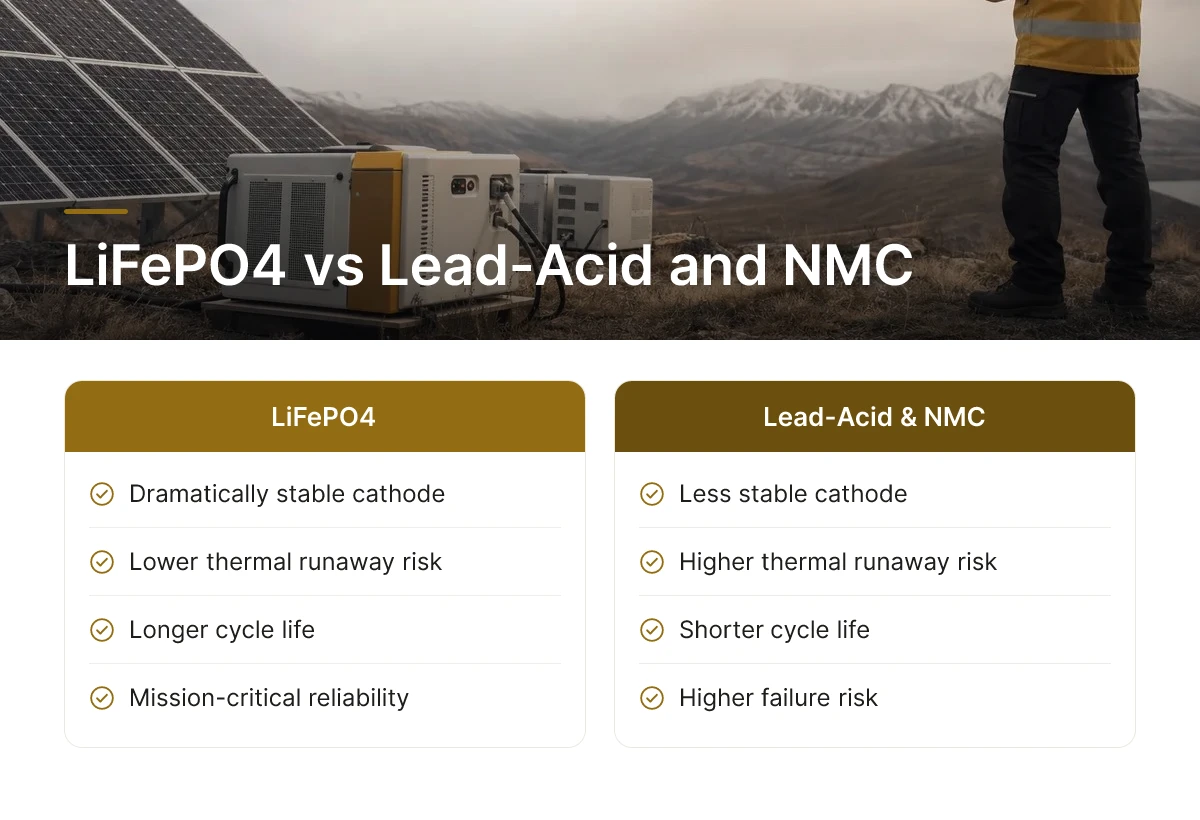
Lithium iron phosphate (LiFePO4) is a distinct subset of lithium-ion chemistry that trades some energy density for a dramatically more stable cathode, giving it lower thermal runaway risk and a longer cycle life than lead-acid or generic lithium-ion chemistries like NMC. That stability is why LiFePO4 dominates the battery based power solutions built for defence, mining, and construction sites where a battery failure isn't an inconvenience, it's a mission risk.
How does LiFePO4 compare to lead-acid and other lithium-ion chemistries in cycle life, safety, and temperature performance?
Lead-acid batteries degrade quickly under repeated deep discharge, often requiring replacement well before a comparable LiFePO4 pack reaches end of life. Generic lithium-ion chemistries such as NMC pack more energy into a smaller footprint, but their cathode structure is more prone to thermal runaway under mechanical damage, overcharge, or high heat, a real concern on job sites and forward operating bases where equipment gets dropped, shot at, or run hard in direct sun. When considering battery based power solutions, this point stands out.
LiFePO4's cathode structure stays chemically stable across more charge and discharge cycles before capacity starts to fade. Mechanically, the iron-phosphate bond is stronger than the cobalt-based structures in NMC cells, so it resists the oxygen release that drives thermal runaway. For fleet operators and defence procurement teams, that translates directly into fewer battery replacements over a deployment cycle and a safer unit to store, transport, and operate near personnel.
Why is -30°C cold-weather reliability critical for defence and remote industrial deployments?
Cold is where generic battery chemistry, and diesel, tends to fail first. Diesel engines face fuel gelling and hard cold starts in sub-zero conditions, while many lithium-ion chemistries lose usable capacity or risk unsafe charging behaviour when cell temperatures drop too low. A battery that can't charge safely at -20°C or -30°C is a liability on an Arctic resupply route or a northern Canadian mine site, where a failed cold start can strand a crew or delay a mission.
Hybridps engineers its LiFePO4 systems with thermal management that keeps cells within a safe charging window down to -30°C, a rating tested for Canadian winters and Arctic operating conditions. That's a procurement advantage for defence buyers evaluating forward operating base power: a system engineered and assembled in Canada, rated for the cold it will actually see in the field, without depending on fuel resupply that can be disrupted or delayed. For units planning cold-weather microgrid deployment at scale, the TERRA hybrid microgrid extends this same cold-rated LiFePO4 platform to whole-site power.
How Do Hybrid Systems Reduce Fuel Logistics, Acoustic Signature, and Cold-Weather Risk?
Battery based power solutions cut three distinct risk categories at once: convoy exposure from fuel resupply, detectability from noise and heat, and cold-start failure in sub-zero conditions.
Each of these risks compounds in forward operating environments. A diesel generator running continuously demands fuel, produces a heat and sound signature, and can fail to start when temperatures drop. A LiFePO4 hybrid system addresses all three simultaneously rather than trading one risk for another.
How does battery capacity reduce fuel resupply frequency and transportation burden?
Every kilowatt-hour drawn from battery storage instead of a running engine is fuel that never needs to be convoyed, stored, or resupplied. That mechanism is direct: less runtime on the diesel engine means fewer resupply trips, and fewer resupply trips mean less convoy exposure for personnel moving fuel through contested or remote terrain.
Fuel efficiency research on hybrid supply systems for mission-critical loads confirms the underlying logic, pairing battery storage with a generator or renewable input reduces reliance on the engine running at inefficient partial loads, which is where diesel systems burn fuel disproportionately [1]. A hybrid microgrid built around LiFePO4 storage, solar input, and generator backup, the architecture behind Hybridps's TERRA platform, lets a forward operating base draw down battery reserves overnight or during low-load periods and only run the generator to recharge at its most efficient point. That shift in duty cycle is what actually reduces fuel convoys, not just a reduction in headline fuel burn.
Why do decibel levels and thermal signature matter for covert or noise-sensitive operations?
Low acoustic and thermal signature is a force-protection requirement, not a comfort feature, a running generator can be heard or thermally detected well beyond a site perimeter. For defence operators, that detectability translates into risk: a generator's engine noise and exhaust heat plume can reveal a position to hostile surveillance or acoustic sensors long before visual contact. Silent battery discharge removes both signatures during the periods when the generator isn't running, which matters most during sensitive operations at night or near contested lines. For those exploring battery based power solutions, this matters.
This is where battery based power solutions diverge from simple "quiet generator" marketing. The requirement isn't reduced noise for worker comfort on a job site, it's the elimination of a detectable signature during mission windows where being heard or thermally imaged has operational consequences.
Low-signature power also enables drone recharging at forward positions. A silent battery pack can recharge tactical or reconnaissance drones without adding acoustic or thermal cues to a position that's otherwise trying to stay concealed, something a running generator undermines by design.
Cold-weather reliability: what happens when diesel meets -30°C?
Diesel engines face real cold-start failure and fuel-gelling risk below freezing, often requiring preheating cycles that delay dispatch. A -30°C-rated LiFePO4 hybrid system skips that delay entirely, delivering dispatchable power on demand without warm-up procedures, a meaningful advantage for Arctic and northern operations where minutes matter.
What Runtime and Power Capacity Does Your Application Need Across Hybrid Tiers?
Match your mission profile to a power tier by weighing crew size, deployment speed, and whether you need hours of tool power or continuous whole-site load. Hybridps builds across five tiers, from single-operator battery packs to a 167 kVA hybrid microgrid, so the comparison isn't abstract, it's a spec sheet.
| System | Power Class | Deployment Speed | Portability | Typical Use Case |
|---|---|---|---|---|
| Batt Pack Energy | 3kW | Single-person setup, minutes | Fully portable | Tool power, small crew, drone recharging |
| Batt Pack Pro | 5kW | Single-person setup, minutes | Fully portable | Job-site tool banks, trailer-mounted use |
| Batt Pack Jupiter | 7kW | Single-person setup, minutes | Fully portable | Multi-tool crews, extended construction shifts |
| Spark Cube | 12/24kW | Two-person setup, under an hour | Skid or trailer-mounted | Larger crews, rental fleets, temporary site power |
| TERRA | 167 kVA continuous / 250 kVA peak / 162 kWh | Trailer-towed, hours for full site integration | Stationary/semi-stationary | Whole-site power, forward operating base, microgrid |
How do portable units compare to stationary systems like TERRA in deployment speed and continuous runtime?
Portable units win on speed, a Batt Pack Energy or Pro can be on and powering tools within minutes, which matters for a crew that redeploys daily across a job site. TERRA trades that speed for scale: it delivers continuous whole-site or forward-base power at a class no briefcase-sized unit can approach, running loads that would otherwise demand a full diesel plant.
This is the core tradeoff in battery based power solutions: portability versus continuous capacity. A construction supervisor running hand tools and lighting for a five-person crew has different needs than an operations officer powering an entire forward operating base overnight. Batt Pack Pro and Jupiter cover the former; TERRA covers the latter.
What multi-input hybrid architecture maximizes uptime for your mission profile?
Multi-input charging, solar, alternator, grid, and generator, lets the battery recharge from whatever power source is already on-site, instead of waiting for a scheduled swap or a return trip to shore power. That architecture is what separates a genuine hybrid platform from a battery-only pack that depletes and sits idle until recharged elsewhere.
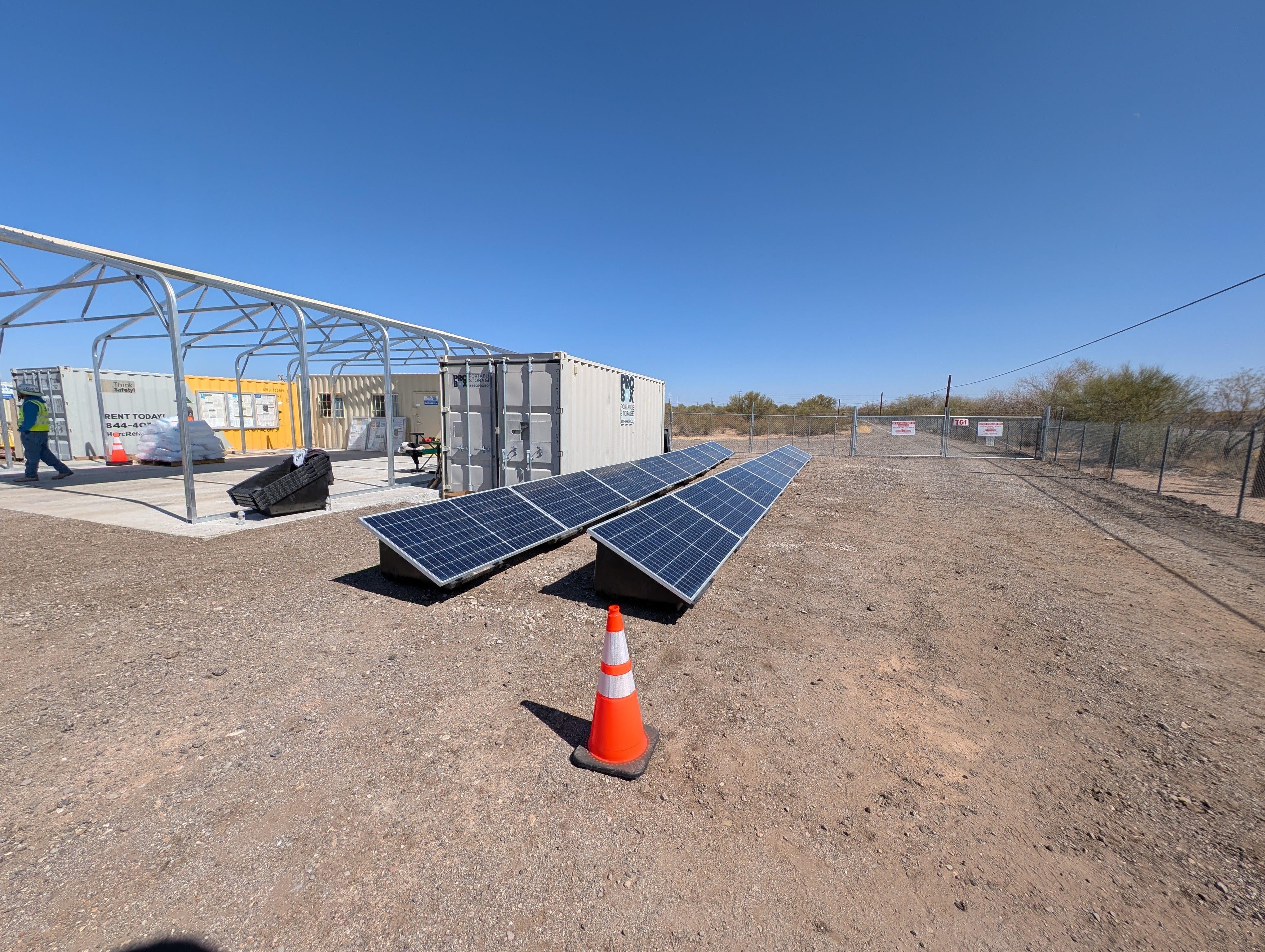
For a remote job site, that might mean solar during the day and generator top-off overnight. For a convoy or FOB, it might mean alternator charging on the move and grid power once static. Either way, uptime depends on charging flexibility, not just battery size.
This power range, from 12/24kW Spark Cube up through TERRA's 167 kVA continuous output, sits above what single-worker, briefcase-class portable packs are built to serve. Those units are engineered for one person and one tool circuit, not a site or a base. If your rental fleet needs durable, higher-capacity units, see Portable Power Packs for buy-or-rent options; construction teams scaling tool power should start with Batt Pack Pro or Jupiter. This directly impacts battery based power solutions outcomes.
How Do You Deploy a Battery-Based Hybrid System Into Existing Power Infrastructure?
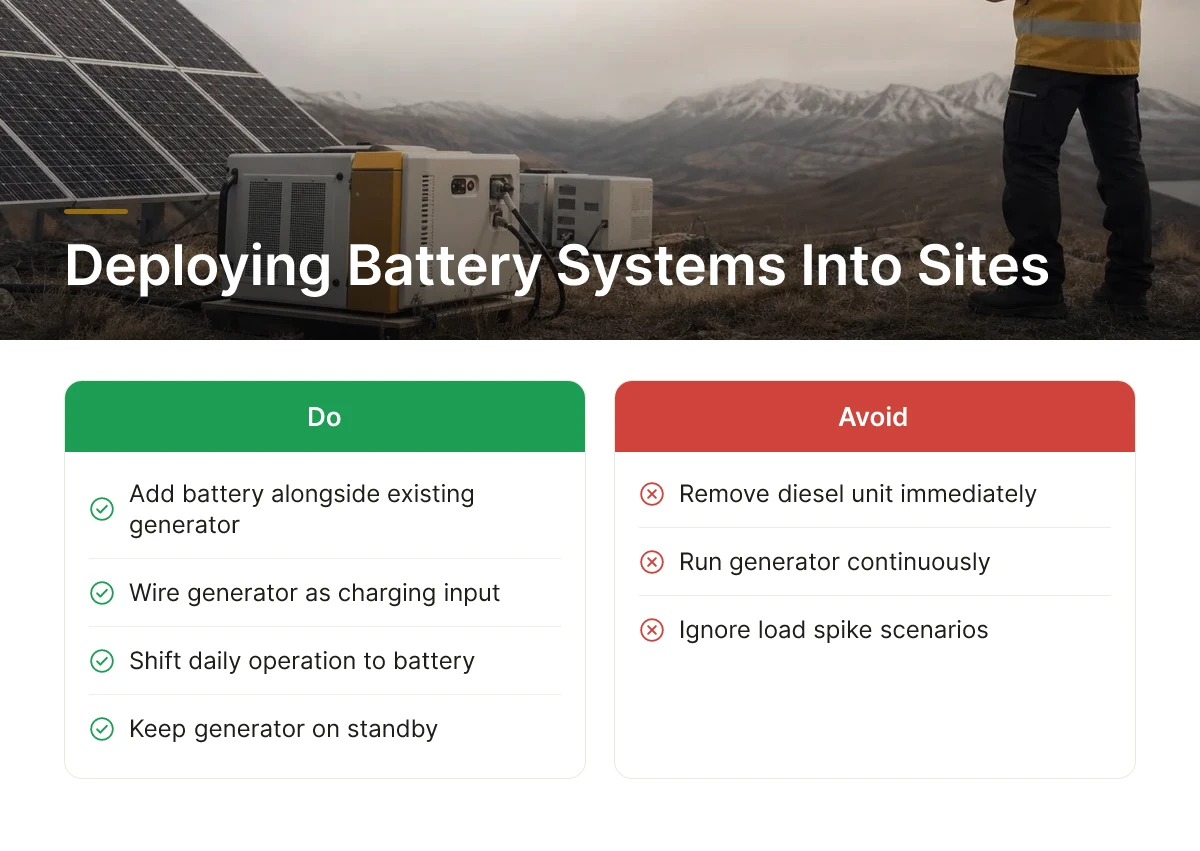
Most sites add battery based power solutions alongside their existing diesel generator rather than removing it, the generator becomes a backup charging input instead of the primary power source.
This phased approach lowers deployment risk considerably. A site keeps its diesel unit on standby, wires it into the battery system as one of several charging inputs, and shifts daily operation to the battery bank for silent, fuel-free running. If load spikes or weather delays solar charging, the generator kicks in to top up the battery rather than running continuously. Hybridps systems accept solar, alternator, grid, and generator inputs on the same platform, so a construction site or forward operating base can integrate a Batt Pack Pro 5kW or Spark Cube 12/24kW without rebuilding electrical distribution from scratch. For larger sites, TERRA's 167 kVA continuous rating lets a diesel generator idle in reserve while the battery carries the bulk of the load.
What should you weigh when comparing total cost of ownership against diesel generators?
Weigh upfront hardware cost against fuel savings, reduced resupply labour, and fewer maintenance hours over the equipment's service life.
Cost tiers roughly track power output. A budget-friendly entry point suits small crews running tools and lighting off a Batt Pack Energy 3kW. Mid-range deployments, Spark Cube territory, fit job sites running multiple loads across a shift. Premium/enterprise tiers, like TERRA's hybrid microgrid platform, suit defence and utility deployments where continuous runtime and load capacity matter more than sticker price. In every tier, the payback mechanism is the same: diesel purchase and resupply convoys disappear or shrink, scheduled maintenance intervals stretch out because there's no engine wearing down, and crews spend less time on fuel logistics and more on the job. Over a multi-year deployment, those savings offset the initial investment, a dynamic covered from the diesel-generator side in industry comparisons of hybrid versus diesel total cost of ownership [2].
What rental, lease, or purchase options fit construction, industrial, and defence buyers?
Buyers can purchase outright, rent for a defined project, or use a buy-or-rent program that shifts between the two as fleet needs change.
Rental fleets and general contractors often need flexibility across projects of different sizes and durations, a buy-or-rent structure lets them scale capacity up for a large job and back down without owning idle equipment. Defence and government buyers face an added consideration: domestic-sourcing requirements. Hybridps designs, engineers, and assembles its systems in Canada, giving procurement teams supply-chain traceability that imported systems can't match.
Fleet and rental operators can explore options through Buy or Rent, while defence, construction, and industrial teams ready to configure a system should Request a Demo or Contact Us to start planning a deployment.
Frequently Asked Questions
Can a battery-based hybrid system fully replace a diesel generator on a remote site?
Yes, for many sites, but the answer depends on continuous load and mission duration. A Batt Pack Pro 5kW or Jupiter 7kW covers tool loads and overnight site power outright. For whole-site or forward operating base loads, a hybrid configuration like TERRA (167 kVA continuous / 250 kVA peak) pairs battery storage with generator or solar charging, cutting diesel runtime rather than eliminating it entirely. This is particularly relevant for battery based power solutions.
How long does a LiFePO4 battery pack last before it needs replacing?
LiFePO4 chemistry is built for longer cycle life than standard lithium-ion, which is the core reason Hybridps uses it across the Batt Pack line. Exact cycle-life figures depend on depth of discharge and operating temperature, so check the spec sheet for the specific model deployed. The tradeoff versus other lithium chemistries is slightly lower energy density for meaningfully better longevity and safety.
Do hybrid power systems still need diesel fuel at all?
Not necessarily, it depends on the configuration chosen. A battery-only unit like the Batt Pack Energy 3kW runs fuel-free on stored charge, recharged by solar, alternator, or grid. A hybrid setup, like a battery paired with a Water-Cooled Diesel DC Gen 6kW, still burns fuel but far less often, since the generator only tops up the battery instead of running continuously.
What happens to a battery-based hybrid system's output in extreme cold?
Standard lithium batteries lose capacity and can fail to start below freezing, but Hybridps systems are engineered and rated for operation down to -30°C. This matters most for Arctic, northern, and winter defence deployments where diesel generators face fuel gelling and cold-start failures. Thermal management inside the pack keeps cells within a safe operating range without external heating infrastructure.
Is a hybrid battery system harder to maintain than a standard generator?
No, it's generally simpler, since there are no oil changes, fuel filters, or combustion components to service. Diesel generators need scheduled maintenance tied to run hours; a battery system's maintenance centres on the battery management system and periodic inspection. Fewer moving parts also means fewer failure points in the field.
Conclusion
Diesel dependency creates three recurring problems for remote and mission-critical sites: fuel logistics risk, acoustic and thermal signature, and cold-weather reliability failures. Battery-based systems built on LiFePO4 chemistry address all three, and matching the power tier to the mission matters, a Batt Pack Pro handles a job-site trailer, while TERRA's 167 kVA continuous output supports a forward operating base or full construction site.
Before your next remote deployment, map your actual continuous load in kW against runtime requirements, then compare that figure against the Batt Pack, Spark Cube, and TERRA specifications on hybridps.ca to identify which tier fits.
Sources & References
- Frontiers | Fuel efficiency and economic assessment of a hybrid power supply system for mission critical applications
- Hybrid Generator vs. Diesel Generator Comparison - Cost, Efficiency & Performance
- Mobile Hybrid BESS vs Diesel Generators Comparison
Recommended Articles
Explore more from our content library: