

Produits
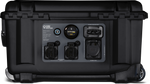 Pack de batteries énergétiques | 3kW
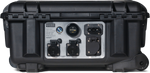 Bloc-batterie Pro | 5 kW
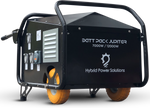 Batterie Jupiter | 7kW
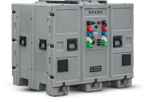 Spark Cube | 12kW/24kW
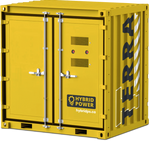 TERRA | 166kVA
Ressources

Why Stationary Hybrid Power Systems Cost Less Than Diesel
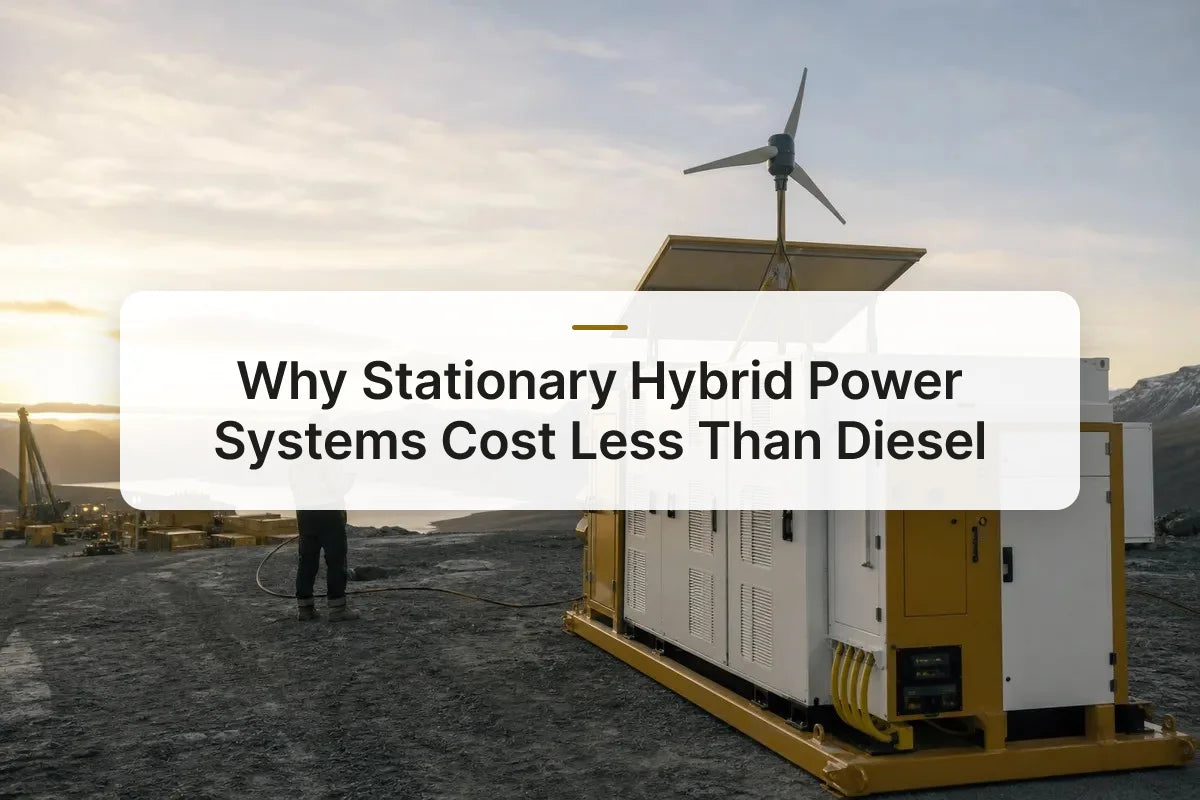
Battery-based stationary hybrid power systems cost less than diesel-only generators because LiFePO4 storage cuts fuel consumption, extends service intervals, and absorbs load swings that otherwise wear down an engine. Over a five-to-ten-year lifecycle, reduced fuel deliveries, fewer oil changes and rebuilds, and lower noise-compliance costs offset the higher upfront investment. For defence, rental, and construction operators, the multi-input design (solar, alternator, grid, generator) also reduces fuel-logistics risk and acoustic signature, which carry their own operational cost beyond the fuel invoice itself.
How Do Stationary Hybrid Power Systems Reduce Total Cost of Ownership Compared to Diesel-Only Generators?
Stationary hybrid power systems lower total cost of ownership by cutting fuel burn, stretching maintenance intervals, and avoiding the compliance costs diesel-only units carry on site.
A diesel generator sized for worst-case load spends most of its life running well below that peak, and a generator operating at 25% load burns meaningfully more fuel per kilowatt-hour than one running near 75% load, with wear accumulating the same way [1]. A LiFePO4 battery pack changes that math. The battery absorbs load spikes and supplies power during low-demand periods, which lets the diesel or grid input run inside its efficient band instead of constantly chasing the load curve. In a typical hybrid BESS configuration, the generator's job narrows to recharging the battery bank rather than serving the load directly, a more efficient use of every litre burned [4].
Engine wear tells the same story from a different angle. A diesel-only unit runs continuously under variable load, which means more oil changes, more filter swaps, and earlier rebuild cycles. In a hybrid configuration, the generator cycles on intermittently, only when the battery needs topping up, so engine hours drop sharply over a given deployment window.
What Fuel, Maintenance, and Operational Savings Add Up Over a 5-10 Year Lifecycle?
Fewer running hours compound into fewer service events, less parts replacement, and lower labour cost across a five-to-ten-year ownership window. Maintenance problems on diesel units tend to accumulate alongside fuel inefficiency rather than in isolation [1], so a system that reduces runtime hours addresses both cost drivers at once. For a rental fleet cycling units across multiple job sites, or a construction crew running overnight power, that translates into fewer technician callouts and less downtime waiting on parts.
How Do Lower Emissions and Noise Compliance Reduce Costs for Industrial and Defence Deployments?
Quieter, lower-emission operation removes cost that never shows up on a fuel invoice: noise-abatement enclosures, restricted operating hours, and permitting friction near populated or environmentally sensitive sites. Diesel and petrol generators carry rising fuel costs, heavy maintenance demands, noise, and environmental impact that businesses are increasingly reconsidering [5]. For defence operators, a lower acoustic and thermal signature also reduces detectability at a forward operating base, an operational benefit that sits alongside the cost savings, not separate from them.
None of this erases the trade-off. A hybrid unit with LiFePO4 storage and multi-input charging, solar, alternator, grid, generator, costs more upfront than a comparable diesel genset. Hybridps builds that premium into products like the Batt Pack Pro 5kW and the TERRA hybrid microgrid, where the higher initial investment is offset by a lower operating cost curve over the equipment's working life rather than by any single fuel saving.
What Are the Key Components and Operating Modes of a Stationary Hybrid Power System?
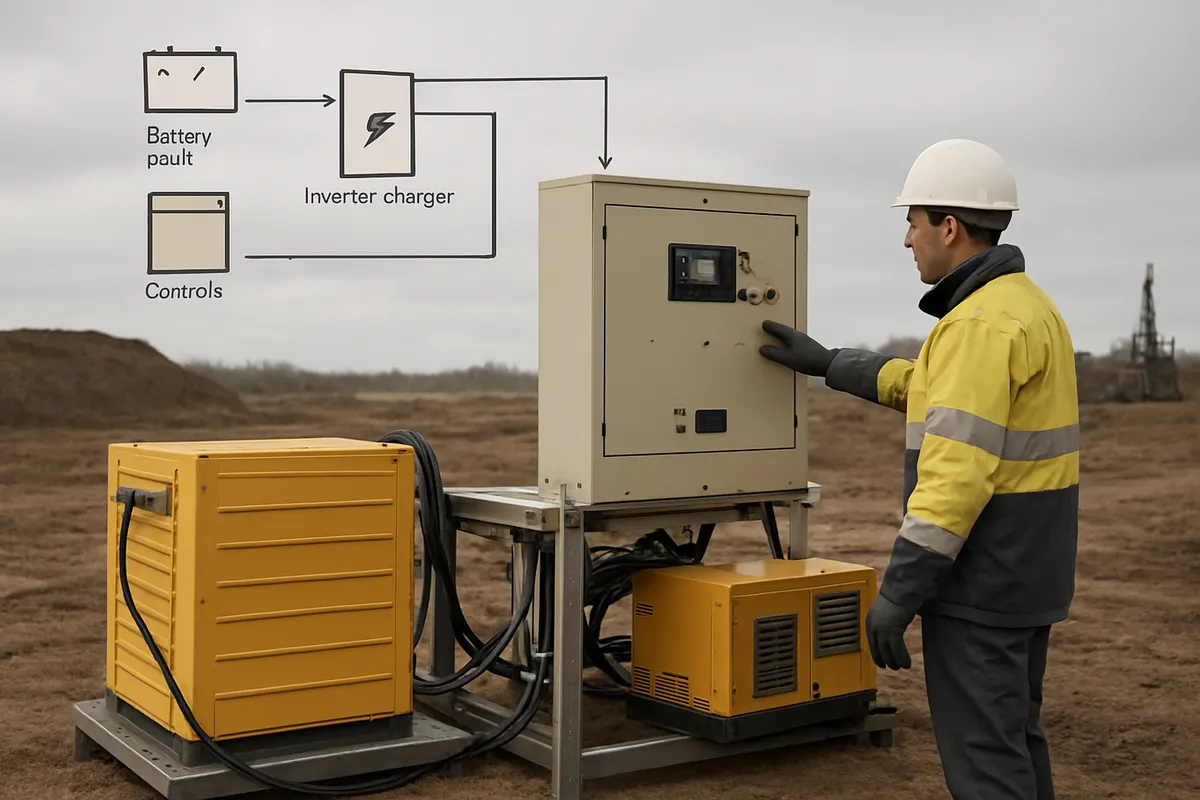
Stationary hybrid power systems combine a LiFePO4 battery bank, a bidirectional inverter/charger, a battery management system (BMS), and multiple input terminals under one automated control layer.
Each component handles a distinct job, but they operate as one unit. The battery bank stores energy; the inverter/charger converts DC to AC and back again; the BMS governs how hard the cells can be pushed; and the input terminals accept power from solar panels, a vehicle alternator, grid electricity, or a diesel generator. Hybridps builds this architecture into its Batt Pack line and the larger Spark Cube and TERRA platforms, all accepting the same four input types so a crew isn't locked into one charging method on site.
The BMS does more than report battery percentage. It enforces voltage, current, and temperature limits cell by cell, shutting down charge or discharge paths before damage occurs. Consumer lithium-ion packs, the kind in laptops or phones, typically run lighter protection logic because the duty cycle is predictable and low-stakes. A system running a remote job site or a forward operating base needs tighter limits because load swings are frequent and a failure mid-task isn't an option.
How Does LiFePO4 Battery Chemistry Differ From Other Lithium-ion Options in Safety, Cycle Life, and Temperature Performance?
LiFePO4 resists thermal runaway far better than cobalt-based lithium-ion chemistries, holds its capacity over more charge cycles, and tolerates cold starts without the capacity collapse typical of consumer cells.
Cobalt-based chemistries pack more energy into less space, which is why they dominate phones and laptops. But that density trades off against thermal stability, they're more prone to runaway under physical damage, overcharge, or heat. LiFePO4 cells degrade more gradually and hold up to repeated full discharge-recharge cycles with less capacity loss over the system's working life. That's why field-deployed equipment, including Hybridps units rated to -30°C, standardizes on it: a battery that fails gracefully and keeps working in an Arctic winter is worth more on a job site than one with a slightly higher energy density.
What Role Do Power Electronics and Integrated Controls Play in Switching Between Power Sources?
Power electronics and automated transfer logic switch between solar, alternator, grid, and generator inputs without dropping the connected load.
The controller follows priority rules, favouring solar when available, drawing from the battery when generation drops, and calling in a generator only when the state of charge hits a set threshold. A hybrid BESS paired with a generator can let the generator run near its efficient load point rather than idling, since surplus output charges the battery instead of going to waste [3]. This transfer logic is what separates a hybrid system from a basic battery backup, the switching is automatic, not manual.
The same control architecture scales from a 3kW Batt Pack Energy unit to a 167 kVA TERRA microgrid, meaning the operating logic a crew learns on a small pack carries over to larger deployments.
How Do Solar, Alternator, Grid, and Generator Inputs Work Together in a Hybrid Configuration?
A control system ranks inputs by cost and availability, drawing free power first and reserving the generator as a last-resort charging source. This sequencing is what separates stationary hybrid power systems from a generator with a battery bolted on for backup.
In What Sequence Do Hybrid Systems Prioritize Power Inputs to Minimize Fuel Burn and Battery Cycling?
The logic follows a simple cost ladder. Solar, where panels are deployed, charges the battery first because it carries no fuel cost and no moving parts to wear out. Grid power or a vehicle alternator comes next when solar is unavailable or insufficient, since both draw from an existing supply rather than burning diesel on-site. The generator sits at the bottom of the stack, activating only when battery state of charge drops below a set threshold and no cheaper input is available.
This ordering matters because every hour the generator stays off is an hour it isn't burning fuel or accumulating wear. A diesel unit running at partial load wastes fuel per kilowatt-hour compared to one running near full load [1], so a system that only calls the generator for short, efficient top-up cycles avoids the worst of that inefficiency. Fewer runtime hours also means fewer oil changes, filter swaps, and service callouts, the same maintenance burden addressed in the cost comparison above.
How Do Multi-Input Hybrid Systems Maintain Continuous Runtime and Reduce Dependency on Fuel Logistics?
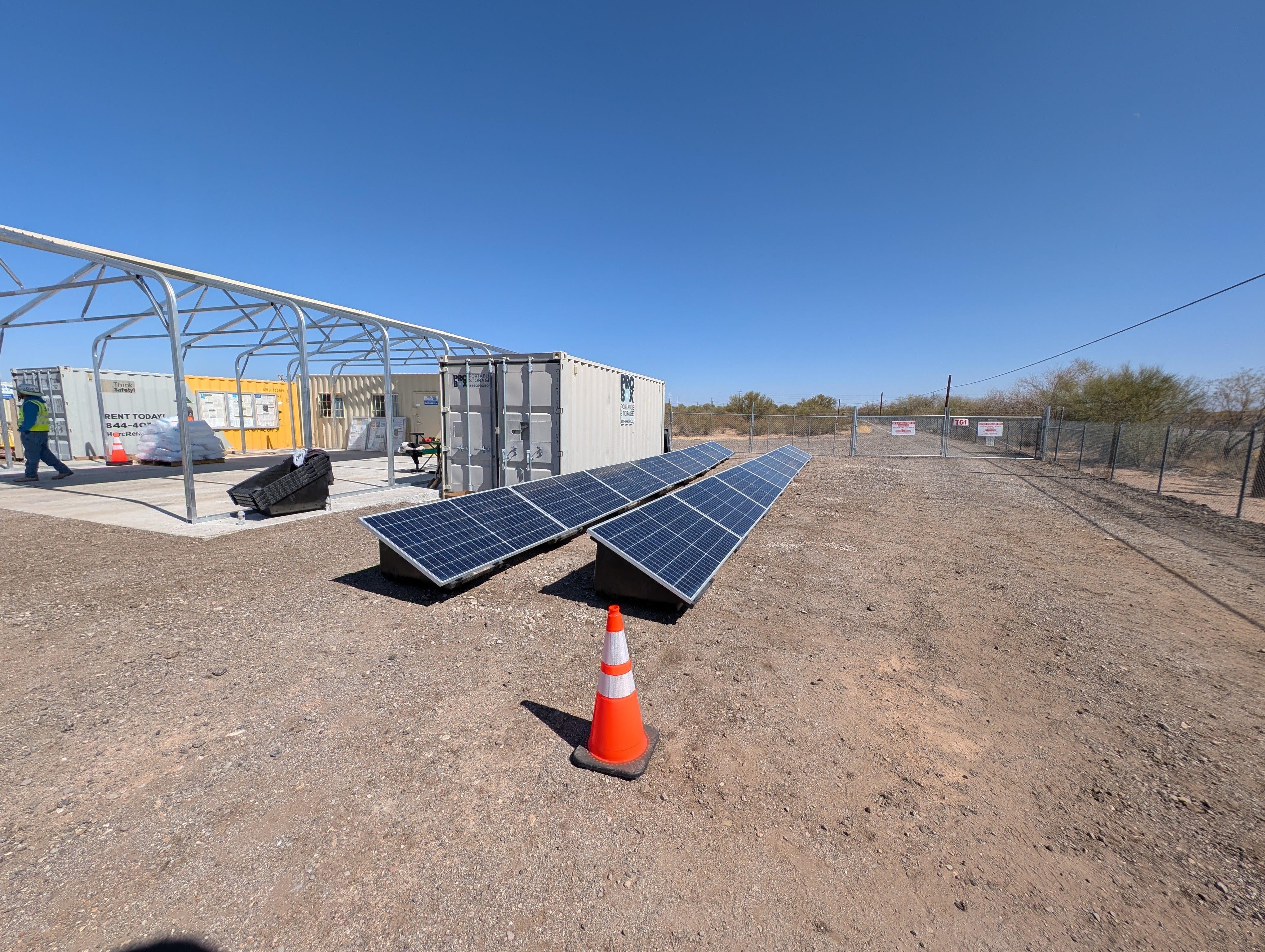
Accepting more than one charging source closes the gaps that a single-source setup can't cover. A solar-only system stalls during extended cloud cover or winter's short daylight hours; a grid-only system is useless at a site with no grid connection. A hybrid configuration keeps charging from whichever input is actually available, which is the difference between a battery-only portable unit that must be swapped or plugged into an outlet once depleted, and a system engineered to accept solar, alternator, grid, and generator power on a rotating basis [3][4]. Consider a remote construction or forward operating site: solar panels charge the battery bank through daylight hours, covering equipment and lighting loads with no fuel burned at all. Overnight, if state of charge drops below the programmed threshold, the generator starts briefly to top up the battery, then shuts off rather than running continuously until morning. Hybridps configures its Batt Pack and TERRA platforms around this same multi-input logic, letting a crew lean on whatever source is cheapest at any given hour instead of defaulting to diesel around the clock [3].
What Performance and Deployment Advantages Do LiFePO4 Hybrid Systems Offer Industrial, Defence, and Remote-Site Applications?
Fuel-logistics reduction is the advantage that matters most at a forward operating base, because every resupply convoy is a personnel exposure risk, not just a line item on a fuel budget. A hybrid battery system that draws from solar, alternator, grid, or generator inputs reduces how often diesel has to reach the site at all. Fewer convoy trips means fewer soldiers on a road that may be contested, which is a tactical outcome, not a cost-saving one. For defence and remote-site planners, that reframes stationary hybrid power systems from an efficiency upgrade to a force-protection measure.
How Do Low Acoustic and Thermal Signatures, -30°C Cold-Start Capability, and Canadian-Made Reliability Meet Defence Requirements?
A low acoustic and thermal signature keeps a position concealed, which matters more than comfort when the alternative is a diesel generator broadcasting its location by sound and heat. Running gensets produce continuous noise and a heat plume that thermal optics can pick up from distance, both are liabilities at a FOB or a tactical staging area. Battery-based power runs silent and cool, which also supports drone recharging operations where a quiet, low-signature charging point near the flight line avoids giving away position to adversary sensors.
Cold-start reliability is where many battery systems quietly fail. Lithium battery performance typically degrades sharply below freezing, and several commercial systems either de-rate output or refuse to start in deep cold. A -30°C rating is a genuine operational differentiator for Arctic deployments, northern Canadian resource sites, and winter construction schedules where a generator that won't start at dawn means a lost shift. Hybrid Power Solutions engineers and assembles its systems in Canada specifically for this operating envelope, which also gives defence and government buyers a domestic supply chain they can audit and procure against, a real consideration when sourcing rules favour local control over imported hardware with no field support.
What Are the Real-World Power Output Tiers for Systems Like TERRA 167 kVA and Spark Cube 12/24kW?
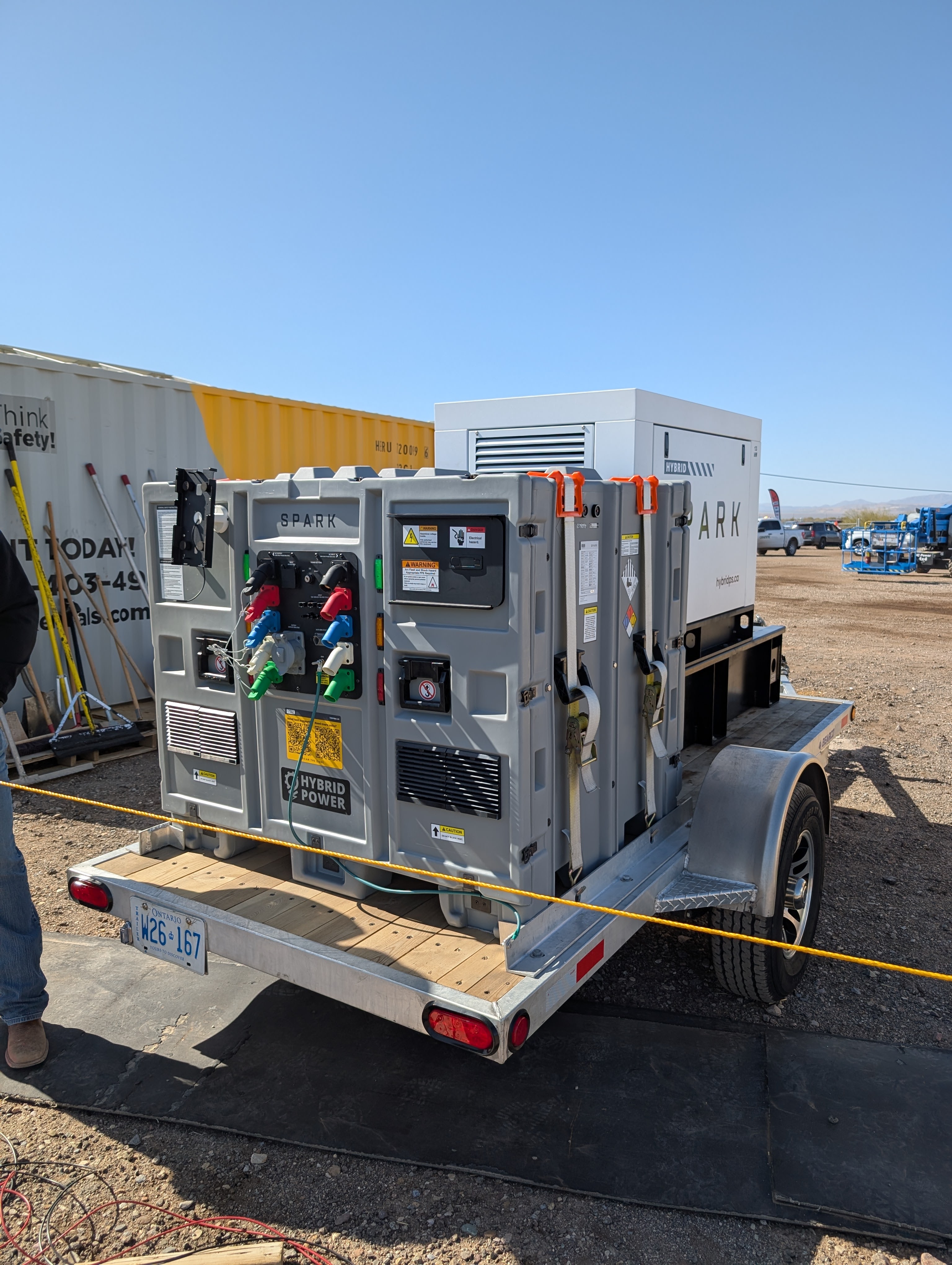
Power requirements scale from a single tool circuit to an entire remote site, and the right tier depends on where a deployment sits on that scale. The Batt Pack Energy 3kW, Batt Pack Pro 5kW, and Batt Pack Jupiter 7kW cover portable, job-site-scale power, recharging drones, running tools, or backing up a tactical position without a generator running nearby. The Spark Cube 12/24kW sits a tier above, suited to mid-size loads where a single Batt Pack isn't enough but a full microgrid is overkill.
At the top of the range, TERRA delivers 167 kVA continuous and 250 kVA peak output with 162 kWh of storage, enough to run an entire forward operating base, a mine site, or a multi-trailer construction camp as a hybrid microgrid rather than a single battery pack. That tiering lets a rental fleet or defence logistics team match the unit to the load instead of overbuilding or running multiple undersized systems in parallel.
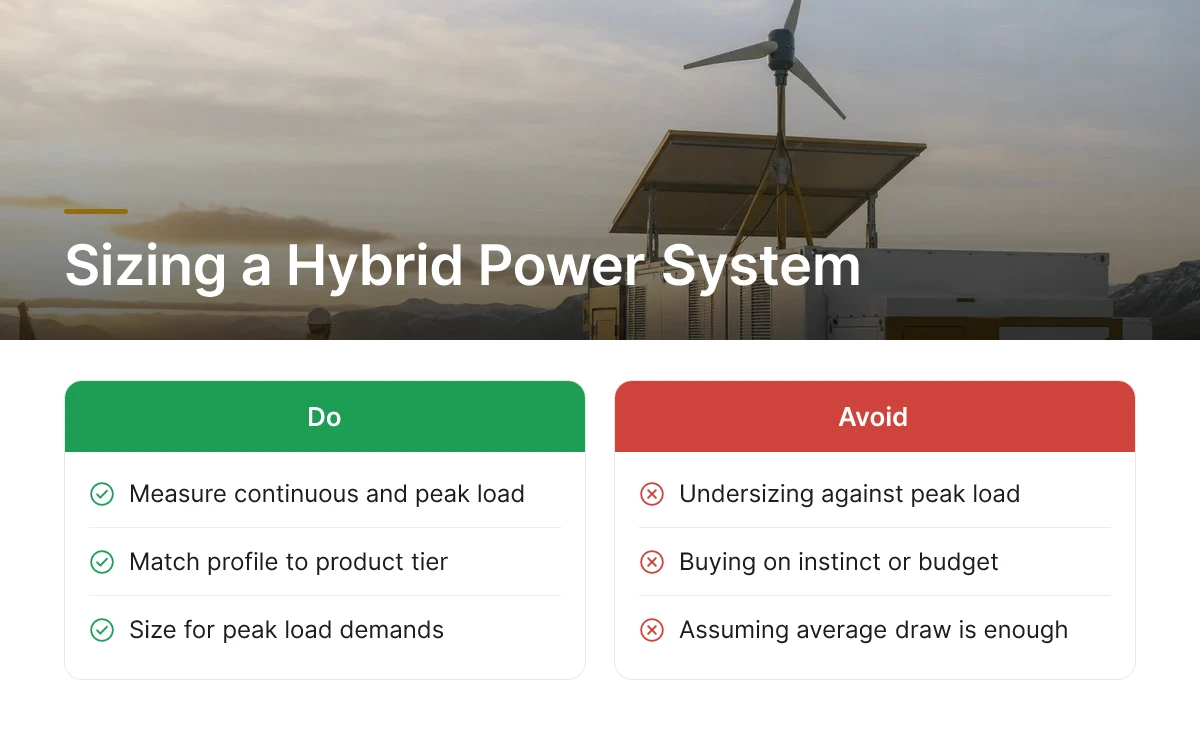
How Do You Select and Size a Stationary Hybrid Power System for Your Operational Requirements?
Start by measuring two numbers, continuous load and peak load, then match that profile to a product tier rather than buying on instinct or budget alone.
Continuous load is what your site draws hour to hour: lighting, tools, communications, HVAC. Peak load is the short spike when a compressor kicks in or a pump starts. Undersizing against peak load is the most common sizing mistake, a unit that handles average draw fine will trip or sag the moment a motor starts. For a single crew running hand tools and site lighting, a Batt Pack Energy 3kW or Batt Pack Pro 5kW usually covers it. Scale up to Batt Pack Jupiter 7kW or a Spark Cube 12/24kW when you're running welders, multiple trailers, or overnight climate control across a larger footprint. Once a site needs to support an entire camp, forward operating base, or multi-load remote facility continuously, you're in TERRA territory, 167 kVA continuous, 250 kVA peak, 162 kWh of storage, sized for whole-site power rather than tool-level loads.
What Permitting, Grid Interconnection, and Regulatory Considerations Apply to Stationary Hybrid Installations by Region?
Permitting rules for stationary hybrid power systems vary by province and municipality, and generator-only sites often face stricter noise and emissions review than hybrid installations do. Many jurisdictions regulate diesel gensets under separate noise bylaws and air-permit thresholds that don't apply, or apply less stringently, to battery-based systems with reduced run hours [5]. That said, grid-interconnected configurations, where a system feeds back into utility infrastructure or operates alongside grid power, can trigger interconnection review regardless of chemistry. Confirm requirements with the local authority having jurisdiction before locking in a deployment date, particularly for defence and utility sites where compliance documentation is part of the contract.
Should You Buy, Rent, or Lease a Hybrid Power System?
Rental fleets generally do better buying durable, low-maintenance units outright, while short-duration job sites often come out ahead renting.
If you're a rental company outfitting a fleet, downtime between contracts is your real cost, a unit that needs frequent service cuts directly into utilization. Owning hybrid units built for repeated redeployment reduces that downtime compared to diesel gensets with hour-based maintenance intervals [3]. If you're a contractor with a single short job, a few weeks of site power, renting avoids tying up capital in equipment you'll use once this year. Construction buyers evaluating this trade-off should look at job-site-scale products like Batt Pack Pro or Jupiter first; defence and remote-site buyers planning longer, higher-load deployments should move straight to microgrid-scale options like TERRA.
Deployment timing differs sharply between tiers. A portable Batt Pack unit can be operational within hours of arrival, no site prep required. A Spark Cube or TERRA-class microgrid involves site assessment, load study, and configuration before commissioning, which is the trade-off for supporting a far larger and more complex load.
Frequently Asked Questions
How long do LiFePO4 batteries last in a stationary hybrid power system compared to diesel generator components?
LiFePO4 cells are built for long cycle life and tolerate far more charge-discharge cycles than the lead-acid batteries used in older setups. Diesel generators, by contrast, wear through pistons, injectors, and starters that need regular rebuilding or replacement. A battery-hybrid system shifts the maintenance burden away from mechanical parts toward electronics that degrade more slowly under normal use.
Can a stationary hybrid power system fully replace a diesel generator, or does it still need fuel backup?
It depends on site load and runtime needs, many deployments run battery-only for daily operations and keep a generator or grid input as backup for extended outages. Hybridps systems like the TERRA hybrid microgrid accept solar, alternator, grid, and generator charging inputs [4], so operators can dial in how much they rely on fuel versus stored energy without redesigning the site.
What maintenance does a battery-hybrid power system require compared to a diesel-only unit?
Battery-hybrid systems need far less routine maintenance because there are no oil changes, filters, or combustion components to service. Diesel-only units require scheduled servicing, fuel system checks, and part replacement as engine hours accumulate. This lower maintenance demand is one of the most cited advantages of hybrid BESS setups over diesel-only operation [3].
Are stationary hybrid power systems reliable in extreme cold for northern or Arctic deployments?
Yes, when the batteries and enclosures are engineered for it, cold-start failures and fuel gelling are common diesel problems that battery systems avoid. Hybridps units are rated for operation down to -30°C, a design requirement for northern construction, mining, and defence sites where diesel logistics become unreliable in winter.
Is it better to buy or rent a hybrid power system for a short-term construction project?
Renting usually makes sense for short, defined jobs, while buying pays off for recurring or long-term deployments across multiple sites. Rental fleets benefit from durable, low-maintenance units that handle repeated redeployment without frequent servicing. Hybridps offers a buy-or-rent path so operators can match the acquisition model to project length rather than committing capital upfront.
Conclusion
Stationary hybrid power systems earn their keep by cutting fuel logistics, lowering maintenance load, and holding up in conditions that strand diesel-only equipment. The real decision point isn't whether batteries can replace generators outright, it's matching input flexibility (solar, alternator, grid, generator) and power tier to your site's actual runtime demands. For defence, rental, and construction operators weighing options, start by mapping your site's peak and continuous load against a system like Batt Pack Pro or TERRA, then request a configuration review through Hybridps's Request a Demo page to see which tier fits before committing capital.
Sources & References
- Hybrid Generator vs. Diesel Generator Comparison - Cost, Efficiency & Performance
- Mobile Hybrid BESS vs Diesel Generators Comparison
- Hybrid Power Systems 101 | BESS | POWR2
- Hybrid Power Systems vs Diesel Gensets: Busting the Myths - Fuelfix & Tanks2Go
Recommended Articles
Explore more from our content library: