

Products
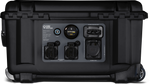 Batt Pack Energy | 3kW
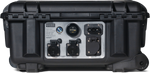 Batt Pack Pro | 5kW
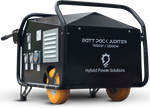 Batt Pack Jupiter | 7kW
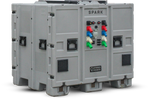 Spark Cube | 12kW/24kW
 TERRA | 166kVA
Resources

How a Hybrid Generator Combines Battery and Fuel Power
A hybrid generator pairs a LiFePO4 battery bank with multiple charging inputs, solar, alternator, grid, and a generator, so the battery carries the load while the generator (or another source) only runs to top up charge. For industrial, defence, rental, and construction operations, this cuts fuel burn and engine runtime, lowers acoustic and thermal signature, and keeps power flowing continuously instead of cycling a diesel engine on and off. Power tiers range from single-tool packs up to whole-site microgrids.
What Is a Hybrid Generator and How Does It Combine Battery Storage with Power Inputs?
A hybrid generator flips the traditional model: a battery bank carries the load at all times, and charging inputs top it up only when state of charge calls for it.
In a conventional diesel setup, the engine runs continuously because it has to match load in real time, if the load spikes, the engine spikes with it. A hybrid generator decouples those two things. The battery sits between the load and the charging source, absorbing demand swings while solar panels, a vehicle alternator, grid power, or a generator recharge the bank on a schedule or automatically once charge drops below a set threshold. The generator, when it runs at all, runs at a steady, efficient load to refill the battery, not to chase a fluctuating job-site demand curve. For a closer look at how solar and battery storage can be packaged with a generator as a single integrated unit, see this overview of a solar-storage genset integrated unit.
What Role Does LiFePO4 Battery Technology Play in Hybrid Generator Performance and Longevity?
LiFePO4 (lithium iron phosphate) is the chemistry that makes daily charge-and-discharge cycling practical in the field, rather than just generic lithium-ion.
Field deployments mean repeated full cycles, day after day, often in heat, cold, or dust. LiFePO4 holds up to that pattern with longer cycle life and better thermal stability than standard lithium-ion chemistries, which matters when a battery bank is the primary power buffer rather than a backup sitting idle. That stability also reduces the risk of thermal runaway under sustained load, a real consideration on a construction site or forward operating base where the pack runs hard and can't be babysat.
How Do Multi-Input Hybrid Systems (Solar, Alternator, Grid, Generator) Work Together to Optimize Power Delivery?
Multiple input paths mean the battery never depends on a single charging source, whichever one is available or cheapest at the time keeps the bank topped up.
Solar panels trickle-charge during daylight, an alternator tops up while a vehicle is running, grid power charges overnight where available, and a generator fills gaps when none of the above is sufficient. Research on remote-community power systems backs the underlying logic: pairing battery storage with diesel generation improves fuel efficiency and reliability for isolated sites by reducing redundant generator runtime and fuel usage [1]. Hybrid Power Solutions applies that same principle across tiers, from the Batt Pack Energy (3kW), Pro (5kW), and Jupiter (7kW) for tool- and crew-scale work, up to the TERRA hybrid microgrid, rated 167 kVA continuous with 162 kWh of storage, for whole-site or forward operating base power. The architecture is the same at every scale; only the capacity changes.
- Solar input: trickle-charges the battery bank during daylight hours at no fuel cost.
- Alternator input: tops up charge whenever a vehicle is running, useful for mobile crews.
- Grid input: recharges overnight or whenever utility power is available on-site.
- Generator input: fills any remaining gap, running at a steady, efficient load rather than chasing variable demand.
How Do Hybrid Generators Deliver Continuous Runtime with Lower Emissions Than Diesel-Only Systems?
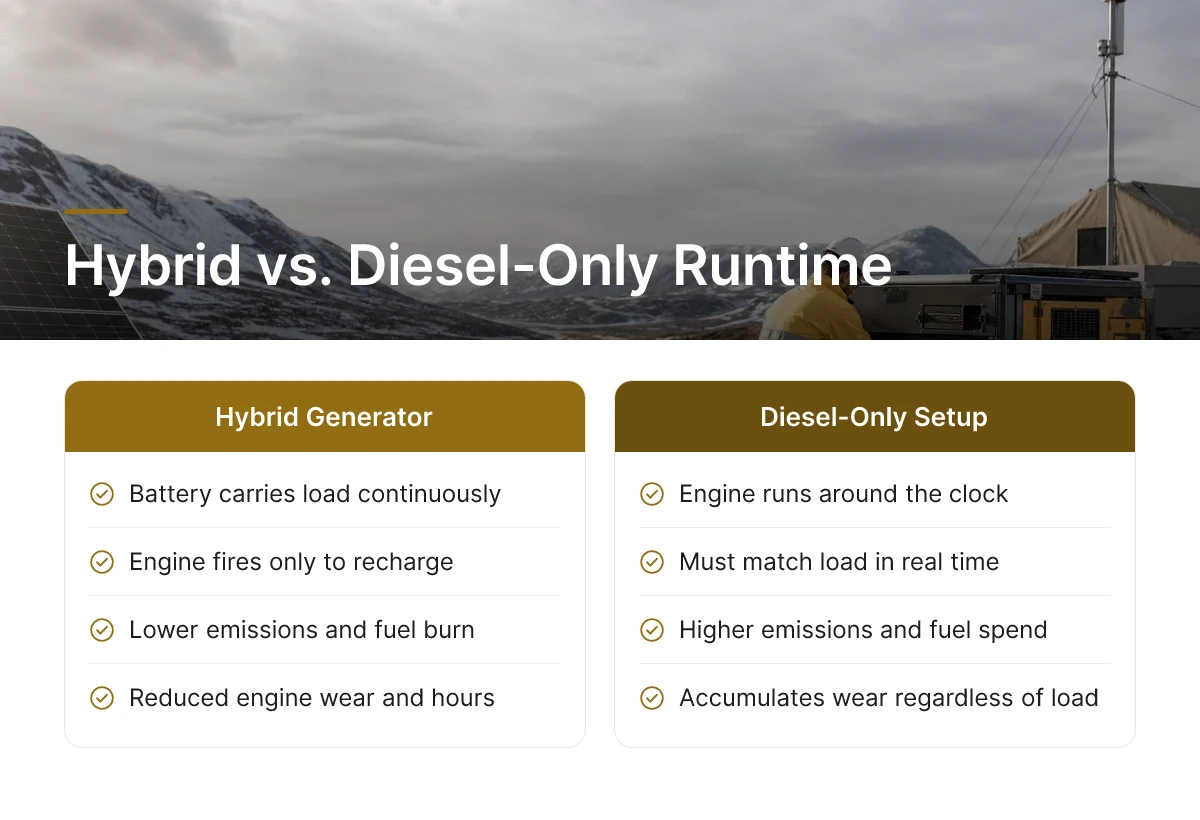
A hybrid generator buffers site load through a LiFePO4 battery bank, so the diesel or generator component only fires to recharge the pack rather than running around the clock. That single design shift is what separates a hybrid generator from a diesel-only setup running at partial load for hours it doesn't need to.
In a diesel-only configuration, the engine runs continuously even when the connected load is a fraction of its rated output, common on job sites where lighting, tools, or communications equipment draw modest, variable power. A hybrid architecture inverts that: the battery carries the load, and the generator cycles on only when state of charge drops to a set threshold. Research on diesel-battery hybrid systems in remote communities confirms this pattern, pairing storage with diesel generation reduces fuel usage and shortens annual engine runtime by letting storage absorb variable load instead of idling redundant generation capacity [1]. Fewer running hours means less fuel burned per day of operation and fewer engine hours accumulated against maintenance intervals. Dual-fuel hybrid configurations extend this same logic further by letting operators choose between fuel types depending on availability and cost, as outlined in this overview of dual fuel hybrid generators.
What Acoustic and Thermal Advantages Do Hybrid Systems Offer for Defence and Noise-Sensitive Operations?
Cutting generator run-hours cuts the hours of engine noise and heat signature a site produces, which matters directly for forward operating bases and noise-regulated construction zones alike. A generator that runs two hours to recharge a battery bank, instead of twenty-four hours to carry a load directly, produces a proportionally smaller acoustic footprint over a full day of operation.
For defence applications, this is a tactical consideration, not just a comfort one. Reduced engine runtime lowers the acoustic and thermal signature a forward position emits, which bears on detectability at a tactical power point, alongside the battery system itself running silently between recharge cycles. Construction sites operating under municipal noise ordinances or near residential boundaries see a parallel benefit: silent battery-powered hours replace what would otherwise be continuous engine drone.
How Does Battery-Integrated Power Reduce Fuel Logistics and Operational Footprint in Remote Deployments?
Fewer generator run-hours translate directly into fewer litres of fuel burned, which means fewer resupply trips to remote or forward sites. For a convoy-dependent deployment, that reduction in fuel logistics also reduces personnel exposure on resupply routes, a material benefit where every convoy run carries operational risk, not just cost.
This is distinct from the runtime limit of a battery-only portable pack, which drains on a single charge and then waits for recharge. A hybrid generator avoids that dependency gap: multi-input charging, solar, alternator, grid, or generator, keeps the battery topped up, so power delivery continues uninterrupted rather than stopping when one charge cycle ends. Hybridps builds this logic into systems like the Batt Pack Pro 5kW and the TERRA hybrid microgrid, rated at 167 kVA continuous output, where battery buffering and multi-input recharging combine to sustain output indefinitely rather than for one battery's worth of stored energy.
What Are the Fuel, Maintenance, and Total Cost of Ownership Advantages Over Traditional Generators?
A hybrid generator cuts total cost of ownership mainly by reducing diesel engine run-hours, which drives down fuel spend, oil changes, filter replacement, and overhaul frequency over the equipment's service life.
Diesel maintenance intervals are built around hours run, not the calendar. An engine idling overnight to carry a light load still burns fuel and accumulates wear toward its next oil change or top-end overhaul, regardless of how little useful work it did. A battery-generator pairing lets the diesel engine shut off once the battery bank covers the load, so hours run, and the consumables tied to them, drop in proportion to how much of the duty cycle the battery absorbs. Research on integrating storage with diesel generation in remote communities found that battery energy storage reduces fuel usage and extends generator life specifically by shortening annual runtime, the same mechanism that applies on a construction site or forward operating base [1].
What Are the Battery Degradation Timelines and Replacement Cost Considerations for Lithium-Based Hybrid Systems?
LiFePO4 batteries degrade based on charge cycles and depth of discharge, and their cycle-life profile typically supports years of daily field use before capacity fade requires replacement.
Unlike diesel wear, which is mostly hour-driven, battery aging responds to how deeply and how often the pack is cycled. Shallow discharges and moderate charge rates extend service life; repeated full discharges under heavy load shorten it. LiFePO4 chemistry is the reason Hybridps builds its Batt Pack Energy 3kW, Batt Pack Pro 5kW, and Batt Pack Jupiter 7kW units around it rather than generic lithium-ion, the chemistry tolerates more cycles at deeper discharge before capacity drops to a level that warrants replacement, which matters for crews running packs daily rather than occasionally.
How Do Hybrid Generators Reduce Long-Term Maintenance Burden and Fuel Consumption on Construction and Rental Fleets?
Hybrid systems lower maintenance burden by shifting daily load cycling onto the battery, leaving the generator to run fewer, more efficient hours under steadier load.
The upfront cost of a hybrid generator sits higher than a comparable diesel-only unit, with pricing scaling from budget-friendly portable packs up to premium microgrid platforms like TERRA. That gap narrows and often reverses over a multi-year ownership period as fuel spend and service callouts drop. For rental fleets, the payoff compounds: fewer unscheduled maintenance visits across a mixed equipment pool means more predictable uptime for every unit in rotation, and less revenue lost to units sitting in the shop instead of on a job site.
Which Defence, Construction, Rental, and Remote Operations Benefit Most from Hybrid Power?
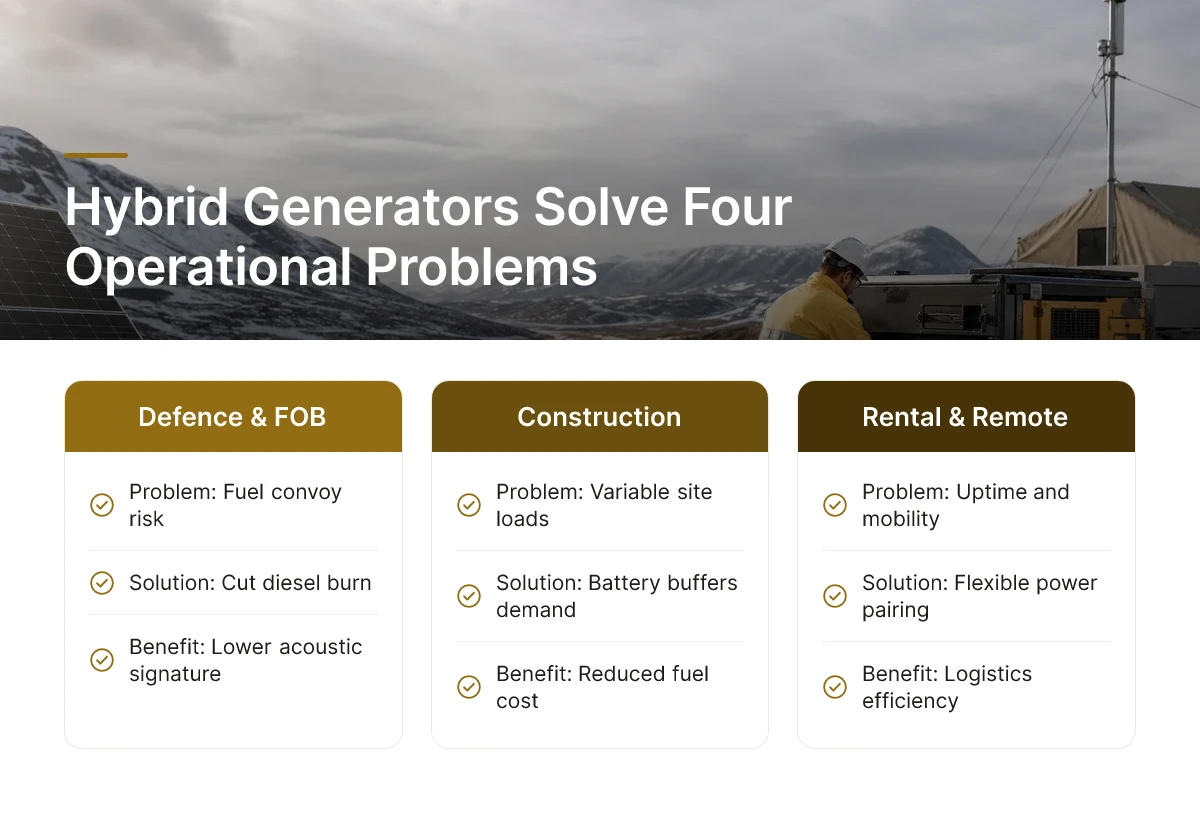
Four buyer types gain from the same hybrid generator architecture, but each solves a different operational problem with it, fuel logistics, uptime, noise, or mobility.
- Defence and forward operating bases: reduce convoy frequency, lower acoustic and thermal signature, and enable quiet field recharging for tactical equipment.
- Rental fleets: benefit from fewer moving parts, fewer service callouts, and more predictable uptime between contracts.
- Construction sites: gain silent overnight operation for lighting, security cameras, and tool charging without a generator watch.
- Remote and off-grid operations: reduce dependency on fuel resupply while maintaining continuous power through multi-input charging.
Defence and forward operating bases carry the sharpest requirements. A convoy carrying diesel to a remote FOB is a target and a cost, every barrel delivered is a barrel exposed to ambush or IED risk. Replacing part of that fuel burn with stored lithium energy cuts convoy frequency directly. A hybrid system also runs with a lower acoustic and thermal signature than a diesel-only setup, which matters for concealment near a forward position. For units running tactical drones, field recharging without a running generator is operationally useful, a quiet position stays quiet. Hybridps supplies this tier through the TERRA hybrid microgrid (167 kVA continuous, 250 kVA peak, 162 kWh) for larger base loads, and Batt Pack Jupiter 7kW for smaller forward deployments where portability matters more than total capacity.
Rental fleets care less about owning the cheapest unit and more about what breaks a callout cycle. A battery-integrated system with fewer moving parts than a diesel engine means fewer service visits and less downtime between contracts, the economics of a buy-or-rent program depend on units that come back from the field still working. Durability under repeated deployment cycles, not sticker price, is the deciding factor for fleet managers running this model.
Construction sites use hybrid power differently again: silent overnight operation for site lighting, security cameras, and tool charging, without a dedicated generator watch or complaints from neighbours about engine noise running past midnight.
How Do Hybrid Generators Meet Emissions Standards and Regulatory Compliance Requirements Across Regions?
Regional noise ordinances and emissions rules increasingly specify equipment type directly, pushing job sites and rental specifications toward hybrid and away from diesel-only units. Municipal noise bylaws near residential zones, tightening non-road diesel emissions standards, and procurement clauses from environmentally-conscious general contractors all narrow what diesel-only gear can legally run on certain sites. Battery energy storage paired with generation has also been shown to reduce fuel usage and generator runtime in remote and isolated-grid settings, which lowers both emissions exposure and maintenance burden over a system's service life [1]. A hybrid generator that can throttle down to battery-only operation for sensitive hours gives operators a compliance buffer that pure diesel units don't have.
Fleet and vehicle power is the secondary case worth naming: utility trucks outfitted with onboard battery power let mobile crews run tools and equipment away from a fixed site, without towing a separate generator for every job.
How Do You Select and Deploy the Right Hybrid Generator for Mission-Critical Applications?
Match the hybrid generator to three variables, load size, runtime window, and site environment, then confirm deployment fits your logistics, whether that's a towable trailer or a fixed pad.
What Power Tier and Runtime Specifications Match Different Operational Requirements?
Start with the load, not the brochure. A single-tool crew running lighting, hand tools, or a radio repeater on a small job site typically needs the Batt Pack Energy 3kW or Pro 5kW; a drone recharge station, surveillance package, or small command post pushes you toward the Jupiter 7kW.
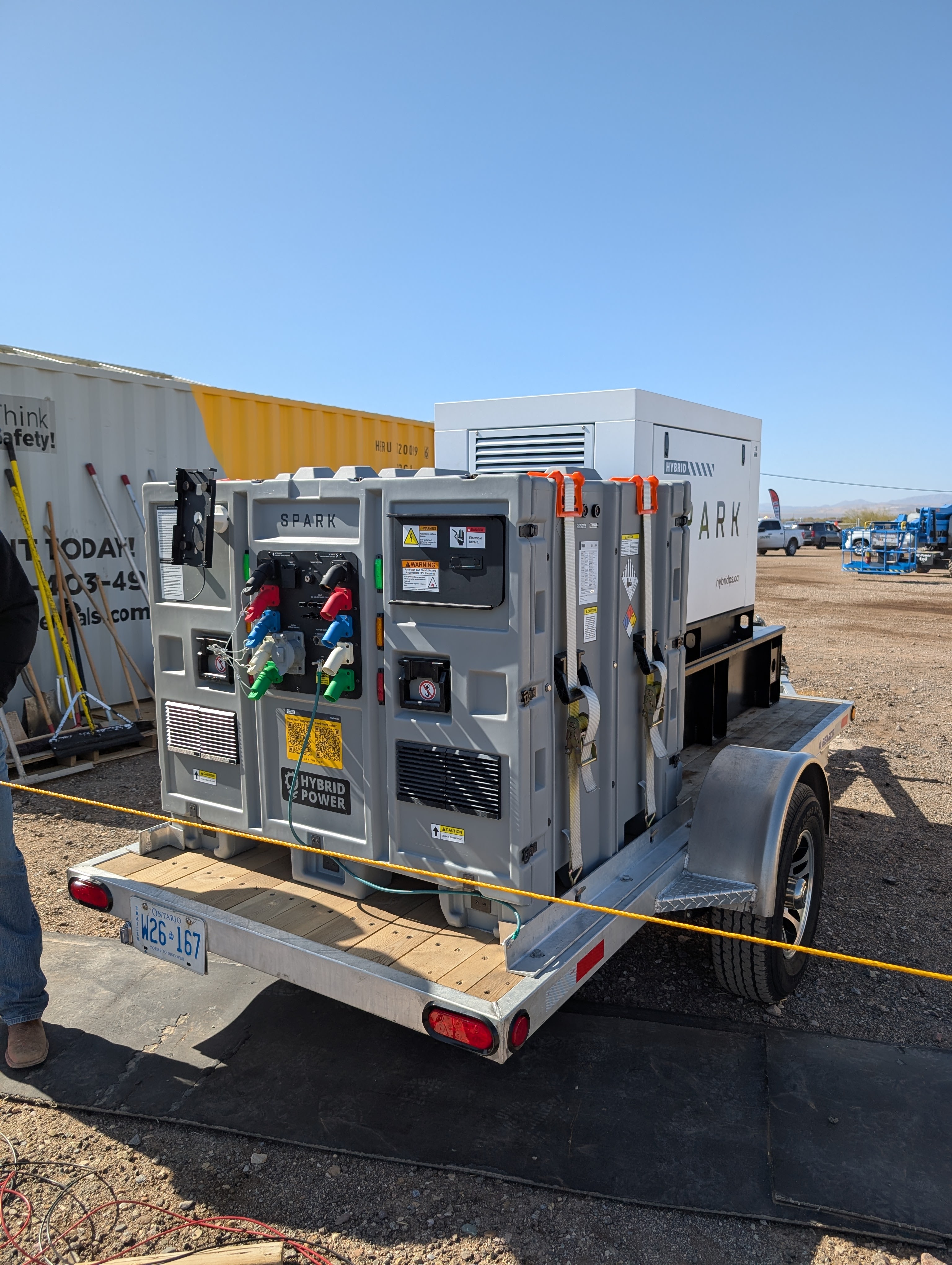
Mid-size sites, a construction compound with multiple trades, or a rental fleet unit serving rotating crews, fit the Spark Cube 12/24kW, which bridges the gap between single-tool power and whole-site capacity. For forward operating bases, disaster relief camps, or utility microgrids running continuous critical loads, the TERRA hybrid microgrid delivers 167 kVA continuous and 250 kVA peak from 162 kWh of storage, enough to carry an entire site through sustained operations without diesel-only redundancy. Battery storage paired with generation can reduce fuel usage, cut redundant generation capacity, and extend generator life by shortening runtime hours [1], the same logic that governs sizing a hybrid generator for a FOB versus a single excavator pad.
How Do Canadian-Made Hybrid Systems with -30°C Ratings Compare to Portable Alternatives?
A -30°C rating means the system starts and holds charge in Arctic and northern Canadian winters where non-rated batteries and electronics commonly fail from cell degradation, condensation, and cold-induced voltage drop. Non-rated lithium packs can lose usable capacity or shut down entirely below freezing, a liability on a northern construction site or a winter defence deployment where backup power can't be optional.
Deployment format matters as much as the rating. Trailer-mounted and towable configurations let crews relocate a hybrid generator between sites in a single tow, useful for rental fleets and construction projects that move phase to phase. Fixed installation suits a semi-permanent base or long-duration remote operation where the unit stays put and integrates with solar or grid inputs over months, not days.
Canadian engineering and assembly isn't a flag-waving exercise for defence and government buyers, it's supply-chain control. Domestic assembly means parts, firmware, and technical support don't route through a foreign intermediary during a procurement audit or a field failure, a real consideration for agencies bound by domestic-sourcing requirements.
Defence teams scoping a forward-base deployment should request a demo or contact the team directly; rental fleets and construction buyers can explore the buy-or-rent program to match a Batt Pack Pro, Jupiter, or Spark Cube to an active job without committing to outright purchase.
Frequently Asked Questions
Can a hybrid generator fully replace a diesel-only generator on a remote site?
Yes, in many applications a hybrid system replaces diesel entirely, though some remote deployments still keep a generator as a charging input for longer stretches. A battery-first setup with solar and grid charging covers continuous site loads silently, while the generator input stays available for extended runs or load spikes. The right mix depends on site duration, load profile, and available charging sources.
How long does a hybrid battery system run before it needs the generator or another input to recharge?
Runtime depends on the load connected and the unit's capacity, ranging from hours on a single battery pack to continuous operation when paired with solar or a generator input. A Batt Pack Energy 3kW or Pro 5kW suits smaller tool loads and overnight site power, while TERRA's 167 kVA continuous / 162 kWh rating supports larger, sustained site demand with generator or grid recharging layered in.
Do hybrid generators work in extreme cold or only in moderate climates?
They work in extreme cold when engineered for it, Hybridps systems are rated to -30°C, built and tested for northern and Arctic field conditions. Many consumer-grade battery systems degrade sharply below freezing or fail to start. Cold-rated thermal management and LiFePO4 chemistry are what separate field-reliable units from residential-grade equipment.
What size hybrid power system does a typical construction job site need?
Most construction sites run well on a Batt Pack Pro 5kW or Jupiter 7kW for tools and overnight power, scaling up to a Spark Cube 12/24kW for larger equipment or multiple trailers. Sizing depends on simultaneous tool load, site duration, and whether solar or generator charging is available on-site. Rental fleets often standardize on one or two tiers to simplify deployment.
Is it better to buy or rent a hybrid generator for a short-term project?
Renting usually makes more sense for a single short project, while buying pays off for recurring or long-duration deployments. Rental fleets benefit from durable, low-maintenance units that cycle between job sites without downtime. Hybridps offers both paths through its Buy or Rent program, letting contractors match equipment commitment to project length.
Conclusion
Hybrid generators earn their place on remote sites by solving three problems diesel alone can't: fuel-logistics burden, noise and emissions exposure, and inflexible scaling. The real decision isn't battery versus diesel, it's matching power tier (Batt Pack, Spark Cube, or TERRA) to your load, duration, and charging inputs, whether that's solar, alternator, grid, or generator. Cold-rated performance and Canadian assembly matter most when procurement and reliability are non-negotiable, as in defence and northern operations.
Start by mapping your site's actual load profile and runtime needs, then compare that against the Batt Pack Pro/Jupiter or TERRA spec sheets on hybridps.ca before requesting a demo.
Sources & References
Recommended Articles
Explore more from our content library: